
A fireplace is the most powerful focal point a living room can have — it produces warmth, light and movement all at once, which no lamp or artwork can replicate. But choosing one involves genuine practical decisions: fuel type, ventilation, clearances and safety. These 23 cozy fireplace design ideas cover the design possibilities alongside the technical guidance you need before committing to any of them.
The four fireplace types compared
Your fuel choice determines cost, installation complexity and how the room actually feels.
Wood-burning gives the most authentic experience — real flame, crackle, scent and substantial heat output. It requires a chimney or flue, produces ash and needs annual sweeping. It's also the most restricted: many urban areas have smoke-control rules limiting what you can burn, so check local regulations before planning.
Gas offers instant, controllable flame with good heat output and no ash. It needs a gas supply and a flue (though balanced-flue and direct-vent models simplify this). Installation must be done by a qualified professional.
Electric needs only a socket. No flue, no fuel, no combustion — which makes it the only realistic option for most apartments and rentals, and the safest around children. The flame is simulated and heat output is modest, essentially a small fan heater. What you're buying is the visual focal point.
Bioethanol produces real flame without a flue, burning liquid fuel cleanly enough to vent indoors. The trade-offs are genuine: it consumes oxygen and releases water vapour and carbon dioxide, so the room needs adequate ventilation, and refuelling requires care — never pour fuel into a hot or lit burner.
Safety essentials
Whatever you install, a few points are non-negotiable:
- Fit a carbon monoxide alarm in any room with a combustion appliance — wood, gas or bioethanol.
- Respect the clearances to combustible materials specified by the manufacturer. These vary by appliance and are not guesswork.
- Sweep wood-burning chimneys annually, or more often with heavy use. Creosote buildup is the primary cause of chimney fires.
- Use a non-combustible hearth extending in front of and beside a wood or gas firebox, sized to your local building regulations.
- Use a guard or screen with open fires, particularly with children or pets in the house.
Building regulations differ significantly between countries and even regions — treat the figures above as principles and confirm the specifics with your installer and local authority.
Mantel proportions
A mantel typically sits around 1.1–1.4 m (44–55 in) from the floor, which puts it comfortably above seated eye level and gives room for the firebox beneath. Combustible mantels must maintain a minimum clearance above the opening — check the appliance's specification, as it varies by model and fuel.
For styling, scale matters: mantel decor should reach roughly two-thirds to three-quarters of the mantel's width, with items grouped in odd numbers at varying heights. A single oversized mirror or artwork above works equally well and is the easier option.
Arrange the seating around it
A fireplace only functions as a focal point if the furniture acknowledges it. Orient at least the main sofa toward it, keep facing seats within about 2.4 m (8 ft) of each other, and leave clear floor in front of the hearth. If you also have a television, placing the two on adjacent walls rather than stacking the screen above the fire avoids both the neck strain and the heat exposure.
23 cozy fireplace ideas — and why each works

1. A Linear Gas Fireplace
The contemporary standard: a long, low flame with no mantel and clean architectural lines. Gas gives instant, controllable heat with no ash — though installation needs a qualified professional.

2. A Wall-Mounted Electric Fire
The only realistic option for most flats and rentals — it plugs in, needs no flue, and can be fitted almost anywhere. Treat it as a visual focal point rather than a heat source.

3. Flanking Bookshelves
Built-ins either side turn the fireplace into a complete wall composition. It's the most effective way to make a modest fire read as an architectural feature.

4. A Classic Wood-Burner
Nothing matches real wood for flame, sound and scent. Budget for annual chimney sweeping and check whether you're in a smoke-control area before committing.

5. An Exposed Brick Hearth
Brick is non-combustible, characterful and ages well. Keep rugs and textiles clear of the hearth extension — that gap exists for a reason.
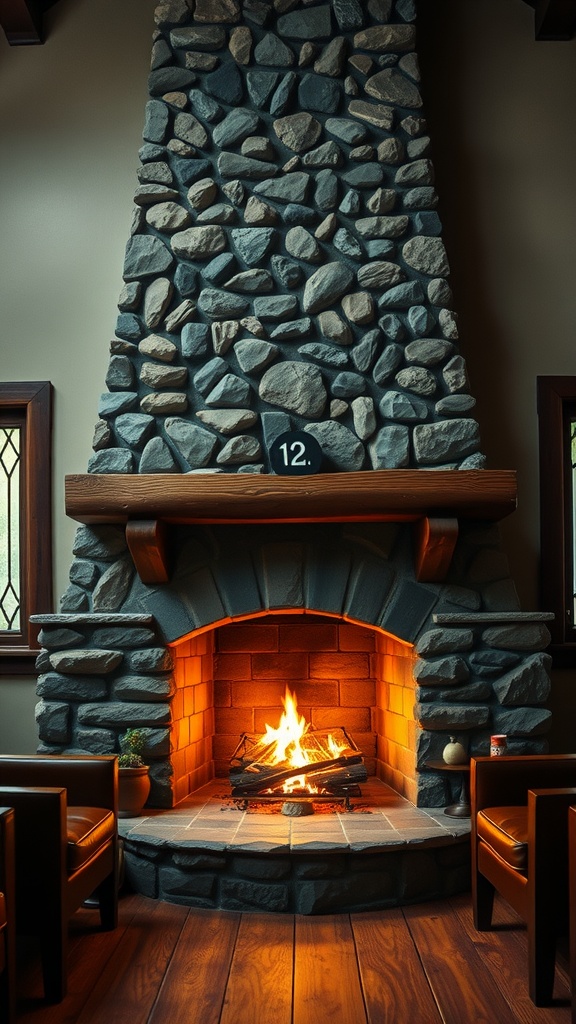
6. A Stone Surround
Stone handles heat well and gives the fireplace real visual weight. It suits rustic and cabin schemes particularly, and it will outlast every other finish in the room.

7. A Corner Fireplace
Corner installations save wall space and create a natural intimate seating cluster — two chairs and a small table is often all the arrangement needs.

8. TV Above the Fire — With Care
Common, but check two things: that the screen still sits near seated eye level, and that the mantel deflects heat away from it. A pull-down mount solves the height problem properly.

9. Two Chairs Facing the Fire
The simplest and most intimate arrangement there is. Keep the seats within about 2.4 m of each other and leave the hearth clear in front.
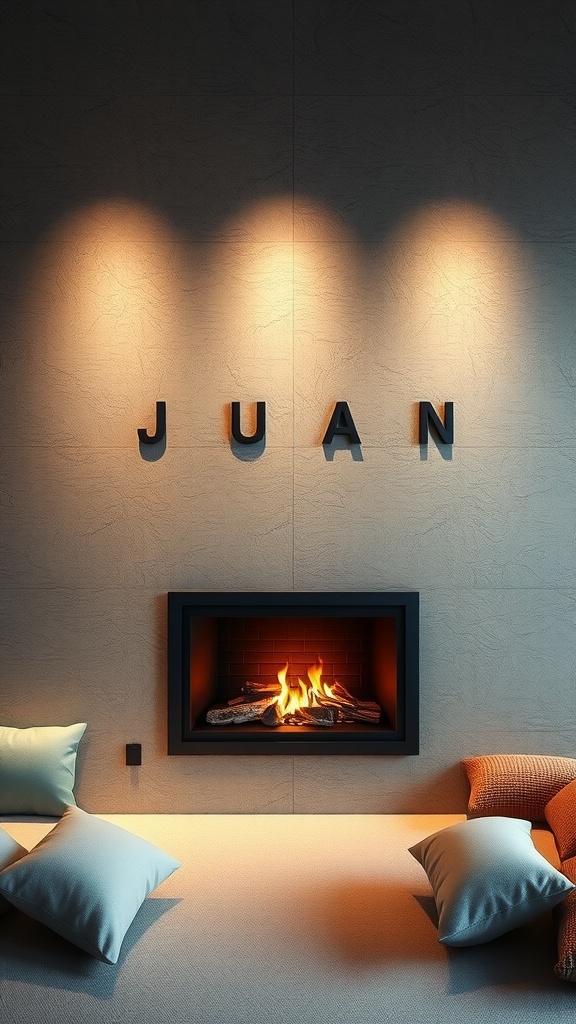
10. A Textured Surround Wall
Plaster, tadelakt or textured render catches firelight beautifully — the moving flame reveals the surface relief in a way flat paint never shows.

11. Minimalist and Mantel-Free
A simple opening with no surround suits modern interiors and makes the flame itself the entire feature. Fewer elements, more impact.

12. An Artistic Surround
The surround is a genuine design opportunity — tile, metal or sculpted plaster all work. Just confirm the material is rated for the temperatures involved.

13. A Seasonally Styled Mantel
The mantel is the easiest surface in the house to restyle through the year. Keep greenery and candles clear of the firebox opening when the fire is lit.

14. A Fireplace as Open-Plan Anchor
In an open-plan space the fire defines the living zone without walls — the seating gathered around it does the dividing work a partition would.

15. A Fire Screen
Decorative and genuinely protective — a screen contains sparks and keeps children and pets at a safe distance. With an open fire it's essential rather than optional.

16. A Timber Beam Mantel
A reclaimed beam is a classic, characterful mantel. Because timber is combustible, its clearance above the opening must follow the appliance specification precisely.

17. A Colourful Backdrop
Painting the chimney breast a bold colour makes a modest fireplace into the room's centrepiece — a decorating-level change with architectural impact.

18. A Fireplace Beside a Window
Fire and daylight together is a genuinely lovely combination — bright and open by day, enclosed and glowing after dark.

19. Layer Textiles Around It
Wool, sheepskin and heavy weaves amplify the warmth a fire provides. Keep them well back from the hearth — the clearance is a fire-safety requirement.

20. A Custom Stone Surround
Mixed stone gives texture and colour variation that manufactured surrounds can't match, and it ages into the room rather than dating.

21. Integrated into Joinery
Building the fire into a run of cabinetry makes it one element of a designed wall — and gives you storage for logs, controls and media in the same structure.

22. A Mirror Above the Mantel
A large mirror is the easiest mantel solution — it fills the wall in one object, reflects firelight, and needs no styling skill at all.
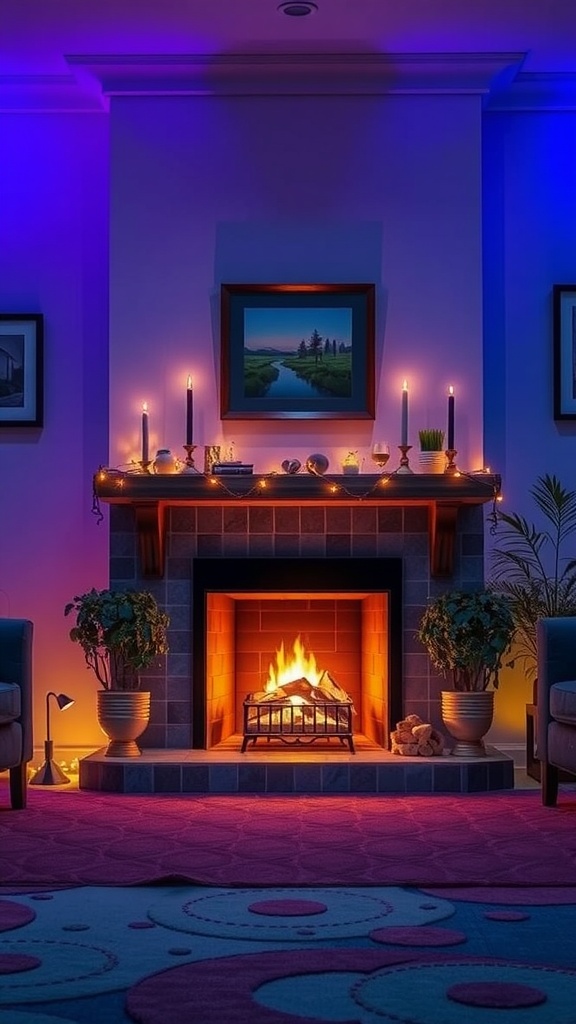
23. Layer Light Around the Fire
Candles and warm lamps extend the fire's glow to the rest of the room. Keep every bulb at 2700 K or lower so nothing competes with the flame's warmth.

Bonus: Traditional Joinery Surround
Painted timber surrounds suit period homes and can be bought ready-made in standard sizes — one of the most affordable ways to give a plain opening real presence.
Fireplace FAQ
Which fireplace type is best for an apartment? Electric, in almost every case — no flue, no combustion, no landlord permission needed for a plug-in model. Bioethanol is the alternative if you want real flame, but it requires proper ventilation and careful refuelling.
Do I need a chimney for a fireplace? For wood-burning, yes — a chimney or flue is essential. Gas usually needs a flue, though balanced-flue and direct-vent models vent through an external wall instead. Electric and bioethanol need no flue at all.
Is bioethanol safe indoors? Yes, when used correctly — but it consumes oxygen and releases water vapour and CO2, so the room must be adequately ventilated. Never refuel a burner that's lit or still hot, and follow the manufacturer's room-size guidance.
How often should a chimney be swept? At least annually for a wood-burning fireplace, and more frequently with heavy use or unseasoned wood. Creosote accumulation is the main cause of chimney fires.
How high should a mantel be? Typically 1.1–1.4 m from the floor. If the mantel is combustible — timber, for instance — its clearance above the firebox opening must follow the appliance's specification, which varies by model.
Can I put a TV above my fireplace? You can, but it's often too high for comfortable viewing and exposes electronics to heat. It works best with a low mantel, an electric or unused fire, or a pull-down mount that brings the screen to eye level.
Common fireplace mistakes
- No carbon monoxide alarm — required with any combustion appliance, and inexpensive.
- Ignoring clearances to combustibles — manufacturer specifications exist for good reason.
- Rugs and textiles over the hearth extension — that clear zone is a safety requirement, not a styling choice.
- Skipping the annual sweep — the leading cause of chimney fires.
- Furniture that ignores the fire — a fireplace nobody's seat faces isn't functioning as a focal point.
Final thought
A fireplace earns its place because it does something no other feature can: it moves. Choose the fuel that genuinely suits your home — electric for a flat, wood for authenticity, gas for convenience — get the clearances and ventilation right, then arrange the seating so people actually face it. The design is the easy part; the decisions underneath it are what make the room work.
Sources & principles referenced: comparison of wood-burning, gas, electric and bioethanol fireplace types (flue requirements, heat output, installation constraints); bioethanol oxygen consumption and combustion by-products; carbon monoxide alarm and clearance-to-combustibles requirements; annual chimney sweeping and creosote-related fire risk; non-combustible hearth extensions; typical mantel height (1.1–1.4 m) and two-thirds to three-quarters styling scale; conversation distance (~2.4 m); warm colour-temperature lighting (2700 K). Building regulations vary by jurisdiction — confirm specifics locally.