
A basement is the cheapest square footage you'll ever gain — you already own it, and no extension is required. But it's also the space most likely to be finished badly, because the problems are invisible until they aren't: moisture, low ceilings, no daylight and cold floors. These 35 cozy rustic family room ideas for a basement makeover cover the design, but start with the technical work that has to happen first. Rustic suits a basement family room particularly well, because its natural materials and warm palette are exactly what a below-ground room needs.
Deal with moisture before anything else
This is the step people skip, and it ruins more basement conversions than any other. Below-ground rooms are prone to damp from groundwater, condensation and poor ventilation — and finishing over an unresolved moisture problem means mould behind your new stud walls within a year or two.
Before any decorating: identify and fix the source of any water ingress, check for existing damp or mould, and consider running a dehumidifier to keep relative humidity in a comfortable range. Choose materials accordingly — vinyl, LVT or engineered flooring tolerates basement conditions far better than solid hardwood, which can cup and warp. Mould-resistant plasterboard is worth the small extra cost in a basement.
Low ceilings: work with them, not against them
Most basements have less headroom than the rest of the house, and the instinct to add drama backfires here. Practical responses:
- Recessed or flush lighting rather than pendants and chandeliers — anything hanging eats the headroom you don't have.
- Low-profile furniture, which increases the visual distance between seat and ceiling.
- Paint the ceiling light, or paint it the same colour as the walls so the boundary blurs and the room reads taller.
- Vertical emphasis — tall bookcases, vertical panelling or full-height curtains draw the eye upward.
Exposed beams are one case where you can lean into a low ceiling rather than disguise it — the rustic look turns a constraint into a feature.
Lighting has to do everything
With little or no daylight, artificial lighting isn't a finishing touch — it's the entire atmosphere. Layer it properly: recessed ceiling lights for general illumination, table and floor lamps at low level for warmth, and accent lighting to add depth. Keep bulbs at 2700 K for cosiness, and use dimmers so the room can shift from bright for games to low for film-watching.
One trick worth knowing: placing lamps at several low points creates pools of warm light and shadow, which reads far cosier than flooding a windowless room evenly from above.
Cold floors and sound
Concrete slabs stay cold, so insulate beneath the floor finish if you can, and use large rugs generously — they add warmth underfoot and absorb sound. Basements also sit directly below living space, so noise travels both ways. Soft furnishings, rugs and acoustic underlay all help; if the basement will house a cinema or games area, insulation between the joists is worth doing while the ceiling is open.
Safety and regulations
Converting a basement into a habitable room usually triggers building regulations, and the requirements are worth checking before you start. Common considerations include a means of escape (often an egress window or a protected route), adequate ventilation, and smoke alarms. If you have any combustion appliance down there, a carbon monoxide alarm is essential. In some regions radon is a factor in below-ground rooms and testing is straightforward and cheap. Requirements vary significantly by country and region — confirm the specifics with your local authority before finishing the space.
35 rustic basement family room ideas — and why each works

1. A Fireplace Focal Point
Fire solves two basement problems at once — warmth and the lack of natural light. An electric or gas model avoids the flue complications of a below-ground wood burner.

2. Nature-Inspired Decor
Natural materials counteract the underground feeling of a basement. Wood, stone and greenery bring the outdoors into a room that has no view of it.

3. A Warm Palette
Cream, caramel and warm brown reflect lamplight kindly. Cool greys are a poor choice in a windowless room — without daylight they read cold and flat.

4. Layered Lighting
The single most important decision in a basement. Combine recessed ceiling lights with table and floor lamps at low level, all warm and on dimmers.

5. Exposed Beams
Rather than boxing in a low ceiling, expose it. Beams turn limited headroom into deliberate rustic character — a rare case of a constraint becoming a feature.

6. A Reading Nook
Basements are naturally quiet and enclosed, which makes them excellent for reading corners. A good lamp is essential — there's no daylight to help.

7. Considered Furniture Layout
Basements often have awkward columns and low beams. Plan around them, keep walkways at 75–90 cm, and check nobody has to duck to reach a seat.

8. Layered Textiles
Soft furnishings warm a below-ground room and absorb sound — which matters when the space sits directly beneath bedrooms.

9. Reclaimed Wood
Salvaged timber brings warmth and patina cheaply. Just ensure it's dry and properly treated before installing it in a below-ground room.

10. One Room, Several Uses
Basements usually have to serve as lounge, playroom and storage at once. Zone with rugs and furniture placement so the functions don't blur into clutter.

11. Open Shelving
Lighter than closed cabinetry, which matters in a room with limited height. Keep it styled sparsely so it doesn't crowd an already-enclosed space.

12. A Generous Sectional
Basements are usually where the family actually sprawls. Prioritise seat depth and comfort — and check the sofa will physically fit down the stairs.

13. Large Rugs
Genuinely functional in a basement: they insulate against a cold concrete slab and absorb sound. Go larger than you think you need.

14. A Family Gallery Wall
Basements have plenty of uninterrupted wall — no windows to work around. Hang so the cluster's centre sits around 145–150 cm from the floor.

15. Rustic Fittings
Wrought iron and aged metal suit the style. In a low basement, choose flush or semi-flush versions rather than anything that hangs low.

16. Vintage Accessories
Old objects give a newly finished basement a sense of history it otherwise lacks — useful when everything else in the room is brand new.

17. Plush Throws
Basements run cooler than the rest of the house. Throws are the cheapest fix and add exactly the tactile warmth the room needs.

18. A Games Zone
Basements are ideal for pool and table games because the noise is contained. Check ceiling height and cue clearance before committing to a table.

19. Stone Features
Stone suits below-ground rooms naturally — it belongs there in a way it doesn't upstairs, and it handles the humidity without complaint.
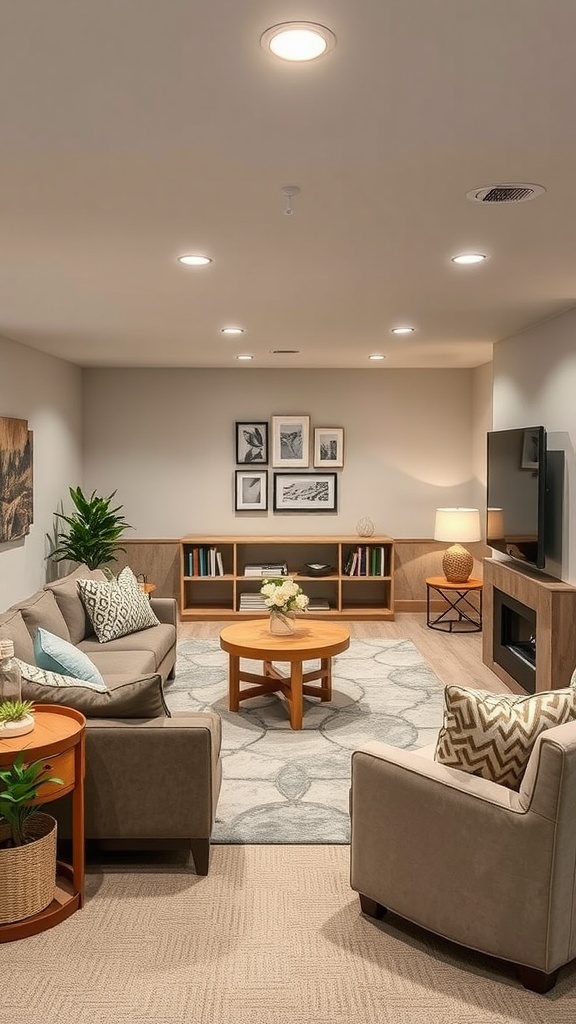
20. A Media Setup
Basements make superb film rooms — no daylight means no glare on the screen. Mount the centre of the screen at seated eye level, around 100–110 cm.

21. Maximise Any Daylight
If you have window wells or high-level windows, keep them completely clear. In a basement every bit of natural light is disproportionately valuable.

22. Solid Wooden Furniture
Timber furniture warms the room visually. Keep pieces away from any external wall that has previously shown damp.

23. String Lights
Low-level warm light at multiple points is exactly what a windowless room wants. Cheap, effective, and instantly atmospheric.
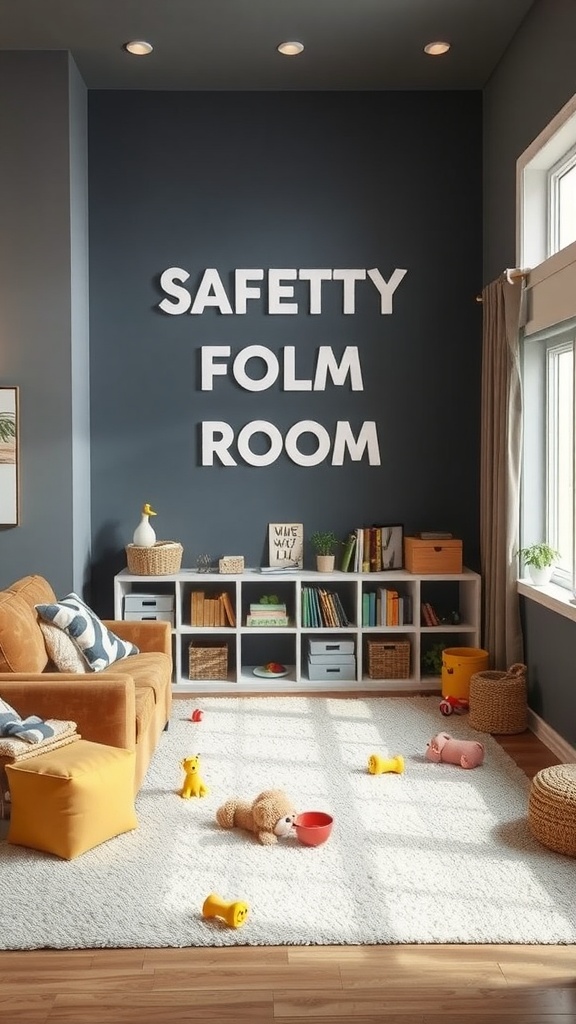
24. A Child-Friendly Zone
Soft flooring, rounded furniture and accessible storage. Basements make good playrooms — just make sure the stairs are gated and well lit.

25. Candles and Scent
Basements can smell musty even when dry. Scent genuinely changes how the room feels — though address the cause of any damp rather than masking it.

26. Seasonal Touches
Without windows, a basement has no connection to the seasons. Seasonal decor reintroduces that sense of time passing.

27. Textural Contrast
Light flooring against a dark wall against rough stone creates depth. In a room with limited daylight, texture does the work colour can't.

28. Poufs and Floor Seating
Low seating suits low ceilings and moves easily when the room changes function. It also carries down the stairs far more easily than a sofa.

29. Sustainable Materials
Reclaimed timber and natural fibres suit rustic and cost less than new. Choose materials rated for below-ground humidity.

30. Bring the Outdoors In
Botanical art, natural textures and plants counteract the enclosed feeling. Choose low-light species, or use good-quality artificial greenery where there's no daylight at all.

31. Make It Personal
A basement is the one room where you can commit fully to a style without it clashing with the rest of the house — it's visually separate.

32. Modern Furniture, Rustic Shell
Contemporary seating against brick and timber stops the room feeling like a themed cabin. Contrast in age, consistency in palette.

33. A Home Bar
A classic basement feature, and practical — it needs only a small plumbing run if any. Light it well; bar corners are usually the darkest part of the room.

34. Defined Activity Zones
Use rugs and lighting to separate watching, playing and reading. Zoning is what stops a large basement feeling like an undefined hall.

35. Soundproofing
Worth doing while the ceiling is open — insulation between the joists benefits both the basement and the rooms above. Essential if it'll be a cinema or music room.
Basement family room FAQ
What should I do before decorating a basement? Deal with moisture. Find and fix any water ingress, check for existing damp or mould, and get the humidity under control with ventilation or a dehumidifier. Finishing over an unresolved damp problem leads to mould behind the new walls.
What flooring works best in a basement? Vinyl, LVT or engineered boards — all tolerate humidity and temperature swings far better than solid hardwood, which can cup and warp on a concrete slab. Add large rugs for warmth over cold concrete.
How do I make a basement with no windows feel less like a basement? Layered warm lighting is the main answer, plus light wall colours, mirrors, natural materials and plenty of texture. Several low-level lamps read far cosier than one bright ceiling light.
How do I handle a low ceiling? Use recessed or flush fittings, choose low-profile furniture, paint the ceiling light or the same colour as the walls, and add vertical emphasis with tall shelving or full-height curtains. Alternatively, expose the beams and lean into the rustic look.
Do I need permission to convert a basement? Usually, yes — turning a basement into a habitable room typically engages building regulations covering escape routes, ventilation and fire safety. Requirements vary considerably by country and region, so check locally before you start.
Common basement mistakes
- Decorating before fixing damp — the most expensive mistake in any basement conversion.
- Solid hardwood flooring — vulnerable to moisture; choose vinyl, LVT or engineered instead.
- Hanging light fittings under a low ceiling — recessed and flush fittings preserve headroom.
- Cool grey paint in a windowless room — without daylight it reads cold; go warm.
- Only one light source — with no daylight, a single fixture makes the room feel like a garage.
Final thought
A basement family room can genuinely be the best room in the house — quiet, enclosed and perfect for films and games. But the sequence matters: sort the moisture, plan the lighting properly, choose materials that suit below-ground conditions, then decorate. Rustic works so well down there because warm timber, stone and layered textiles are exactly the antidote to concrete and low light.
Sources & principles referenced: basement moisture management (water ingress, condensation, dehumidification, mould-resistant materials); moisture-tolerant flooring selection (vinyl, LVT, engineered versus solid hardwood); low-ceiling techniques (recessed lighting, low-profile furniture, vertical emphasis); layered artificial lighting and colour temperature (2700 K, dimmers); acoustic insulation between joists; habitable-basement building-regulation considerations including means of escape, ventilation, smoke and carbon monoxide alarms, and radon testing. Regulations vary by jurisdiction — confirm locally.