
The difference between a tree that looks "decorated" and one that looks designed is rarely the ornaments themselves. It's order, quantity and depth: lights that reach inside the branches, ribbon that has a direction, heavy ornaments where the branches can hold them, and a palette that stops at three colors. These 25 Christmas tree decor ideas start with the numbers designers use to decorate in layers, then cover traditional, elegant, natural, vintage and DIY looks — each one built on the same framework.
Decorate in layers, in this order
Almost every professionally styled tree is built in the same sequence, and the order matters because each layer is harder to add once the next one is on:
- Lights — first, and switched on while you work so dark patches are obvious.
- Topper — before ornaments, so you aren't leaning into a finished tree with a ladder.
- Garland or ribbon — the layer that gives the tree direction.
- Large ornaments, deep inside — near the trunk, where they add depth and the branches are strongest.
- Medium and small ornaments — on the outer tips, filling the gaps.
- Picks and finishing touches — florals, berries or sprays tucked in last.
The numbers behind a full-looking tree
These are rules of thumb used by decorators and tree retailers rather than laws, but they explain why so many trees look sparse:
- Lights: about 100 mini lights per vertical foot — roughly 700 on a 7 ft tree. Weave them from the trunk out along each major branch rather than wrapping only the outer surface.
- Ornaments: about 10–15 per foot of height for standard-size ornaments — 70 to 100 on a 7 ft tree. Most households own far fewer and spread them too evenly across the surface.
- Ribbon or garland: roughly 9–10 ft (about 3 m) per foot of tree for a full spiral — around 65–70 ft for a 7 ft tree. Vertical cascades use less.
- Palette: two or three colors plus one metallic. Every extra color has to be repeated several times around the tree to look intentional, which multiplies how many ornaments you need.
Choose a tree that can carry the look
Not every tree holds every style. Among real trees, the Fraser fir became the most popular species in large part because its firm branches hold heavier ornaments and, when watered properly, it keeps its needles well — useful if your look relies on glass and large baubles. Softer-branched trees suit lighter, natural decorations. If you're buying an artificial tree, the National Fire Protection Association advises choosing one labeled "fire resistant"; it can still burn, but it resists catching and is easier to extinguish.
Decorate for the household you have
Veterinary hospitals see the same holiday injuries every year. Tinsel and ribbon are the classic danger for cats: swallowed, they act as a "linear foreign body" that can bunch and damage the intestines and often requires surgery. Glass ornaments break and cut, and a climbing cat can pull over an unanchored tree. With pets or small children, keep the bottom third of the tree to shatterproof ornaments without hooks within reach, skip tinsel entirely, choose fabric or wooden ribbon ends secured tightly, and anchor the tree to the wall with a discreet hook and clear line.
25 Christmas tree decor ideas — and why each one works
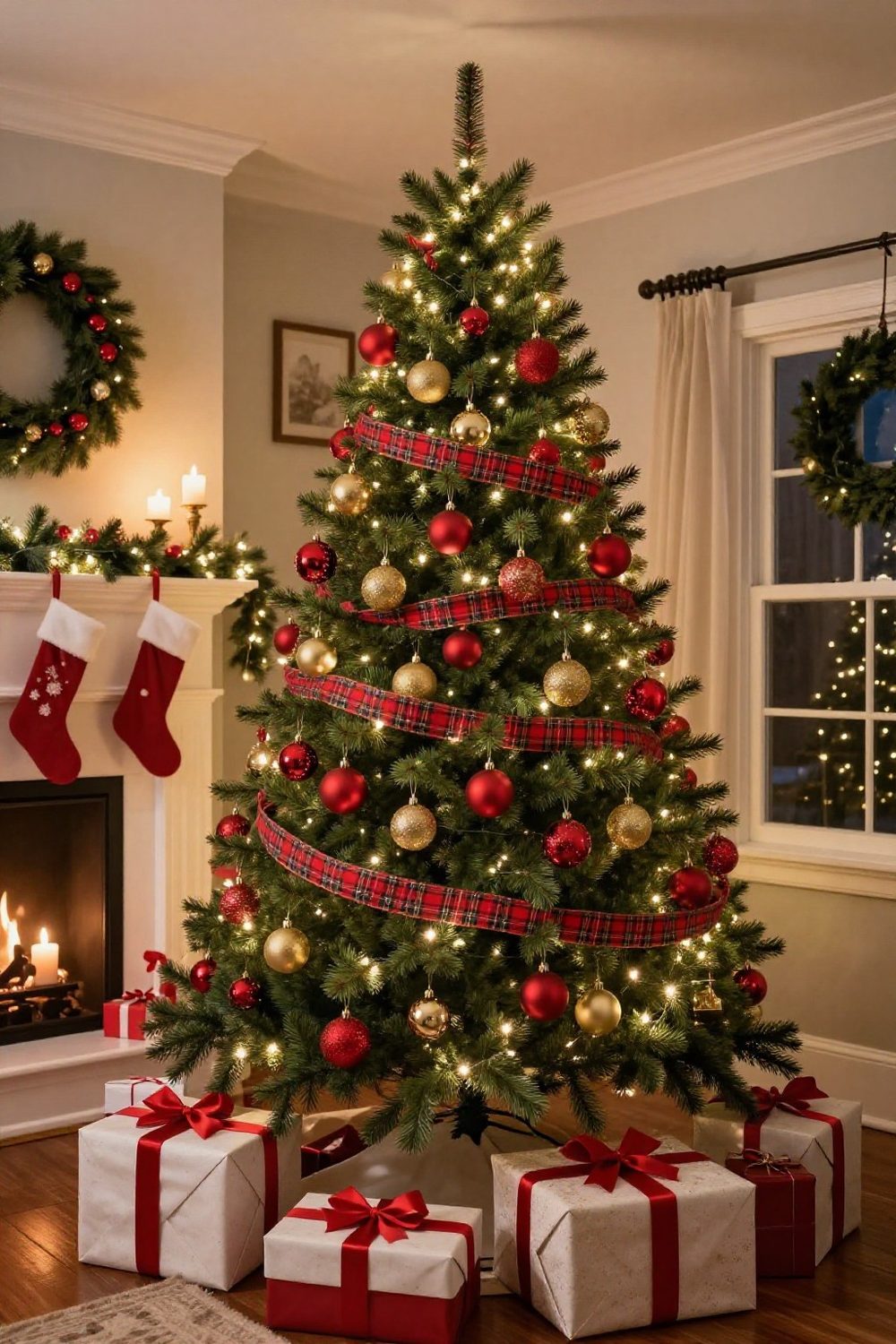
1. Traditional red and gold
Red and gold is the most forgiving traditional palette: red gives color, gold catches the light, and both repeat easily. Mix finishes — matte, glossy and glitter — in each color so the tree has texture without adding new colors.
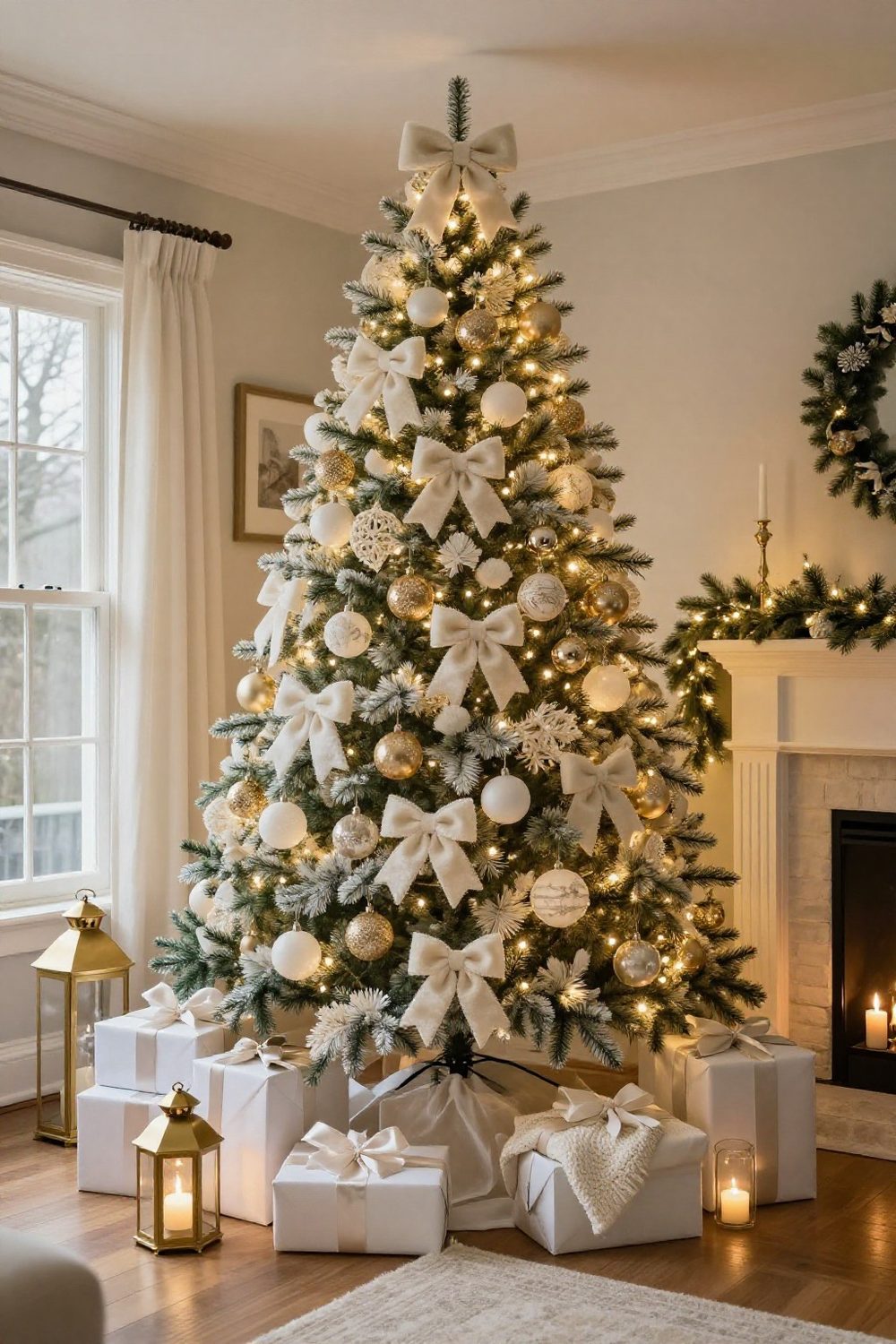
2. Elegant white, ivory and champagne
Elegant trees use fewer colors, not costlier ornaments. Ivory, white and champagne gold with a few velvet bows look refined because the eye reads one continuous tone with variations in finish.
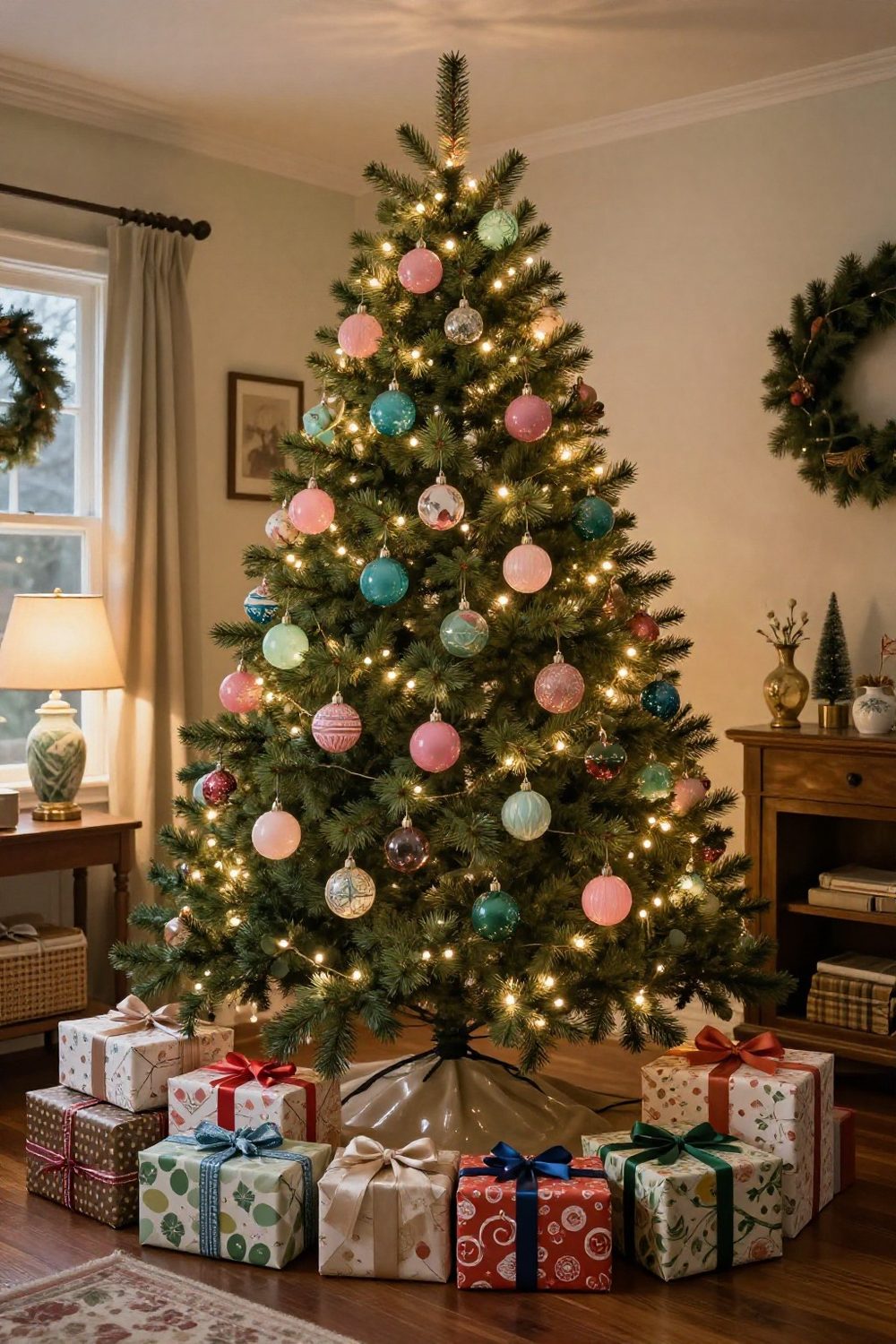
3. A vintage glass tree
Mid-century glass ornaments in faded pinks, blues and greens look best together in large numbers — a single vintage bauble gets lost, thirty of them become the theme. Hang the most fragile ones high and deep inside.
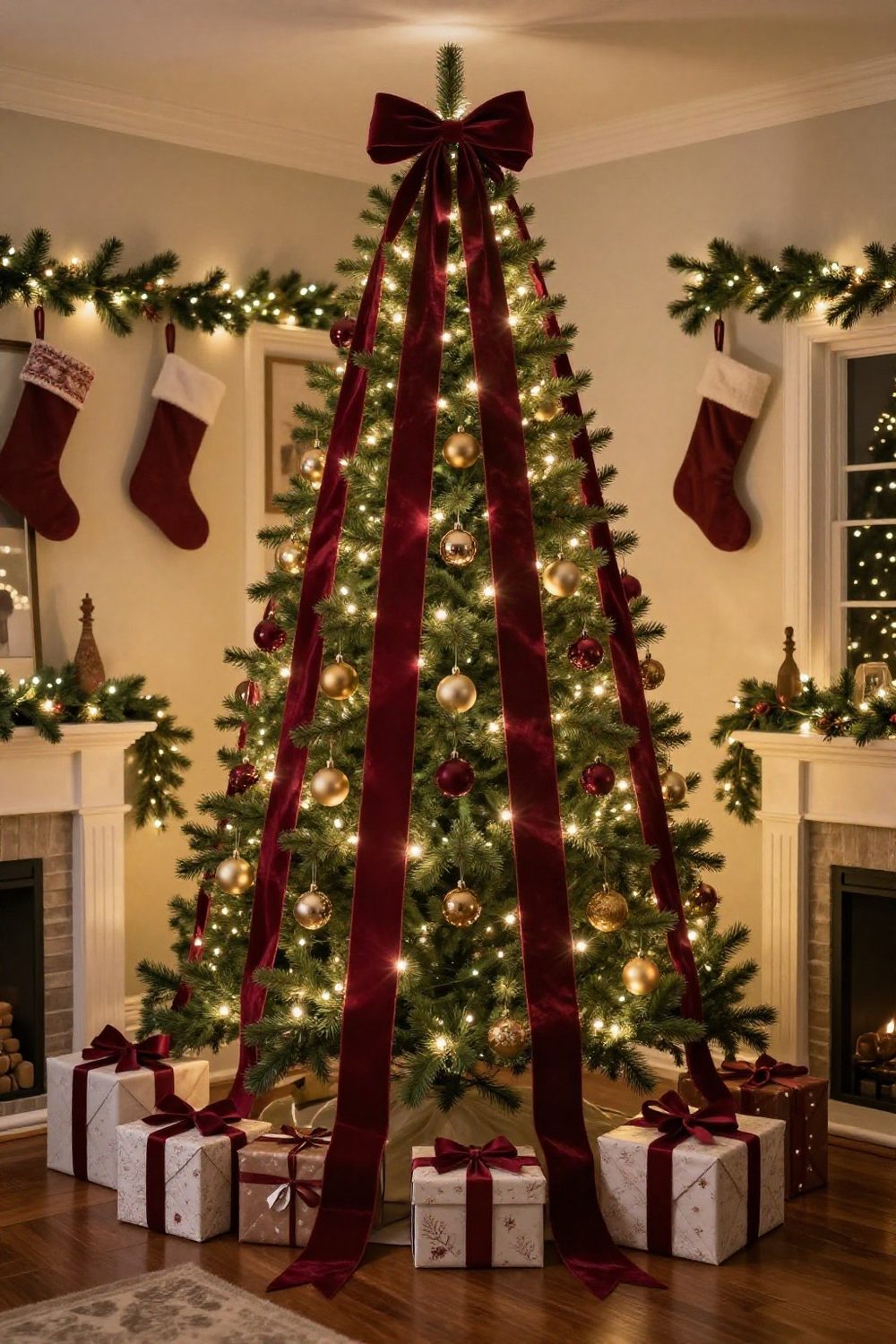
4. Vertical ribbon cascades
Instead of wrapping ribbon around the tree, let five or six lengths fall from the top to the bottom like streams. Vertical lines make the tree look taller and use less ribbon than a full spiral.
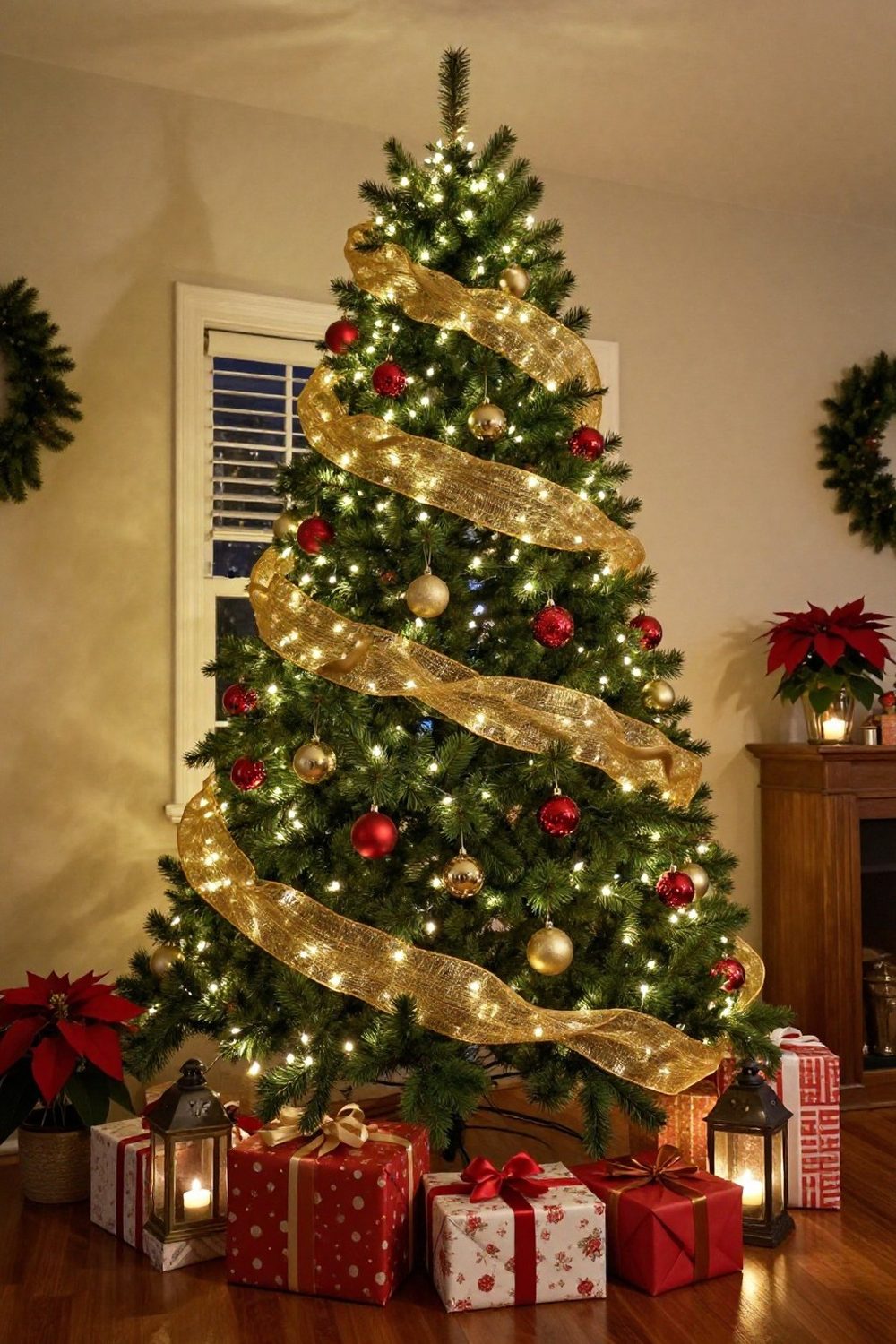
5. The loose spiral
For a spiral, tuck the ribbon into the branches every 12–18 in so it dips in and out instead of sitting on top like a sash. Wired ribbon holds the shape; unwired ribbon slides down within days.
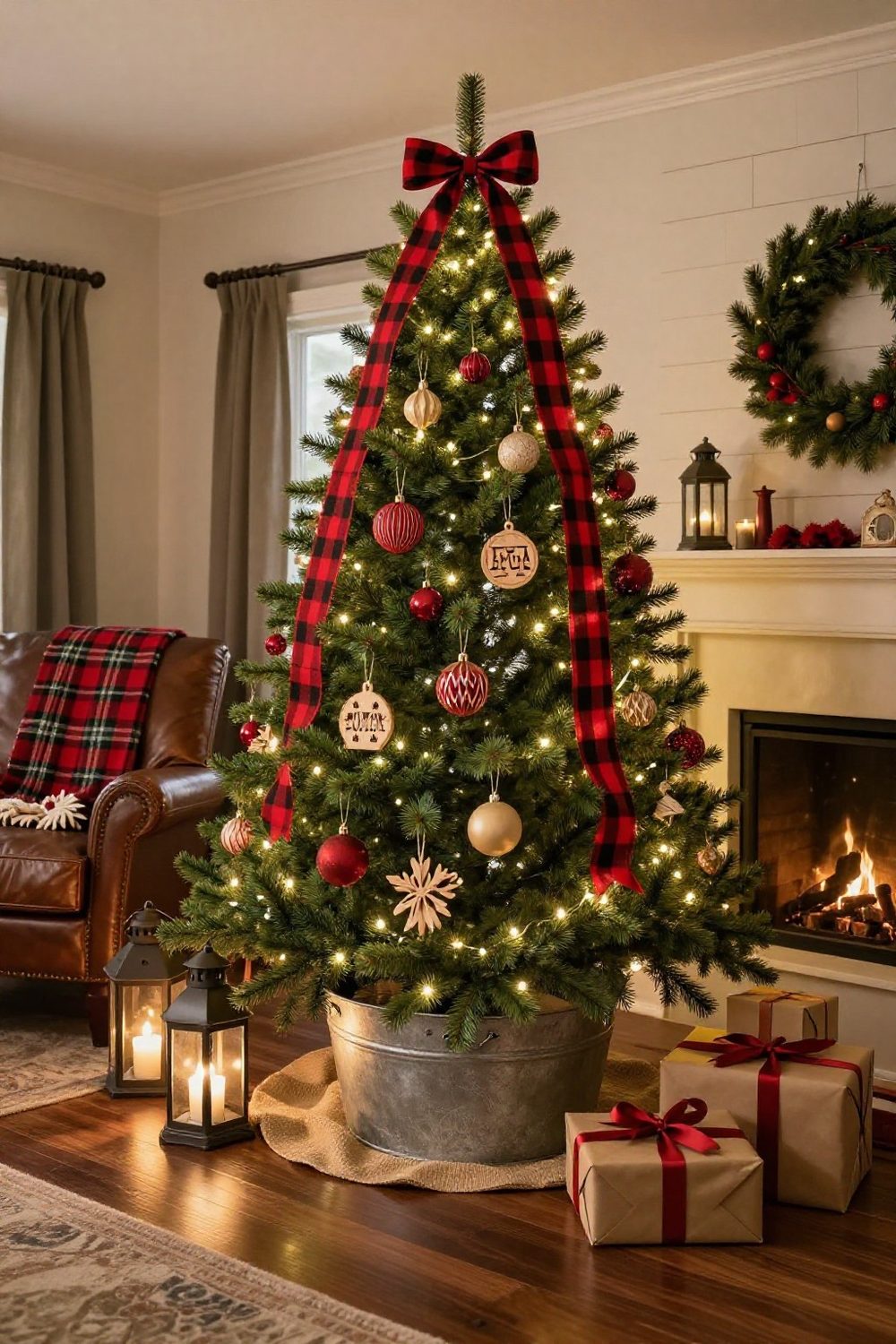
6. Farmhouse buffalo plaid
Buffalo plaid ribbon, wooden ornaments and a burlap tree skirt define the farmhouse tree. The look works because the materials are all matte and natural — a single glossy bauble would break it.
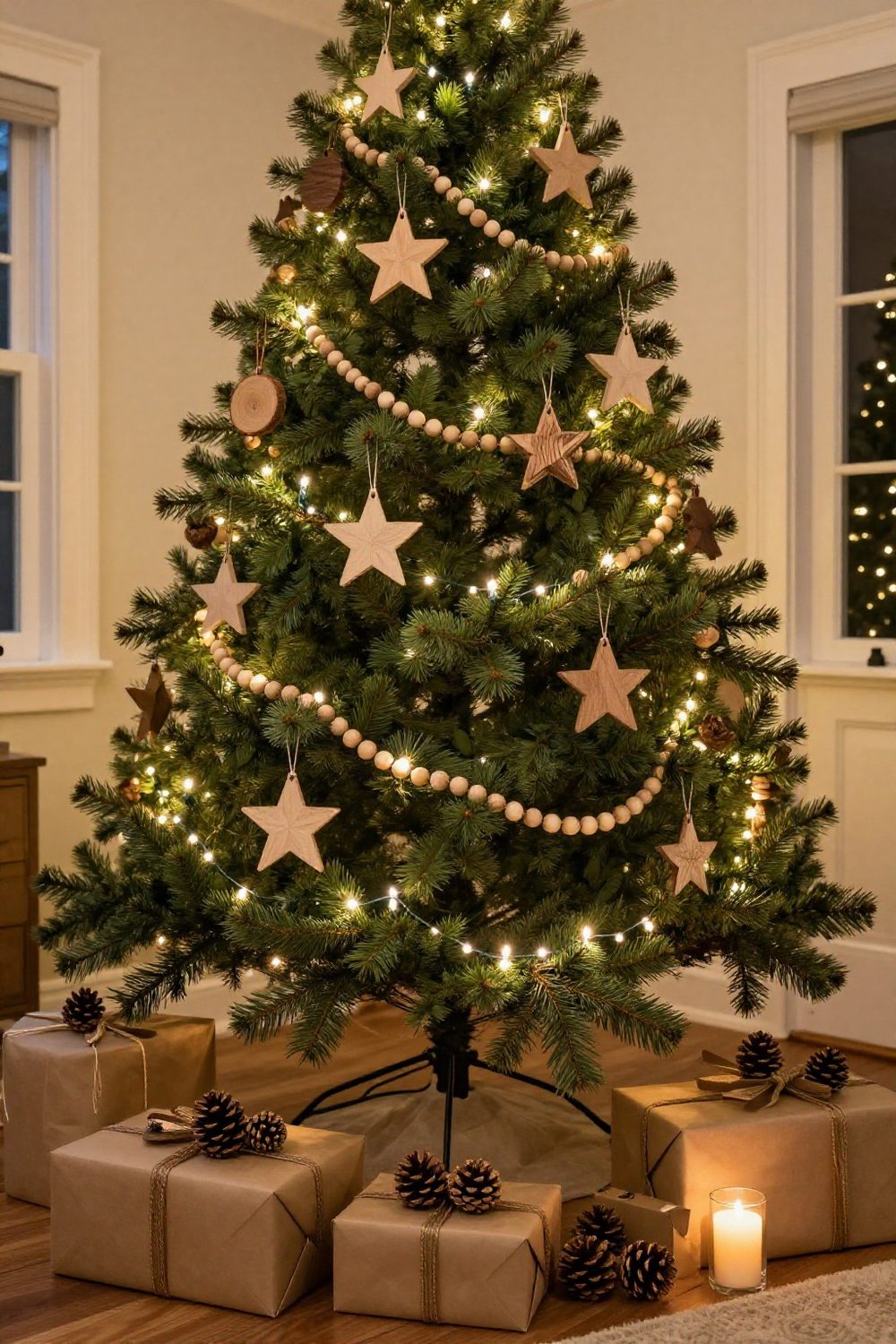
7. Wooden ornaments and bead garland
Wooden stars, slices and beads are a natural DIY project and nearly indestructible — a good choice for the lower branches in homes with pets. Leave some raw and stain others for variety.
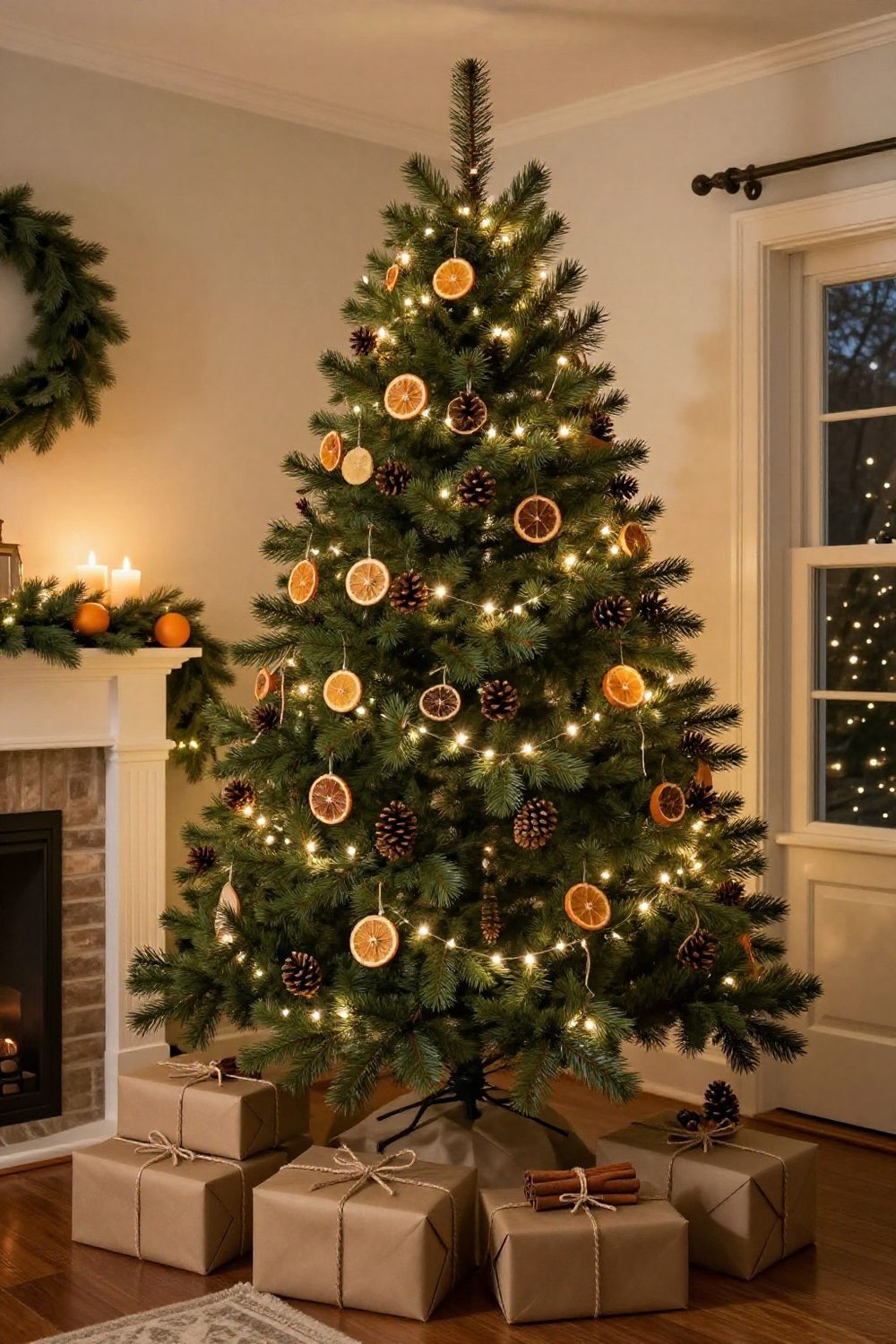
8. Dried oranges, pinecones and cinnamon
A natural tree combines dried citrus, pinecones and cinnamon bundles tied with twine. It costs very little and smells of the season — dry the orange slices thoroughly so they don't mold on the branches.
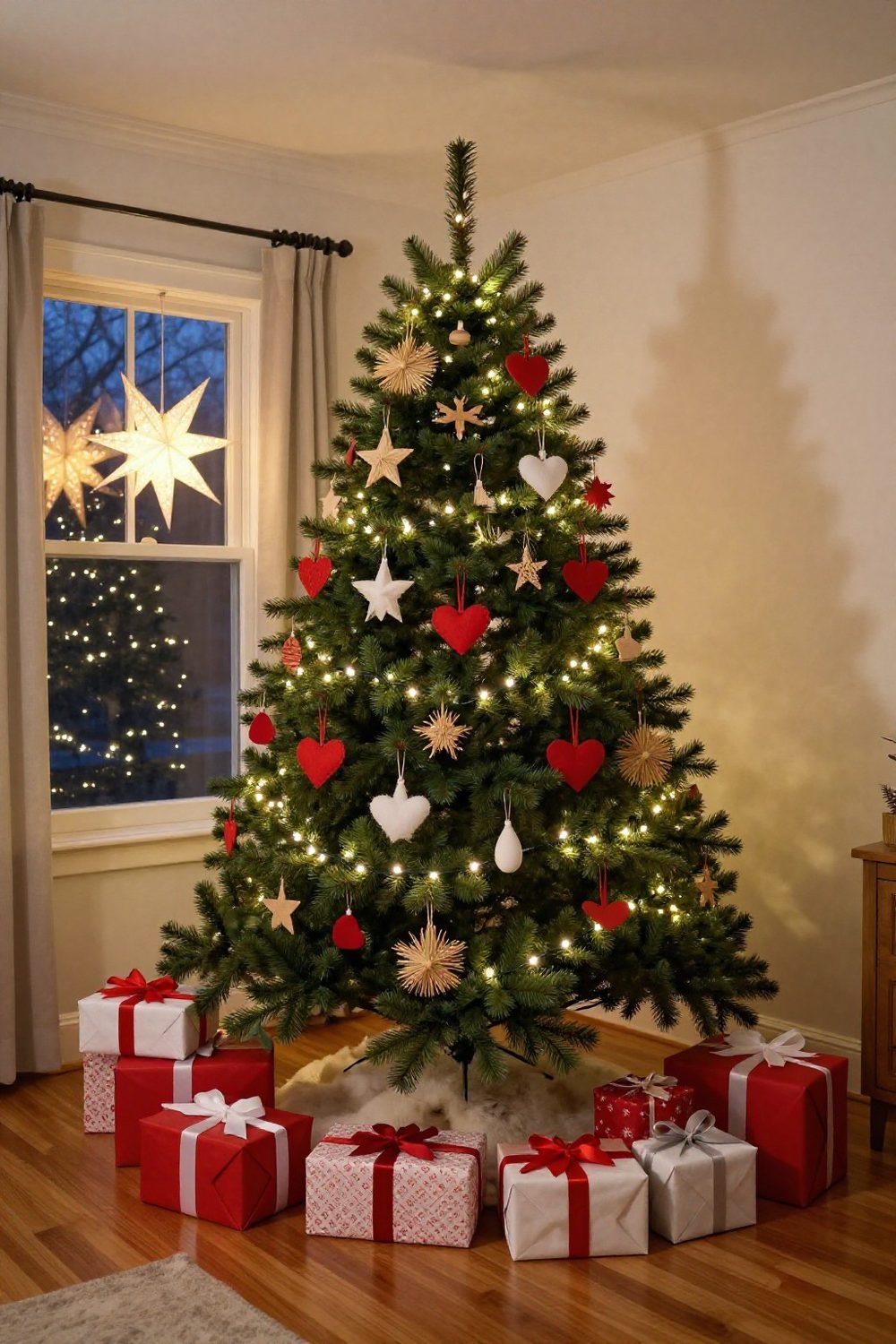
9. Scandinavian red and white
Straw stars, red and white felt hearts and simple wooden ornaments give the Nordic tree its handmade warmth. Keep the lights warm white and the decorations sparse enough that the green still shows.
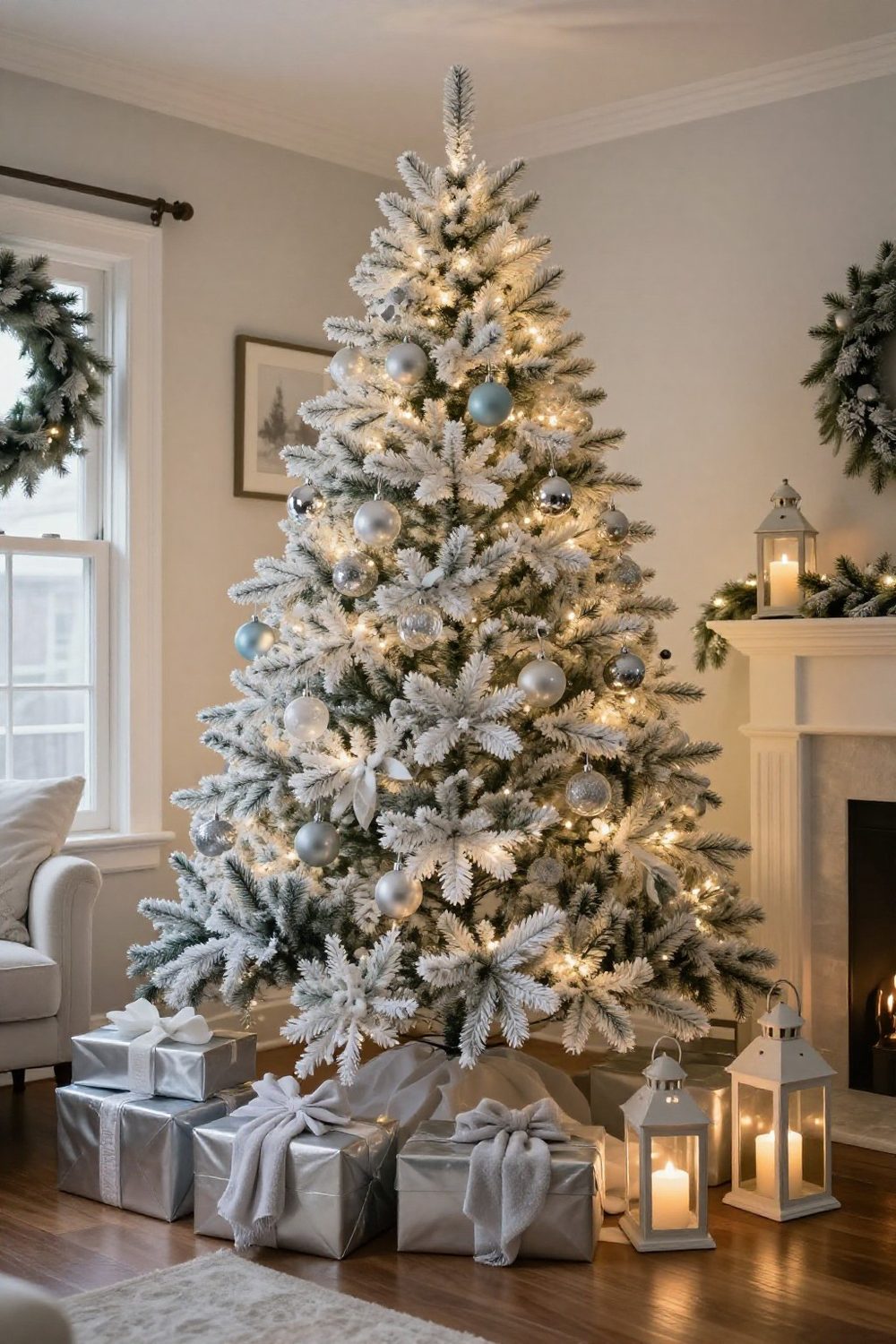
10. A flocked tree in silver and blue
A flocked tree already supplies the "snow," so the ornaments can stay cool and quiet — silver, pale blue and clear glass. Warm white lights stop the palette from feeling cold.
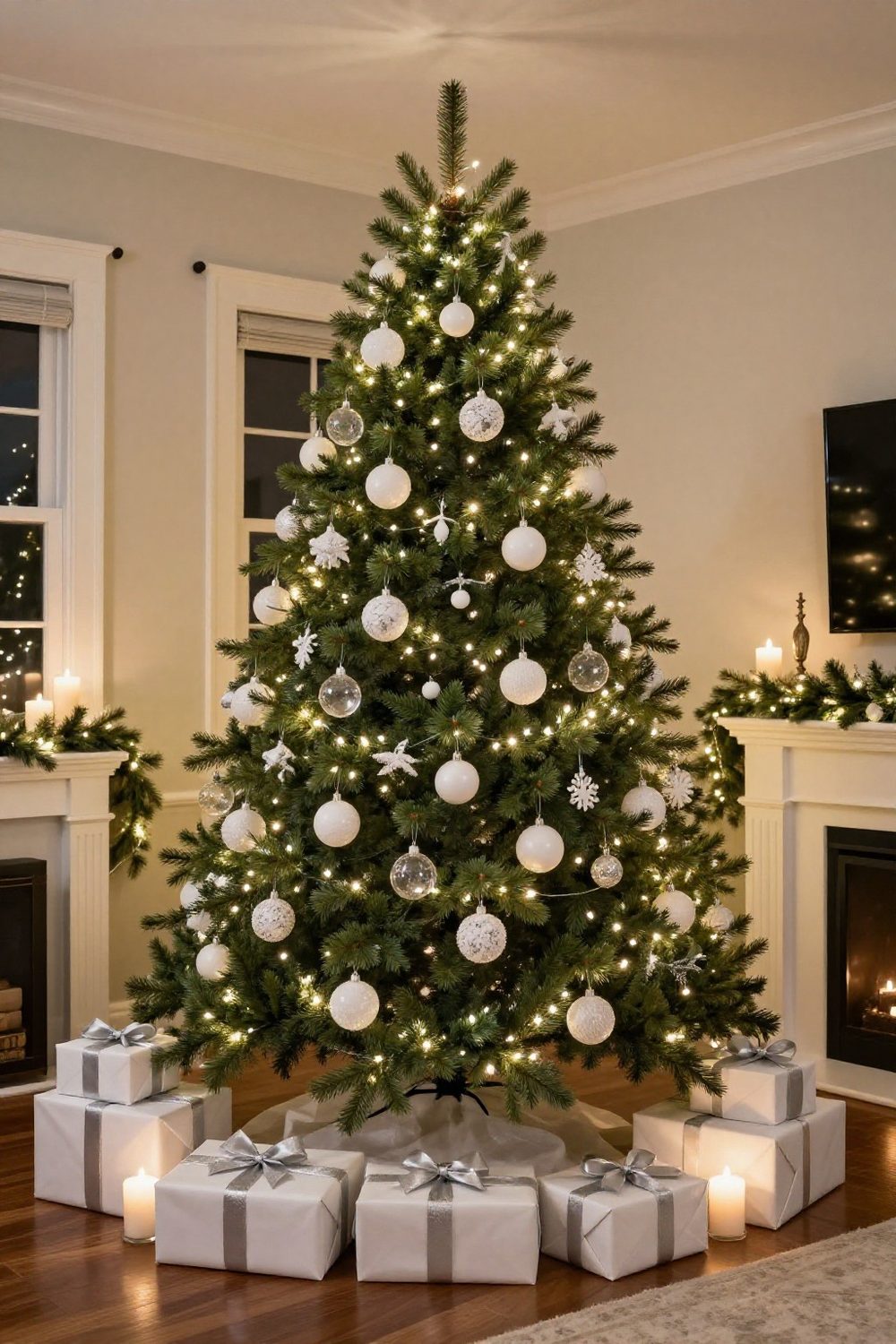
11. All-white ornaments on a green tree
A monochrome scheme on a natural green tree is one of the simplest ways to look designed: white, frosted and clear glass ornaments only. The green does the color work.
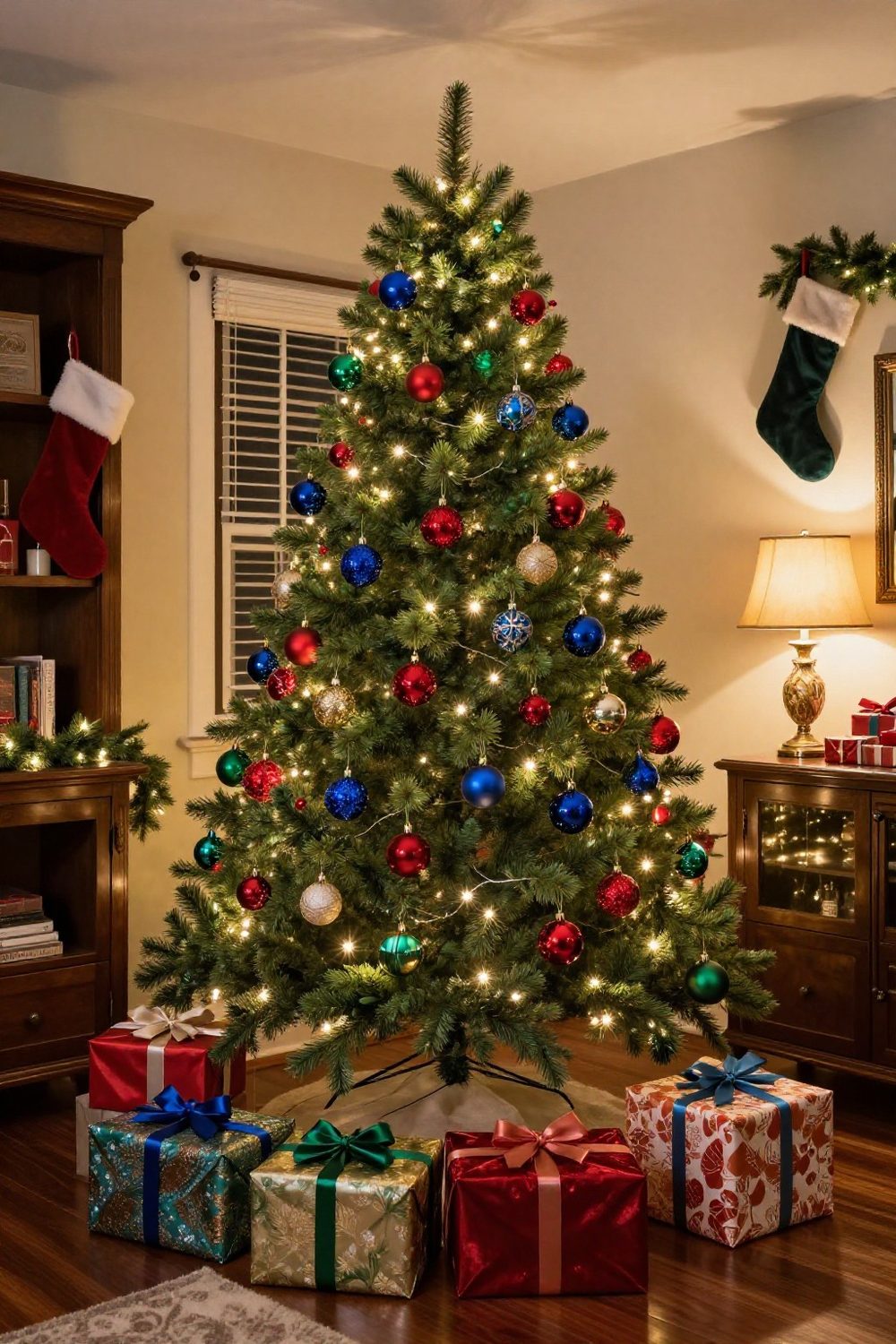
12. Jewel tones
Emerald, sapphire and ruby ornaments with gold accents feel rich and festive in a living room with dark wood or velvet. Keep each jewel color in roughly equal amounts so none takes over.
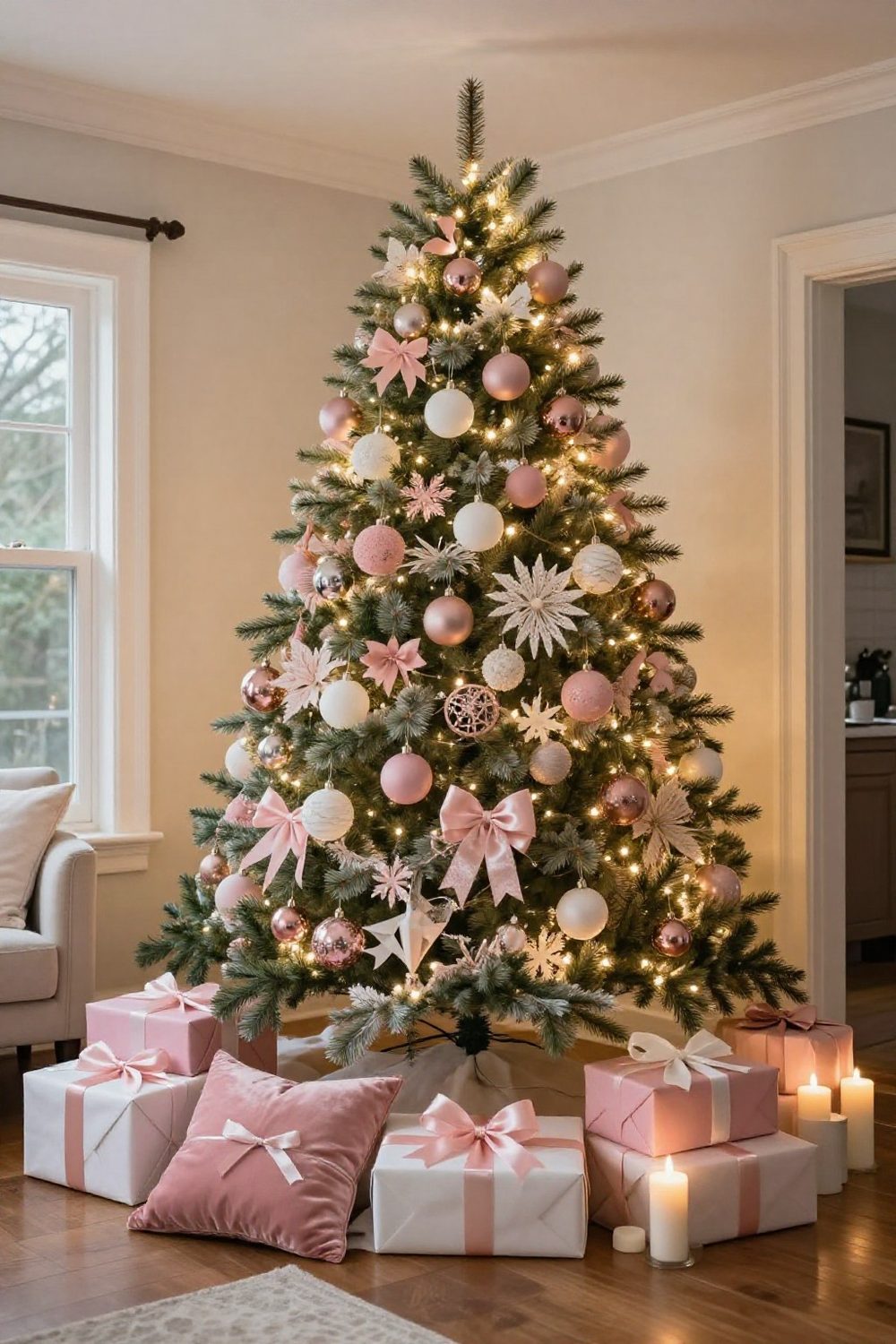
13. Blush pink and rose gold
Pink trees work best in muted shades — blush, dusty rose, rose gold — rather than bright candy pink. Add white and clear ornaments so the pink reads as a palette, not a novelty.
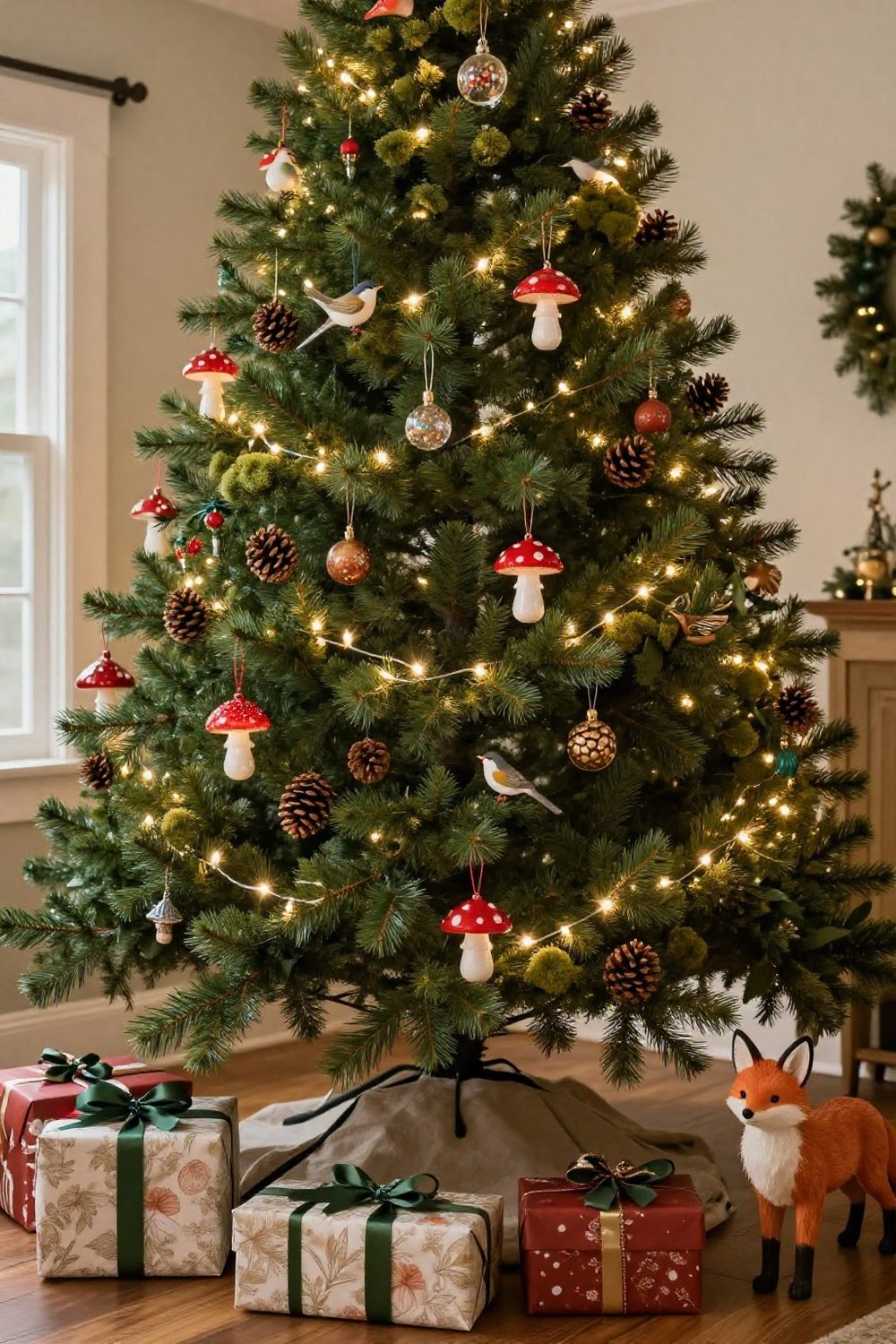
14. A woodland tree
Clip-on birds, glass mushrooms, pinecones and bits of moss turn the tree into a small forest. Clip-on ornaments sit on top of the branches, so they stay visible where hanging ornaments would disappear.
15. The memory tree
A tree of handmade, heirloom and travel ornaments is rarely color-coordinated, and doesn't need to be. Give it unity with lights and one ribbon color, and let the ornaments tell the story.
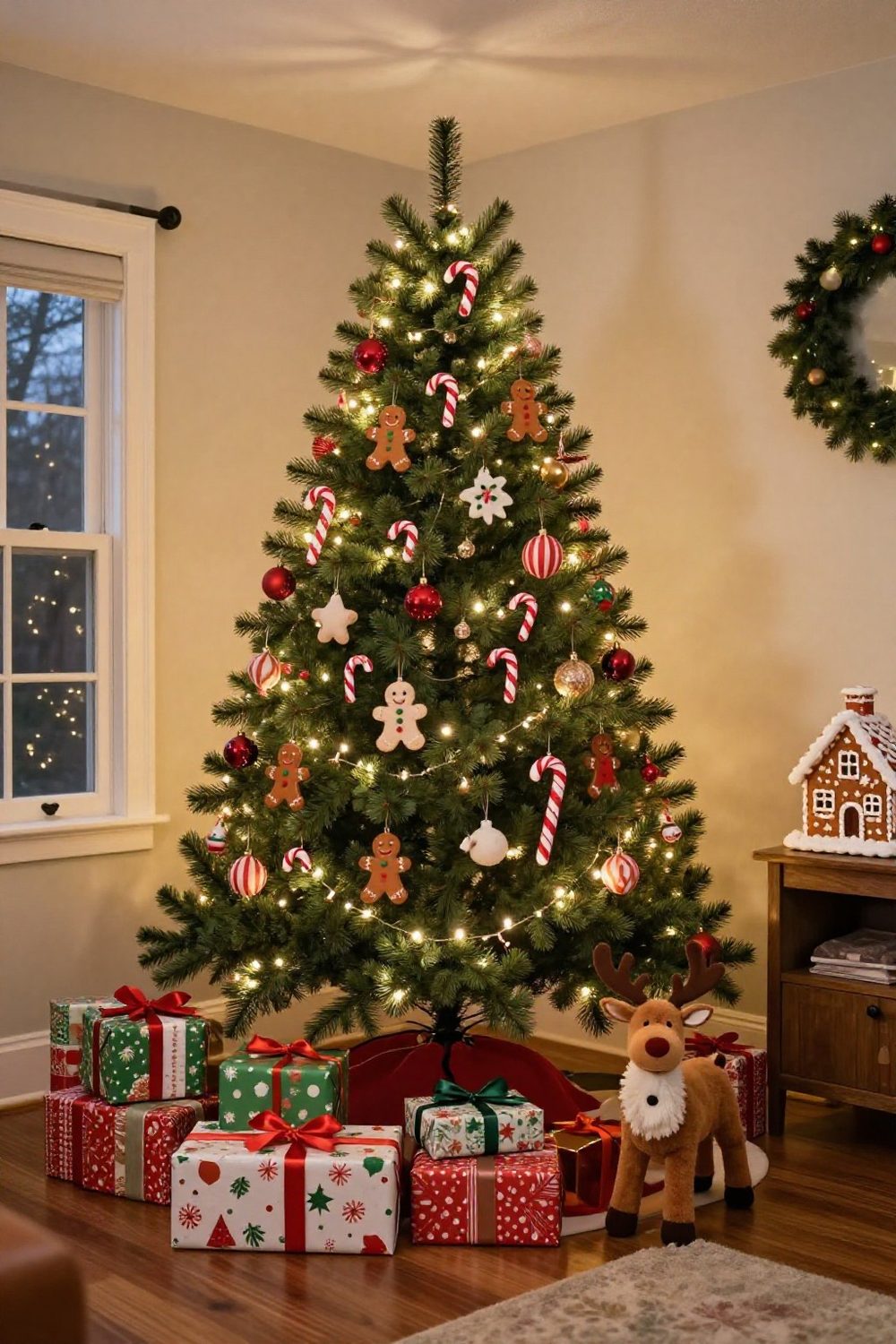
16. Candy canes and gingerbread for the kids
Candy canes, felt gingerbread figures and soft ornaments make a cheerful tree children can help decorate. Use felt or wooden versions of food ornaments on the lower branches — real treats attract pets.
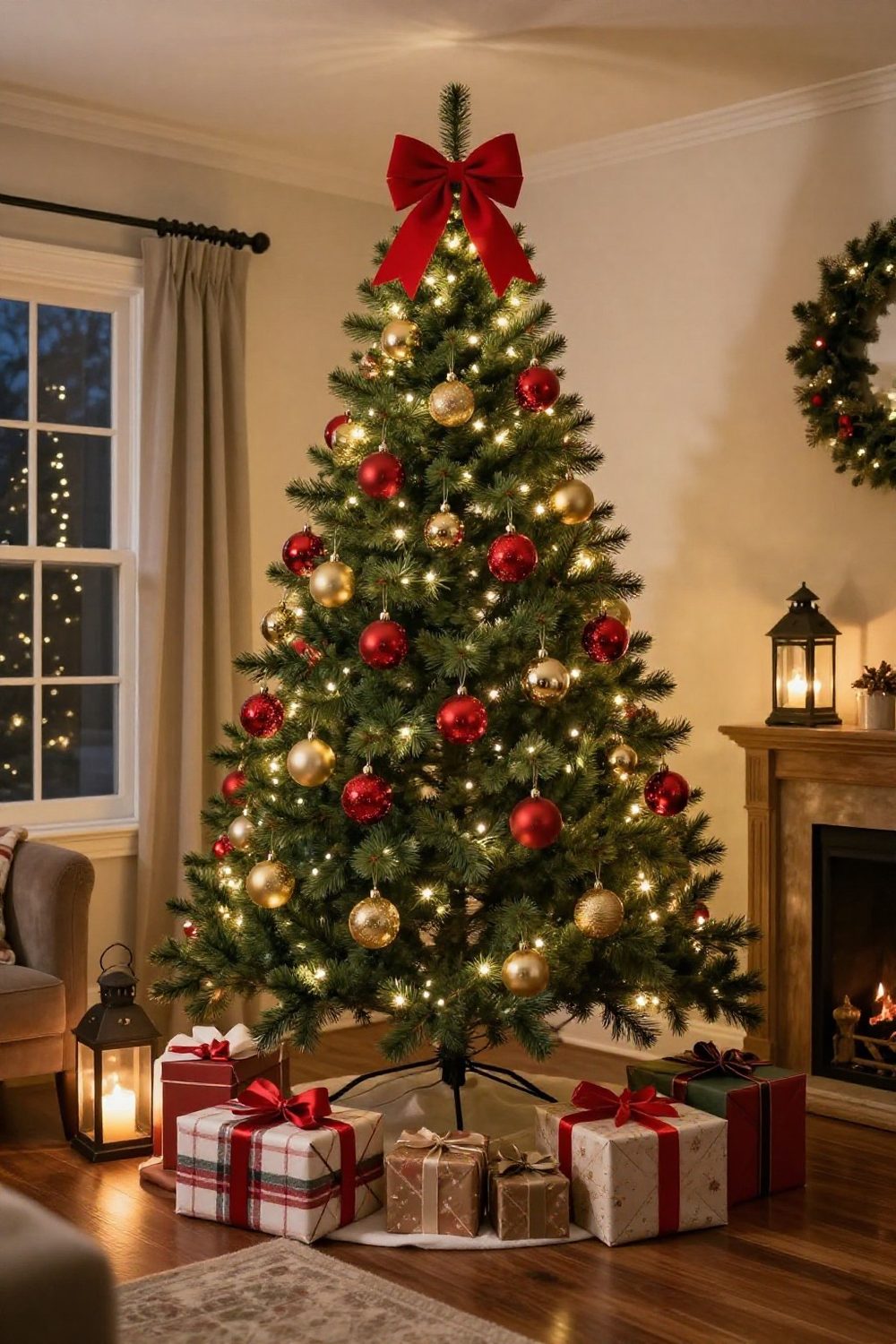
17. Oversized ornaments on a small tree
A handful of extra-large baubles on a small tree is a scale trick: fewer, bigger pieces make a 4–5 ft tree look generous rather than undersized.
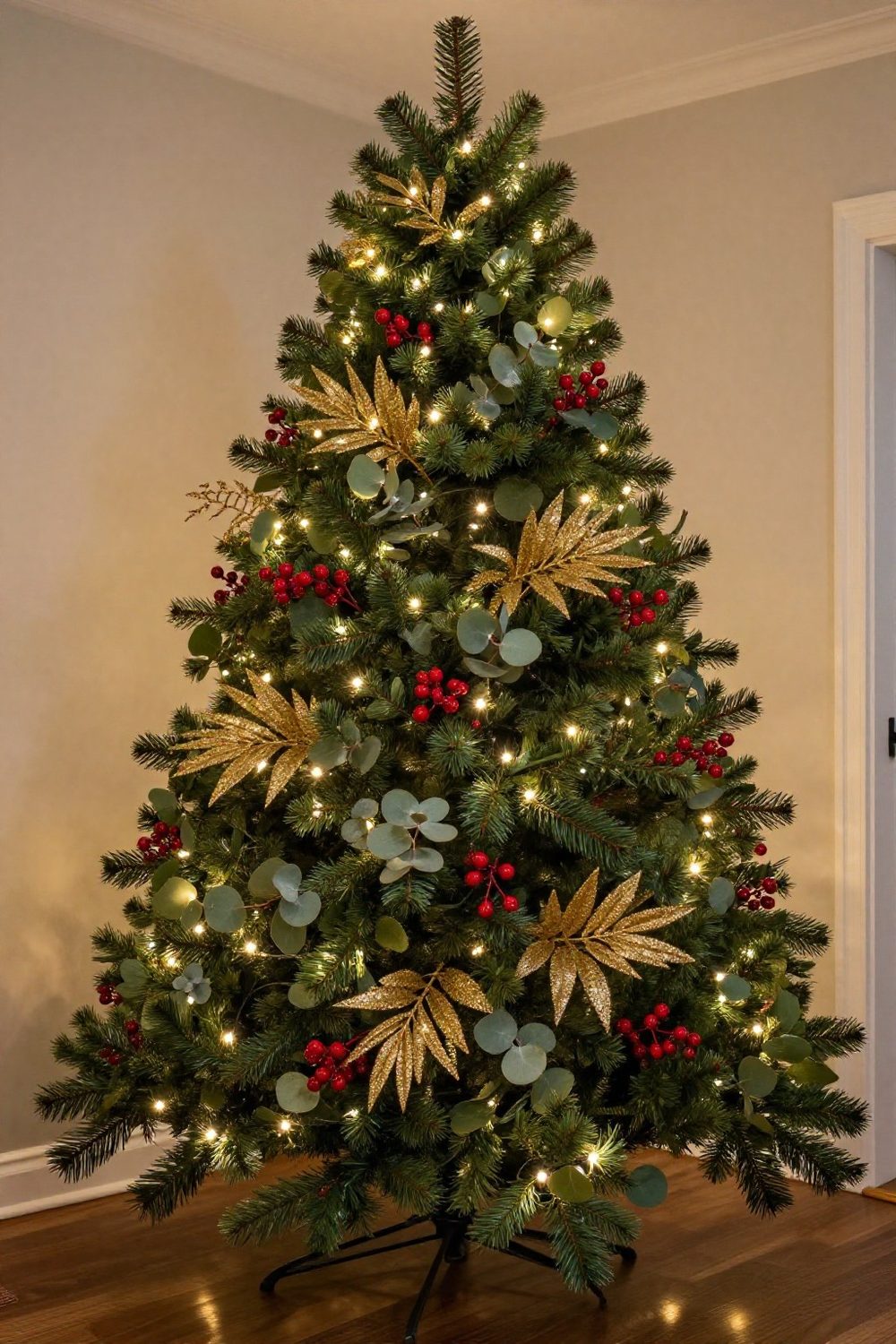
18. Picks and florals
Berry picks, eucalyptus sprays and glittered branches tucked in last fill bare spots and give the silhouette texture. Angle them outward and slightly upward so they read from across the room.
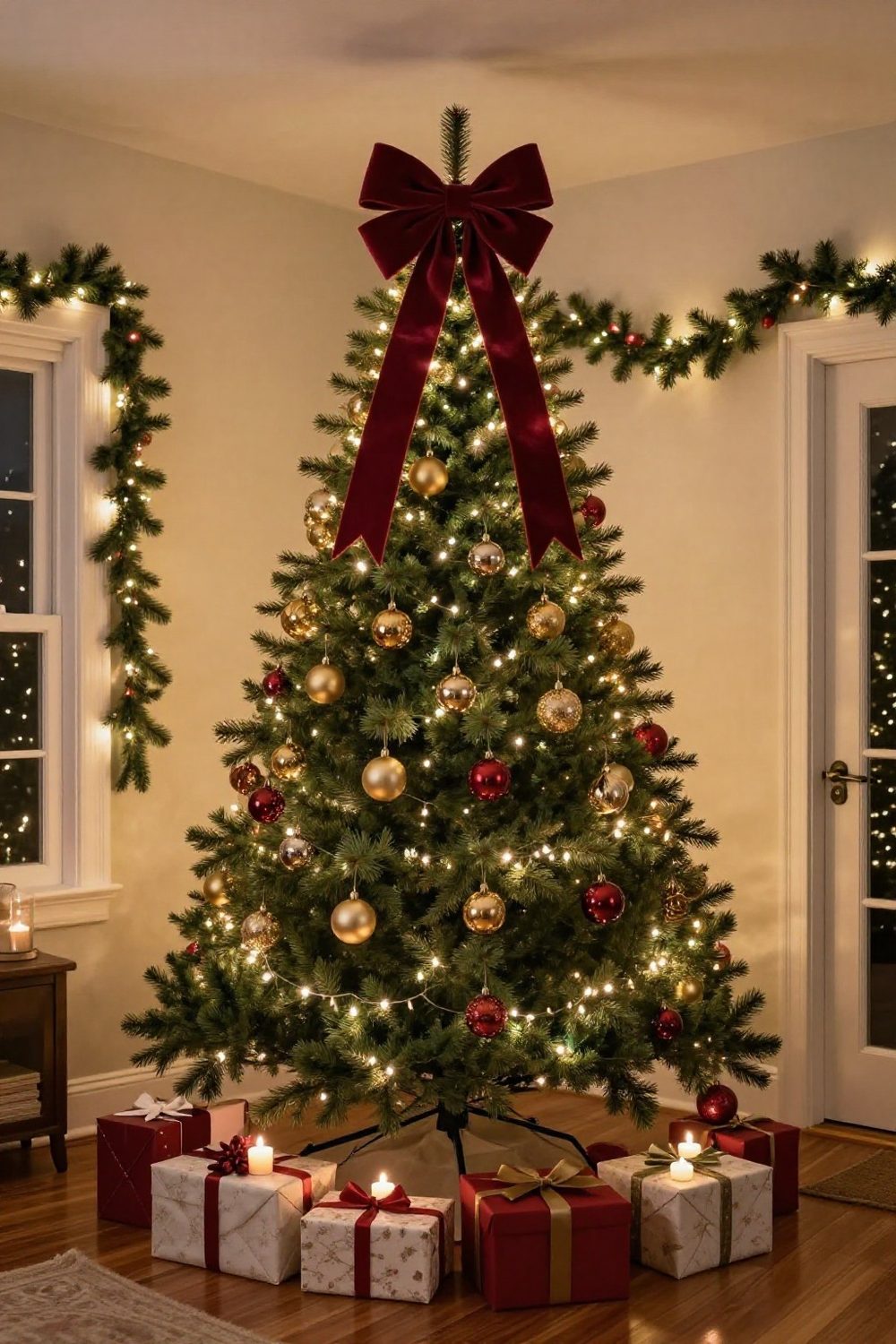
19. A bow instead of a star
A large velvet bow with long tails trailing down the tree is the soft alternative to a star. Let the tails merge with the ribbon cascades for a continuous line from top to bottom.
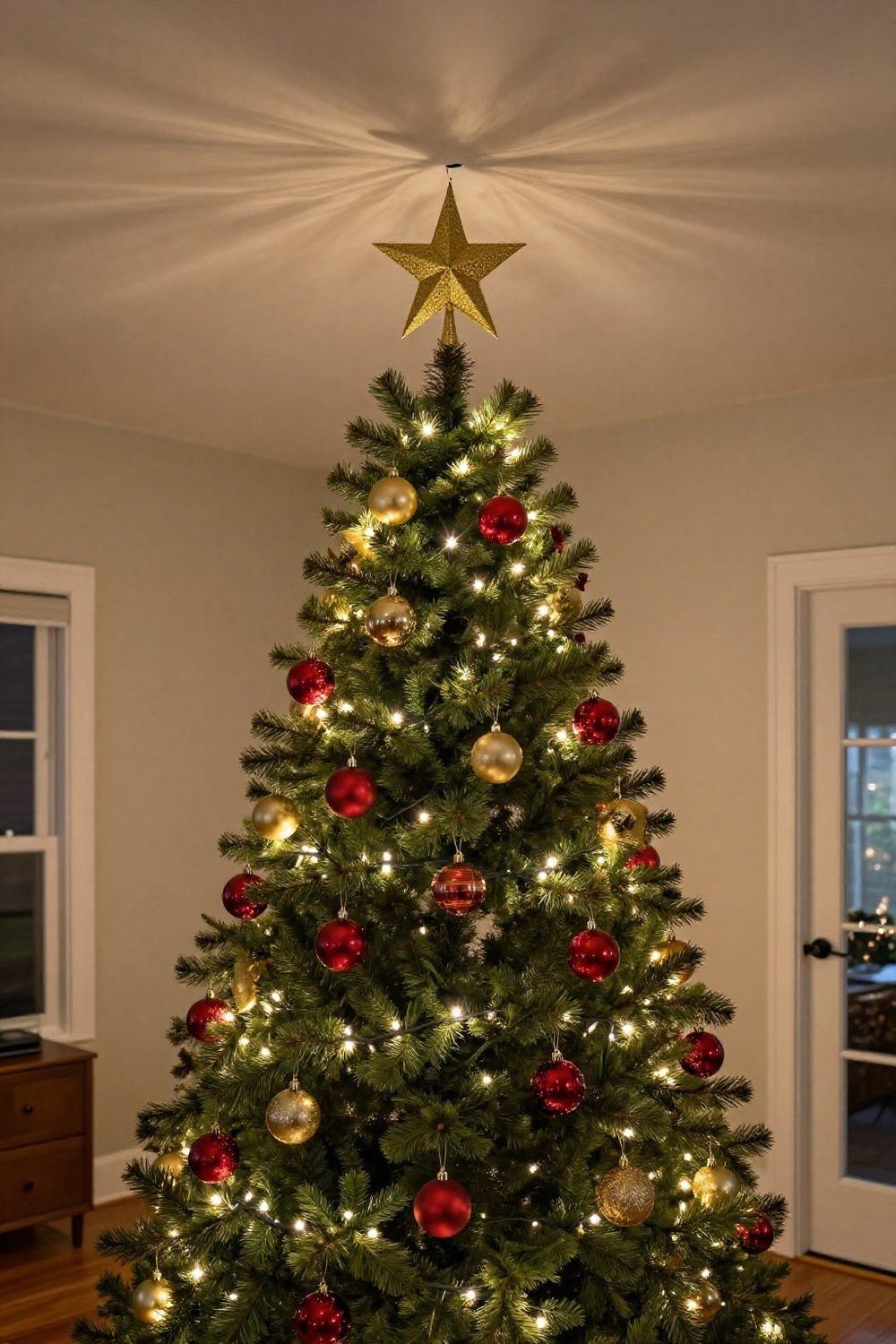
20. A star sized to the tree
A topper that's too small looks like an afterthought. Choose a star roughly in proportion to the tree's height, and leave at least 6 in between its tip and the ceiling.
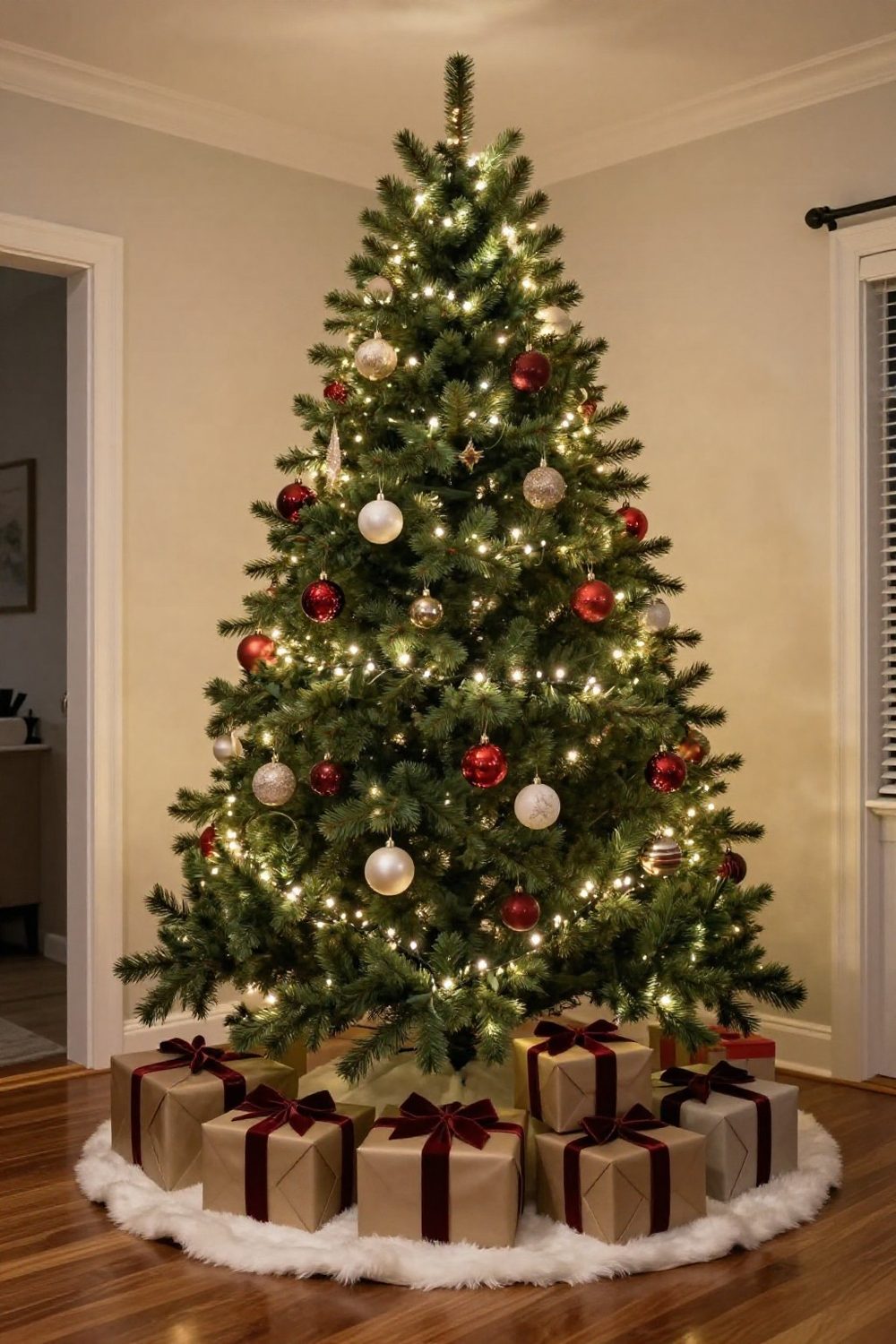
21. A tree skirt with texture
A faux fur or knit skirt finishes the base and hides the stand. Choose a skirt diameter close to the width of the lowest branches so it reads as part of the tree, not a rug beneath it.
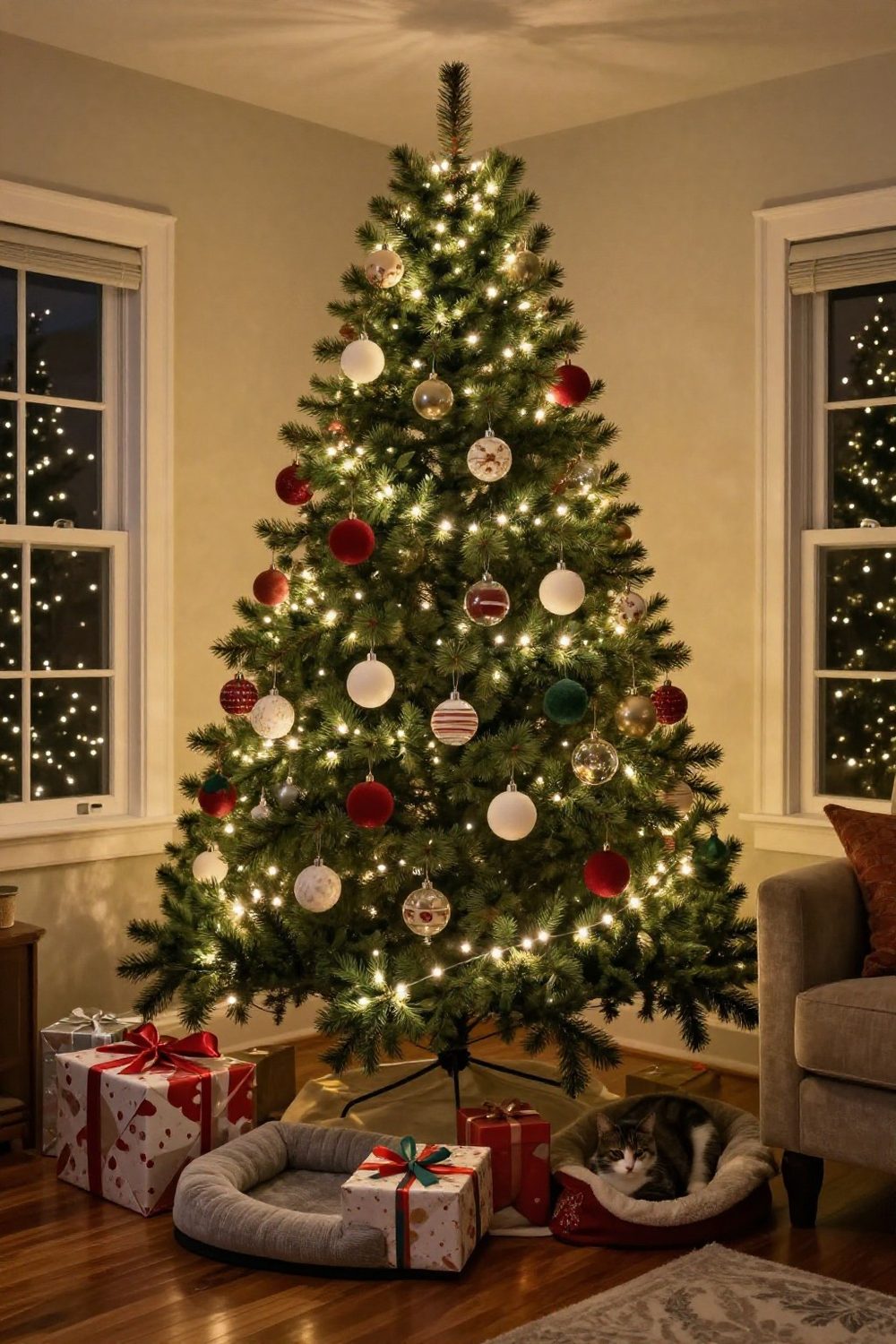
22. A pet-proof bottom third
Keep the lowest third of the tree to shatterproof ornaments attached securely, and move glass and anything dangling higher up. The tree looks the same from the sofa — and survives the cat.
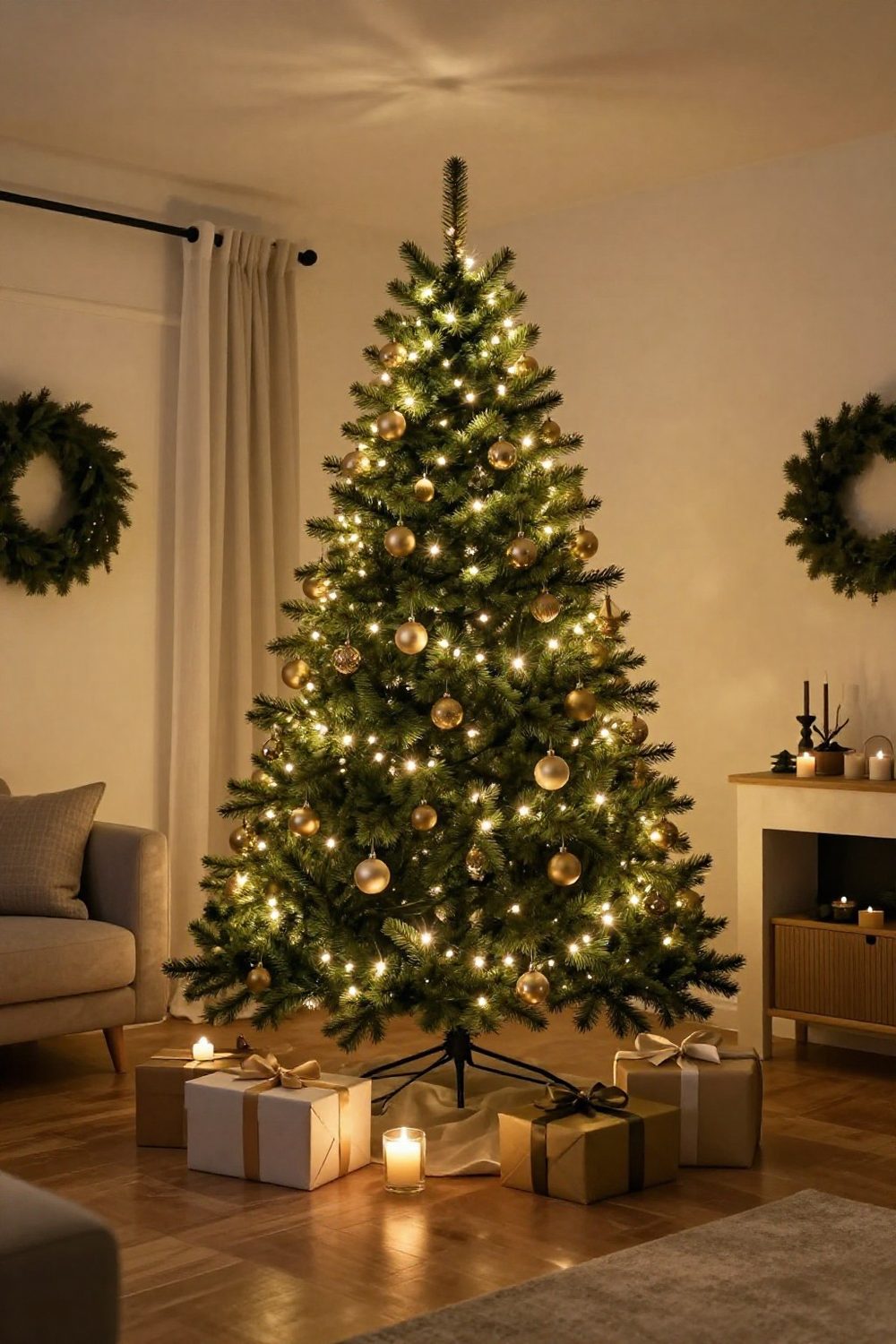
23. The minimal pencil tree
A slim pencil tree with warm lights and a dozen ornaments in one metal is a modern take that fits apartments. Minimal trees need perfect lighting, since there's little else to look at.
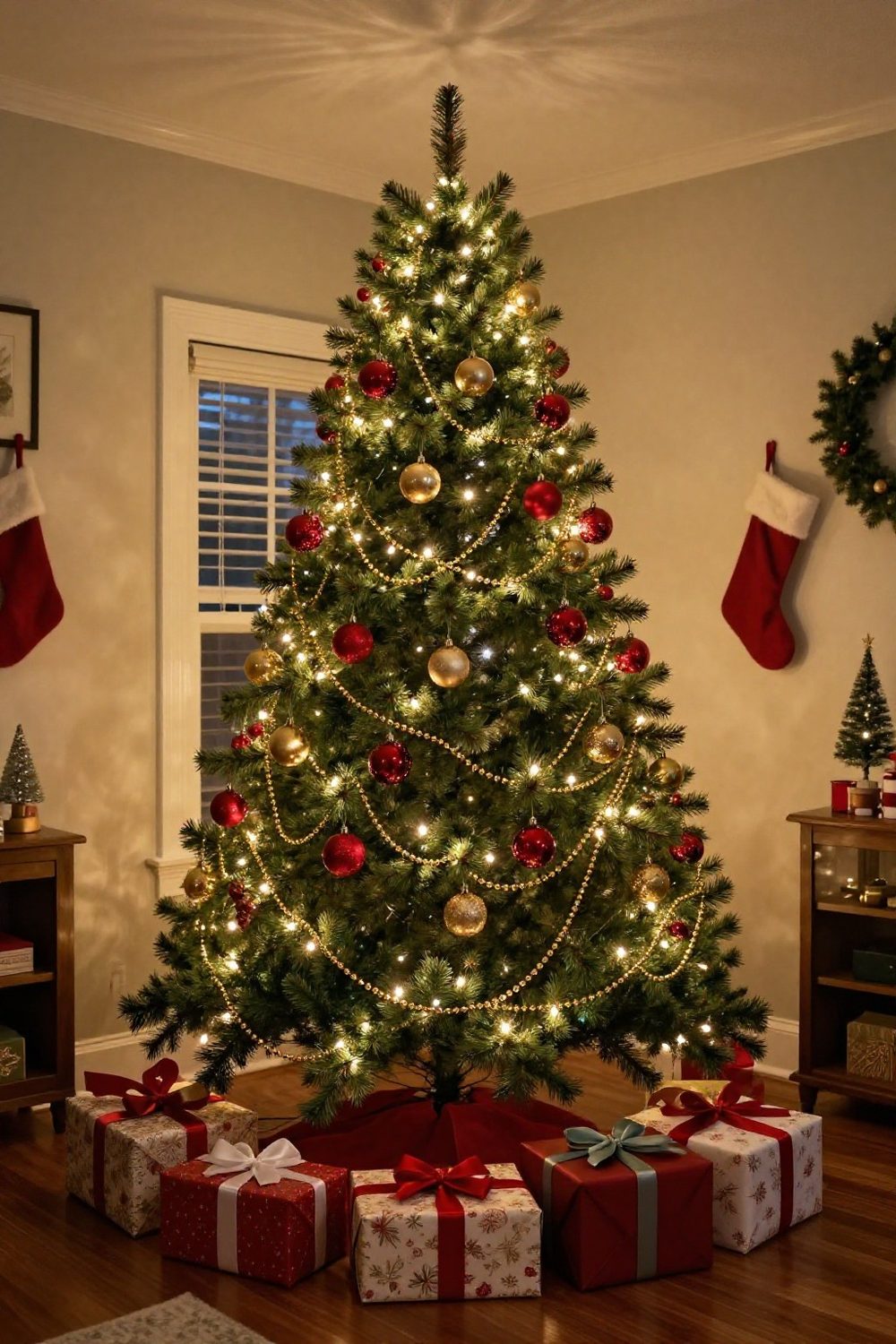
24. Bead garland swags
Instead of a spiral, drape bead garland in shallow swags from branch tip to branch tip. Swags look traditional and catch the light from every angle.
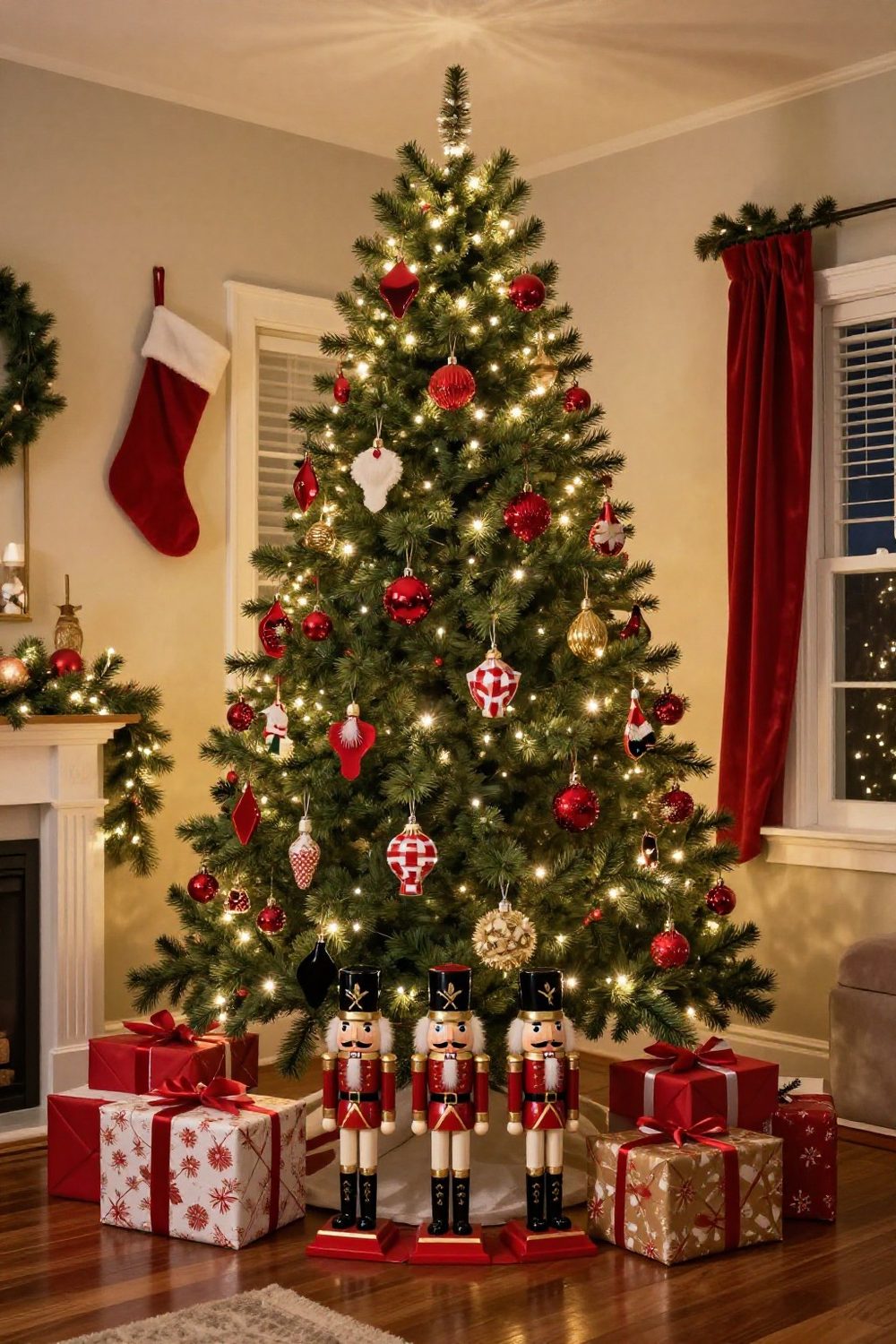
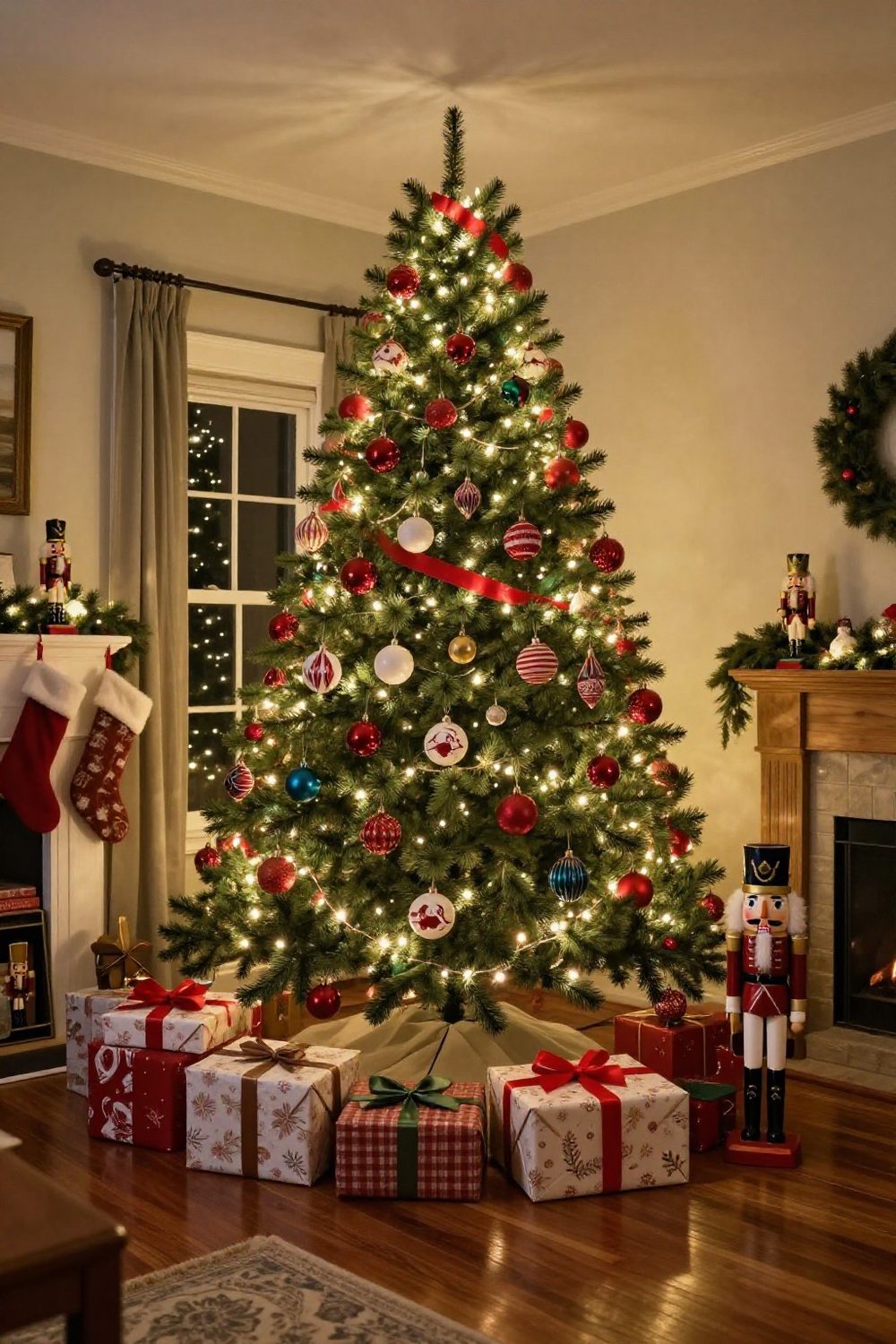
25. A nutcracker theme
Nutcracker ornaments in red, black and gold, with a few soldiers standing at the base, make a classic theme tree that feels like a scene from the ballet. Repeat the palette in the ribbon to tie it together.
How to decorate a tree in one evening
- Fluff every branch on an artificial tree — it's tedious, and it's the difference between a full tree and a flat one.
- Lights on, switched on, from trunk to tip along each branch.
- Topper, then ribbon or garland.
- Large ornaments deep inside, then medium and small on the tips, working in a zigzag so colors don't line up in rows.
- Picks last, then step back to the far side of the room and fill the darkest gaps.
Common Christmas tree decorating mistakes
- Too few lights — the most common reason a tree looks flat; aim for about 100 per foot.
- Ornaments only on the surface — tuck larger ones inside for depth.
- Too many colors — two or three plus a metallic is enough.
- Heavy ornaments on weak tips — they droop and fall; hang them near the trunk.
- Tinsel in a home with cats — a real veterinary emergency risk.
- A topper touching the ceiling — leave about 6 in of air above it.
Final thought
A beautiful tree is built, not scattered: enough light to glow from inside, ribbon with a direction, ornaments in depth rather than on the surface, and a palette disciplined enough to read as one idea. Get the layers right, and almost any of these styles — traditional, elegant, natural or vintage — will look like it was planned.

Sources & principles referenced
- Decorator and retailer rules of thumb: ~100 mini lights per vertical foot; 10–15 standard ornaments per foot; ~9–10 ft of ribbon or garland per foot of tree for a full spiral.
- North Carolina State University / Christmas tree industry sources — Fraser fir popularity, branch firmness and needle retention.
- National Fire Protection Association — choose artificial trees labeled "fire resistant."
- VCA Animal Hospitals — holiday hazards for cats: tinsel and ribbon as linear foreign bodies, breakable ornaments, securing the tree.
- Tree topper clearance — at least 6 in between topper and ceiling.
Images in this article are AI-generated visualizations of each idea, not photographs of finished projects.