
Vintage Christmas decor has a pull that new decorations rarely match: the faded colors of mid-century glass, the bubbling lights of the 1940s, the silver gleam of a 1960s aluminum tree. But old decorations come with old engineering, and a few of them need careful handling. These 25 vintage Christmas decor ideas start with a short history of the American classics — so you know what you're looking at in a thrift store — and the safety rules for decorating with them, then show how to use vintage pieces in a room that still feels like your home rather than a museum.
A short history of the classics
- Shiny Brite ornaments (from 1939). When war threatened German glass imports, importer Max Eckardt worked with Corning Glass, which adapted its light-bulb ribbon machine to blow ornaments. The first machine-made, lacquered Shiny Brite ornaments shipped to Woolworth's in December 1939; during the war years, silvering was cut back and ornaments were often clear glass with thin stripes.
- Bubble lights (from 1946). Invented in the late 1930s and licensed to the NOMA Electric Corporation, bubble lights reached stores after the war, in 1946. The tubes contain a liquid with a very low boiling point that bubbles when the bulb warms it.
- Aluminum trees (from 1959). The Aluminum Specialty Company of Manitowoc, Wisconsin, sold more than a million "Evergleam" aluminum trees between 1959 and the end of the 1960s. They were lit with a rotating color wheel, because electric lights on conductive aluminum branches were dangerous.
Vintage safety: what not to use
- Never put string lights on an aluminum tree. The branches conduct electricity. Use a color wheel or spotlight from a distance, as the originals did.
- Retire old light sets. The U.S. Consumer Product Safety Commission advises using newer lights with thicker wiring and built-in safety fuses, and discarding sets with cracked sockets, frayed wires or loose connections. Display vintage strings unplugged, or choose modern reproductions.
- Handle old tinsel with care. Older tinsel was often made with lead; manufacturers stopped producing and importing lead tinsel in the U.S. after January 1, 1972, at the FDA's urging. Keep pre-1972 tinsel away from children and pets, and wash hands after handling it.
- Bubble lights get warm and contain chemicals. Keep them away from children who might break the glass tube, and don't leave them running unattended.
How to use vintage without a museum look
Vintage pieces look strongest when they're grouped and framed by simple modern basics: thirty glass ornaments in one bowl rather than one per shelf; a vintage ceramic tree on a plain console; old ornaments on a tree lit with warm modern LEDs. Choose one era or one palette — pastel 1950s glass, or 1960s silver and turquoise — and the collection reads as intentional rather than random.
25 vintage Christmas decor ideas — and why each one works

1. A tree of vintage glass ornaments
Mid-century glass ornaments in faded pinks, blues and greens make the most recognizable vintage tree. Use warm modern LED lights so the old glass glows without the fire risk of old wiring.
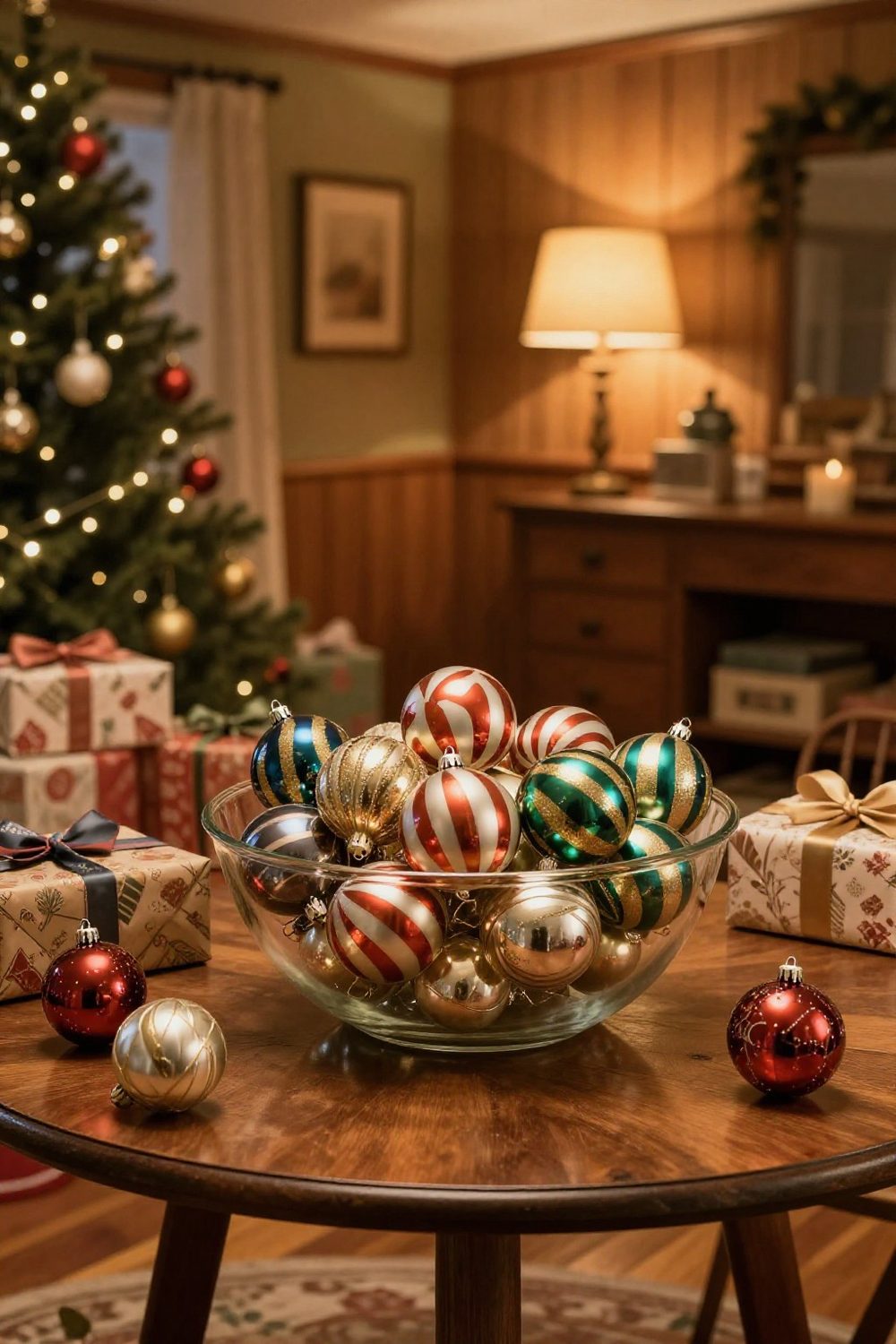
2. A bowl of striped wartime-style ornaments
Clear and striped glass ornaments of the war-era style look beautiful gathered in a glass bowl — and the most fragile pieces stay safe off the tree.

3. An aluminum tree with a color wheel
A silver aluminum tree lit by a color wheel is pure 1960s. Light it the original way — from a distance — and never with string lights on its branches.
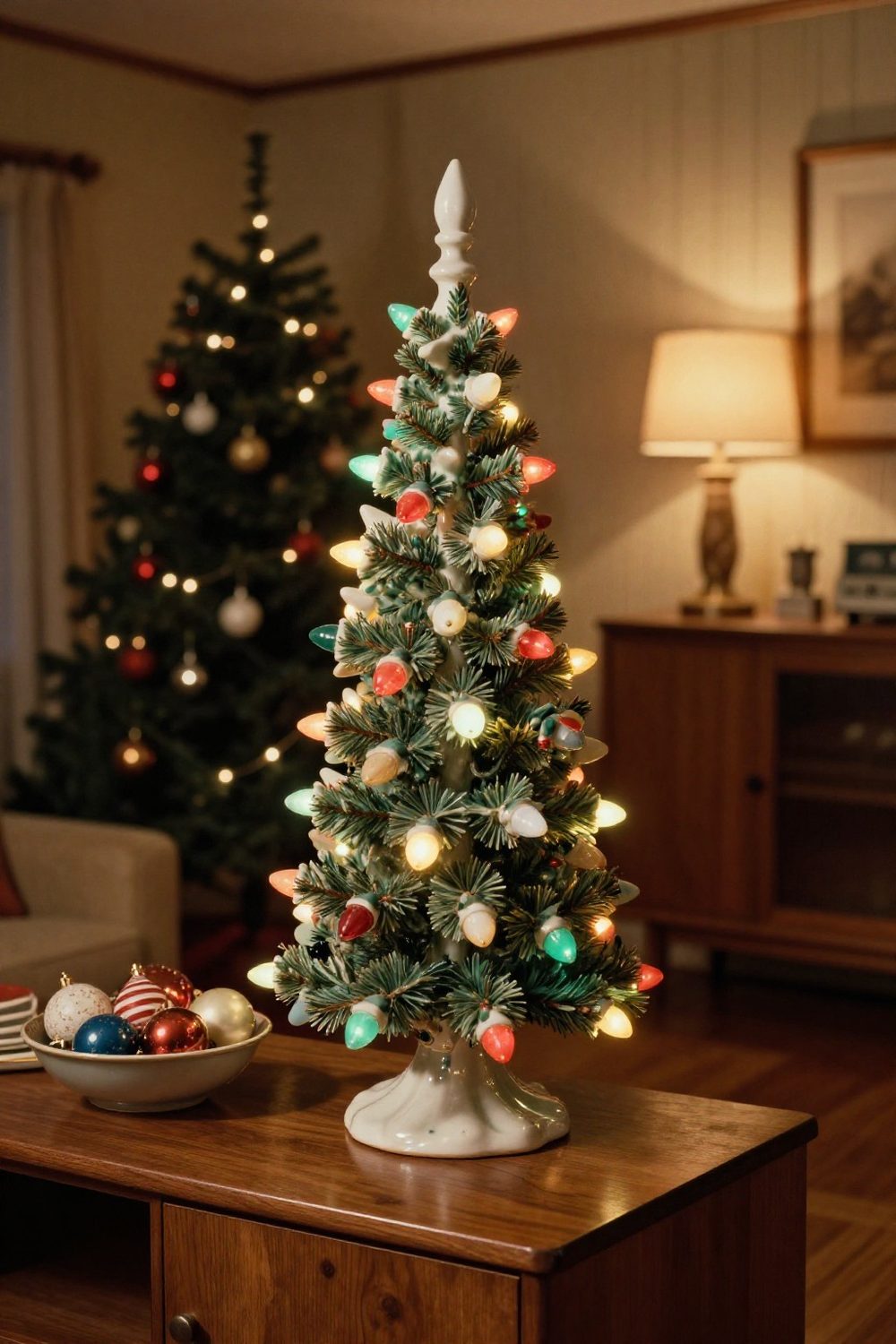
4. A ceramic tree
Ceramic trees with little plastic bulbs were popular hobby-class projects from the 1960s onward. One on a sideboard or kitchen counter is instant nostalgia; use an updated LED base if the wiring is old.
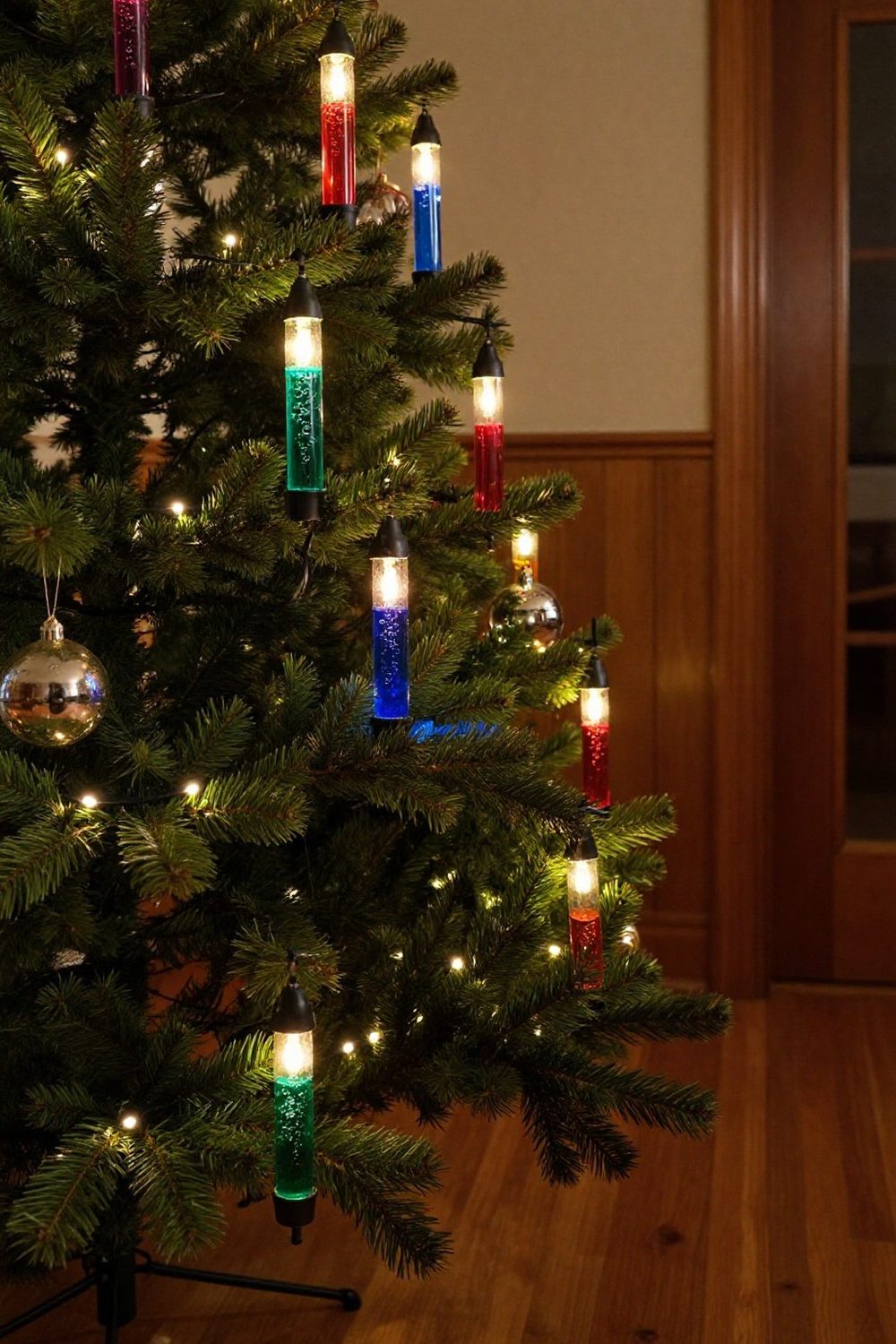
5. Bubble lights
Bubble lights are the sound and motion of a 1940s Christmas. Modern reproductions give the same effect with current safety standards; keep originals for display.
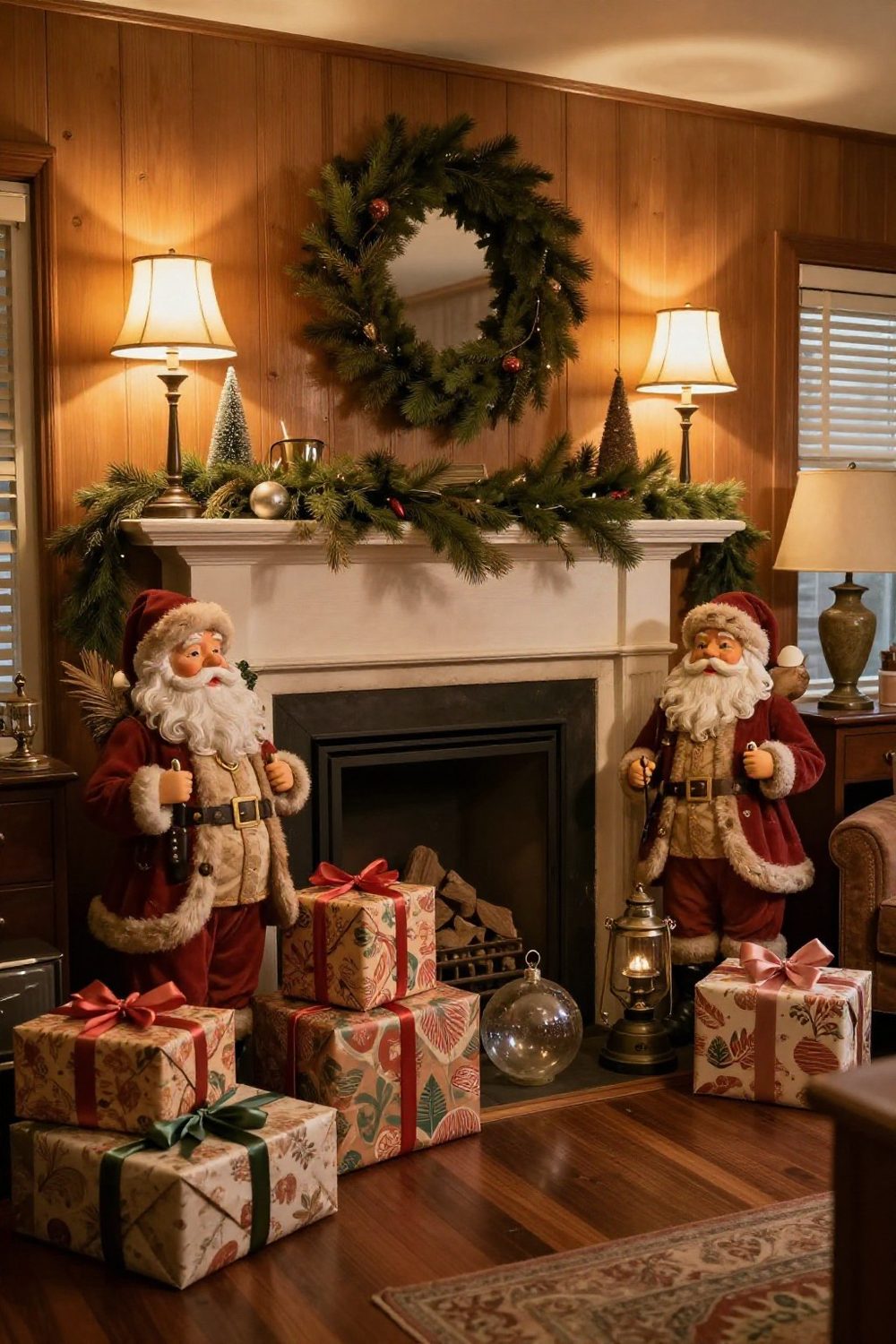
6. A Santa collection on the mantel
Vintage Santa figures in graduated sizes make a charming mantel display. Group them closely; spaced out, small figures look lost.
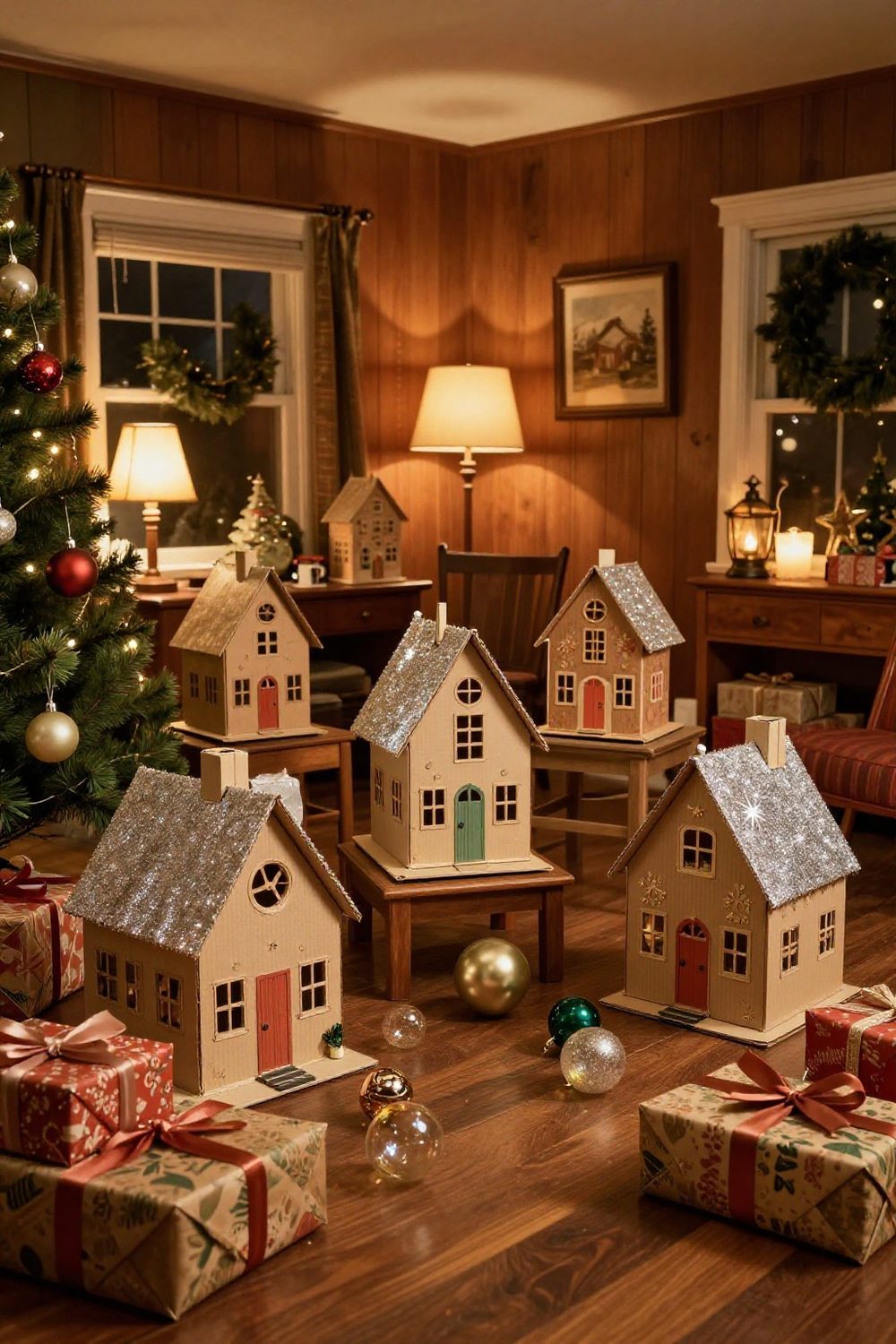
7. A glitter house village
Small cardboard "putz" houses with glitter roofs, set among bottle-brush trees and cotton snow, recreate an early 20th-century village under the tree or on a shelf.
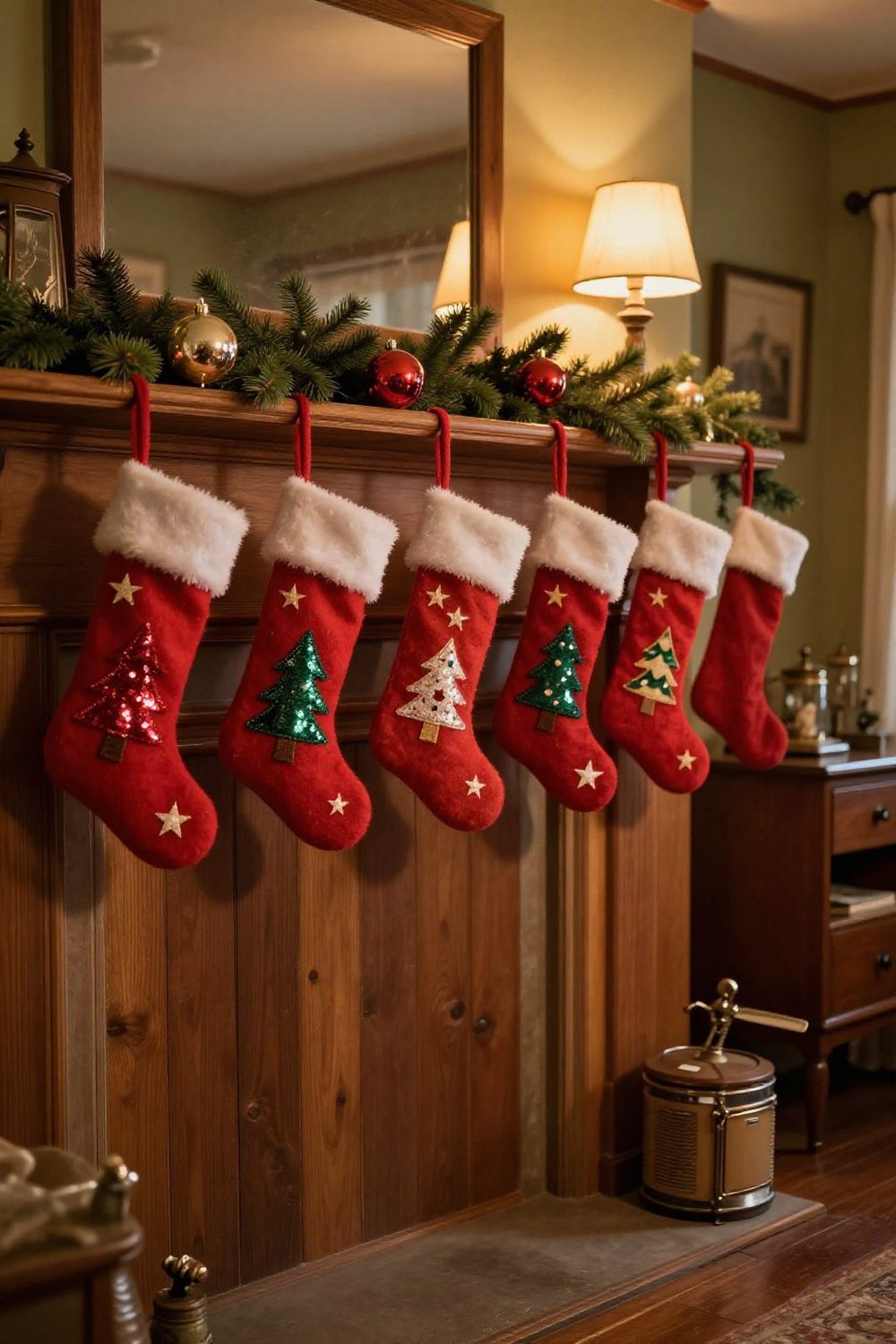
8. Felt stockings from the past
Felt stockings with sequins and appliqué were a mid-century staple. Thrifted or handmade in the same style, they bring color and character to the mantel.

9. Christmas tree dishes
Vintage Christmas china — the green tree pattern is a classic — sets a nostalgic table. Mix with plain white plates if your set is incomplete.
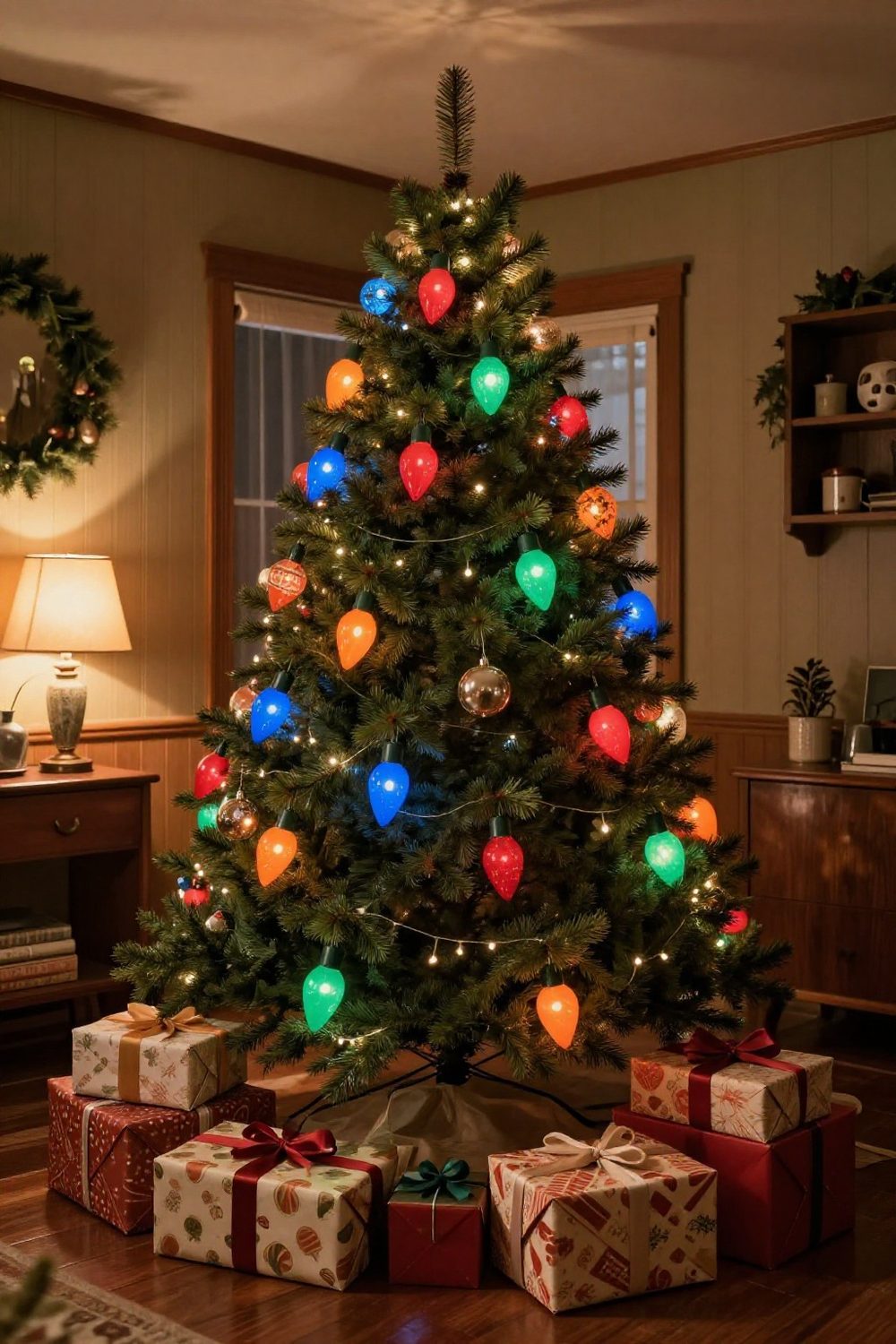
10. Big colored bulbs
Large C9-style colored bulbs in red, blue, green and orange define the 1950s tree. LED versions look the same and run cool.

11. A pastel 1950s palette
Pink, mint and pale blue on a white or flocked tree is the pastel side of mid-century Christmas. Keep everything in pastels for the look to read as a style.

12. Reindeer and sleigh figurines
A vintage sleigh and reindeer set on a shelf or coffee table adds movement to a display. Line them up as if they're about to take off.

13. Old Christmas cards
Antique and mid-century cards, propped in a crate or framed, are inexpensive at flea markets and full of period illustration.
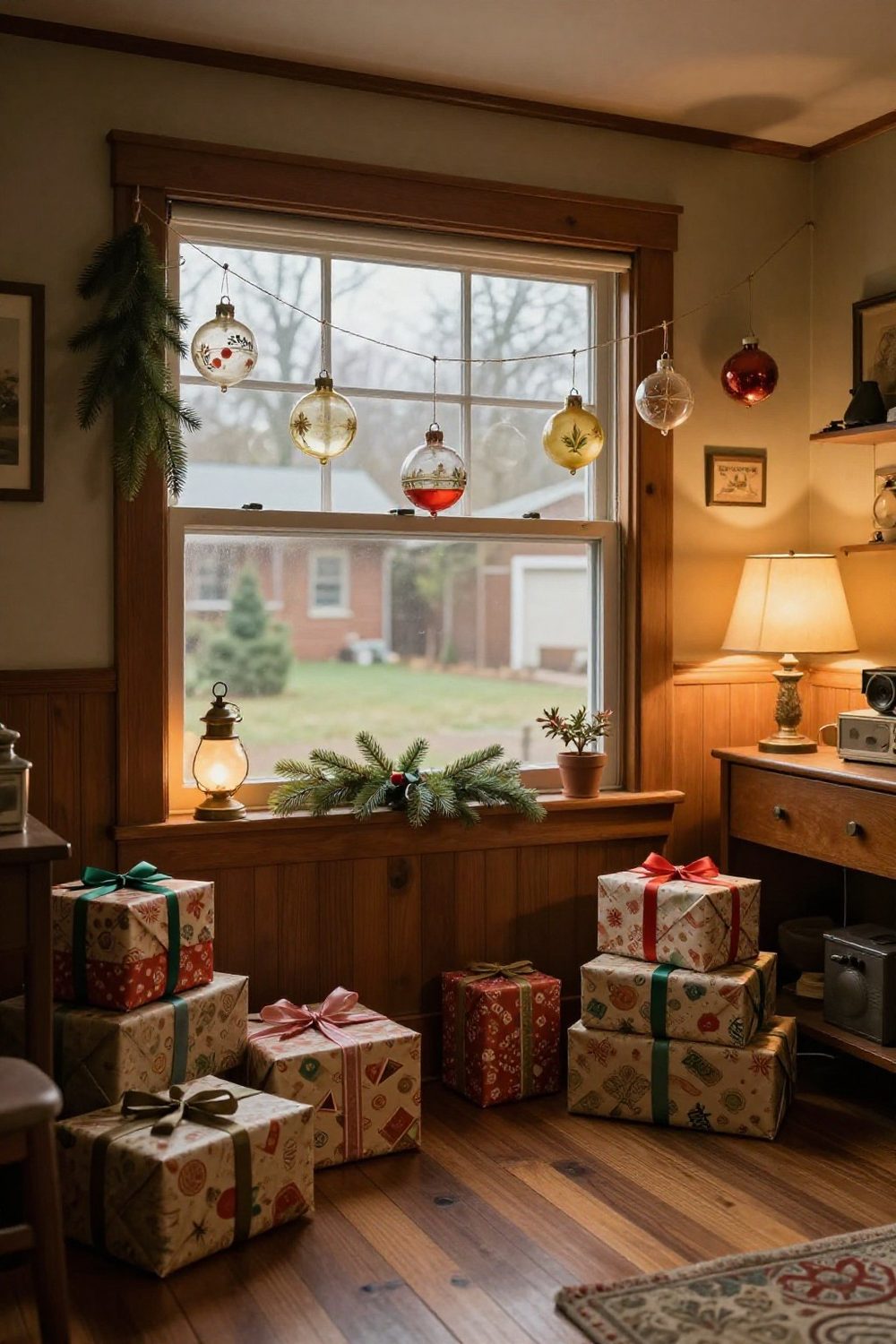
14. Ornaments in the window
Hanging glass ornaments in a sunny window on clear line lets daylight shine through the old glass — a different look from the tree at night.

15. A vintage nativity
An old nativity set — chalkware, wood or ceramic — often carries the most family history of any decoration. Give it a place of its own.
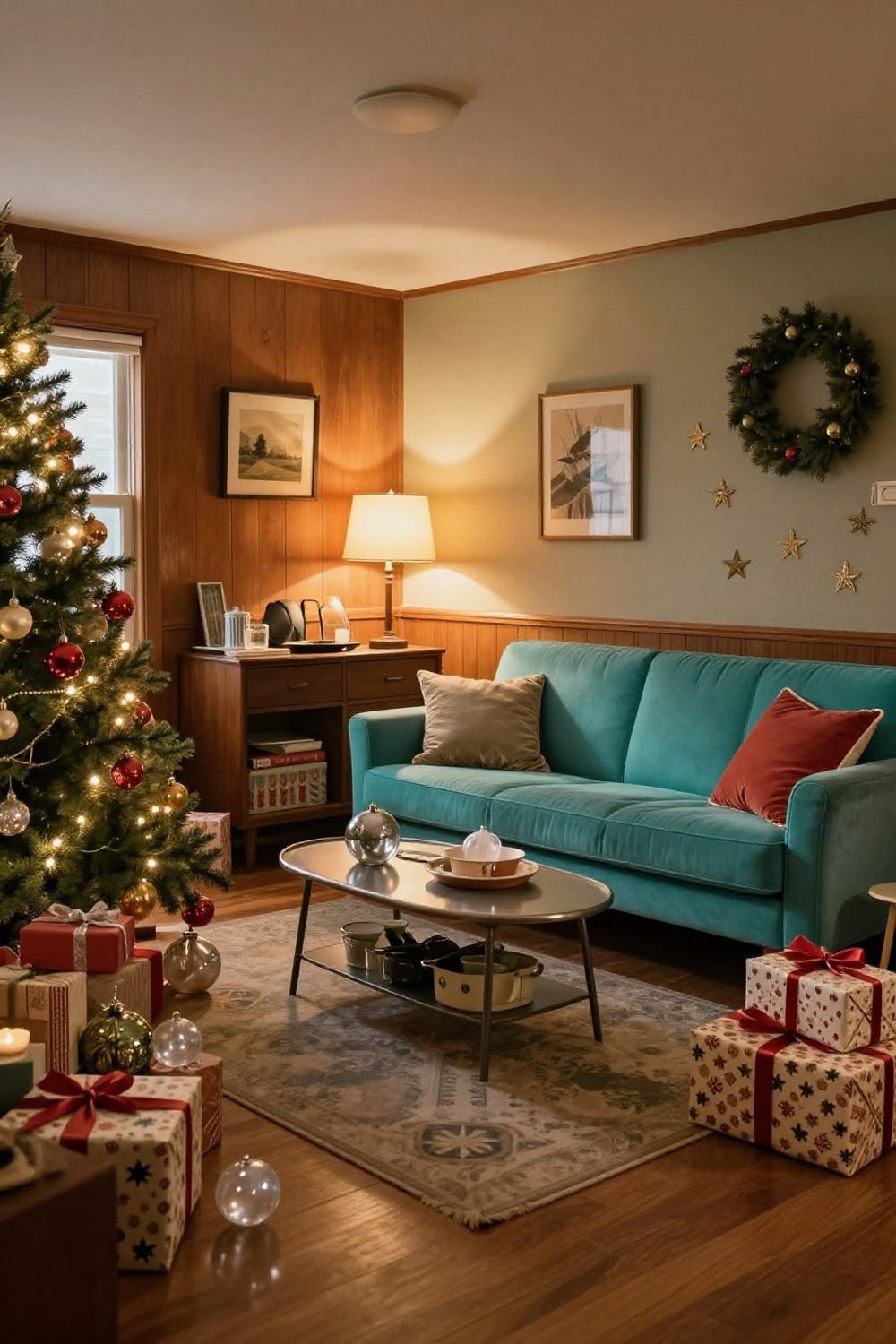
16. Silver and turquoise for a mid-century room
Turquoise, silver and white ornaments suit mid-century modern furniture. It's the palette of the aluminum-tree era, without needing an aluminum tree.

17. A wooden sled
An old wooden sled leaning by the door or fireplace is one of the easiest vintage pieces to find and style.
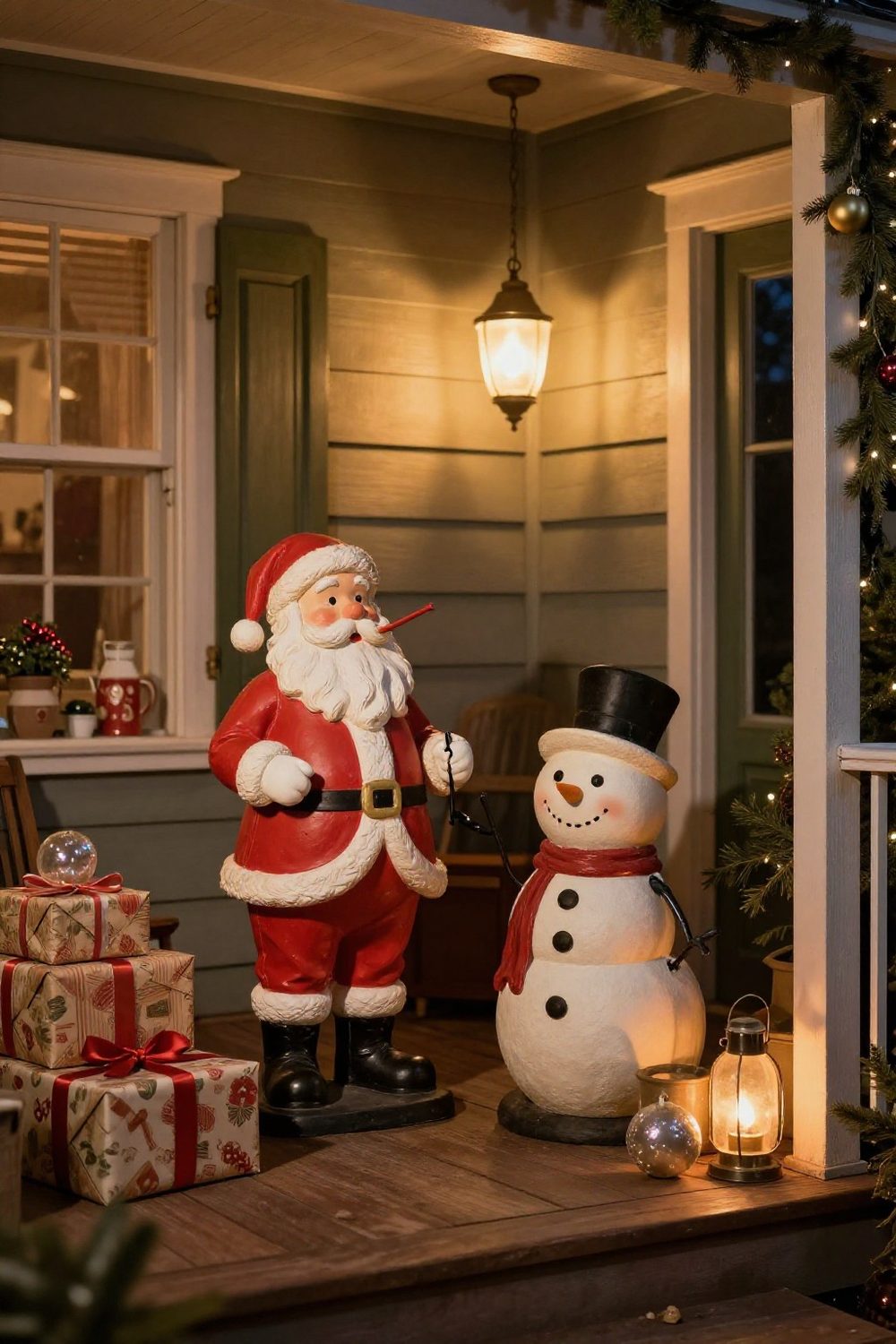
18. Blow molds
Plastic blow-mold Santas and snowmen are the outdoor icons of the 1960s and '70s. Replace any old internal wiring with a modern outdoor-rated LED kit.
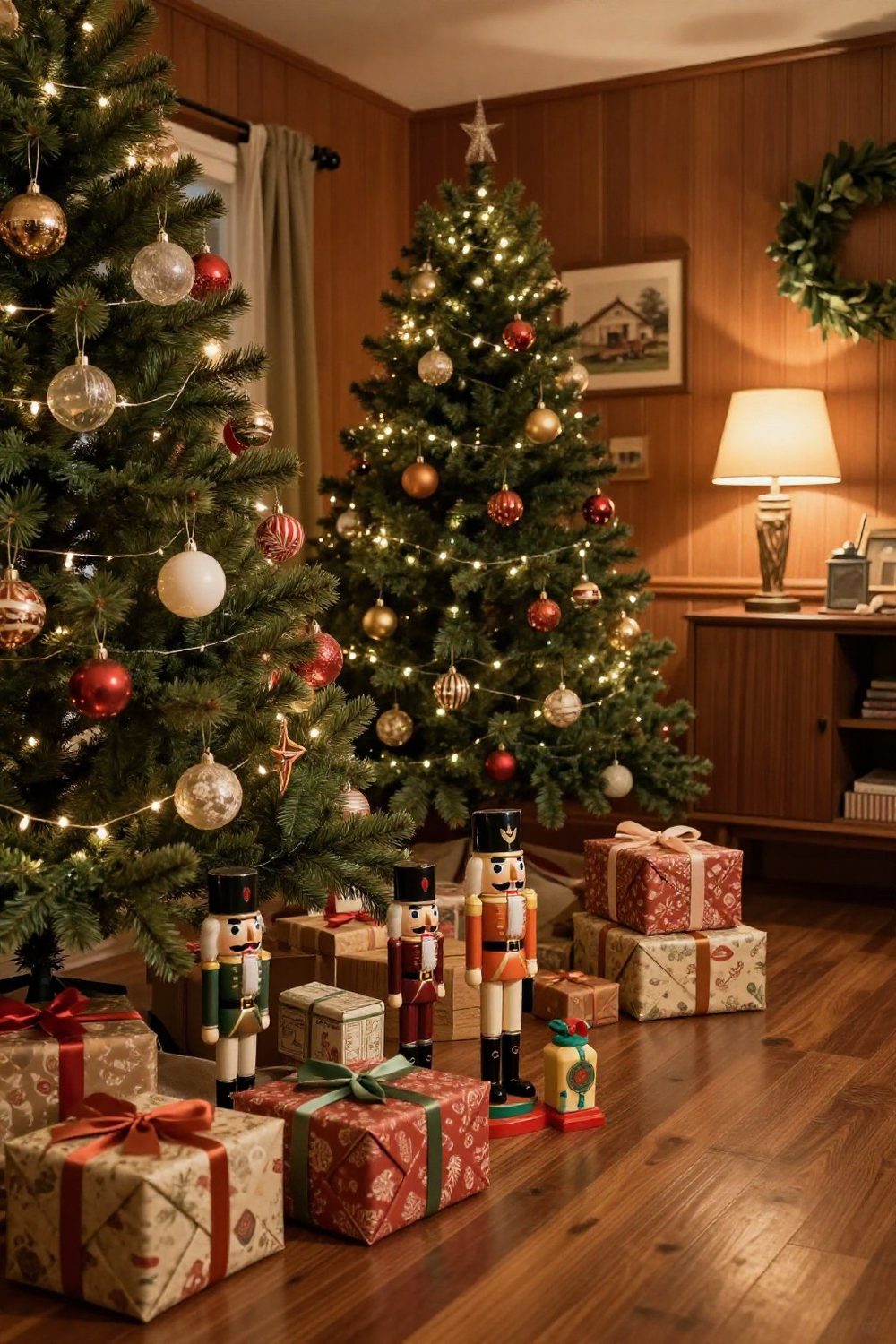
19. Old toys under the tree
Tin toys, wooden soldiers and a vintage train under the tree tell a story of Christmases past. Keep wind-up toys away from small children.

20. A candy dish
A cut-glass or pressed-glass candy dish filled with ribbon candy and peppermints is a vintage detail people actually use.

21. Vintage textiles
An old quilt, a wool blanket or embroidered linens bring warmth and pattern. Textiles are the easiest vintage pieces to live with every day.

22. Brass candlesticks
A collection of mismatched brass candlesticks from thrift stores looks rich grouped together. Use flameless tapers near greenery.
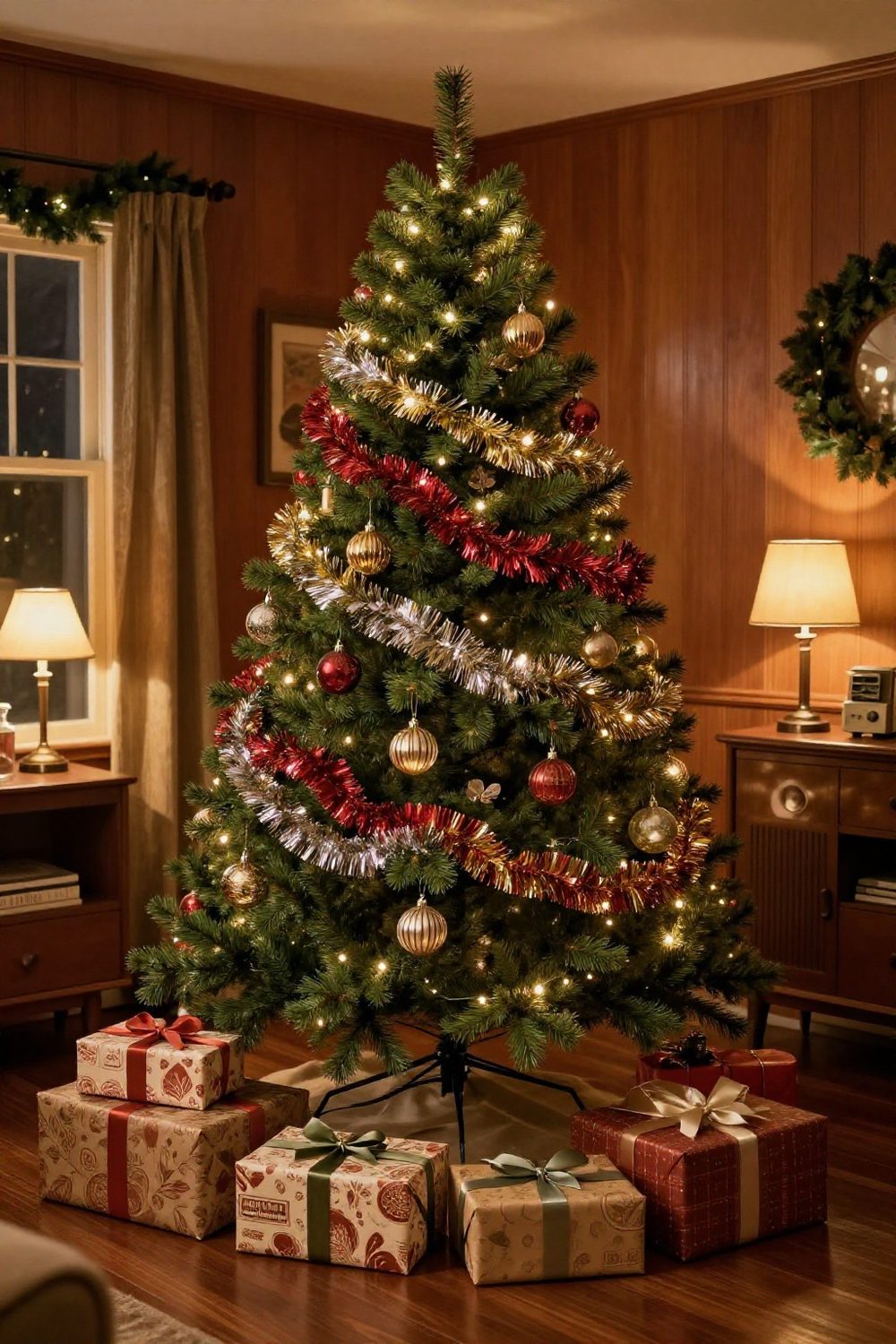
23. Tinsel — the modern kind
For the silvery tinsel look, use modern PVC tinsel rather than old lead tinsel — and skip it entirely if a cat lives in the house.

24. A shadow box display
A wooden printer's tray or shadow box displays small vintage ornaments safely on the wall, each in its own compartment.
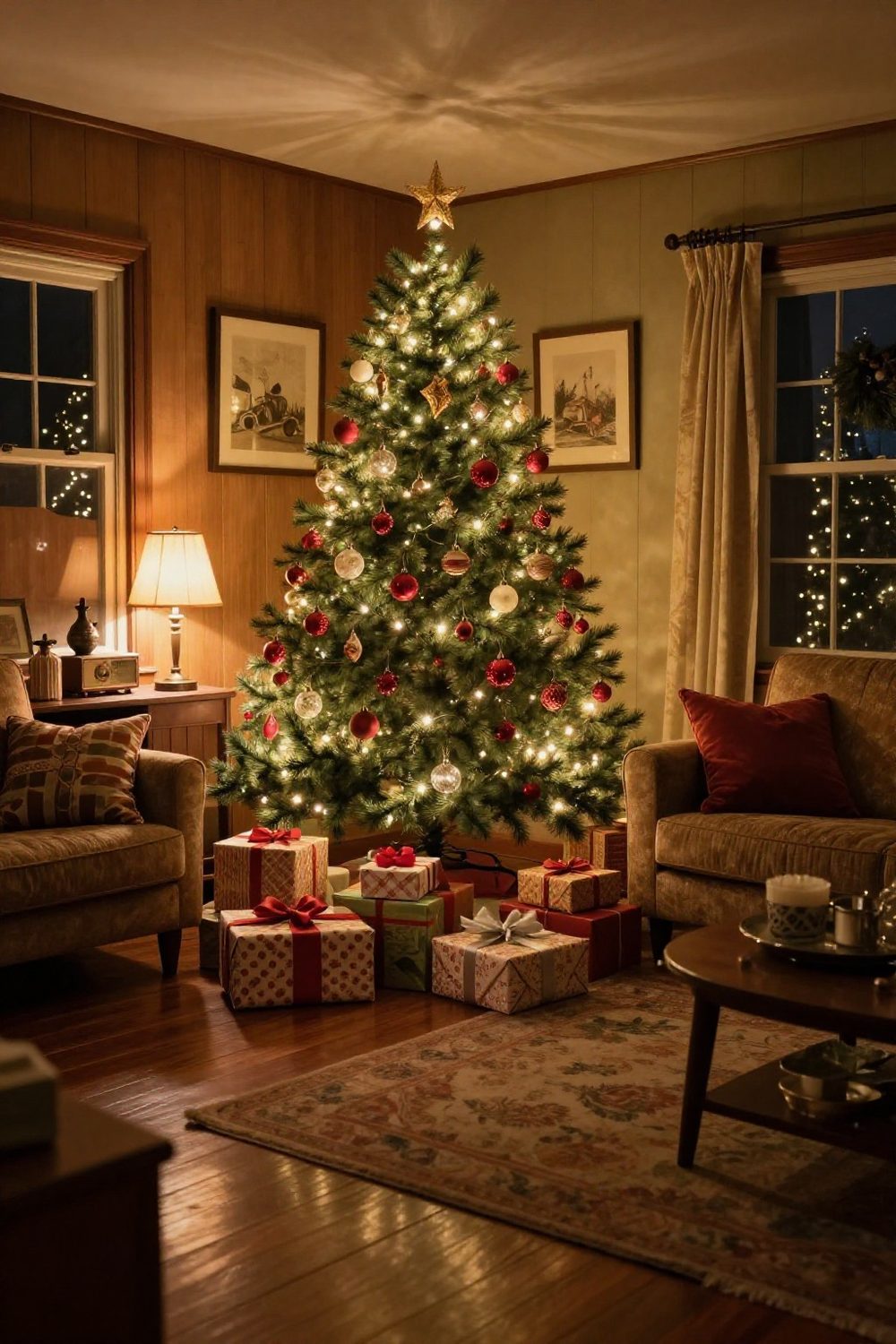
25. Warm modern light, old ornaments
The best vintage rooms combine old ornaments with modern, safe, warm lighting. The glass looks the same; the wiring doesn't keep you up at night.
How to decorate with vintage Christmas pieces
- Choose an era or palette — 1950s pastel, 1960s silver, or classic red and green.
- Check every electrical piece — retire old wiring, use modern LED.
- Group collections rather than scattering them.
- Frame them with simple basics — plain greenery, warm light, neutral textiles.
- Protect the fragile pieces — high on the tree, in bowls or shadow boxes.
Common vintage Christmas mistakes
- String lights on an aluminum tree — a real shock hazard.
- Plugging in decades-old light sets — use modern fused sets or LED reproductions.
- Old lead tinsel within reach of children or pets.
- Too many eras at once — the room looks like a thrift store.
- Fragile glass on the bottom branches.
Final thought
Vintage Christmas decor works best as a collection given room to breathe: one era, grouped together, lit with safe modern light. Keep the old wiring retired and the old tinsel away from little hands, and the faded glass and bubbling lights will make your home feel like the Christmases people remember.

Sources & principles referenced
- The Henry Ford — history of Shiny Brite ornaments: Max Eckardt, Corning Glass and the first shipments to Woolworth's in December 1939.
- Bubble light history — Carl Otis's invention, licensed to NOMA Electric Corporation, marketed from 1946.
- Wisconsin Historical Museum / The Henry Ford — Aluminum Specialty Company's "Evergleam" aluminum trees, 1959–1960s, lit with color wheels because string lights on aluminum were dangerous.
- U.S. Consumer Product Safety Commission — use newer lights with fuses and thicker wiring; discard damaged sets.
- U.S. Food and Drug Administration (1971–72) — voluntary end of lead tinsel production and import after January 1, 1972.
Images in this article are AI-generated visualizations of each idea, not photographs of finished projects.