

Japandi has become one of the most sought-after looks in interior design, and bedrooms are where it makes the most sense. A japandi bedroom takes Japanese minimalism — restraint, craftsmanship, reverence for natural materials — and fuses it with Scandinavian warmth and functionality. The result is a room that's calm without being cold, and minimal without feeling clinical. These 38 japandi bedroom ideas show how the style works in practice.
What is Japandi, exactly?
Japandi is a hybrid of two design traditions that already had a lot in common. Both Japanese and Scandinavian design value simplicity, natural materials, functionality and a deep connection to nature. Where they differ is temperature: Japanese interiors lean darker, more austere and more sculptural, while Scandinavian interiors lean pale, soft and cosy. Japandi style takes the discipline and craftsmanship of the first and the warmth and liveability of the second — which is why it feels serene rather than severe.
The Japandi colour palette
Getting japandi bedroom colors right is most of the battle. The palette is muted and earthy: warm whites, oatmeal, soft greys, clay, and gentle sage or olive greens, with the occasional grounding accent of charcoal or black. Nothing is bright, nothing is glossy. Keep your dominant 60% a warm neutral, your 30% a natural wood tone, and use black or a deep green sparingly as the 10% accent — that touch of dark is what gives Japandi its definition.
Wabi-sabi and the value of empty space
Two Japanese concepts underpin the style. Wabi-sabi finds beauty in imperfection and age — a hand-thrown ceramic with an uneven glaze, linen that wrinkles, wood that shows its grain and knots. Ma is the principle of meaningful negative space: the emptiness between objects isn't a gap to fill, it's part of the composition. Practically, that means buying fewer, better things and leaving surfaces genuinely clear. A Japandi bedroom with three considered objects will always beat one with twenty.
Materials and furniture: low, natural, crafted
Japandi furniture sits low to the ground — platform beds, low nightstands, floor cushions — which makes ceilings feel higher and rooms feel calmer. Materials do the decorating: natural wood (often contrasting a pale Scandinavian oak against a darker Japanese-inspired timber), linen and cotton bedding, paper, bamboo, rattan and unglazed ceramic. Choose pieces that show visible craftsmanship, and avoid anything shiny, plastic or overtly mass-produced.
Lighting the Japandi way
Natural daylight is the primary light source in Japandi design, so keep windows as unobstructed as possible and use sheer linen curtains to diffuse rather than block. For evening, choose soft, diffused fixtures — paper lanterns, linen shades, warm hidden strips — at 2700 K or lower. The aim is gentle, shadowless warmth, never a harsh overhead glare.
38 japandi bedroom ideas — and why each works
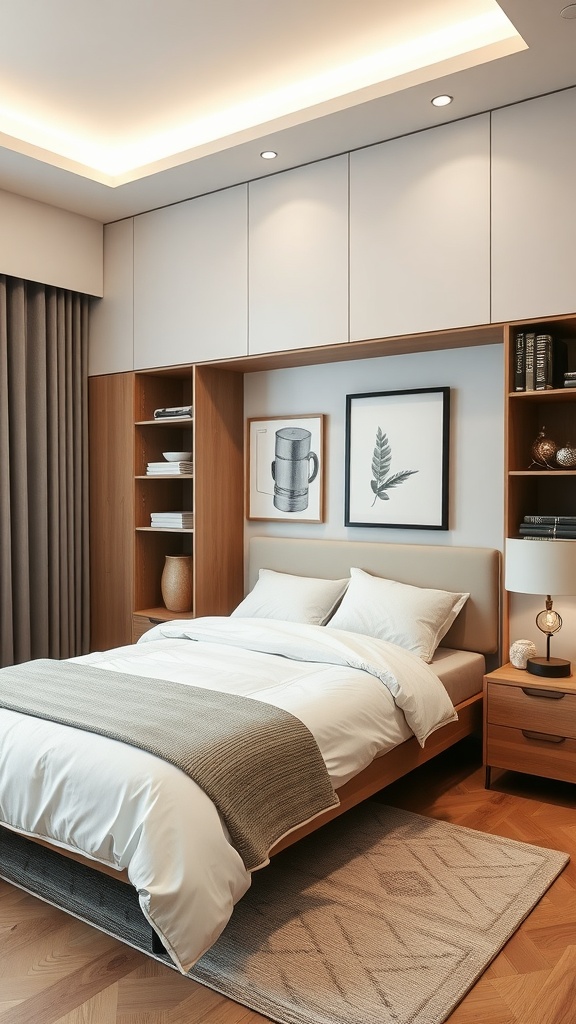
1. Functional, Concealed Storage
Japandi depends on clear surfaces, which only works if everything has a home. Choose closed storage with simple, flat fronts so the room stays visually quiet — clutter is the one thing this style cannot absorb.

2. Layered Natural Textures
Texture is what keeps minimalism from feeling cold. Layer linen, wool and cotton in closely related tones — the Scandinavian half of Japandi is where this cosiness comes from.

3. Soft Earthy Palette
Muted sage or olive walls with warm wood is a quintessential Japandi combination. The colours are drawn straight from nature, which is precisely why they read as restful.

4. Maximise Natural Light
Daylight is Japandi's most important material. Keep window treatments minimal and sheer so light floods in, and the natural wood and linen tones come alive.

5. A Few Well-Chosen Plants
Japandi uses plants sparingly and sculpturally — one striking specimen beats a jungle. Think of each plant as a piece of living sculpture with space around it to be appreciated.

6. Natural Wood Throughout
Wood is the backbone of Japandi. Let the grain show, avoid high-gloss finishes, and consider contrasting a pale oak with a darker timber for depth — that light-dark tension is very Japandi.

7. Minimalist Scandinavian Furniture
Clean-lined, functional pieces with no ornamentation are the Scandinavian half of the equation. Every item should earn its place through use as well as looks.

8. Tatami-Style Flooring
Woven tatami mats bring authentic Japanese texture and a subtle grassy scent. Even a single tatami-style mat beside a low bed shifts the whole room's character.

9. Shoji Screens
A shoji screen filters light into a soft, even glow and can divide a room without solid walls. Used as a headboard backdrop, it's one of the most recognisable Japandi moves there is.
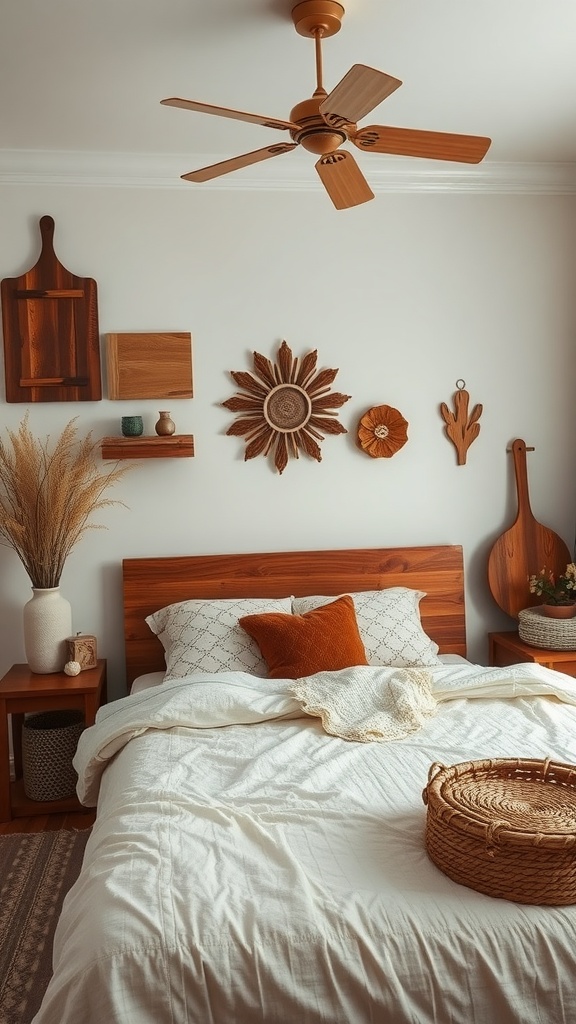
10. Handcrafted Objects
Visible craftsmanship is central to Japandi. A few handmade pieces with slight irregularities embody wabi-sabi far better than a shelf of flawless mass-produced decor.
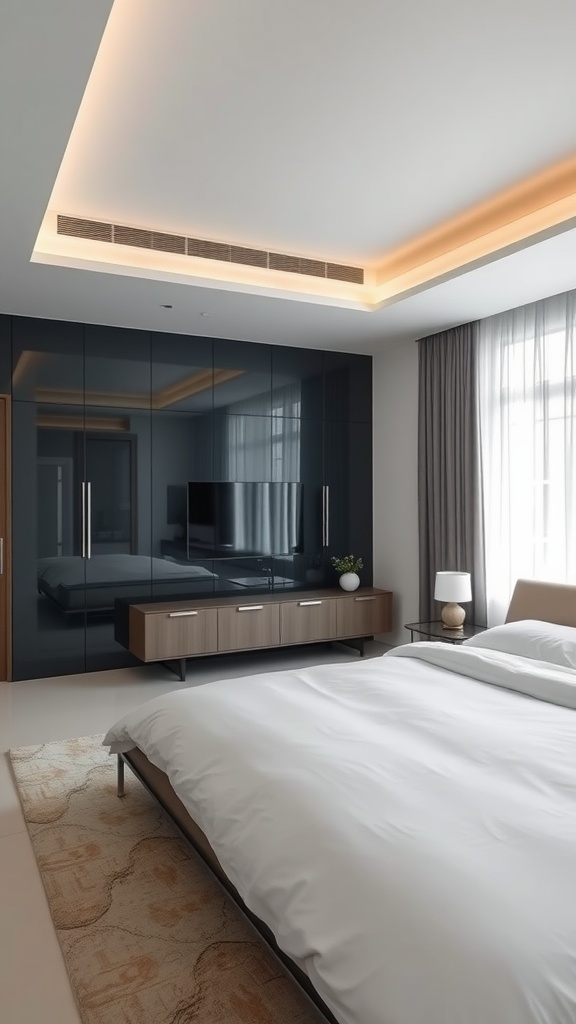
11. Hidden Technology
Japandi doesn't reject technology — it conceals it. Hide cables, tuck chargers into drawers and choose devices in matte, muted finishes so nothing disrupts the calm.

12. Balanced Symmetry
Symmetry creates instant order and calm — matched nightstands, matched lamps. In a style this pared-back, that balance does a lot of the visual work.

13. Nature-Inspired Wall Art
One large, quiet artwork with natural motifs suits Japandi better than a busy gallery wall. Leave generous empty wall around it so it can breathe.

14. Subtle, Diffused Lighting
Soft, shadowless light at 2700 K is the Japandi standard. A single warm lamp casting gentle light beats any bright ceiling fixture for evening calm.

15. Bamboo and Linen
Linen bedding is perfect Japandi: breathable, beautifully textured, and it wrinkles — which wabi-sabi celebrates rather than hides. Bamboo adds a light, renewable structural note.

16. Multi-Functional Pieces
Scandinavian practicality means each piece should do more than one job — a bench that stores, a nightstand that hides clutter. Fewer objects, more function.

17. Custom Built-Ins
Flush built-in cabinetry delivers serious storage while keeping wall planes unbroken — exactly the seamless calm Japandi is after.

18. Textured Wall Finishes
Limewash or plaster gives walls organic, imperfect depth. It's wabi-sabi applied at architectural scale — quiet in colour, rich in surface.

19. A Curated Bookshelf
Style shelves at roughly half capacity, grouping books with a ceramic or two and leaving real gaps. The empty space is the design, not a shortfall.

20. Zen-Inspired Simplicity
Strip back to the essentials: a low wooden bed, soft linen, one or two natural objects. This is Japandi at its purest and most restful.

21. Sheer Linen Curtains
Sheer linen diffuses daylight into a soft, even glow — the same effect shoji screens achieve, in a form that suits any window.

22. A Ritual Object
A tea set on a wooden tray turns the nightstand into a small ritual space. Japandi values slow, mindful moments — and objects that invite them.

23. Tonal Neutral Layers
Layering several close neutrals gives depth without introducing colour. It's how a restrained palette avoids looking flat.
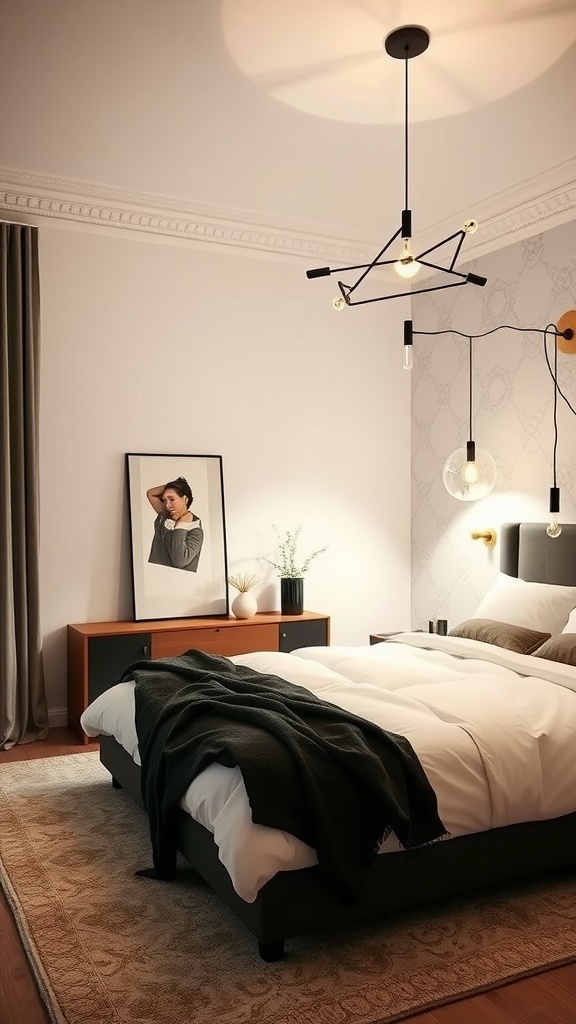
24. A Sculptural Light Fixture
In a minimal room, the light fitting becomes sculpture. Choose a simple form in paper, rattan or matte metal — presence through shape, not decoration.

25. A Cohesive Scheme
Everything in a Japandi bedroom should feel like it belongs to one family. Cohesion — not variety — is what produces the deep sense of calm.

26. Warm Wood Tones
Warm-toned timber is what stops Japandi from tipping into cold minimalism. It's the Scandinavian influence doing its job.

27. A Single Folded Throw
One beautiful throw folded across the foot of the bed adds warmth and a hint of asymmetry — restraint that still feels generous.

28. A Low Wooden Bed Frame
Low-profile platform beds are a Japandi signature: they make ceilings feel taller and instantly lower the room's visual centre of gravity.

29. A Meditation Corner
A cushion, a plant and deliberately empty floor make a quiet corner for stillness — a natural extension of Japandi's mindful philosophy.

30. A Simple Reading Nook
A low chair by the window with a small side table is all you need. Position it for natural light — Japandi always follows the daylight.

31. Artisan Ceramics
Hand-thrown, unglazed pottery is wabi-sabi in physical form — irregular, tactile and quietly beautiful. Display one or two, never a collection.

32. Considered Arrangement
Group a few objects in odd numbers with clear space around them. In Japandi, how you arrange things matters more than how many you own.

33. Quiet Colour Transitions
A barely-there blush or clay wall adds warmth without breaking the muted palette — colour so soft it registers as a feeling more than a hue.

34. Nature-Themed Artwork
Botanical and landscape art in simple wooden frames reinforces Japandi's connection to the natural world. Keep frames slim and unadorned.

35. Frame the Outdoor View
If you have a view, treat it as the room's artwork and keep the wall around it bare. Connecting inside to outside is fundamental to both parent styles.
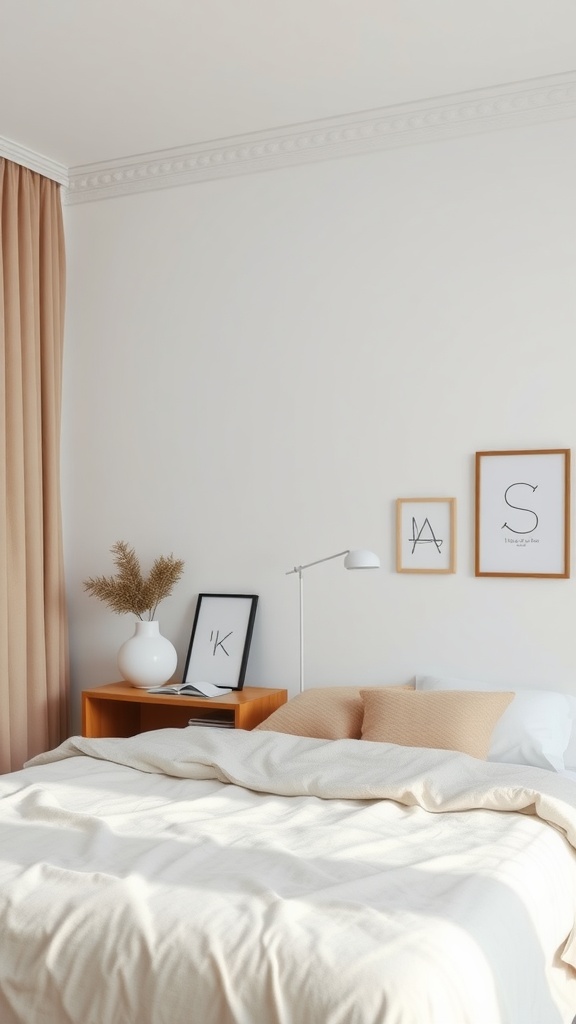
36. Radical Simplicity
When in doubt, remove something. Japandi is one of the few styles where subtraction reliably improves the result.

37. A Few Personal Pieces
Minimal doesn't mean impersonal. A small number of meaningful objects keeps the room human — just give each one room to be seen.

38. Natural Fragrance
Incense, hinoki wood or a subtle essential oil engages the one sense most design forgets. Scent is a genuine part of the Japandi sensory experience.
Japandi vs. Scandinavian vs. minimalist
These three get confused constantly. Scandinavian design is pale, cosy and light-focused, with an emphasis on hygge and soft textiles. Minimalism is about reduction for its own sake — often stark, frequently monochrome, sometimes cold. Japandi sits between them: as restrained as minimalism, but warmed by natural materials and craftsmanship, and grounded by the darker accents and sculptural forms of Japanese design. If Scandinavian is cosy and minimalism is severe, Japandi is serene.
How to get the Japandi look on a budget
Japandi has a reputation for being expensive, because "buy fewer, better things" usually means paying more per item. But the style is unusually budget-friendly if you sequence it correctly, since its biggest transformations are subtractive and cost nothing.
Start by decluttering — removing objects and clearing surfaces gets you halfway to Japandi for free, and no purchase will help until you've done it. Next, change the light: swapping to warm 2700 K bulbs and adding a single soft bedside lamp costs very little and completely alters the room's mood. Then repaint in a warm neutral or muted sage, which is the cheapest way to reset a palette.
Only then start buying, and buy slowly. Linen bedding is the single highest-impact purchase — it delivers texture, drape and that lived-in wabi-sabi wrinkle all at once. After that, hunt secondhand for solid wood furniture; older timber pieces often have exactly the grain and patina Japandi wants, at a fraction of new prices. Finish with one or two handmade ceramics and a single sculptural plant. A room built this way will look more authentically Japandi than one furnished entirely from a catalogue.
Japandi bedroom FAQ
What colours work best in a Japandi bedroom? Warm whites, oatmeal, soft grey, clay and muted sage or olive, with natural wood throughout and a small amount of charcoal or black for definition. Avoid bright, saturated or glossy colours entirely.
Does a Japandi bedroom have to be minimalist? It has to be uncluttered, but not empty. The difference is warmth — Japandi keeps soft textiles, natural wood and a few personal, handmade objects, where strict minimalism often strips those away.
What's the difference between Japandi and wabi-sabi? Wabi-sabi is a Japanese aesthetic philosophy about finding beauty in imperfection and age; Japandi is an interior style that draws on it. You can think of wabi-sabi as one of the ideas that gives Japandi its soul.
Does Japandi work in a small bedroom? Exceptionally well. Low-profile furniture makes ceilings feel higher, the pale palette visually expands the walls, and the style's insistence on clear surfaces is precisely what a small room needs.
Common japandi bedroom mistakes
- Minimal but cold — without warm wood and soft textiles, you've made stark minimalism, not Japandi.
- Filling every surface — negative space is a design element here; leave it empty.
- Glossy or synthetic finishes — Japandi needs matte, natural, tactile materials.
- Too many colours — stay within the muted earthy palette and let texture provide the variety.
Final thought
Japandi works so well in a bedroom because both of its parent traditions were chasing the same thing: a calm, functional space made from honest materials. Buy less, choose better, leave space around what you keep, and light it softly — the tranquillity follows naturally.
Sources & principles referenced: Japandi as a Japanese–Scandinavian design hybrid; the wabi-sabi aesthetic (beauty in imperfection and age); ma (meaningful negative space); muted earthy Japandi palettes; low-profile furniture and natural-material selection; diffused warm lighting (2700 K); the 60-30-10 colour rule.