

Grunge decor lives on a knife-edge: done well it reads as raw, layered and lived-in; done carelessly it just reads as a room nobody tidies. The whole skill is in the difference. These 34 grunge bedroom ideas are organised around that line — what makes worn, imperfect, layered decorating look deliberate rather than neglected, and how to build the look without it collapsing into actual mess.
Grunge is curated imperfection, not the absence of effort
The central misunderstanding about grunge is that it's easy — that you achieve it by simply not tidying. You don't. A convincing grunge room is deliberately imperfect: every worn, layered, mismatched element is there by choice, and behind the apparent chaos sits a quiet order. The bed is unmade in a considered way, not a slept-in one. The clutter is a curated display, not a pile. The distressing is on the right pieces, not on everything.
The practical version of this principle: choose your imperfection, and keep the rest clean. Grunge works when a few surfaces are allowed to be raw and layered while the surfaces you actually use — the bed you sleep in, the desk you work at, the floor you walk on — stay functional and clear. A room that's imperfect everywhere isn't grunge; it's just unmaintained.
It's really an industrial aesthetic with the volume up
Strip grunge back and its bones are industrial: exposed brick, raw or distressed wood, blackened and galvanised metal, visible pipework, concrete, and hard-worn leather. What separates grunge from clean industrial is the layer on top — the band posters, the textiles, the personal collage, the sense that a specific person with specific taste lives here. So the reliable way to build a grunge room is to establish an industrial material base and then layer the personality over it, rather than trying to conjure "grunge" out of soft furnishings alone.
Pick two or three of those core materials and repeat them. Brick plus black metal plus distressed timber reads as one coherent scheme; one of everything reads as a junk shop. This material discipline is what most successful grunge rooms have and most failed ones lack.
Patina you earn, not patina you buy
Grunge is built on age and wear, and the most convincing version uses genuinely old, worn things — thrifted, salvaged, inherited, second-hand. Real wear has a logic to it: it appears where hands and use actually touched a piece, and it comes in the mismatched finishes of objects that aged separately. That irregularity is exactly what a factory "distressed" finish, applied evenly to a brand-new object, can't reproduce.
You don't need everything to be authentically old — but the room wants a few genuine pieces to anchor it, because real patina makes the newer, plainer things around it read as part of a collection rather than a showroom. Thrift shops, salvage yards, and family attics are where grunge rooms are actually furnished. It's also the cheapest way to decorate, which suits the aesthetic's origins exactly.
Layering is the technique
Where minimalism removes, grunge accumulates — and accumulation is a technique with rules, not a licence to pile things up. Rugs overlap. Textiles stack in different weights and patterns. Wall art layers frame over frame, poster over poster. The look builds in depth, and the depth is what makes it feel rich rather than random.
Two things keep layering from becoming mess. First, a connective thread — a repeated colour, a shared era, a common material — running through the layers so they read as related. Second, a limit: even accumulation needs an edge, a point where the wall or the corner is full and you stop. Grunge that keeps everything reads as hoarding; grunge that's edited reads as style.
Light it dim, but keep one honest light
Grunge wants a warm, dim, amber glow — Edison bulbs, low lamps, candles, moody pools of light rather than a bright even wash. Warm bulbs around 2700 K do this; cool white kills the mood instantly. But the same rule that governs any dark, moody room applies here: atmosphere can't be the only light. Keep one genuinely bright, warm task light at the desk or bedside for reading and getting dressed, and let everything else be mood. A room that's only ever dim is romantic for a week and impractical forever.
34 grunge bedroom ideas — and why each works

1. Layered Textures
Stacking different weights and weaves — knit over linen over worn cotton — is the foundational grunge move and the source of its depth. Keep a colour or tone running through them so the layers read as chosen, not dumped.

2. Thrift-Store Finds
Second-hand pieces bring the genuine wear and mismatched character the aesthetic is built on, at the budget it was born at. A few authentically old items anchor a room full of plainer ones.

3. Exposed Brick
Brick is the signature grunge surface — raw, textured, and honest about the building. If yours is plastered over, a good brick-slip panel or textured wallpaper on one wall gets most of the effect.

4. Edison Bulbs
Exposed-filament bulbs give the warm amber glow the look depends on, and the bare fitting suits the industrial base. Put them on a dimmer so the room can go from mood to functional when you need it.

5. A Dark, Muddy Palette
Grunge colour runs to the murky end — teal, oxblood, charcoal, moss — rather than clean brights. These desaturated tones read worn and atmospheric, and they forgive the layering that would look busy in a crisp palette.

6. Industrial Metal
A black metal bed frame or blackened-steel fittings supply the hard industrial edge the soft textiles play against. Metal against fabric is the core grunge contrast — hard and soft in the same frame.

7. Vintage Band Posters
Grunge is a music aesthetic before it's a decorating one, so band posters are core rather than decorative. Massed over a whole wall they carry more personality than any bought art.

8. Pallet Furniture
Raw pallet wood is DIY, near-free and exactly the rough material the look wants. Sand it enough to be splinter-free and seal it — "raw" shouldn't mean "hazard".
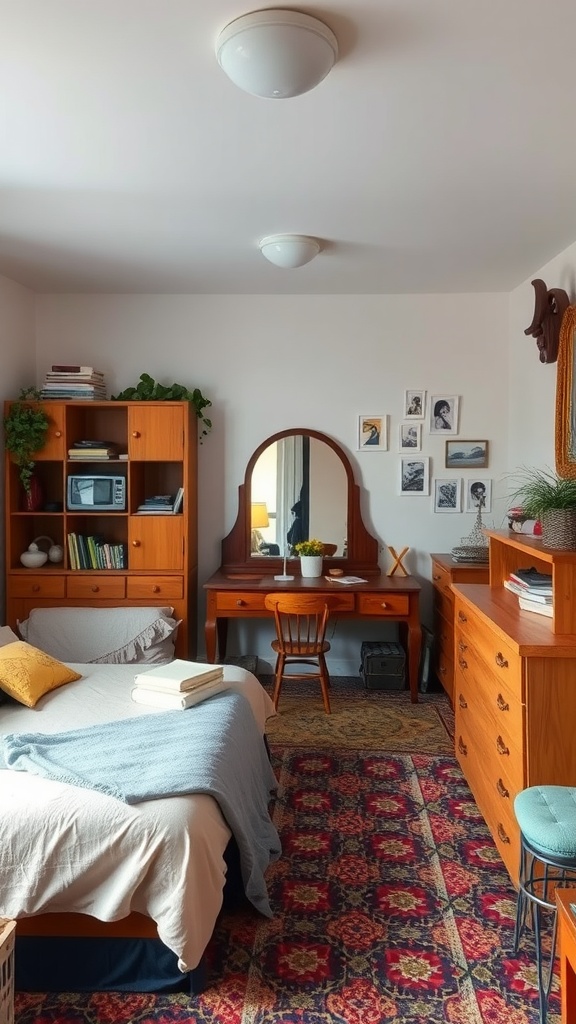
9. Mismatched Furniture
Pieces that clearly weren't bought as a set read as collected over time, which is the whole story grunge tells. Tie them together with one shared element — a wood tone, a colour, an era — so "mismatched" stays deliberate.
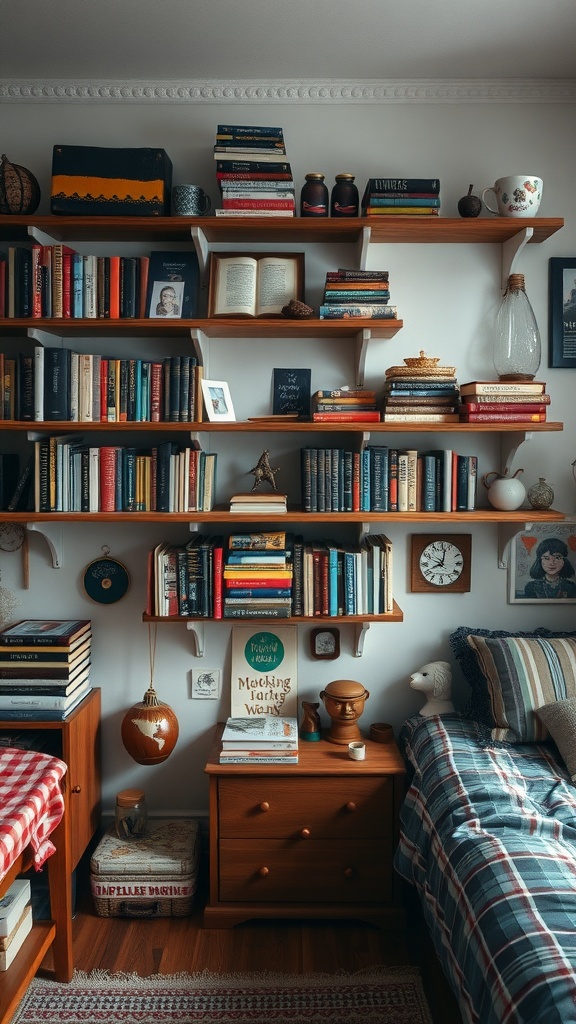
10. Wall-Mounted Shelves
Open shelves display the books, records and objects that show who lives here, using vertical space and keeping the floor clear. Well-stocked, slightly overfull shelves suit the layered aesthetic better than sparse styled ones.

11. Mismatched Mirrors
A cluster of different-framed mirrors adds the collected look while bouncing light around a deliberately dim room. Group them like a gallery wall rather than spacing them evenly.

12. Distressed Wood
Genuinely worn timber carries patina no new piece can fake — the wear sits where hands and use actually put it. A salvaged or long-used piece beats a factory-distressed one every time.

13. Graffiti or Street Art
Street-art energy suits the raw, anti-polish spirit, and it's a genuine hit of colour against the muddy palette. In a rental, a large canvas or a removable mural panel gets the look without touching the wall.

14. Heavy Blackout Curtains
Weighty dark drapes deepen the mood and, unlike most grunge elements, do a real job — proper darkness for sleep. Heavy fabric also absorbs sound, which softens a room full of hard industrial surfaces.

15. Overlapping Rugs
Layering rugs of different patterns and piles is textbook grunge — depth underfoot and warmth over a hard floor. A worn, faded rug reads more authentic here than a pristine one.

16. Reclaimed and Sustainable Pieces
Salvaged and upcycled materials are both the greenest choice and the most on-theme, since reuse is where the aesthetic came from. Decorating with what already exists is grunge in its purest form.

17. Deliberately Undone Bedding
The unmade-but-not-messy bed is the hardest grunge trick: relaxed, layered and inviting rather than genuinely slept-in. The secret is good-quality, texturally interesting bedding — cheap sheets just look unmade.
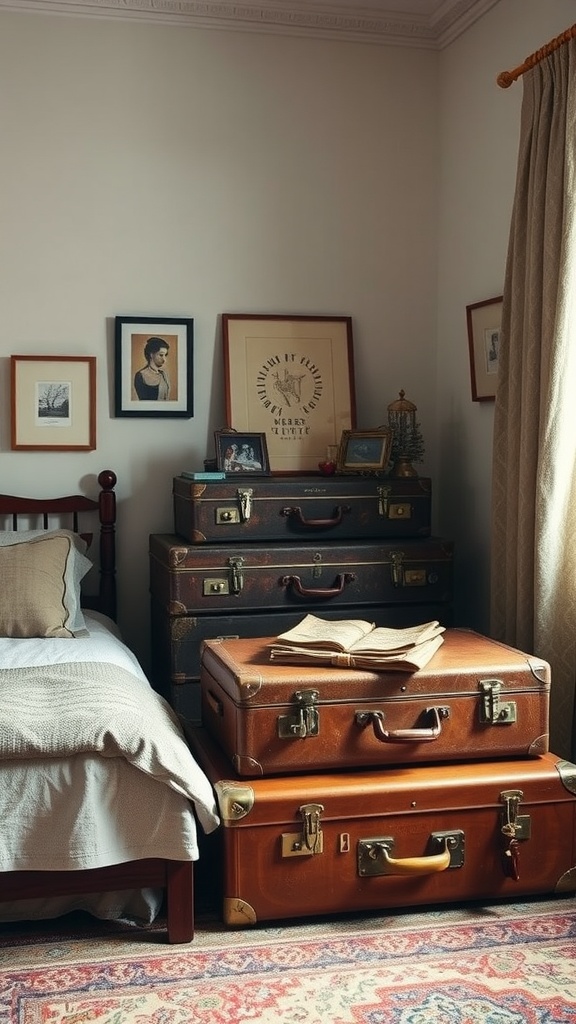
18. Vintage Suitcases as Storage
Stacked old cases store things, add patina, and double as a side table — decor and function in one worn object. This is the kind of hidden storage that keeps grunge from tipping into clutter.

19. A Personal Mood Board
A dense wall of photos, clippings and art is the room's autobiography, and it's the layer that makes an industrial base read as grunge. It also grows and changes, so the wall never feels finished — which suits the look.
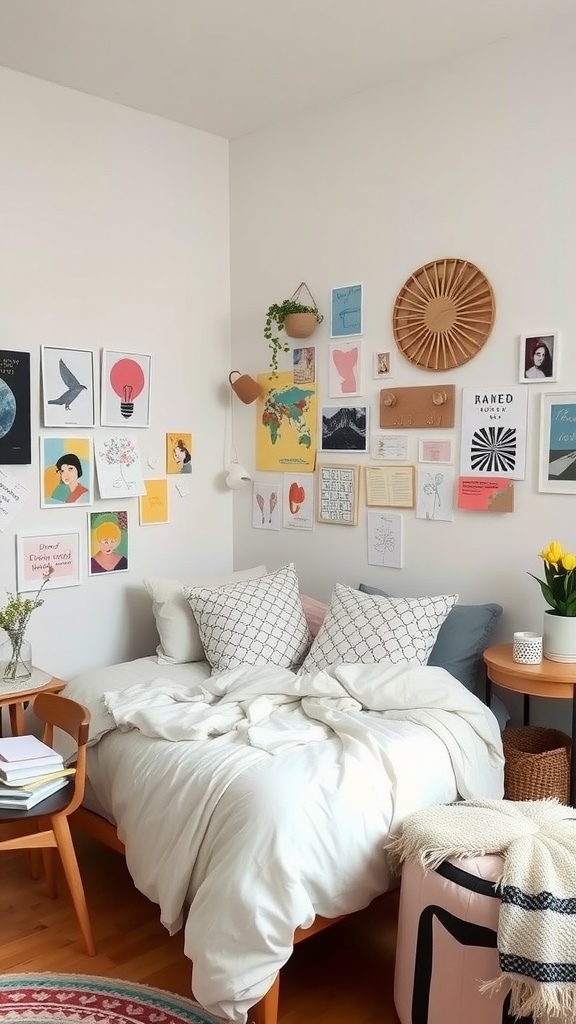
20. DIY Art
Homemade work fits the anti-polish, anti-mass-produced ethos better than anything bought, and imperfection is a feature here rather than a flaw. It's also free, which is very on-brand.

21. Layered Wall Art
Overlapping frames, leaning some and hanging others, builds the same accumulated depth on the wall that layered textiles build on the bed. A shared frame colour or era keeps the pile-up from reading as chaos.

22. Rough Materials, One Clean Line
Setting a sharp modern piece against rough rustic ones stops the room reading purely as decay — the contrast is what makes the roughness look chosen. One clean element frames all the texture around it.
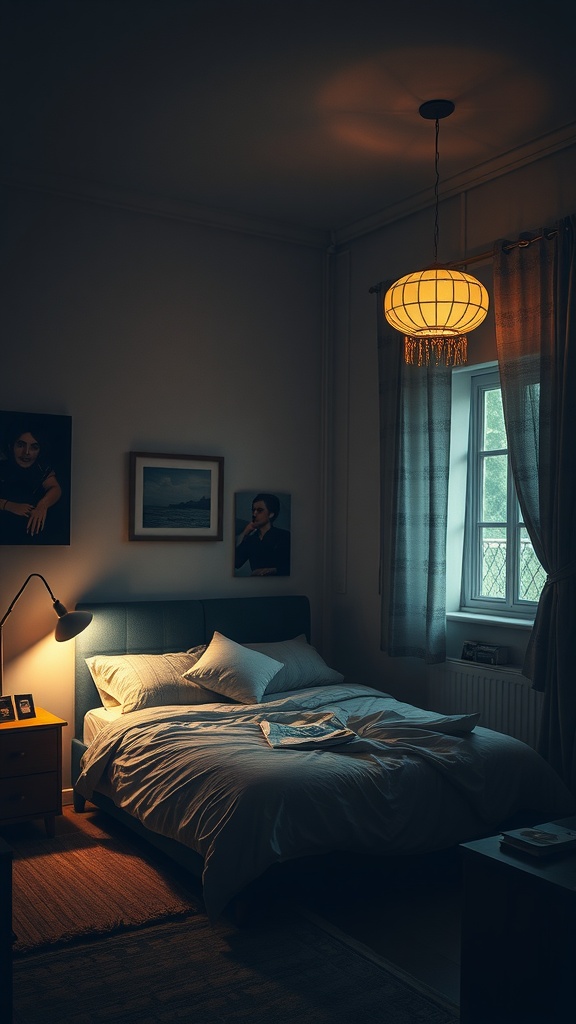
23. A Sculptural Light Fixture
An unusual, industrial or handmade fixture works as both light source and object, earning double its footprint. In a dim room the fitting itself is on show, so it's worth choosing one with presence.

24. Plants in the Gloom
Foliage keeps a dark, hard-edged room from feeling lifeless, and it reads vivid against the muddy palette. Choose low-light-tolerant species and put them by what daylight there is.

25. Floor Cushions
Casual floor seating suits the relaxed, unfussy spirit and adds another layer of texture at low level. It also gives the room a second place to be without buying more furniture.

26. Vintage Textiles
Old fabrics bring faded colour and genuine wear that new textiles can only imitate, and their patterns add the layered richness the look wants. Mixing eras is encouraged, not a mistake.

27. Personal Objects on Show
The things that mean something to you are what separate a grunge room from a styled set — this look can't be bought wholesale. Give a few of them proper display space rather than scattering them.

28. A Salvaged Headboard
A headboard made from reclaimed timber, an old door or a pallet becomes the room's centrepiece and its clearest statement of material. It's also a beginner-friendly DIY that anchors everything else.

29. Exposed Pipe Fittings
Iron pipe makes rugged, cheap shelving and rails and puts the industrial skeleton on show, which is exactly the point. Kits assemble with a wrench, so it's accessible even to non-builders.

30. Layered Lighting
Several small warm sources — a lamp, string lights, a fixture — build the pools of light a moody room needs, where one overhead bulb would flatten it. Remember to keep one of them bright enough to actually work by.

31. Artful Clutter
The defining grunge skill: clutter that's arranged, layered and contained to certain zones rather than spread everywhere. The test is whether you could photograph it and whether the bed and floor still work — if yes, it's styling; if no, it's mess.

32. Candles for Low Light and Scent
Candles add another layer of warm low light and an atmospheric edge the eye can't see but the room still feels. Use LED versions around all those layered textiles — open flames and piled fabric don't mix.

33. A Few Colourful Pillows
A hit of colour stops the muddy palette from going drab, and cushions are the cheapest, most reversible way to add it. Keep the hits to one or two colours so they read as accents, not confetti.

34. The Full Industrial-Chic Version
Brick, timber floor, vintage lighting and worn furniture together show the polished end of grunge — raw materials, but composed. It's proof the look can be intentional and still read as effortless.
Grunge vs. just messy: where the line is
This is the distinction the whole aesthetic turns on, and it's learnable. A few reliable tells that keep you on the right side of it:
- The functional surfaces stay clear. The bed you sleep in, the desk you use and the floor you cross are working surfaces, not display zones. Grunge lets specific corners and walls be layered and busy; mess is when there's nowhere left to actually live.
- Every "imperfect" thing is chosen. The distressed dresser, the unmade bed, the leaning frames — each is a decision. If it's there because you haven't dealt with it, that's not styling.
- There's a connective thread. A repeated colour, era or material runs through the layers. Without it, "eclectic" becomes "random".
- The clutter is contained. Curated clutter belongs to a shelf, a wall, a corner — it has edges. Clutter with no edges is just clutter.
- It's clean underneath. Grunge is a look, not a hygiene standard. Dust, laundry and bins are never part of the aesthetic; a layered, worn room that's also genuinely clean is the target.
Put simply: grunge is a room you could photograph. If you'd have to tidy it first, it's crossed the line.
Grunge bedroom on a budget (and in a rental)
Grunge is arguably the most budget-friendly aesthetic there is — it's built on second-hand, salvaged and DIY, and newness actively works against it. Where to put the little money it needs:
Nearly free. Thrift the furniture and textiles. Build a headboard or shelving from a pallet or salvaged timber. Make the wall art. Layer the rugs and throws you already own. Assemble the mood board from what you have.
Under $80. Edison bulbs on a dimmer, a set of 2700 K lamps, iron-pipe shelf brackets, black washi tape and frames for the poster and gallery walls, a couple of accent cushions.
Renter-friendly swaps. Brick-effect peel-and-stick or a textured panel instead of real exposed brick; a large street-art canvas instead of a painted mural; freestanding pipe shelving instead of drilled fixings; heavy curtains and dark bedding to carry the mood without touching the walls. Almost nothing about grunge needs to be permanent — which fits an aesthetic that's meant to keep evolving anyway.
Grunge bedroom FAQ
How do I make a grunge room look intentional and not just messy? Keep the functional surfaces — bed, desk, floor — clear and working, and confine the layered, cluttered look to specific walls, shelves and corners. Make sure every worn or mismatched piece is a choice, run one connective colour or material through the layers, and keep the room genuinely clean underneath. The test: could you photograph it as-is?
What's the difference between grunge, emo and industrial decor? Industrial is the clean material base — brick, metal, concrete, pipe. Grunge layers worn textiles, personal collage and curated imperfection over that base. Emo overlaps but centres more tightly on music and dark, emotional personal expression. Grunge is the most texture- and layering-driven of the three.
What colours suit a grunge bedroom? Muddy, desaturated tones — teal, oxblood, charcoal, moss, rust — rather than clean brights or pure black. One or two small colour accents keep the murky palette from going drab.
Can I do grunge without exposed brick? Easily. Brick-effect wallpaper or peel-and-stick panels, distressed wood, industrial metal and layered textiles all carry the look. Brick is iconic but it's only one of several core materials.
Is grunge decor high-maintenance? Less than most, because wear and imperfection are the point — but it still needs actual cleaning and editing. The maintenance isn't tidying to perfection; it's keeping the curation sharp and the functional surfaces usable.
Common grunge bedroom mistakes
- Confusing mess with the aesthetic. The biggest one. Grunge is curated imperfection; genuine clutter, dust and laundry are never part of it.
- No material discipline. One of everything reads as a junk shop. Choose two or three core materials and repeat them.
- Faux distressing on everything new. Evenly "distressed" factory pieces read fake next to genuine wear. Anchor the room with a few authentically old things.
- Layering with no connective thread. Accumulation needs a shared colour, era or material or it collapses into chaos.
- Only mood lighting. A permanently dim room is impractical. Keep one bright, warm task light.
- Every surface busy. Even grunge needs breathing room and clear working surfaces — layer the walls and corners, not the bed and desk.
Final thought
Grunge is the aesthetic most often ruined by being taken literally. It isn't the absence of effort — it's effort aimed at looking effortless, which is harder. Build an honest industrial base, layer worn and personal things over it with a thread running through, light it warm and low but keep one real working light, and above all keep it clean underneath. Get that balance and the room reads as raw, rich and unmistakably lived-in. Miss it, and it's just a room that needs tidying.

Sources & principles referenced
- The roots of the grunge aesthetic in a music subculture and in second-hand, DIY and salvaged decorating.
- The industrial material palette (exposed brick, raw and distressed wood, blackened and galvanised metal, exposed pipework, concrete, worn leather).
- The distinction between genuine, use-located patina and evenly applied factory distressing.
- Layering as a compositional technique requiring a connective thread and an editing limit.
- Warm (2700 K) dim lighting in multiple sources with a dedicated brighter task light.
- Blackout window treatment for sleep and heavy fabric for acoustic absorption.
- Fire-safety guidance favouring LED candles around layered textiles.
- Reversible and rental-friendly substitutions for permanent finishes.