
Most living rooms don't fail at Christmas because of the wrong ornaments. They fail because the decorations fight the room: a tree too wide for the walkway, garland draped over a fireplace that's actually in use, and a ceiling light that flattens every twinkle into a supermarket glow. These 25 Christmas decor ideas for the living room start with the few measurements and safety rules that decide whether a holiday room works, then move through the tree, the mantel, the lighting and the small surfaces that finish it.
Size the tree to the room, not to the store
A tree is the largest piece of furniture you'll bring into the living room all year, and it arrives without a floor plan. Three numbers settle almost every placement question:
- Height: take your ceiling height and subtract about 12 in (30 cm). That leaves room for the stand and a topper with at least 6 in (15 cm) of air above it. On a standard 8 ft ceiling that means a 7 ft tree, not the 7.5 ft one that looked modest in the lot.
- Width: read the listed diameter, not the height. Full-profile trees are roughly two-thirds as wide as they are tall, so a 7 ft full tree can need close to 5 ft (150 cm) of floor. Slim and pencil profiles exist precisely for rooms that can't spare that.
- Walkway: keep the main route through the room at 30–36 in (75–90 cm) clear, measured from the tips of the lowest branches. Branches that brush every passer-by shed needles and ornaments for five weeks.
Measure with tape on the floor before you buy. A 5 ft circle of painter's tape is the fastest way to discover that the corner you had in mind also holds the only path to the sofa.
Keep a three-foot safety zone
The National Fire Protection Association's guidance is simple: keep the tree at least 3 ft (90 cm) from any heat source — fireplaces, radiators, heat vents, candles and hot lights. US fire departments still respond to an estimated 143 home fires a year that start with Christmas trees (NFPA, 2020–2024 average), and about a third of them happen in January, when a tree that went up after Thanksgiving has dried out. Two consequences for decorating:
- The classic "tree beside the fireplace" photo usually breaks the rule. If the fireplace gets used, the tree belongs on another wall, and the mantel gets the greenery instead.
- Plan the take-down date when you plan the tree. A real tree that comes down in the first week of January is a calmer tree than one left up until the needles carpet the floor.
Light it like a living room, not a store window
The cozy holiday room in photographs is lit from many small warm points at different heights, with the overhead light off. Three rules get you there:
- Quantity: the long-standing rule of thumb is about 100 mini lights per vertical foot of tree — roughly 700 for a 7 ft tree. Fewer leaves dark gaps; far more starts to look like a light display rather than a tree.
- Color temperature: choose warm white, around 2700–3000 K, so the tree matches your lamps. Cool white tree lights next to warm table lamps make the room look like two different rooms.
- Heat and safety: low-heat miniature or LED lights dry a real tree more slowly. Use lights listed by a qualified testing laboratory, check whether a set is rated for indoor or outdoor use, follow the manufacturer's limit on how many strands can be connected end to end, and turn tree lights off when you leave the house or go to bed — a plug-in timer does this without relying on memory.
If the tree is real, treat it like cut flowers
A fresh tree stays safer and holds its needles longer when it can drink. The National Christmas Tree Association's care advice: cut a ½-inch (1.3 cm) disk off the base of the trunk before setting it up (most species still take up water if they go into the stand within 6–8 hours of the cut), use a stand that holds about 1 quart (≈1 liter) of water per inch of trunk diameter, and check the level every day so it never drops below the base of the trunk. A 4 in trunk needs a stand that holds roughly a gallon — many of the cheap stands sold with the tree don't.
Check the plants before the pets do
Holiday greenery is not all equal. The ASPCA lists poinsettias as mildly irritating to the mouth and stomach but "generally over-rated in toxicity." The plants that deserve real caution in a home with animals are lilies — even a leaf or a petal can cause kidney failure in cats — along with holly and mistletoe. If a cat shares the living room, keep lilies out of holiday arrangements entirely and put holly and mistletoe out of reach.
25 Christmas living room ideas — and why each one works
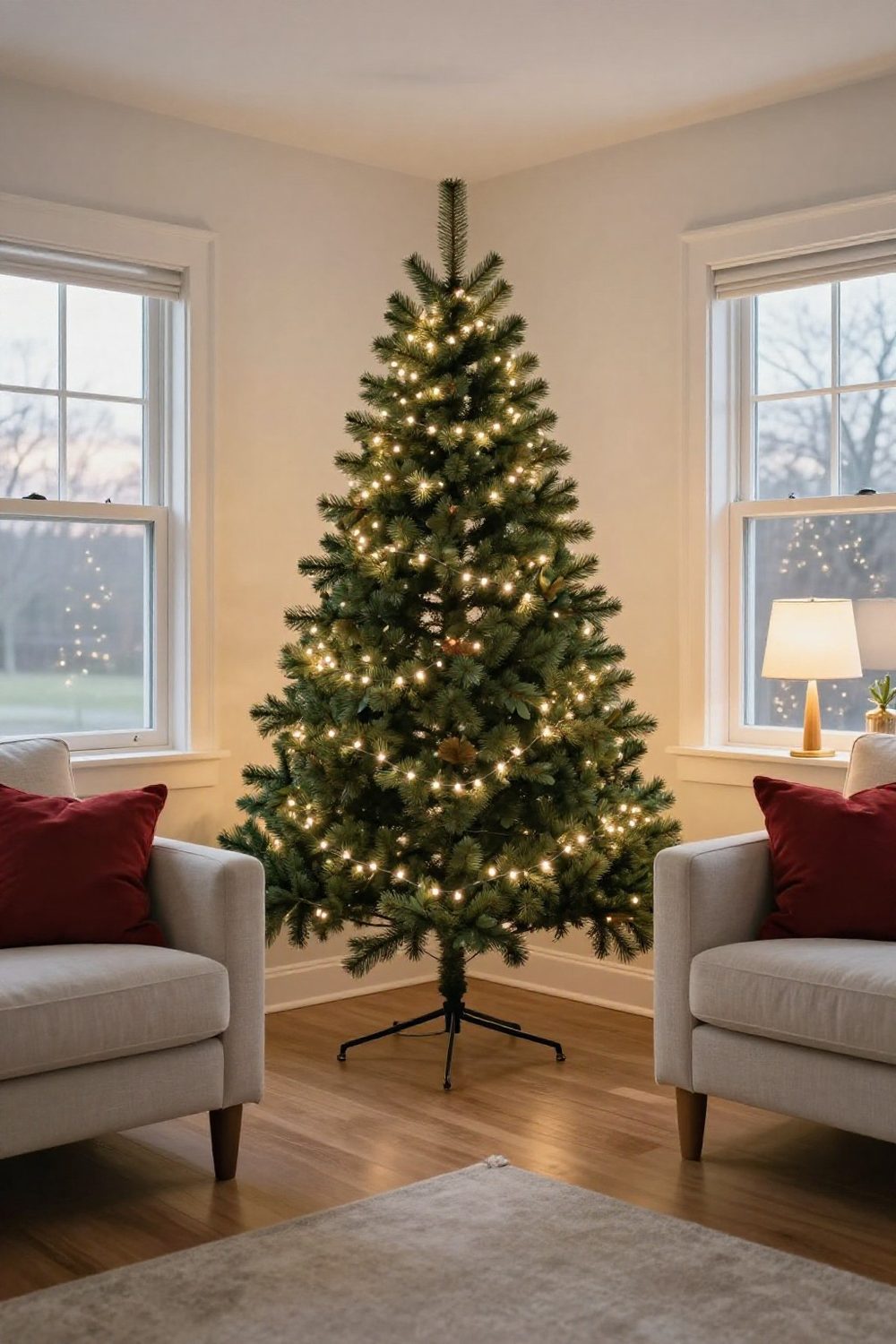
1. A slim tree for the corner
A pencil or slim tree around 3 ft wide gives a small living room the height of a full tree without taking the sofa's walkway. Put the fullest side toward the room and keep ornaments lighter on the wall side, where nobody sees them.
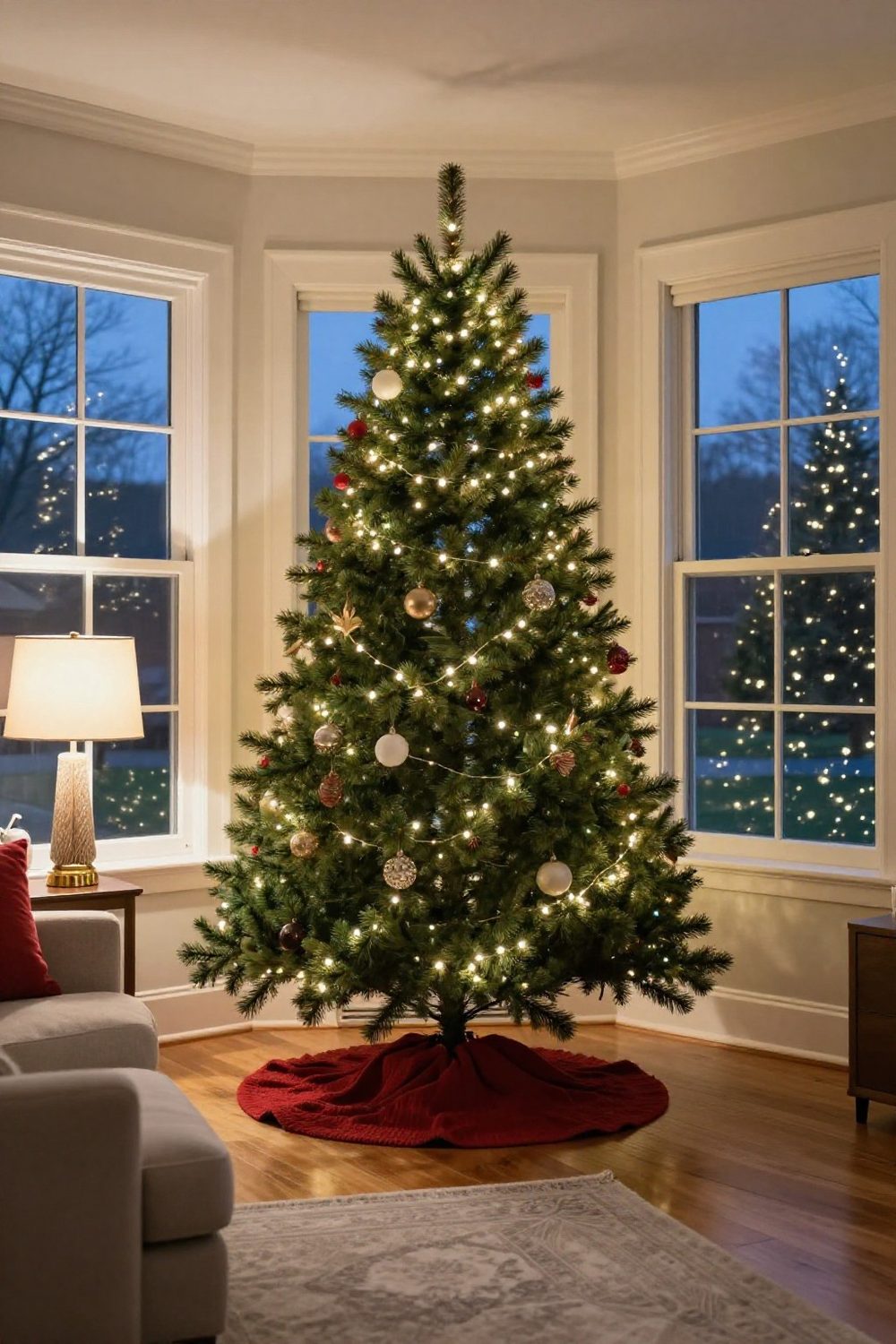
2. The tree in the window
A tree in front of the main window is the one your street sees. Before committing, check what's under the window: a radiator or heat vent within 3 ft rules this spot out, however good it looks from the sidewalk.
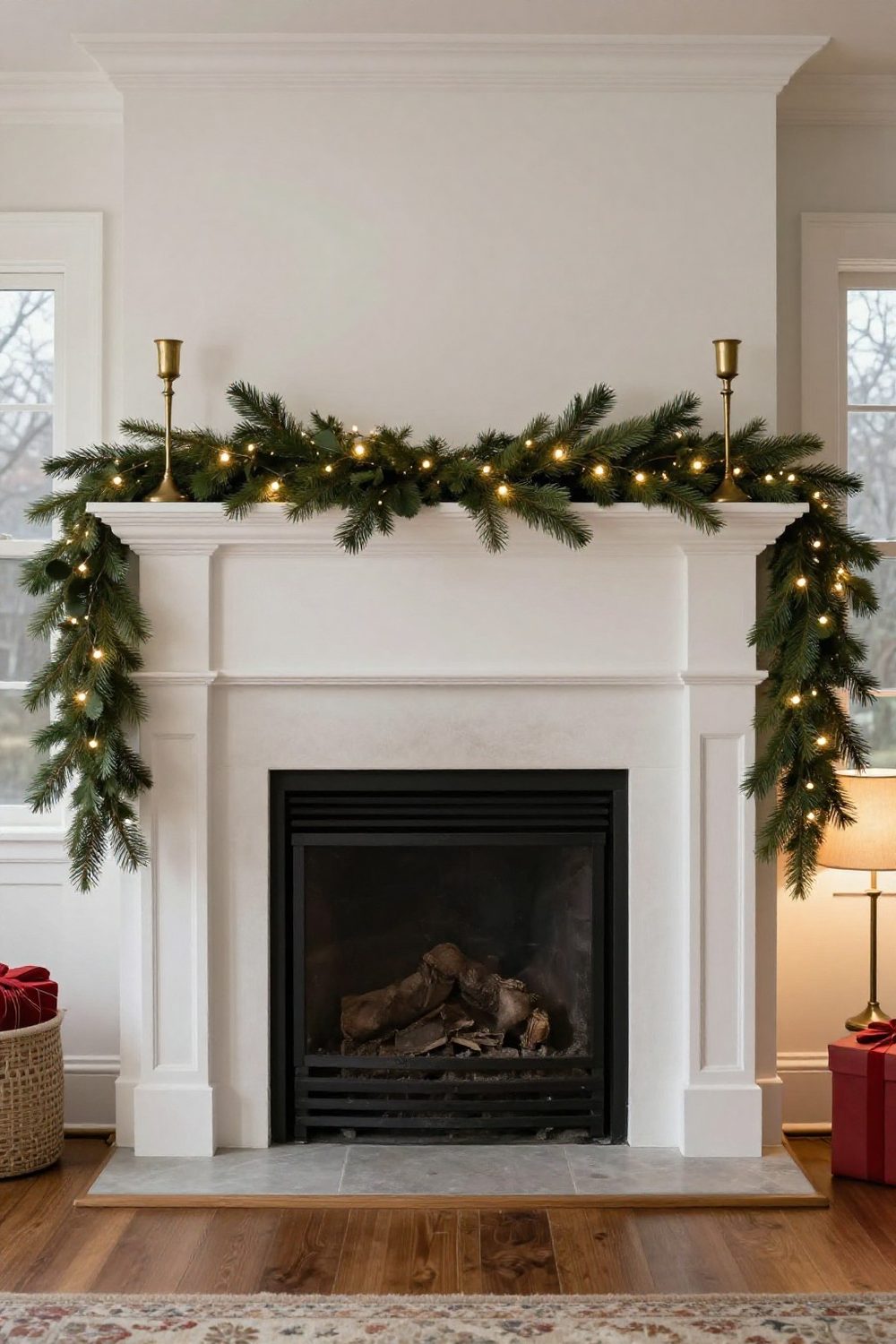
3. Give the mantel the greenery, not the tree
When the fireplace is in use, the mantel is where the room's main garland belongs. Let it run the full width and drape slightly past each end; a garland cut flush to the mantel looks skimpy. Keep dried greenery and paper decorations off the mantel on nights the fire is lit.
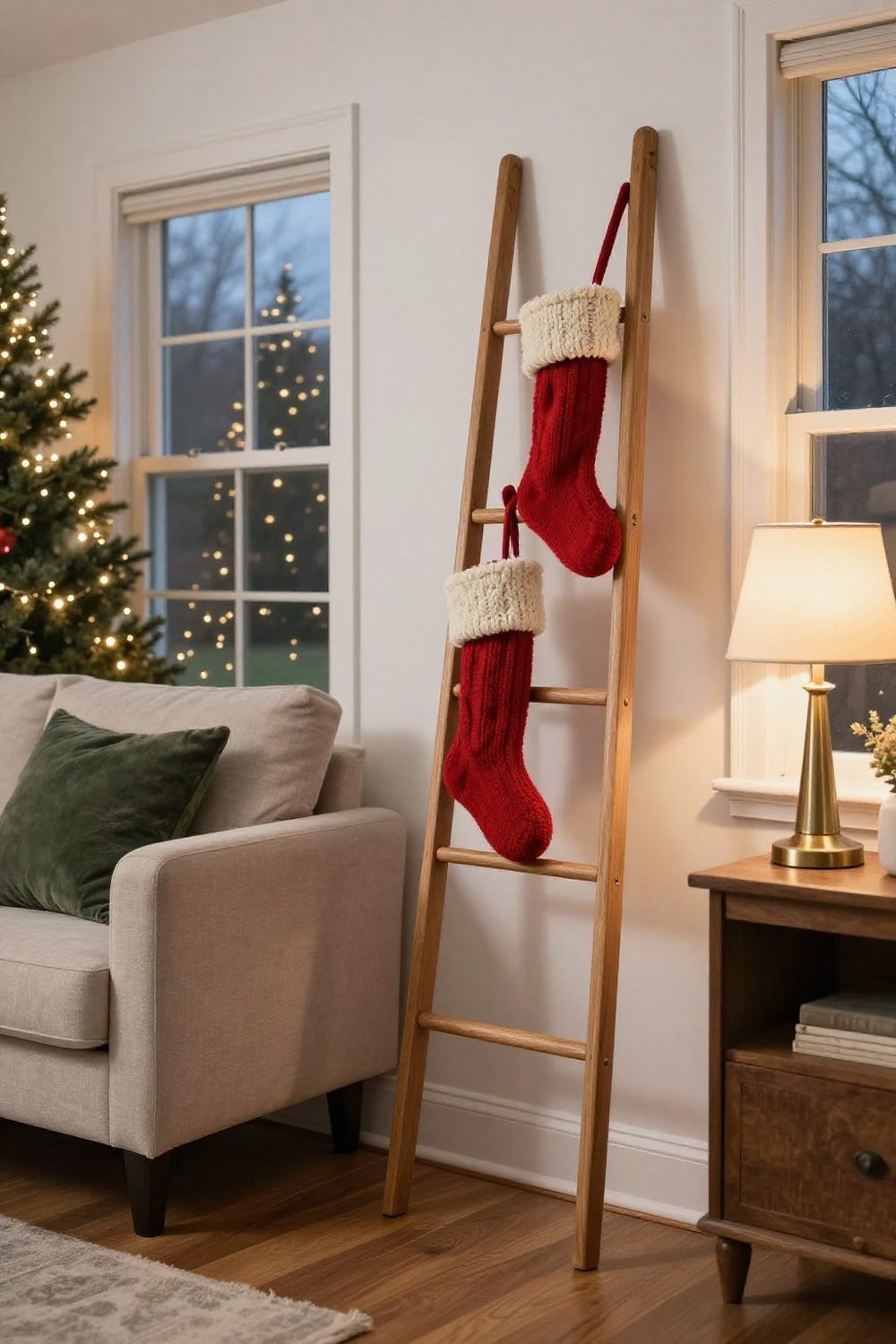
4. Stockings off the firebox
Wool stockings hanging just above an active fire are the textbook example of a decoration inside the three-foot zone. A blanket ladder, a row of hooks on a shelf or a weighted stocking stand keeps the tradition and moves it a safe distance from the flames.
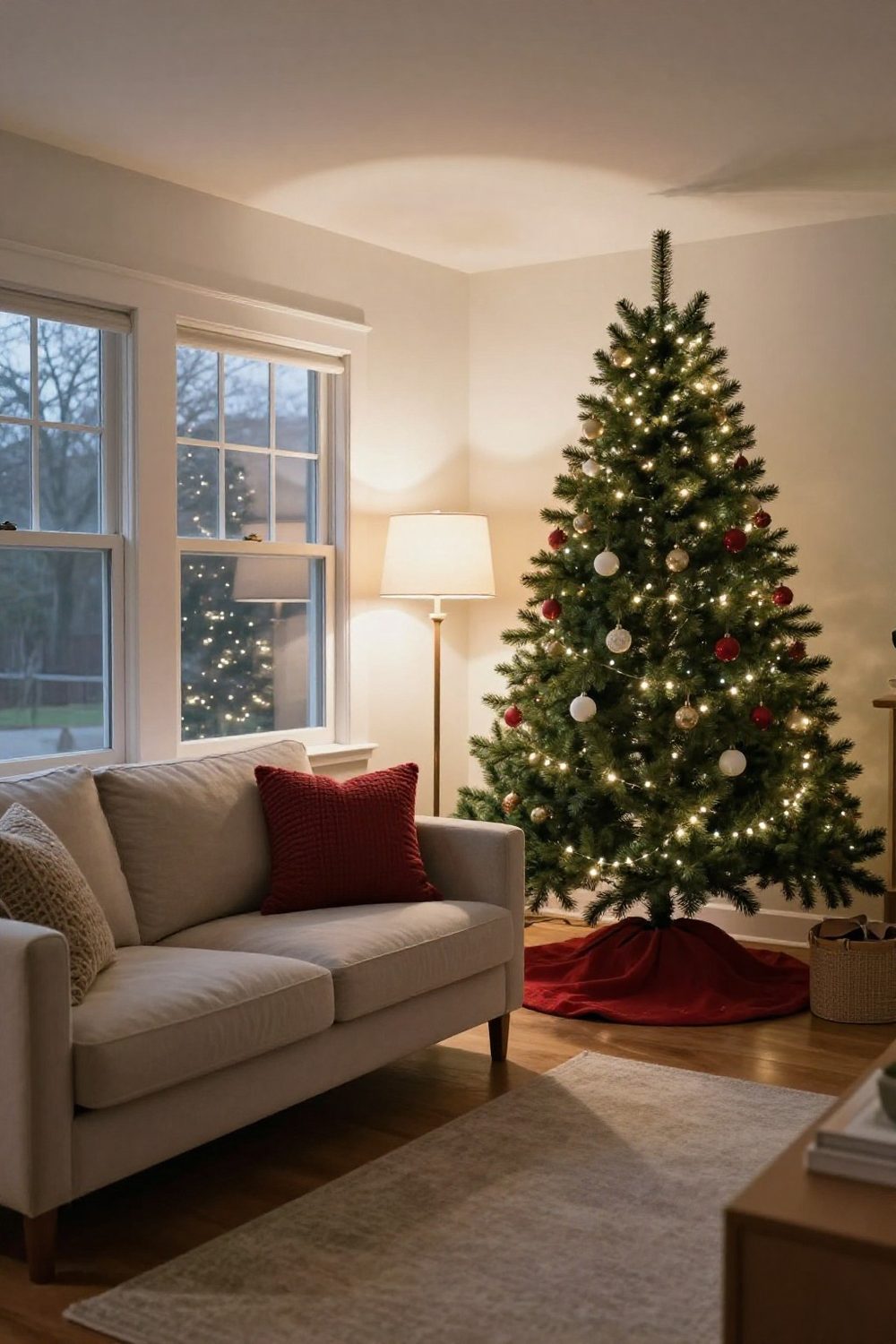
5. Overhead light off, three warm sources on
Switch off the ceiling fixture and light the room from the tree, a table lamp and a floor lamp at different heights. This one change does more for the "Christmas movie" look than any ornament you can buy.
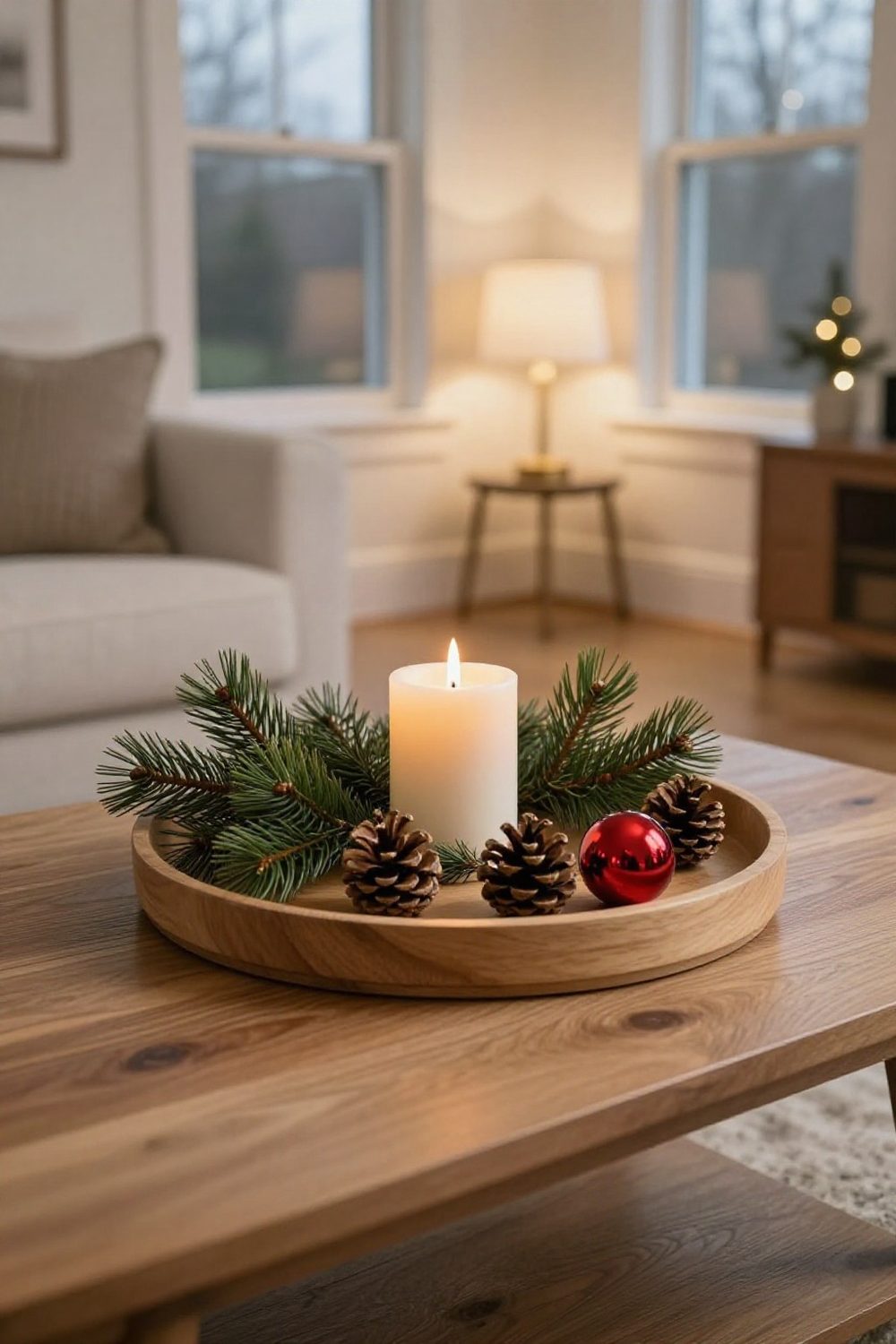
6. A tray vignette on the coffee table
Group the small seasonal things — a candle, a few sprigs, pinecones, one ornament — on a single tray. A tray turns clutter into a composition, and it lifts off in one move when the table is needed for food or a board game.
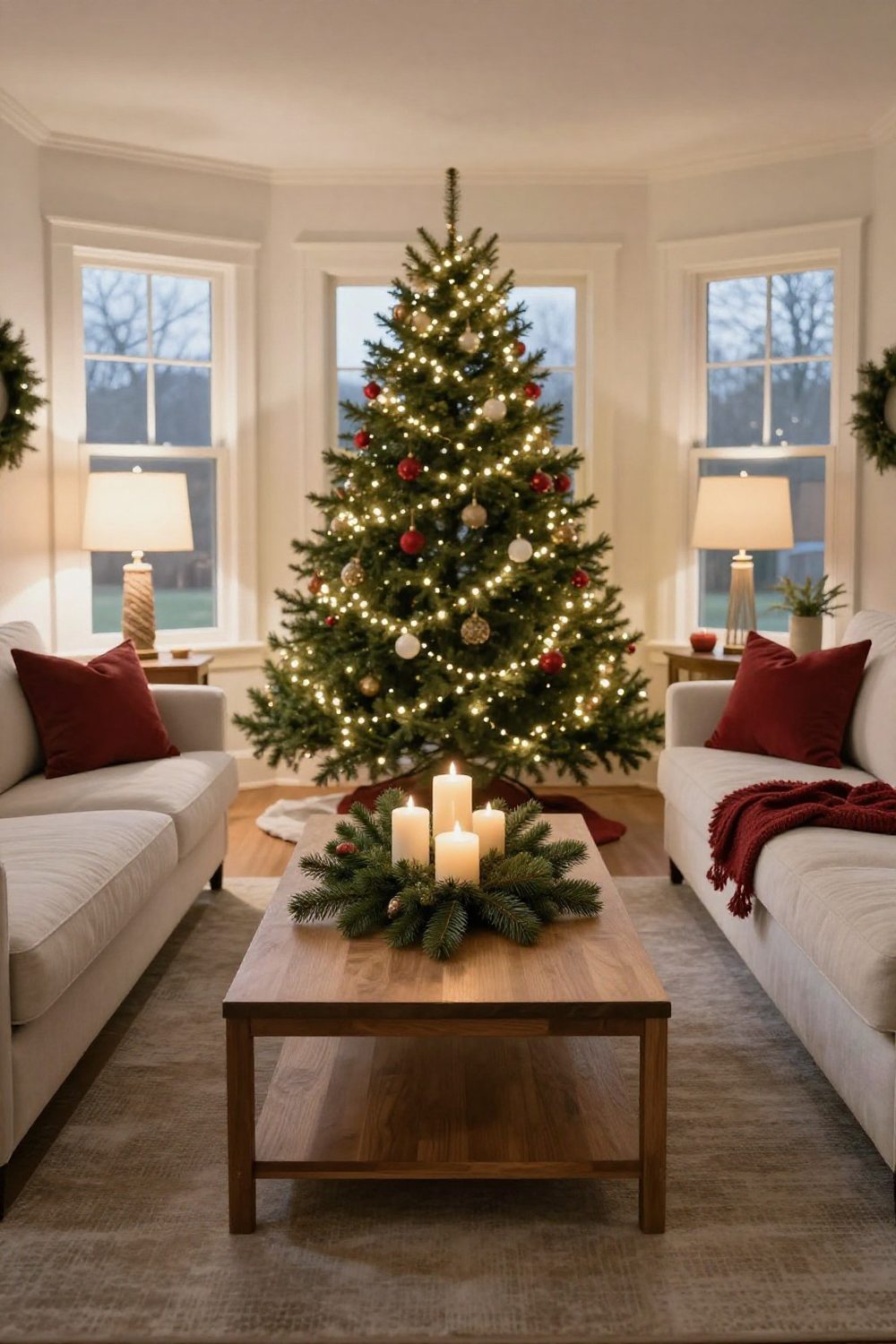
7. Keep the centerpiece low
Anything on a coffee table taller than about 12 in (30 cm) starts to block faces across the seating group. Holiday centerpieces belong at eye level only on a dining table; in the living room, think long and low.
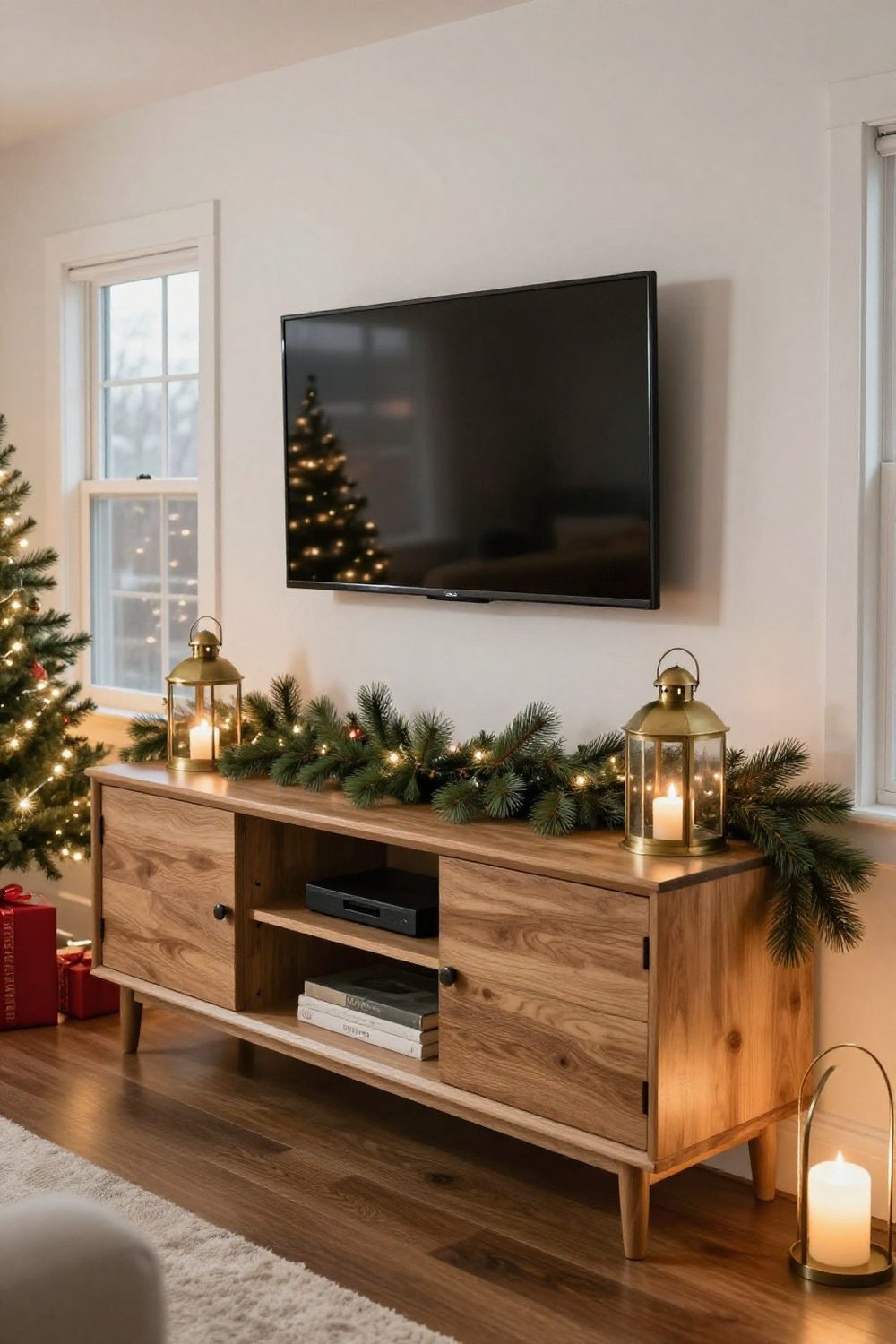
8. Dress the TV stand without hiding the TV
A low garland and a pair of lanterns turn the media wall into part of the decor. Keep greenery clear of the TV's vents and the remote sensor, and stop the garland below the screen so it doesn't frame a black rectangle for half the day.
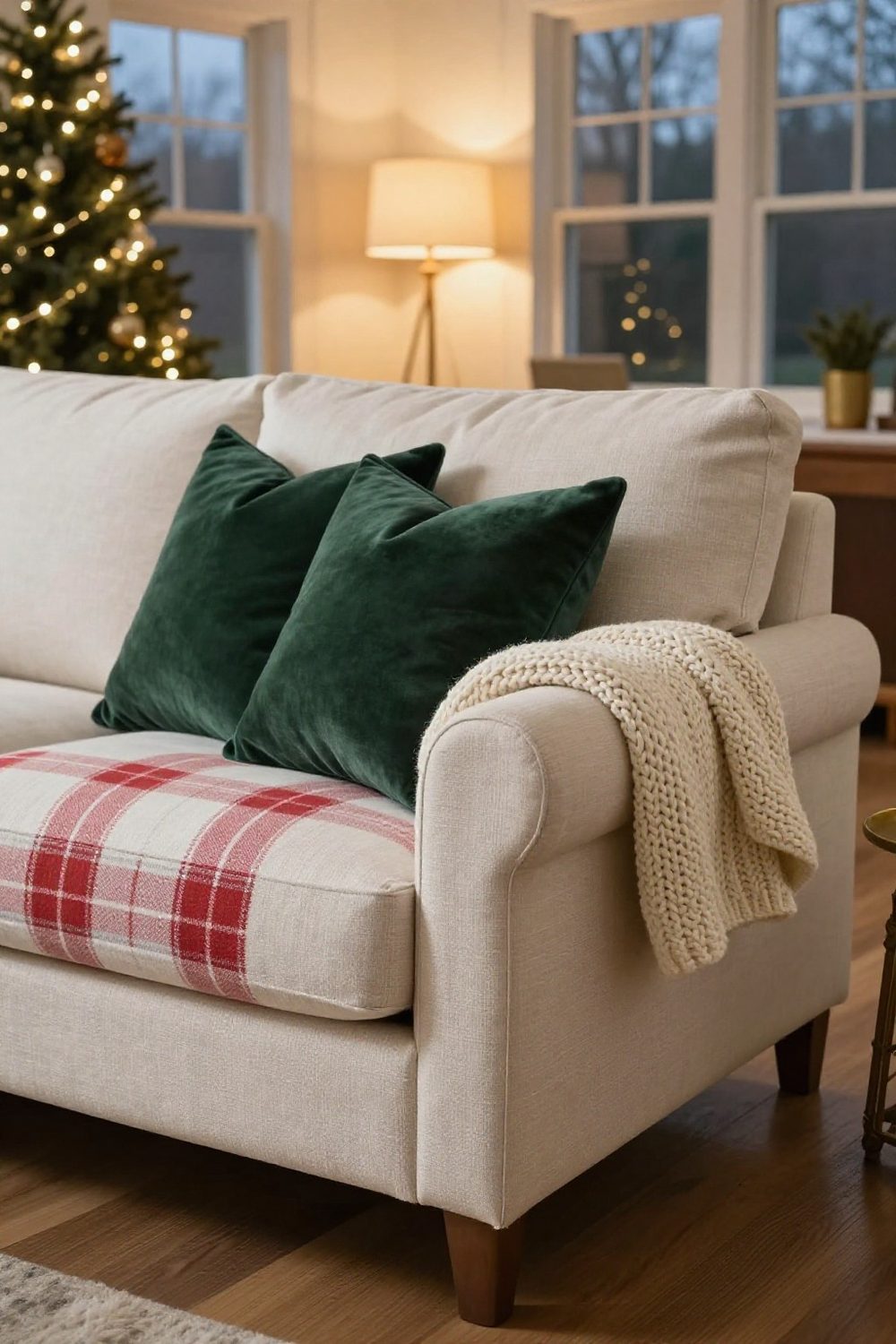
9. Swap pillow covers, not pillows
Seasonal covers in plaid, velvet or a muted red change the sofa in minutes and fold flat into a drawer in January. Keep the inserts; buying whole holiday pillows means storing bulky foam for eleven months.
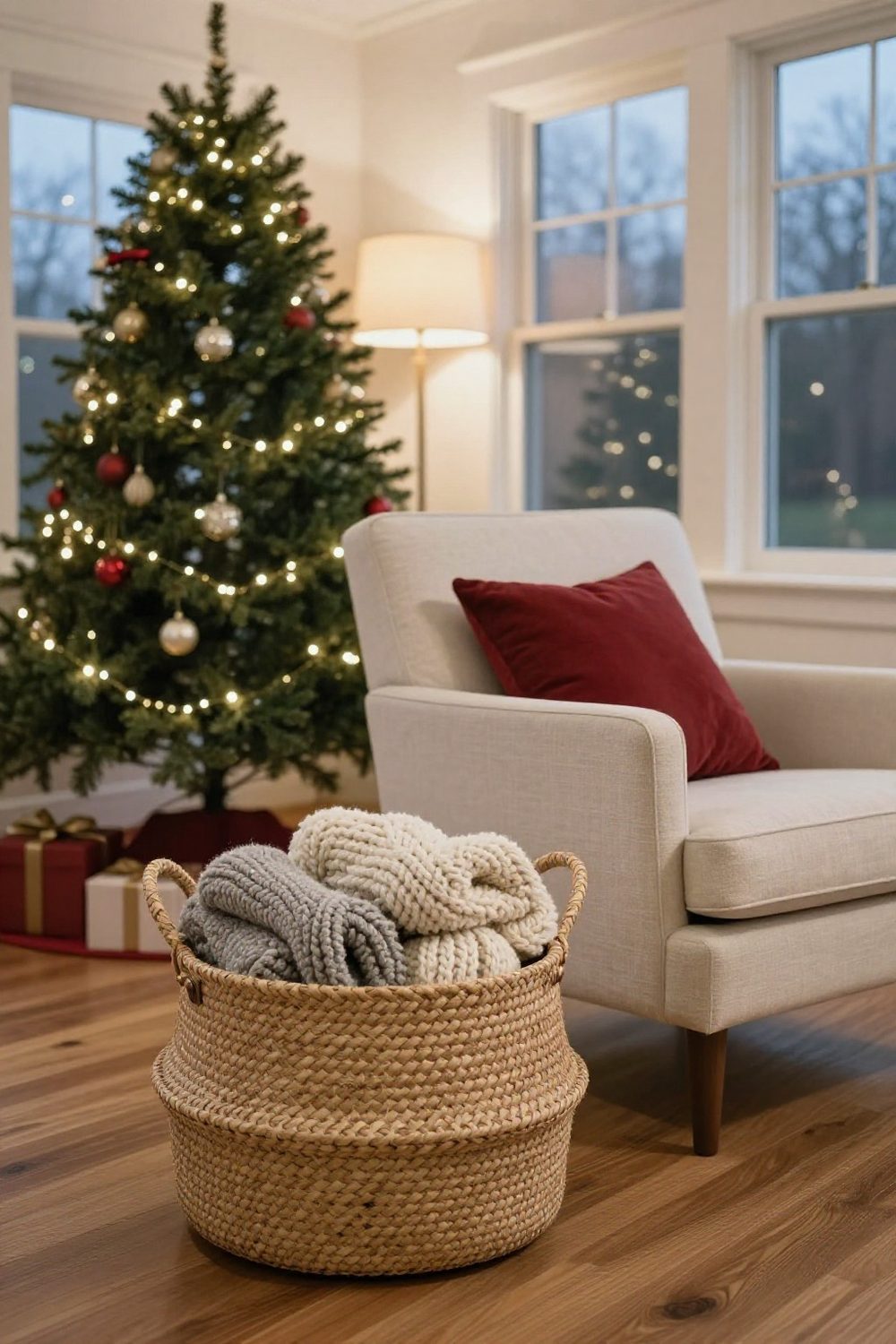
10. A basket of throws within reach
Coziness in winter is partly physical: a warm layer within arm's reach of every seat. A basket of knit and wool throws by the armchair works harder than another decorative object on a shelf.
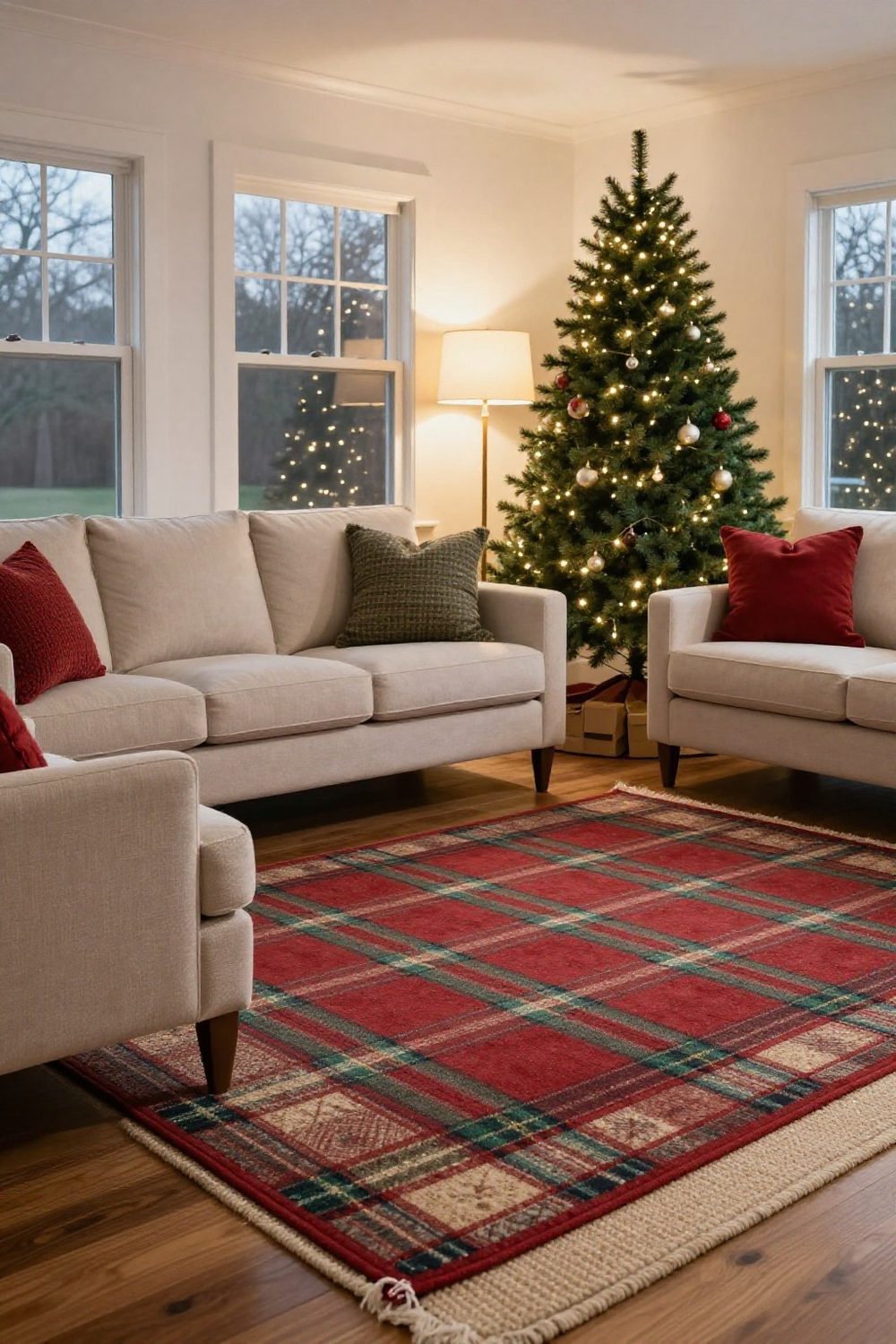
11. Layer a holiday rug
A smaller plaid or patterned rug laid over your main neutral rug brings the season down to floor level. Keep the base rug where it is so the seating layout and walkway don't shift.
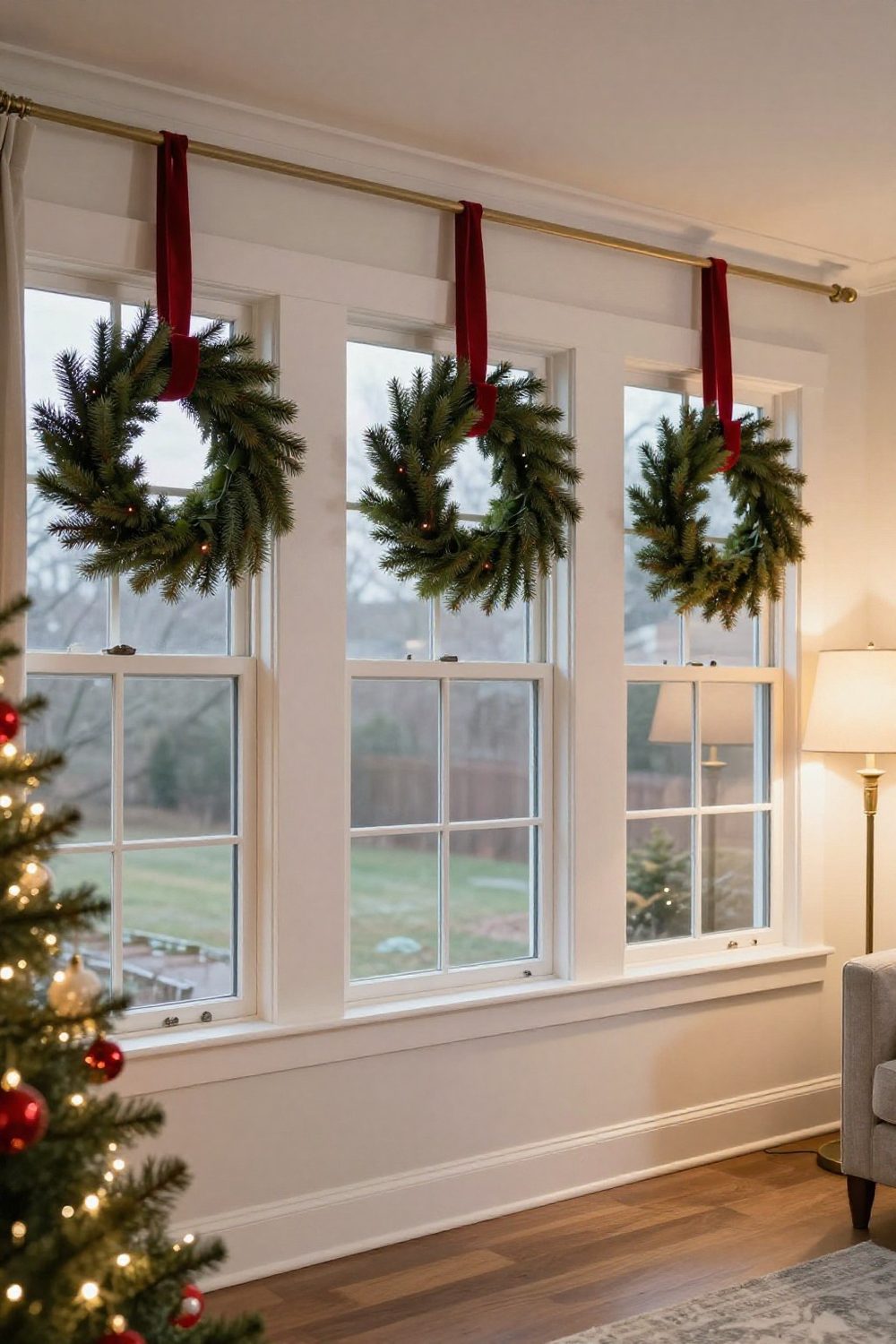
12. Wreaths on ribbon in the windows
Small wreaths hung on ribbon from the top of the window frame decorate the room from inside and the street from outside. Keep them small enough that the glass still lets in daylight — December days are short already.
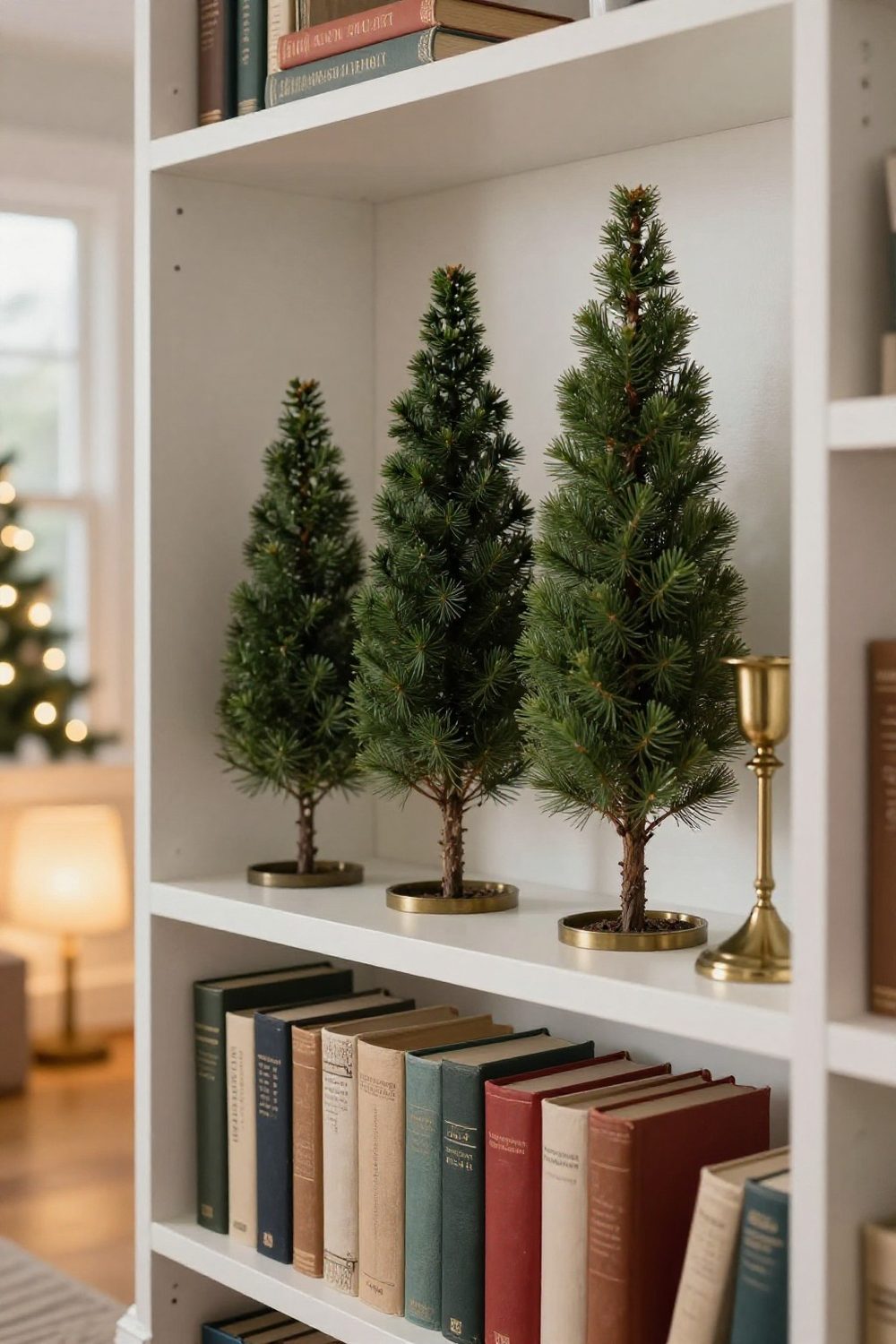
13. Bottle-brush trees on the bookshelf
A cluster of small bottle-brush trees in two or three heights reads as a tiny forest on a shelf. Grouping in odd numbers keeps it looking deliberate instead of scattered.
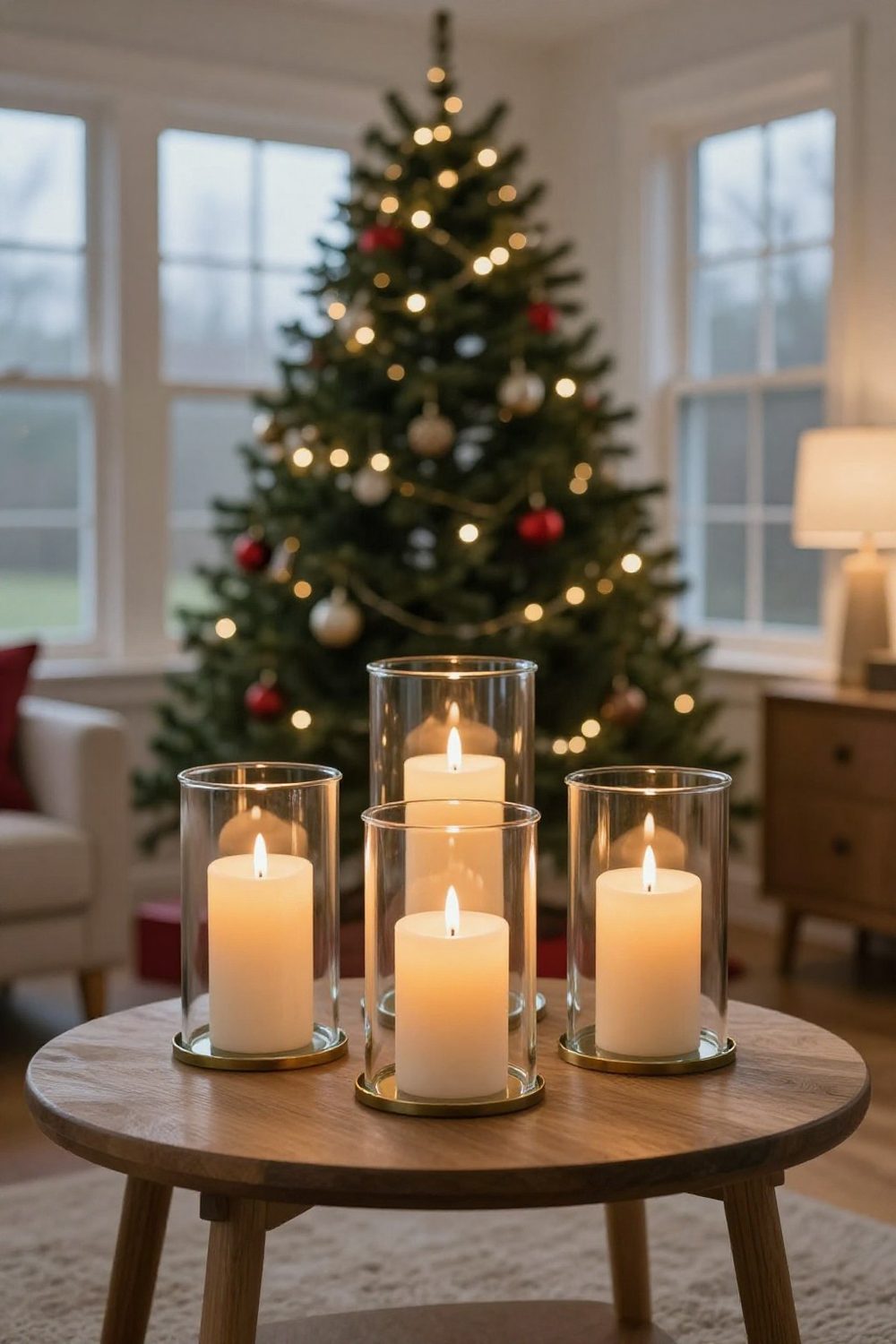
14. Flameless candles near anything that burns
Real flame belongs well away from the tree, garland and curtains. Good flameless pillars in glass hurricanes give the same glow on the side table next to the tree — and they can stay on a timer all evening.
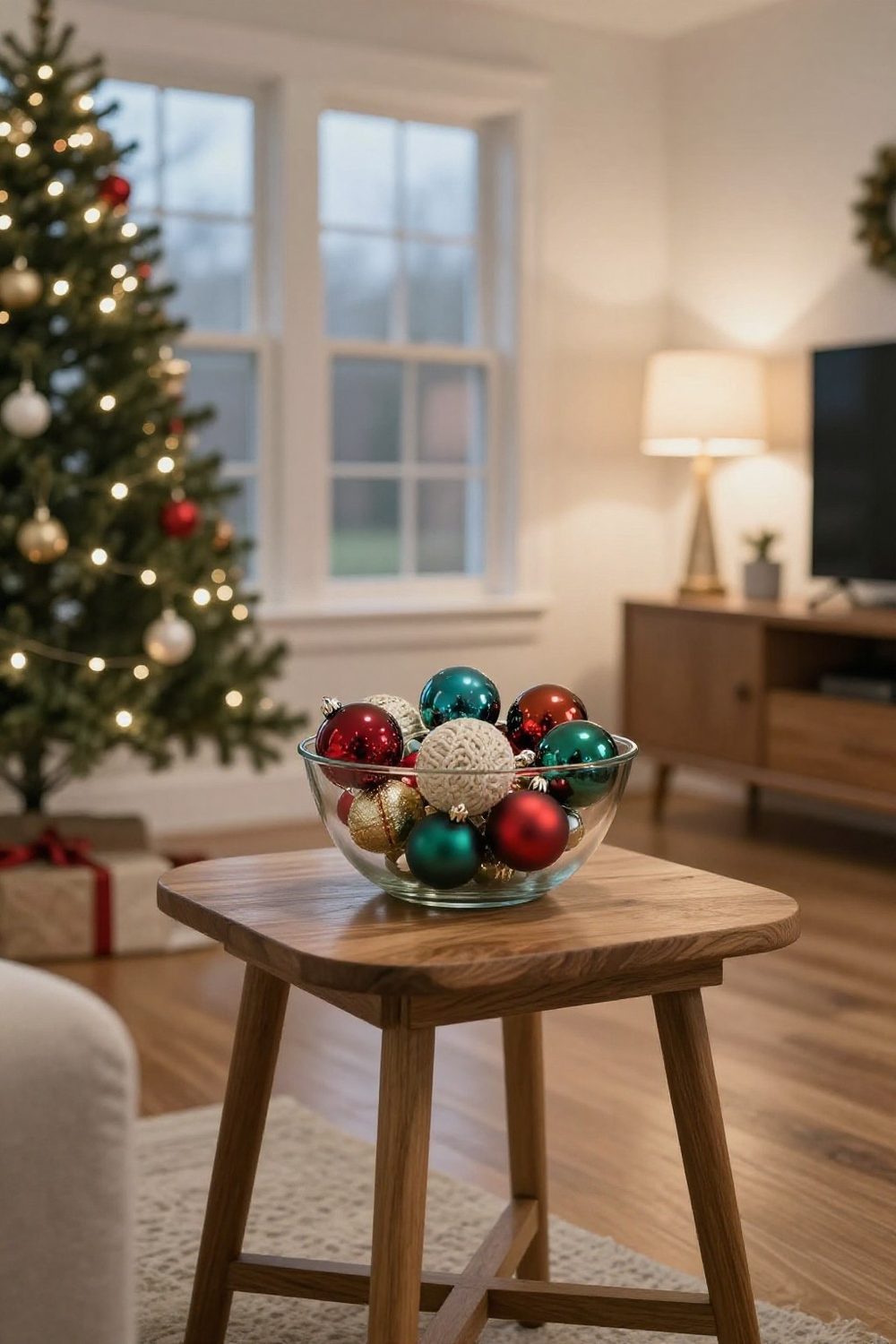
15. A bowl of vintage ornaments
Inherited or thrifted glass ornaments that are too fragile for the tree look their best gathered in a clear bowl, where their colors and wear become the point. It's also the safest place for them in a house with pets.
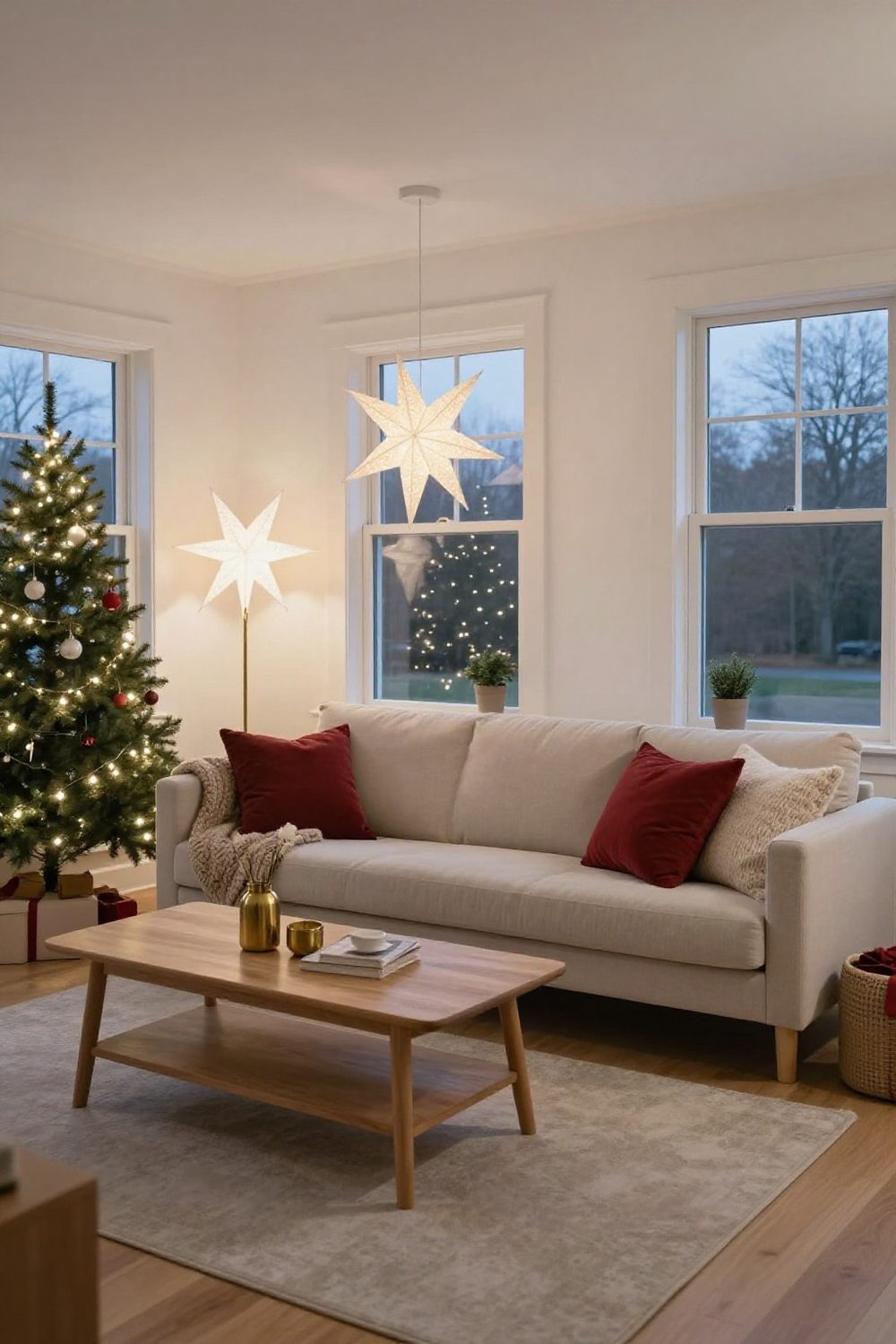
16. Paper star lanterns, Scandinavian style
White paper stars lit from inside are a staple of Nordic Christmas windows: soft, warm and almost weightless. Use only the LED bulbs the lanterns are designed for, so the paper never sits against a hot bulb.
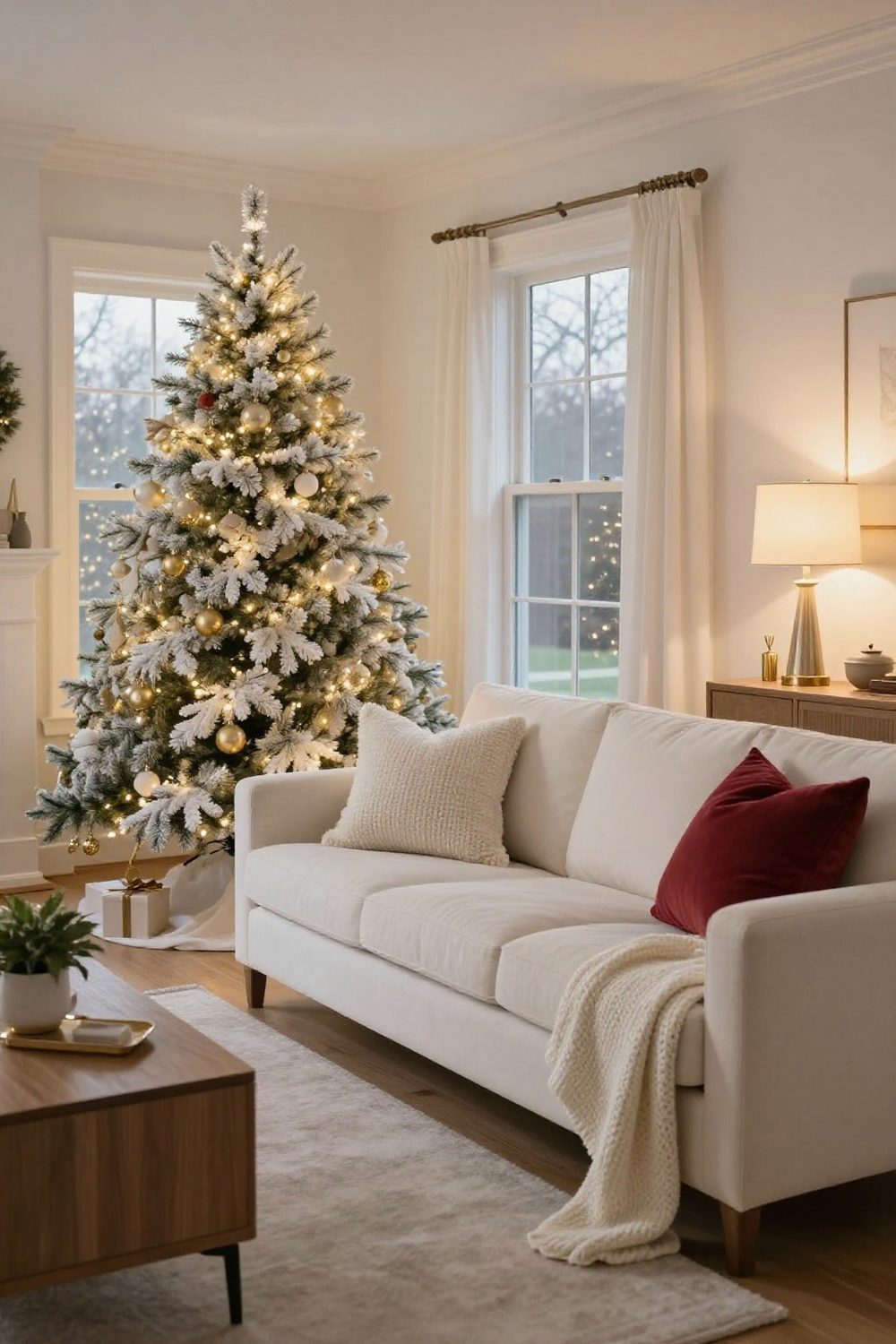
17. An elegant palette: white, cream and one metal
The rooms that read as "elegant" usually use fewer colors, not more expensive ones. Pick white and cream plus a single metal — brass or gold — and let greenery be the only other color.
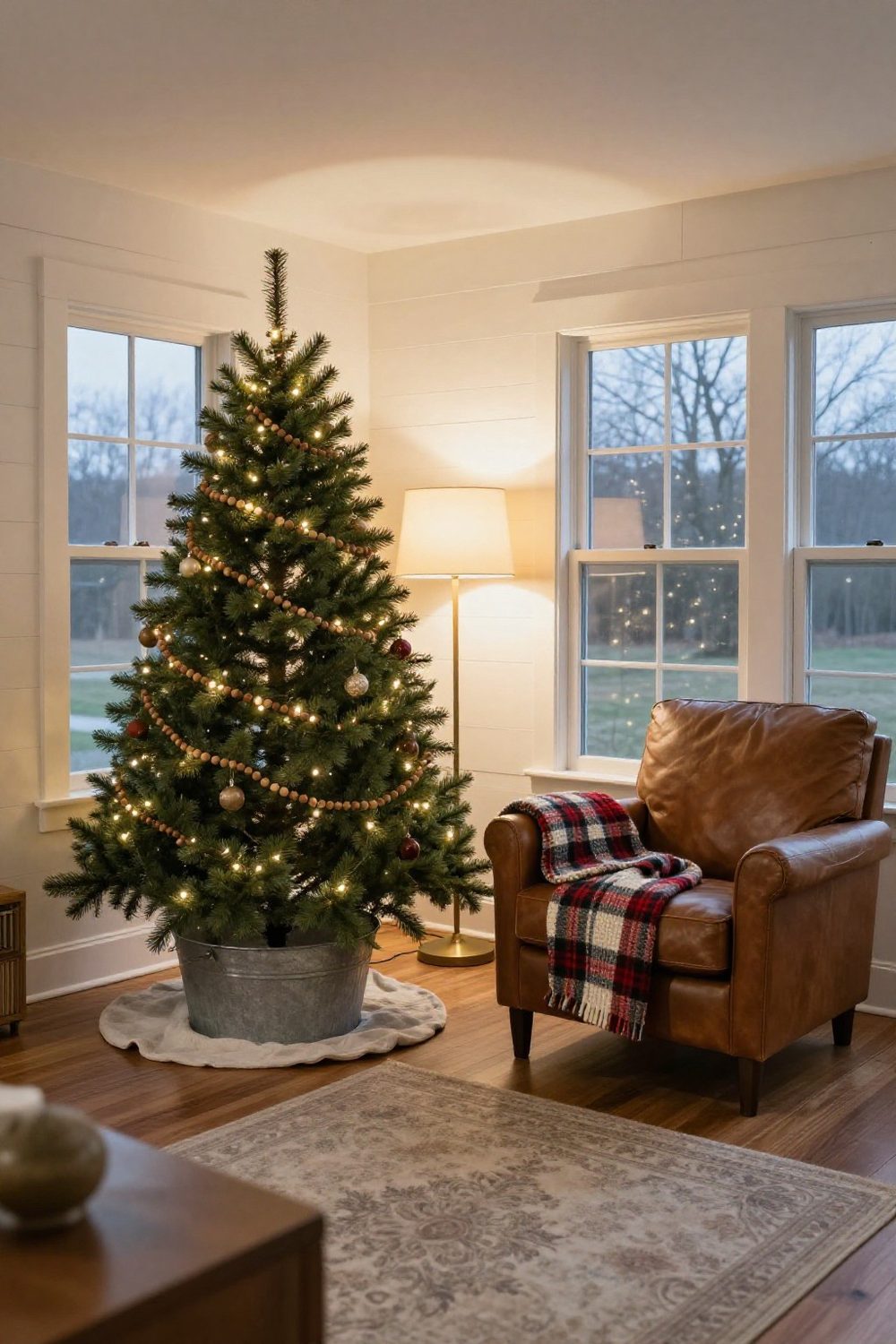
18. Farmhouse Christmas with natural materials
Wood bead garland, a galvanized bucket around the tree stand, a plaid blanket and real greenery give the farmhouse look its warmth. The style works because every material is matte and handled — very little shines.
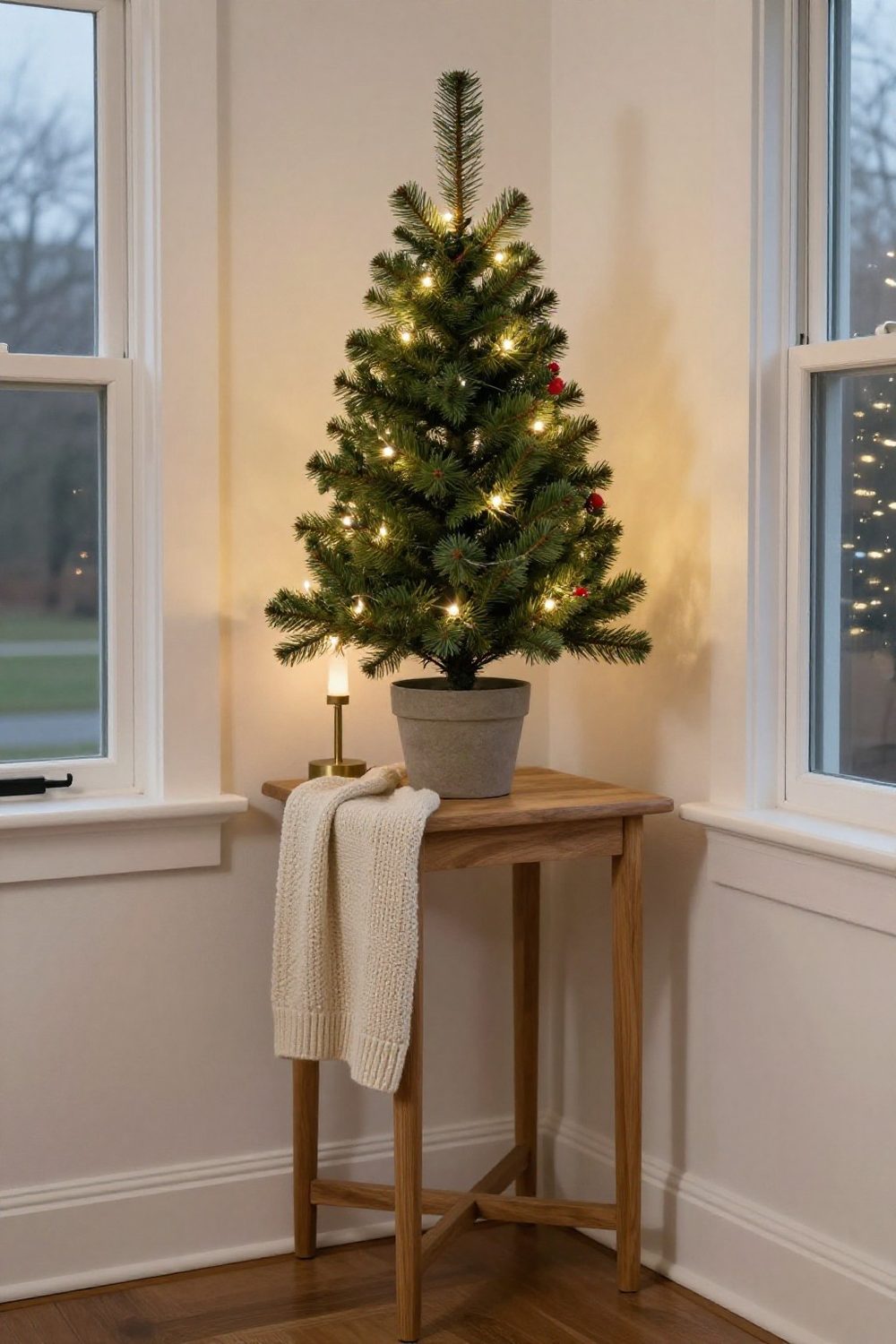
19. A tabletop tree for small apartments
When the floor plan can't spare five feet of floor, a 2–3 ft tree on a console or side table gives the season a focal point. Raised off the floor, it also survives curious pets and small children better.
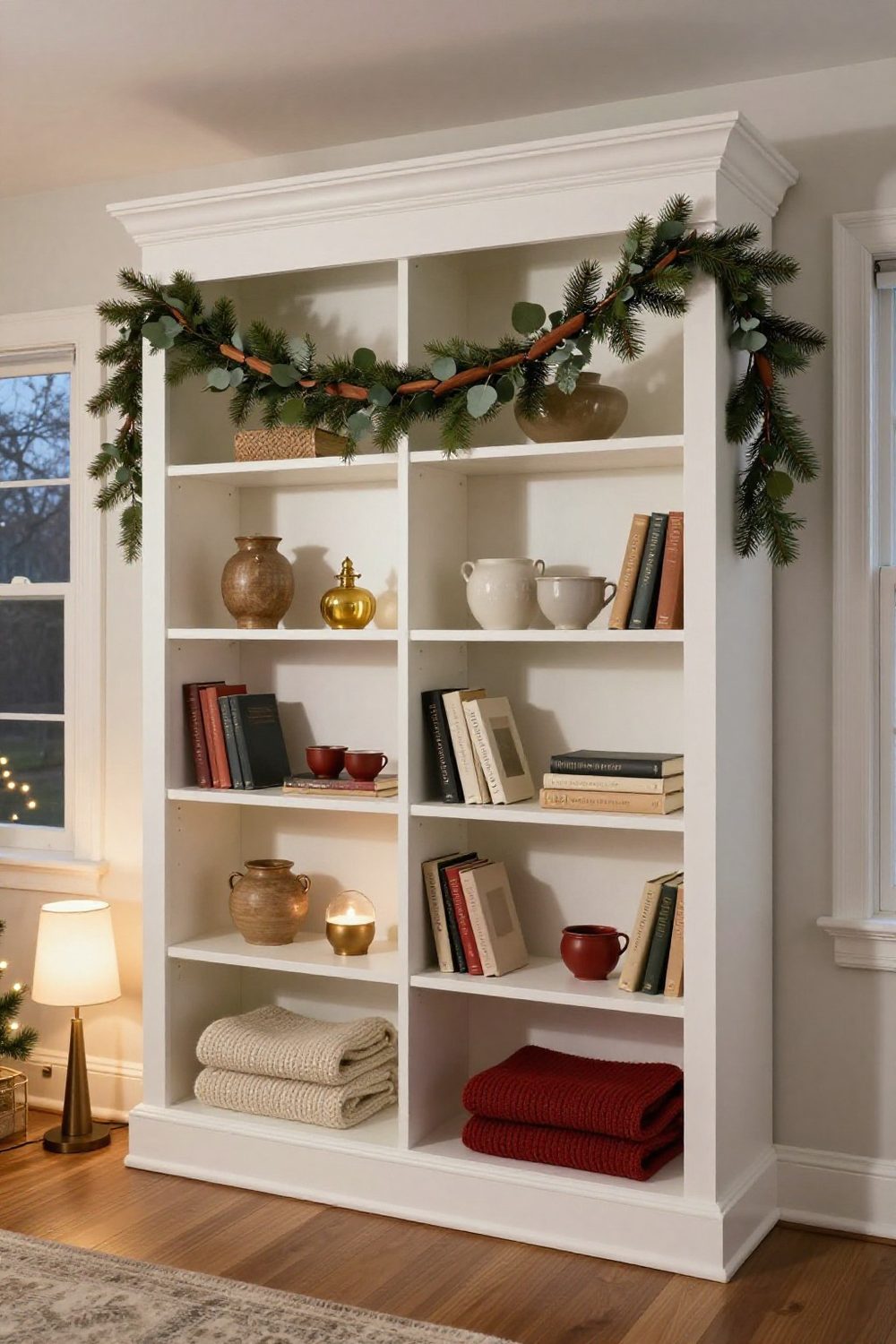
20. Garland along the bookcase
A loose garland across the top of a bookcase carries the green from the tree to the far side of the room. Faux cedar or eucalyptus lasts all season indoors; real cuttings dry out within a couple of weeks in a heated room.
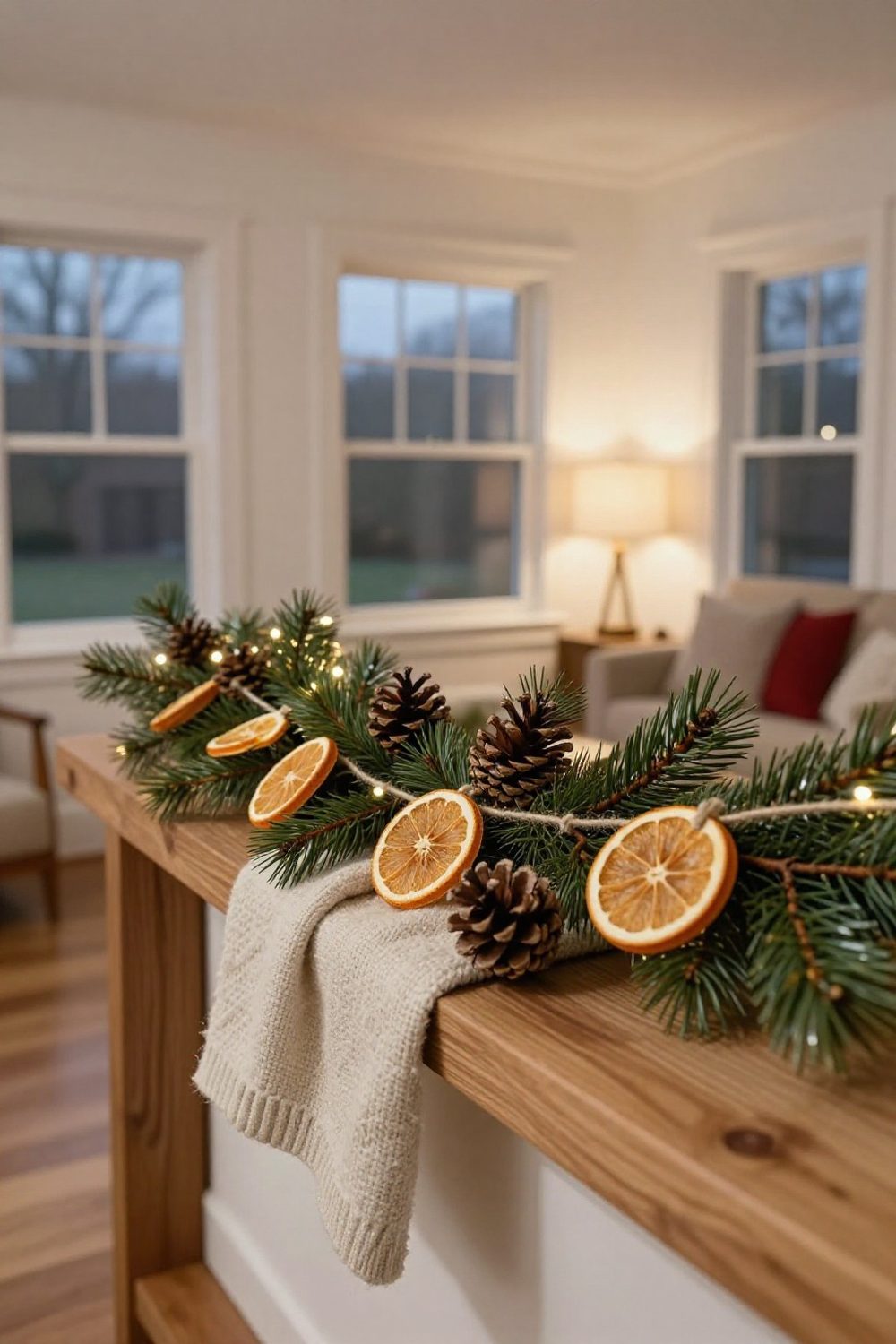
21. Dried orange and pinecone garland
Oven-dried orange slices strung with pinecones make an inexpensive, warm-toned garland that smells faintly of citrus. Dry the slices fully at a low oven temperature over several hours — damp slices mold once they're hung.
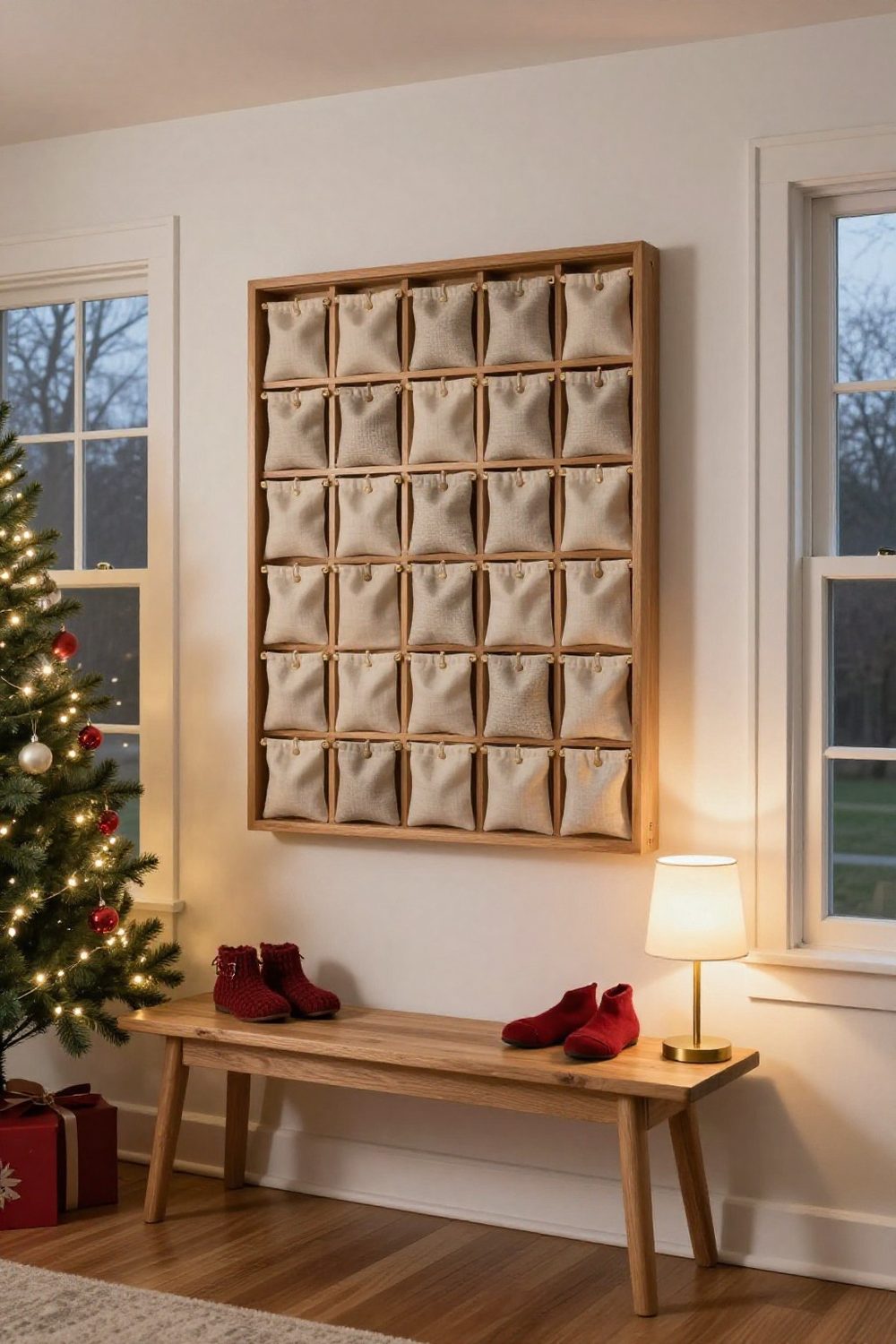
22. An advent calendar as wall decor
A wooden or fabric advent calendar does double duty: decoration on the wall and a daily ritual for the household. Hang it at the height of whoever opens it, which is not always the adults.
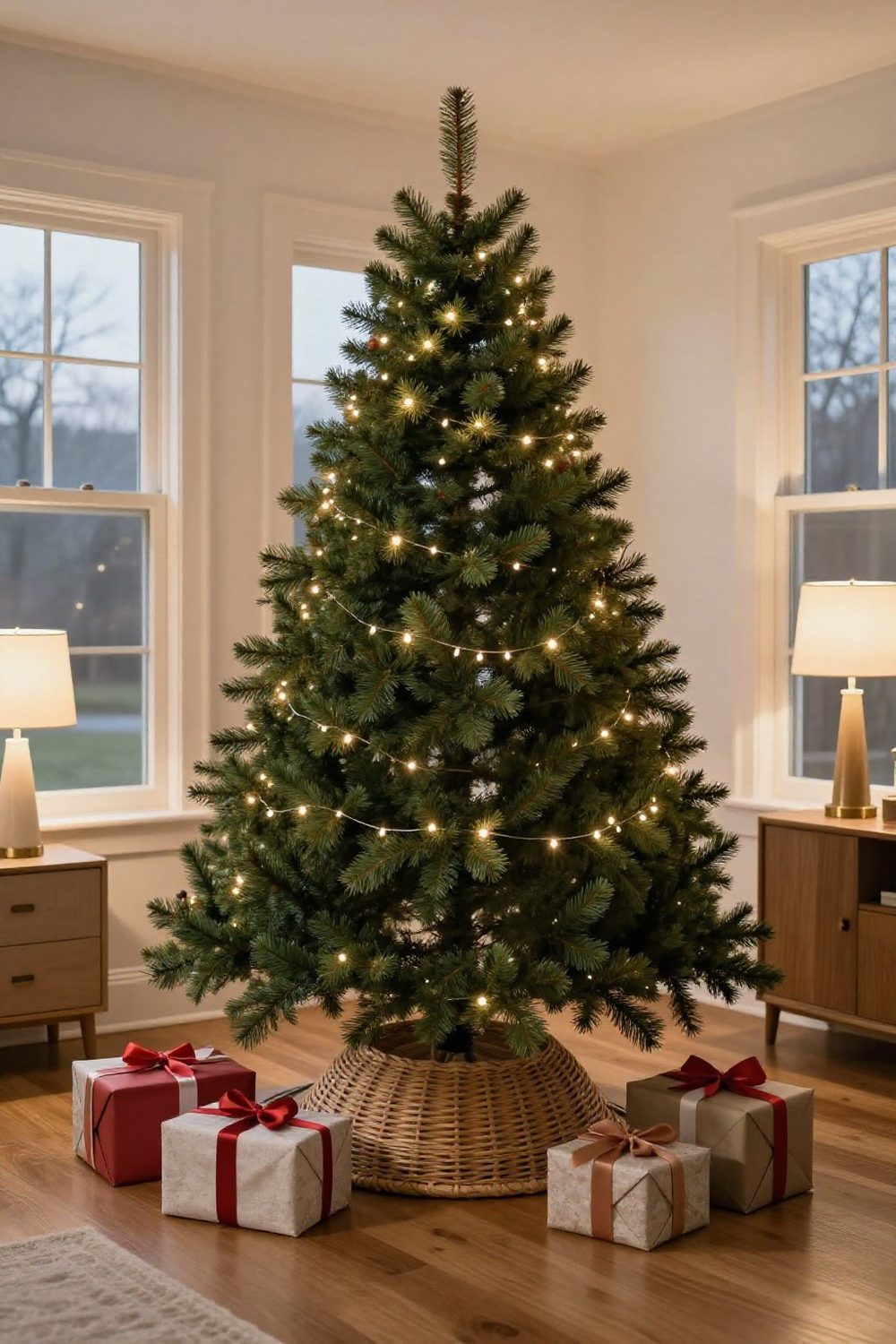
23. A tree collar instead of a skirt
A woven or metal tree collar hides the stand neatly and doesn't bunch the way fabric skirts do. With a real tree, make sure the collar still lets you reach the water reservoir every day.
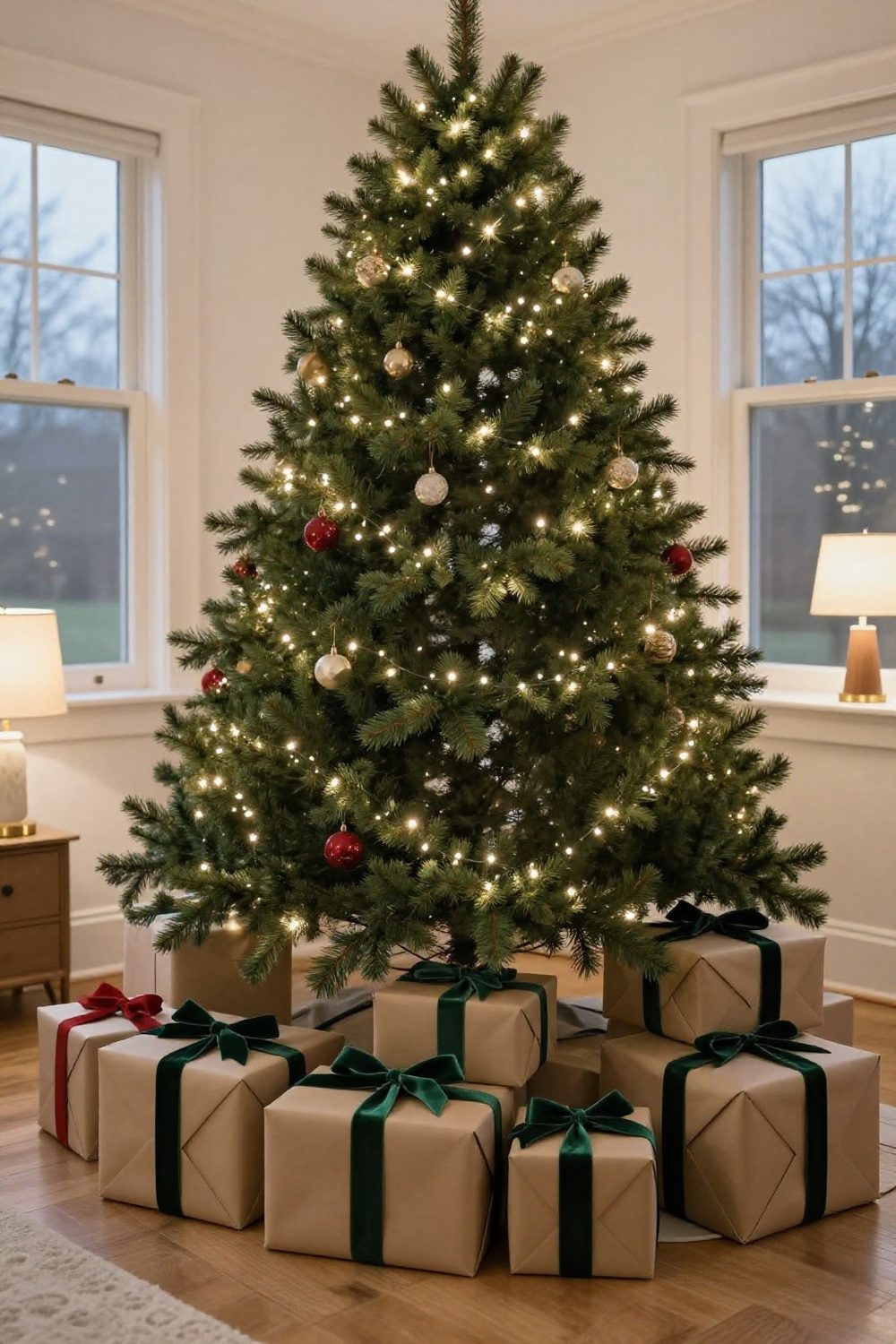
24. Wrap the gifts in the room's palette
For the weeks they sit under the tree, presents are part of the decor. Two or three wrapping papers in the room's colors look calm; ten different prints look like a store shelf.
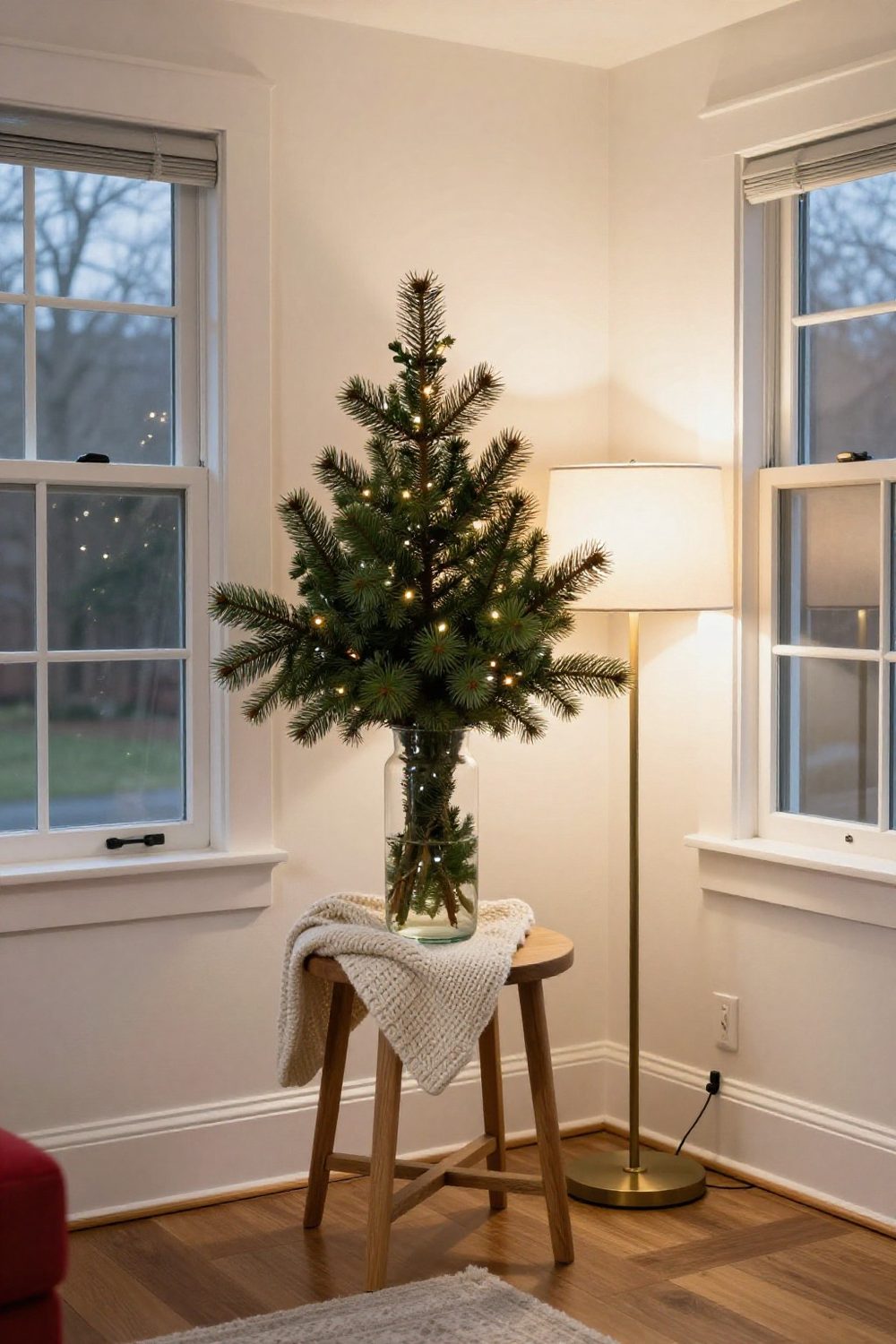
25. Put the trimmings in a vase
The lower branches you cut off to fit a real tree into its stand are free decor. Recut the stems and put them in water in a clear vase; on a side table they bring the scent of the tree into another corner of the room.
How to put it together in one afternoon
- Measure first: tape the tree's footprint on the floor and check the walkway and the 3 ft heat clearance.
- Lights before ornaments: string the tree lights and switch them on before hanging anything else, so gaps are easy to see.
- Big to small: tree, then mantel or bookcase garland, then textiles, then the small surfaces — tray, shelves, side tables.
- Edit the surfaces: leave at least one table clear for drinks. A room where every flat surface is decorated is a room where nobody can put down a mug.
- Set the timers: tree lights and flameless candles on timers, so the room is lit when you come home and dark when you sleep.
Common Christmas living room mistakes
- A tree that's too wide for the room — height gets all the attention; diameter is what blocks the walkway.
- Greenery and stockings over a fire that's actually lit — move them, or keep the fireplace for looks only that season.
- Cool white lights next to warm lamps — the room ends up lit in two conflicting colors.
- The overhead light left on — it washes out every small warm light you've added.
- Every surface decorated — a holiday living room still has to work for coffee, games and guests.
- A dry tree in January — the risk peaks after the holidays, not before them.
Final thought
The best Christmas living rooms are decorated around how the room is used: a tree sized to leave the walkway clear, greenery kept a safe distance from heat, and light coming from many warm, low sources instead of one bright one. Get those right and almost any style — Scandinavian, farmhouse or white-and-gold — looks considered rather than crowded.

Sources & principles referenced
- National Fire Protection Association — Christmas tree safety tip sheet (3 ft from heat sources, lab-listed lights, manufacturer's strand limits, lights off when away or asleep) and home Christmas tree fire statistics, 2020–2024 averages.
- National Christmas Tree Association — tree care tips (½-inch fresh cut, 6–8 hour window, 1 quart of water per inch of stem diameter, daily water checks, low-heat lights).
- ASPCA Animal Poison Control — poinsettia, lily, holly and mistletoe toxicity listings.
- Retailer tree size charts (full-profile diameter ≈ 60–70% of height; slim and pencil profiles narrower).
- Industry rule of thumb for tree lighting density (~100 mini lights per vertical foot) and tree height vs. ceiling clearance (~12 in, with ≥6 in above the topper).
- Standard living-room clearances — main walkways 30–36 in (75–90 cm); warm-white color temperature 2700–3000 K.
Images in this article are AI-generated visualizations of each idea, not photographs of finished projects.