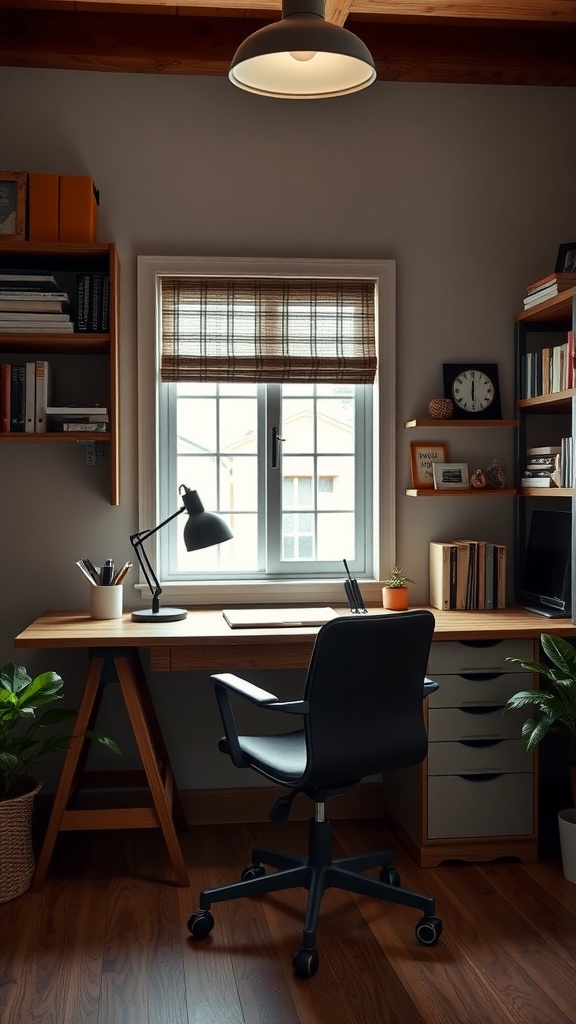

Apartments come with a specific set of constraints: someone else owns the walls, the floorplan is fixed, and anything you change may need to be undone when you leave. That doesn't limit what's possible nearly as much as people assume — it just changes where you spend effort. This guide works through a cozy apartment room by room, covering what actually transforms each space and which of those changes are reversible.
What you can change in a rented apartment
Before anything else, it's worth separating the fixed from the changeable, because most people underestimate the second category.
Almost always reversible: lighting (lamps, bulb colour, plug-in dimmers), textiles, rugs, freestanding furniture, plants, art hung on existing hooks, removable wallpaper and peel-and-stick tile, tension rods, and over-door or freestanding storage.
Usually needs permission but often granted: painting walls, changing light fittings, fitting shelves, and swapping cabinet hardware — keep the originals in a box and reinstate them when you leave.
Genuinely fixed: the layout, the windows, the kitchen carcasses and the flooring.
The useful insight: lighting and textiles are both fully reversible and among the highest-impact changes available. That's where a renter's budget belongs.
Lighting is the apartment renter's biggest lever
Most rented apartments are lit by a single cool-white ceiling fixture per room, which is the least flattering arrangement possible. Two changes fix it, and both come with you when you move:
- Change every bulb to 2700 K. This costs very little and instantly warms every room in the flat.
- Add lamps at low level. Aim for three light sources at different heights per room — a floor lamp, a table lamp and something accent. Several low pools of warm light read far cosier than one bright overhead.
Plug-in dimmer adapters and smart bulbs both let you control brightness without touching the wiring.
Make small rooms work harder
Apartment rooms tend to be smaller and to serve several functions at once. Two principles carry most of the load: go vertical — tall shelving, wall-mounted storage and hanging plants use volume the floor can't spare — and choose multifunctional pieces, so a storage ottoman, a sofa bed or a nesting table set earns its footprint twice.
Keep the practical clearances in mind even in a small flat: 75–90 cm for main walkways, 40–45 cm between sofa and coffee table, and facing seats within about 2.4 m so conversation works.
5 cozy apartment ideas, room by room
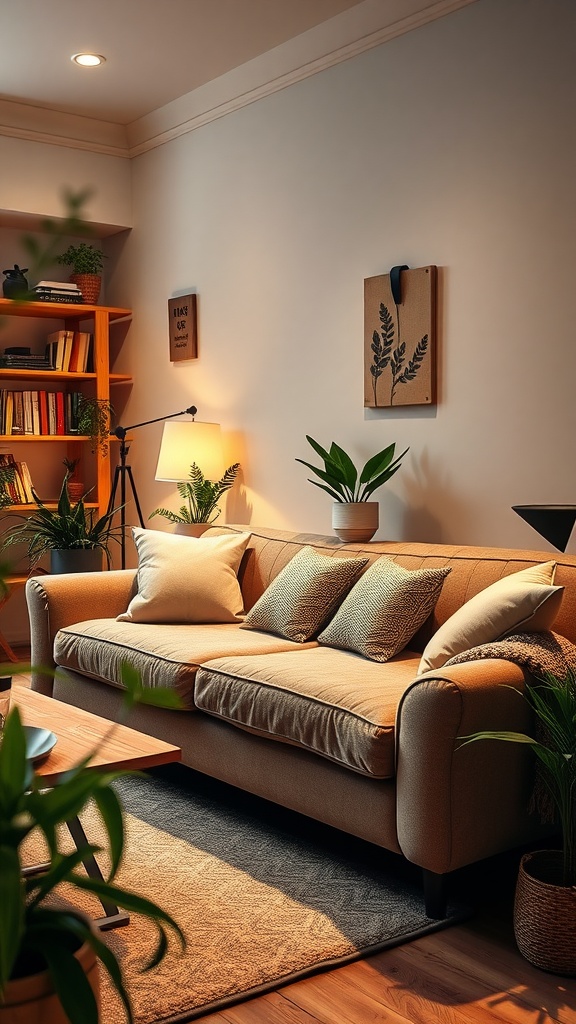
1. A Warm Living Room Retreat
The living room is where an apartment either feels like a home or like temporary accommodation, and three things decide it.
Pull the furniture off the walls. The instinct in a small flat is to push everything to the perimeter to create space. It backfires — seating ends up too far apart for comfortable conversation and the middle becomes a dead zone. Even moving the sofa 20 cm inward and running a narrow console behind it makes the arrangement read intentional.
Size the rug properly. An undersized rug is the clearest sign of an unresolved room. Aim for large enough that at least the front legs of each seat sit on it; if the rug you own is too small, layering it over a larger natural-fibre one solves the problem cheaply.
Add a bookshelf and plants. Books bring colour, texture and a strong signal that someone actually lives here — and they absorb sound, which matters in apartments with hard floors and shared walls. Plants soften the hard lines that rental architecture tends to have.
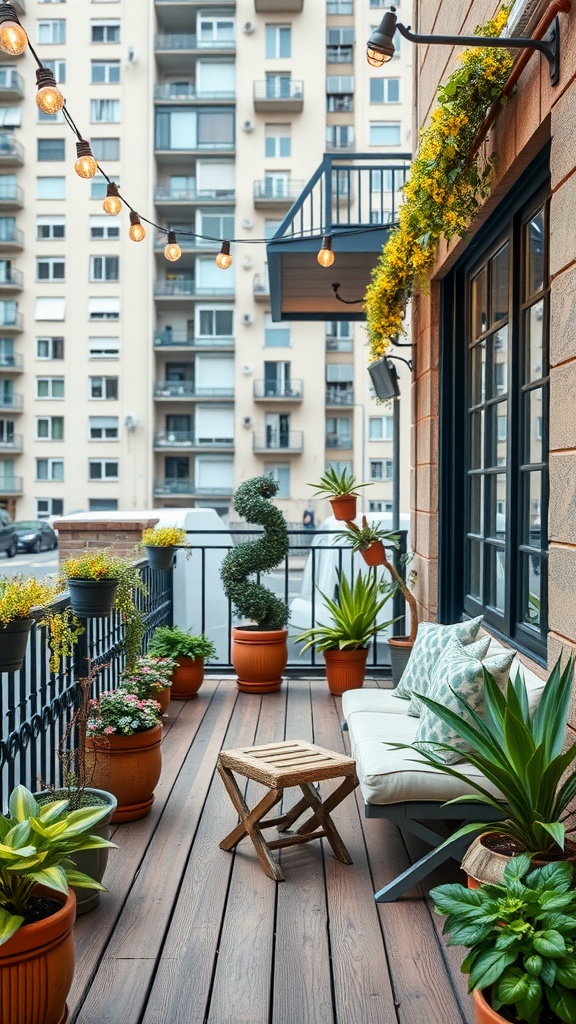
2. A Balcony Worth Using
A balcony is the most under-used square footage in most apartments — often treated as storage for things that don't fit inside. Furnished properly it becomes an extra room, and every element is portable.
Start with the floor. Interlocking wood or composite deck tiles clip over existing concrete without any fixing, transform how the space looks and lift straight out when you leave.
Keep the furniture small and foldable. A bistro table and two folding chairs suit most balconies better than a bulky lounge set, and they stow away in winter. Measure before buying — balcony depth is usually the binding constraint.
Add string lights and plants. Warm string lights turn a balcony into an evening space, and layered planting at different heights makes it feel like a garden rather than a ledge. Check your building's rules on anything fixed to railings or walls, and on drilling.
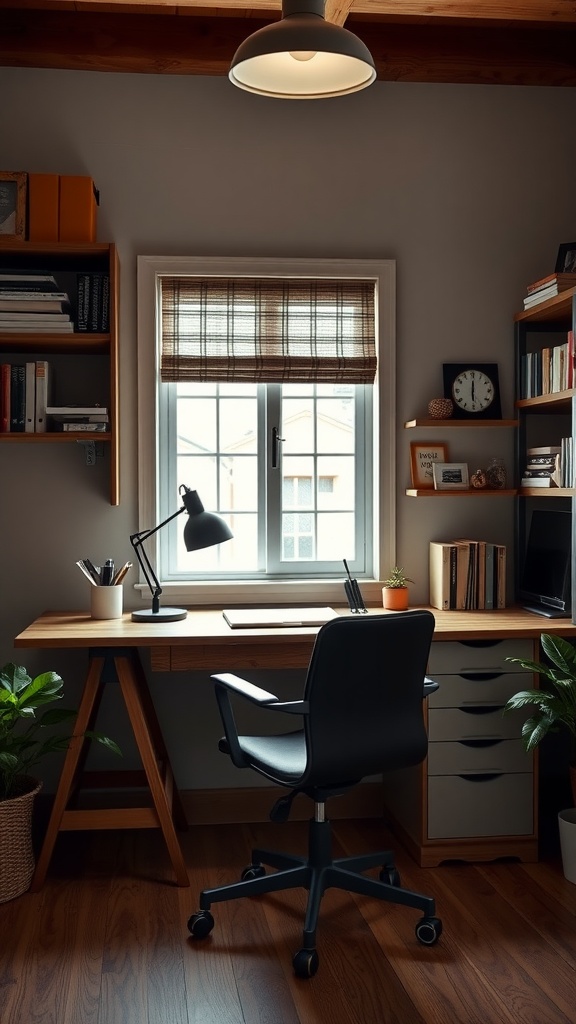
3. A Home Office That Doesn't Take Over
Most apartments have no spare room, so the workspace has to share with something else. The goal is a desk you can mentally switch off from at the end of the day.
Set the ergonomics correctly, because you'll feel this daily. Desk height around 72–75 cm suits most people; the top of the monitor should sit at or slightly below eye level, roughly an arm's length away; and your forearms should rest close to parallel with the floor when typing. A laptop alone forces you to choose between neck strain and wrist strain — a separate keyboard and a laptop stand solve it inexpensively.
Light it separately. A dedicated task lamp positioned to the side (not behind you, which causes screen glare) means you can light the desk without lighting the whole room.
Give it a visual boundary. A rug under the desk, a screen, or simply positioning the desk against a bookshelf marks it as its own zone. Being able to physically close or turn away from the workspace matters more than its size.
4. A Kitchen Nook
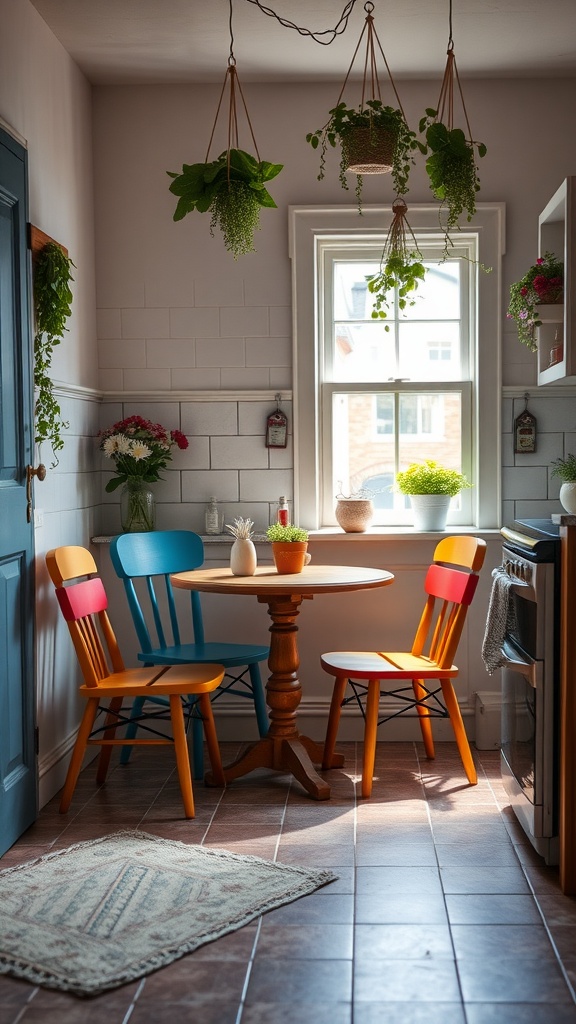
Apartment kitchens are usually fixed — you can't move the units or change the worktop. What you can change is the eating area, and that's what makes the room feel like part of the home rather than a utility space.
Choose a round table. In tight corners a round table beats a rectangular one because there are no corners to catch as you pass, and it seats people more sociably. Allow roughly 60 cm of table edge per person and about 90 cm behind each chair so people can actually stand up.
Use colour where it's cheap. Painted chairs, textiles and crockery bring personality to a kitchen whose cabinetry you're stuck with. Colourful chairs around a plain table is the classic renter's solution.
Add hanging plants. They use vertical space rather than the worktop you need, and greenery does more than anything else to warm a bland fitted kitchen. Herbs on the windowsill do the same job and get used.
5. A Bedroom Sanctuary
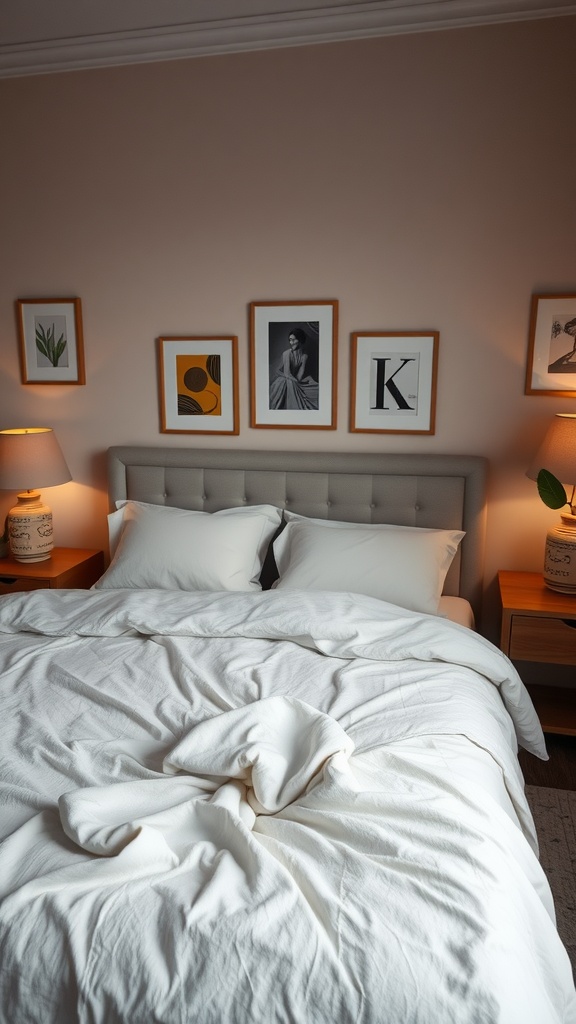
The bedroom is where reversible changes deliver the most, because almost everything in it is soft furnishing rather than fixture.
Bedding first. It's the largest fabric surface in the room and the thing you're in contact with for a third of your life. Layer it — sheet, duvet, a folded throw, cushions in mixed textures — because a layered bed looks inviting where a flat one looks functional.
Two bedside lamps. Matched lamps flanking the bed give instant symmetry, which reads as considered design, and warm bedside light is what makes a bedroom feel restful. Keep each nightstand top within about 5 cm of the mattress height so the lamp switch and a glass of water are reachable lying down.
Art at the right height. Hang so the centre sits around 145–150 cm from the floor, and scale a piece or cluster to roughly two-thirds of the bed's width. Hanging art too high and too small is the most common proportion error in bedrooms.
Deal with the window. Rental blinds are usually thin and let in light at unhelpful hours. Adding lined curtains on a tension rod — no drilling required — improves both sleep quality and how finished the room looks.
Apartment decorating FAQ
How do I make a rented apartment feel like home? Concentrate on the reversible high-impact items: warm 2700 K bulbs, lamps at low level, generous textiles, a properly sized rug, plants and art. These five things change how every room feels and all of them move with you.
Can I decorate without losing my deposit? Yes, if you stick to non-permanent methods — removable adhesive hooks, tension rods, peel-and-stick wallpaper and tile, freestanding storage. If you do paint or change hardware, keep the originals and photograph the room before you start.
What's the cheapest change with the biggest effect? Lighting. Swapping every bulb to warm white and adding one or two lamps costs very little and transforms every room — and it's entirely portable.
How do I make small apartment rooms feel bigger? Keep the palette light, go vertical with storage, use mirrors to reflect windows, choose furniture on visible legs so floor runs underneath, and above all keep surfaces clear. Clutter shrinks a room faster than any architectural constraint.
How do I deal with noisy neighbours? Soft surfaces absorb sound: thick rugs with underlay, lined curtains, upholstered furniture and bookshelves against a shared wall all help meaningfully. Nothing reversible achieves true soundproofing, but the difference is noticeable.
Common apartment decorating mistakes
- Accepting the ceiling light as-is — a single cool-white fixture is the least flattering lighting there is, and the easiest thing to fix.
- All furniture against the walls — spreads seating too far apart and leaves a dead centre.
- Buying furniture that won't fit through the door — measure the stairwell and doorways, not just the room.
- Undersized rugs and art — the two most visible proportion errors in any home.
- Assuming nothing can change — most renters underestimate how much is reversible.
Final thought
An apartment doesn't need permission to feel like home. Fix the lighting first, layer in textiles, size the rug and art properly, and give each room one thing that's genuinely yours — a bookshelf, a plant collection, art you love. Everything on that list is reversible, portable and yours to take to the next place.

Sources & principles referenced
- Reversible versus permanent alterations in rented housing.
- Layered lighting and colour temperature (2700 K).
- Living-room clearances (walkways 75–90 cm, sofa-to-coffee-table 40–45 cm, conversation distance ~2.4 m).
- Area-rug sizing.
- Desk ergonomics (72–75 cm desk height, monitor at or below eye level at arm's length, forearms parallel to floor).
- Dining clearances (~60 cm per person, ~90 cm chair pull-out).
- Bedside-table height (within 5 cm of mattress).
- Art hanging height (145–150 cm centre) and two-thirds scaling rule.
- Acoustic absorption by soft furnishings.