
A home office has to do something no other room does: keep you focused and comfortable for eight hours, then look like part of a home rather than a cubicle the rest of the time. Decor here isn't decoration for its own sake — light, color, plants and a good chair change how you feel at four in the afternoon. These 24 home office decor ideas start with the setup that makes a workspace comfortable, then go through walls, desks, storage, lighting and the small details that make a home office a place you actually want to sit down in.
Set up the desk before you decorate it
The OSHA computer workstation guidelines are a useful checklist for anyone working from home:
- Monitor: top of the screen at or slightly below eye level, about an arm's length away (roughly 20–40 in).
- Chair and desk: feet flat on the floor, thighs roughly parallel to it, elbows close to the body and bent at about 90° when typing. A standard desk is about 28–30 in high; if yours is higher, raise the chair and add a footrest.
- Glare: place the screen at a right angle to windows rather than facing them or with a window behind it, and use blinds to control bright light.
The American Academy of Ophthalmology also suggests the 20-20-20 rule for screen work: every 20 minutes, look at something about 20 feet away for 20 seconds. A desk facing into the room or beside a window, rather than into a blank wall, makes that easy.
Light it in layers
Daylight from the side is ideal. Add a desk lamp for task light and at least one other soft source — a floor lamp or a sconce — so the room isn't lit only by the screen and the ceiling fixture on dark winter afternoons. For video calls, light in front of you flatters; a window behind you turns you into a silhouette.
Keep cords safe and out of sight
An office collects chargers, power strips and extension cords. Don't run cords under rugs or pinch them under furniture — they can overheat and wear unseen — and don't plug one power strip into another. A cable tray under the desk and a few cord clips keep the floor clear and the room looking like a room.
24 home office decor ideas — and why each one works
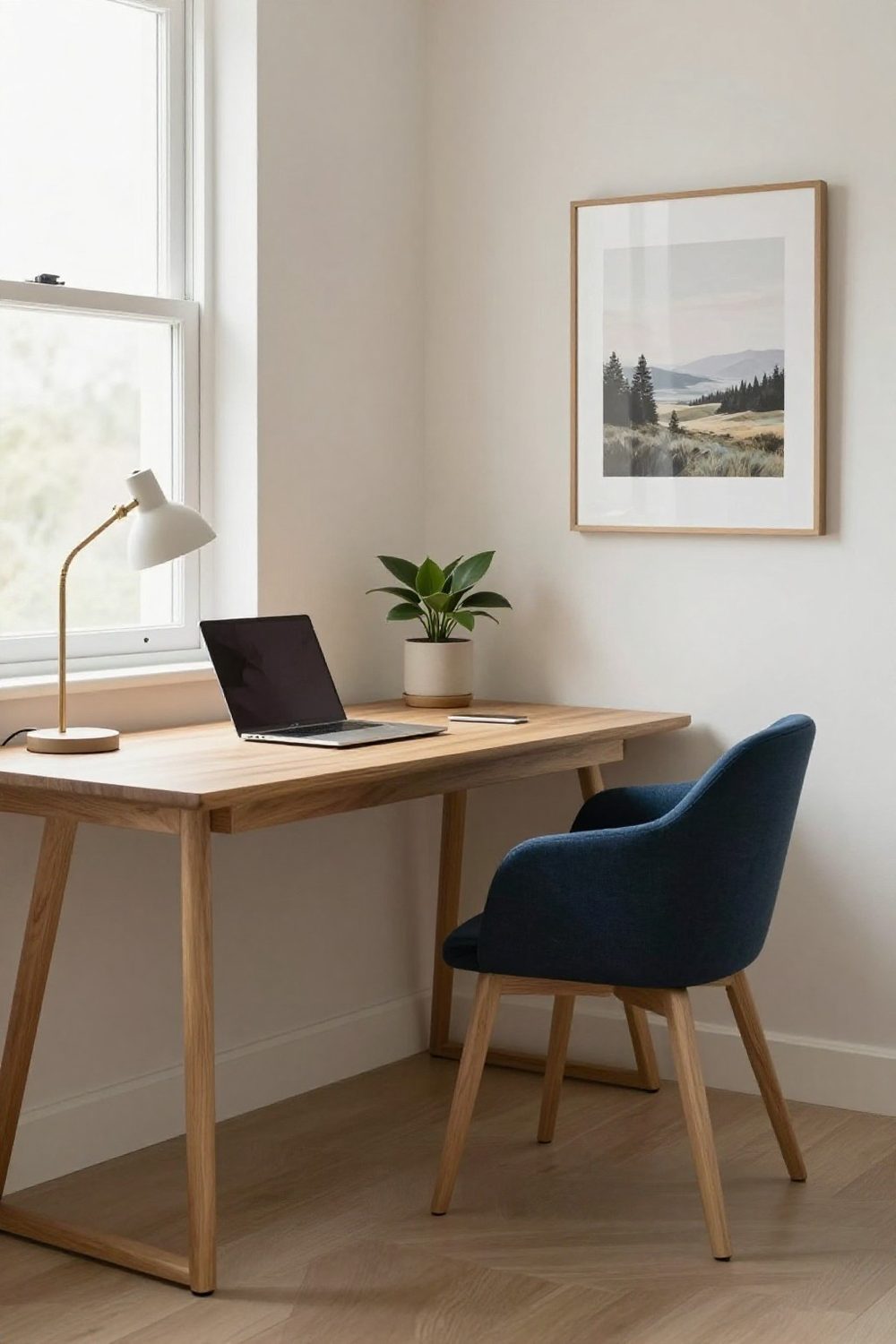
1. Put the desk beside the window
Side light from a window is the most comfortable light to work in and gives you a view to rest your eyes on. Face the room, not the wall, if the layout allows.
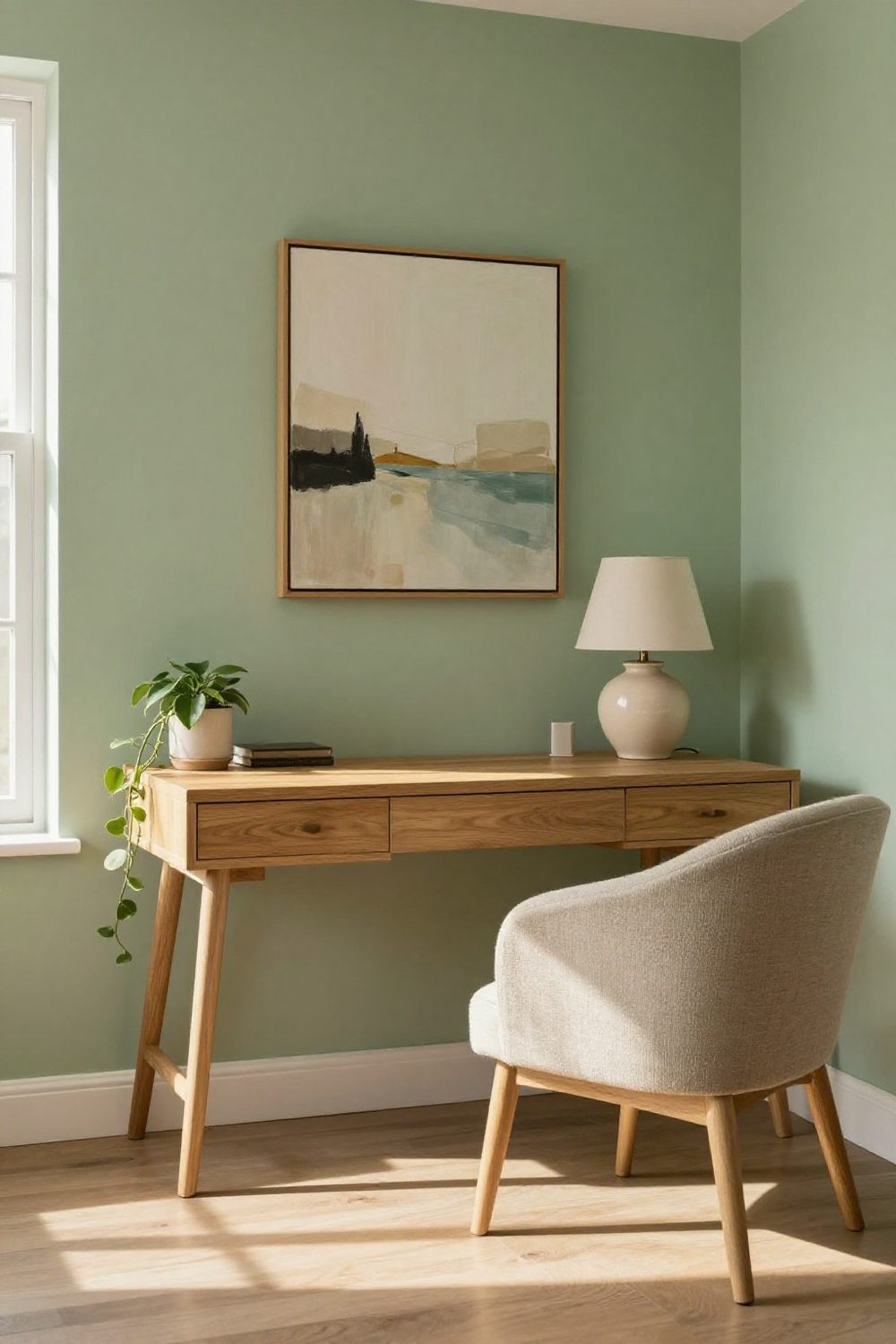
2. A calm wall color
Soft greens, warm greys and muted blues are restful for long days. Paint the wall you look at most.
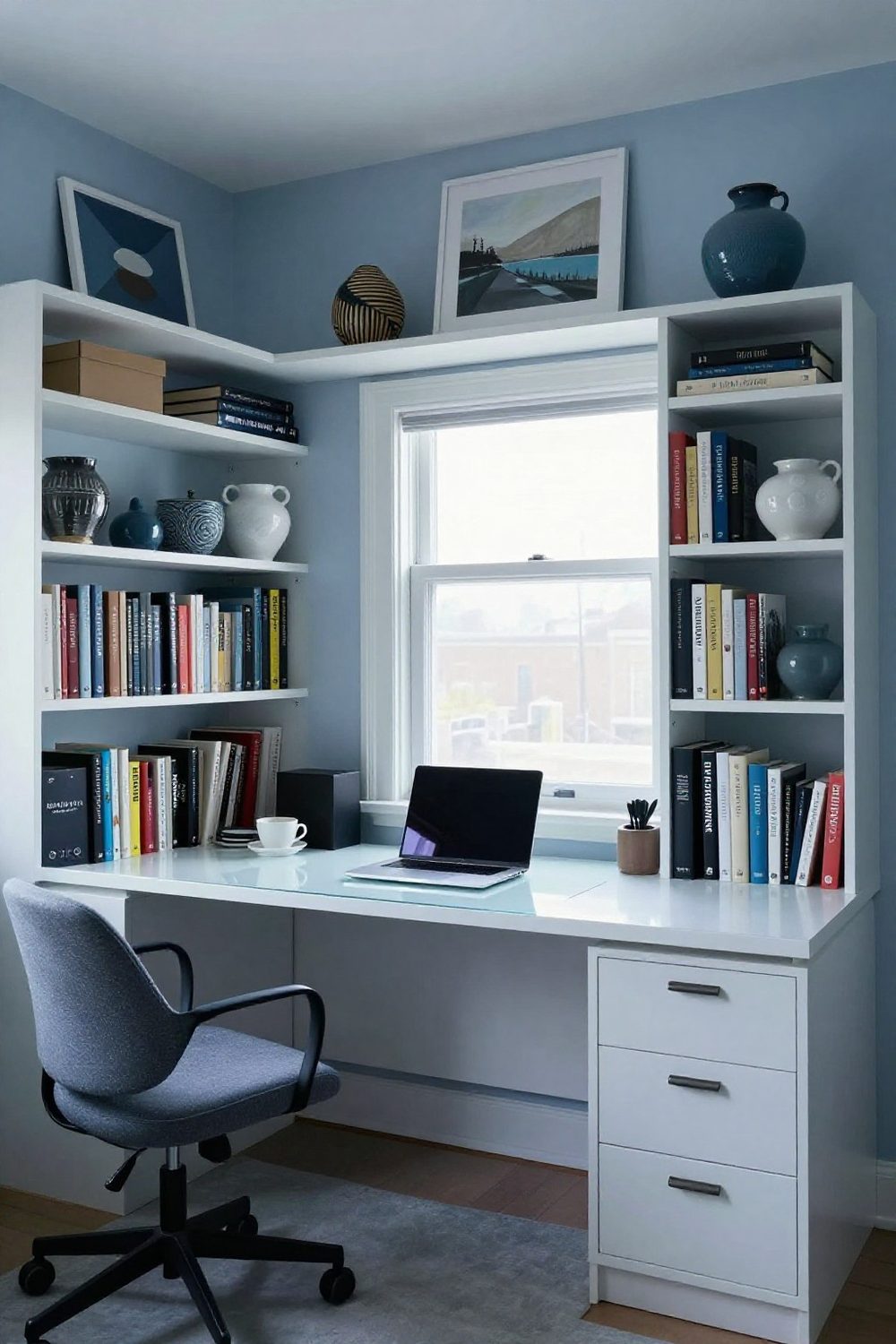
3. Shelves as a backdrop
Shelves behind the desk make a strong video-call background and hold books, binders and personal objects in one composed wall.
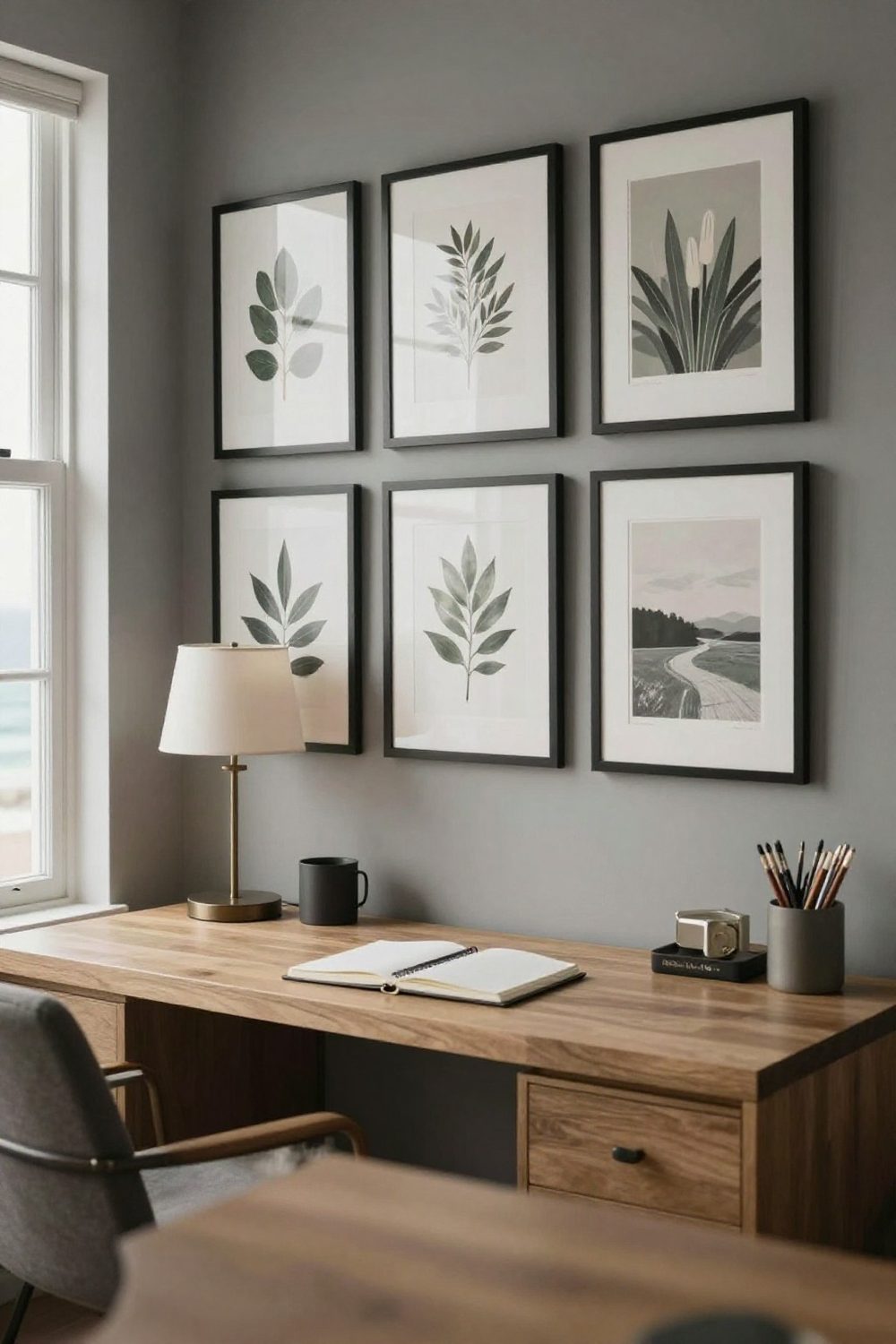
4. A gallery wall above the desk
Art you like looking at turns a desk into a place you want to sit. Keep the frames consistent and the bottom row 8–10 in above the desk.
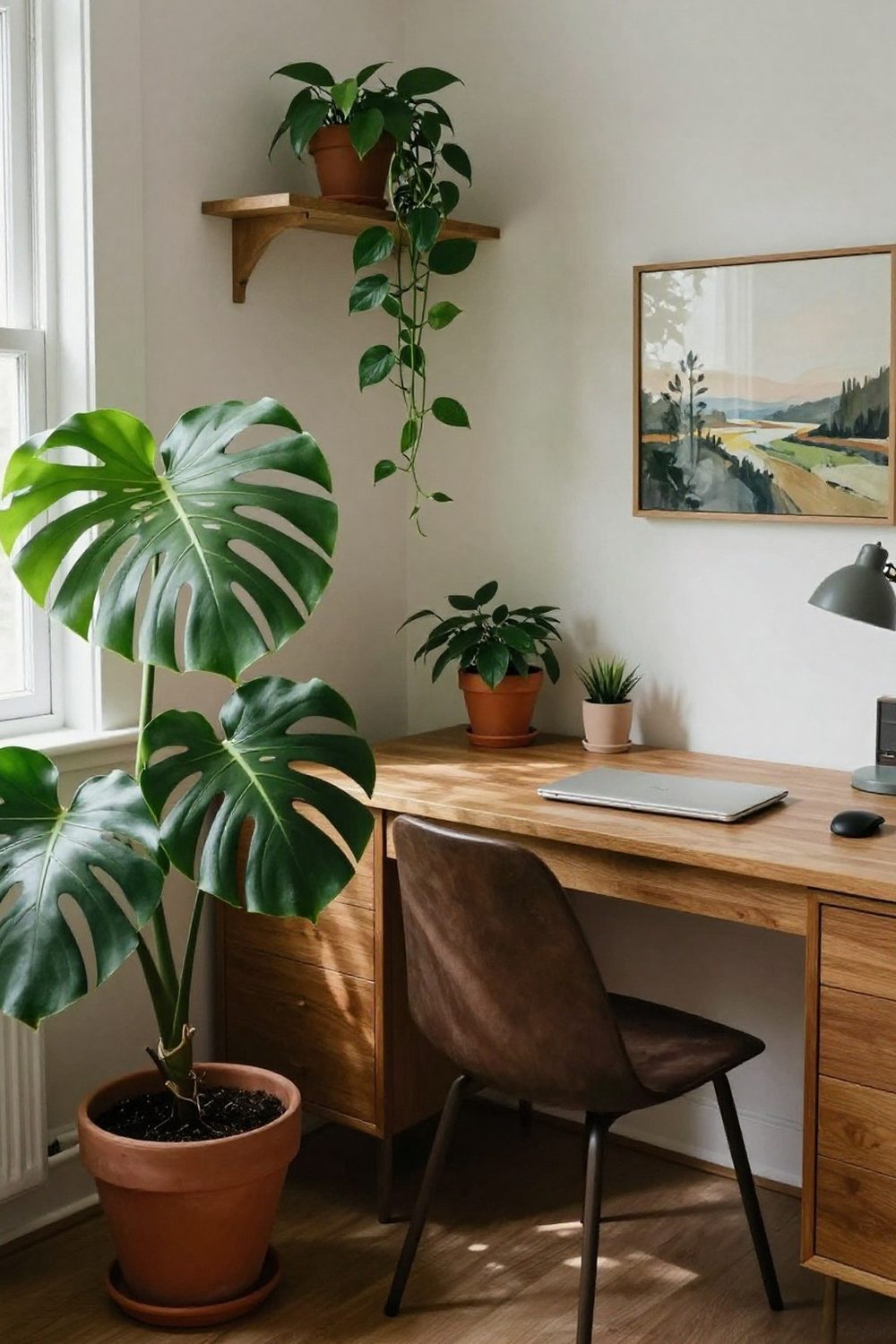
5. Bring in plants
Plants soften a room full of hard surfaces and screens. Pothos, snake plants and ZZ plants tolerate office light and irregular watering.
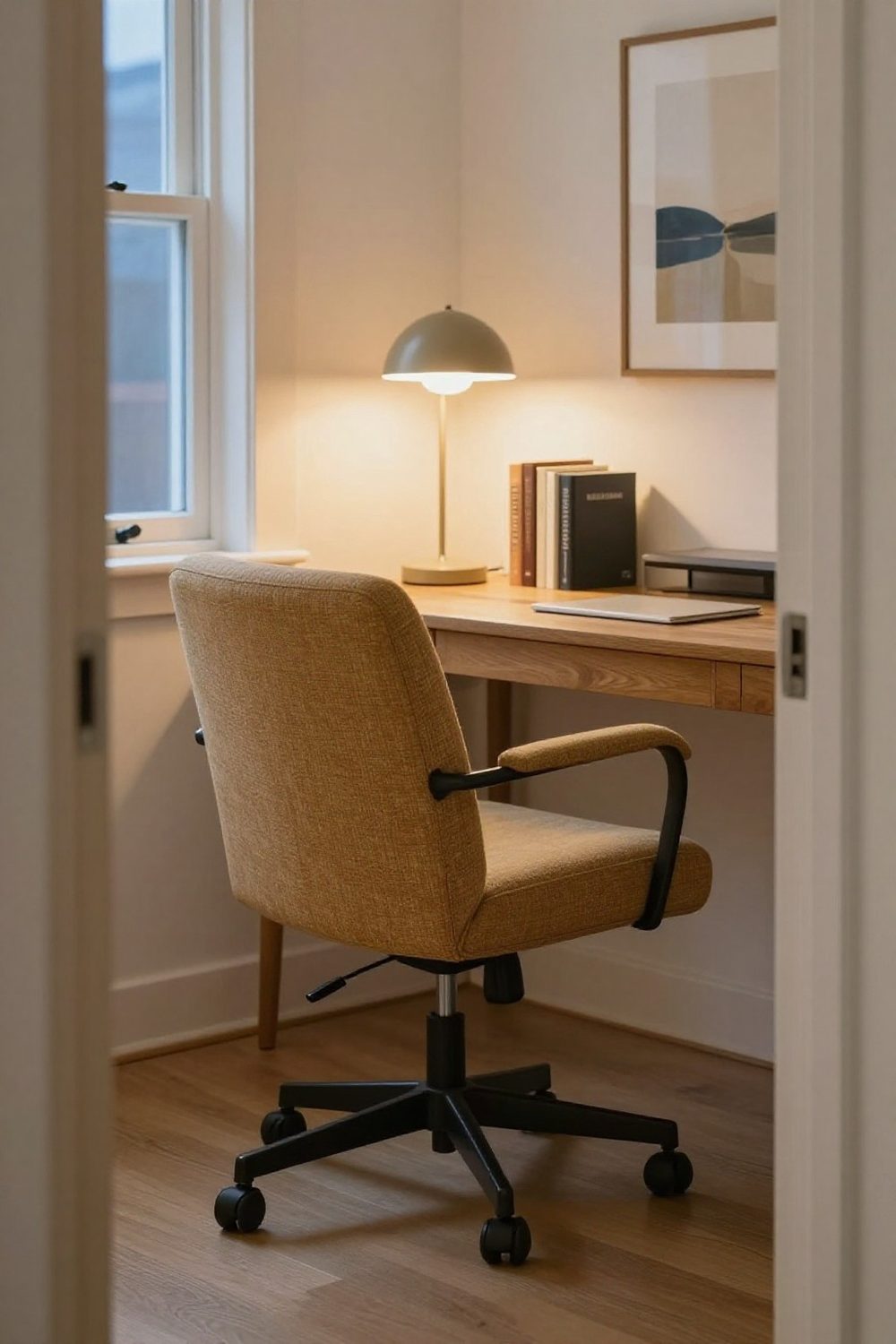
6. A chair that looks like furniture
Choose an adjustable chair in fabric or leather rather than mesh-and-plastic if the office is part of your living space. Comfort first, then looks.
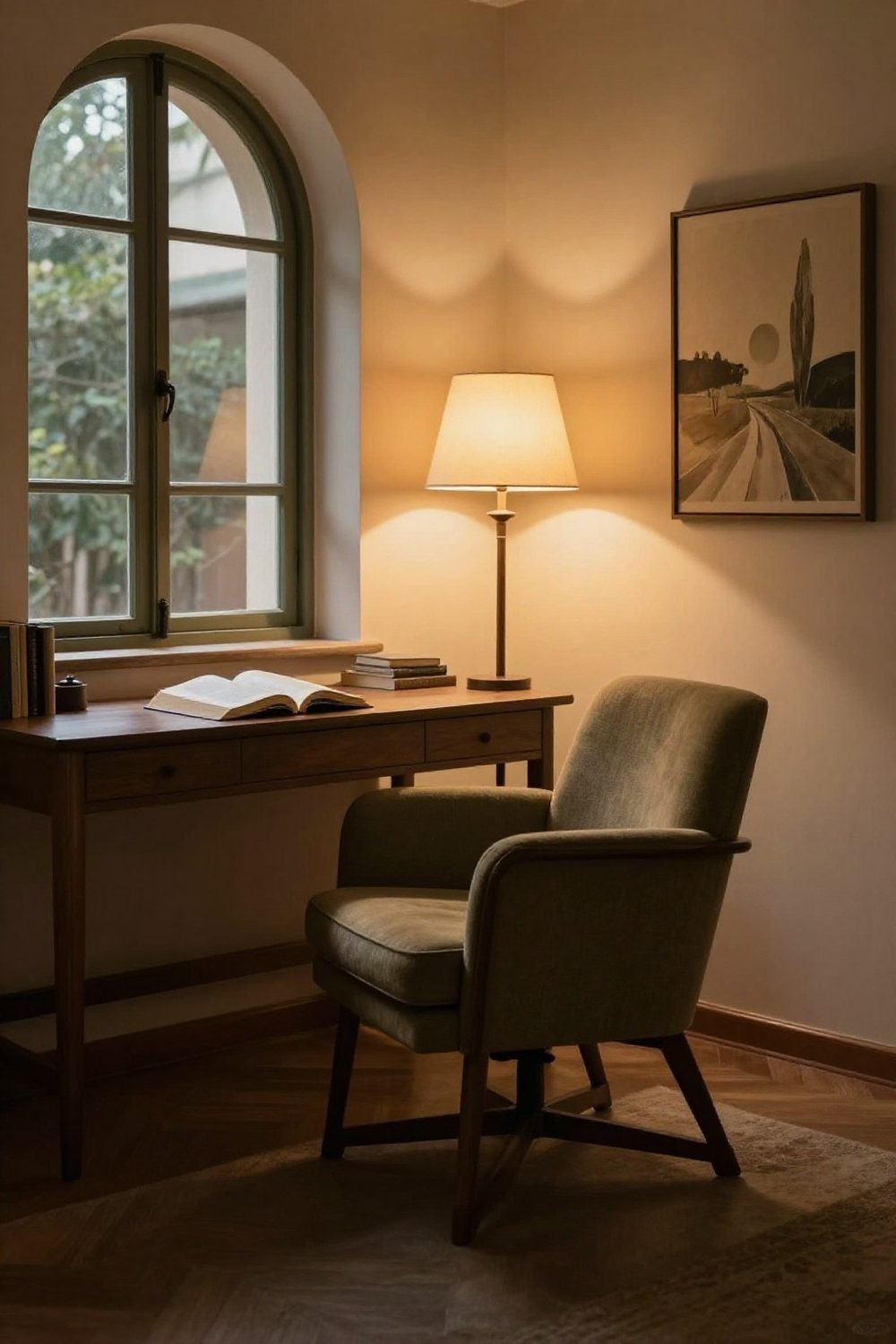
7. A second seat for reading
An armchair and a lamp in the corner give you somewhere to read, think or take a call away from the screen.
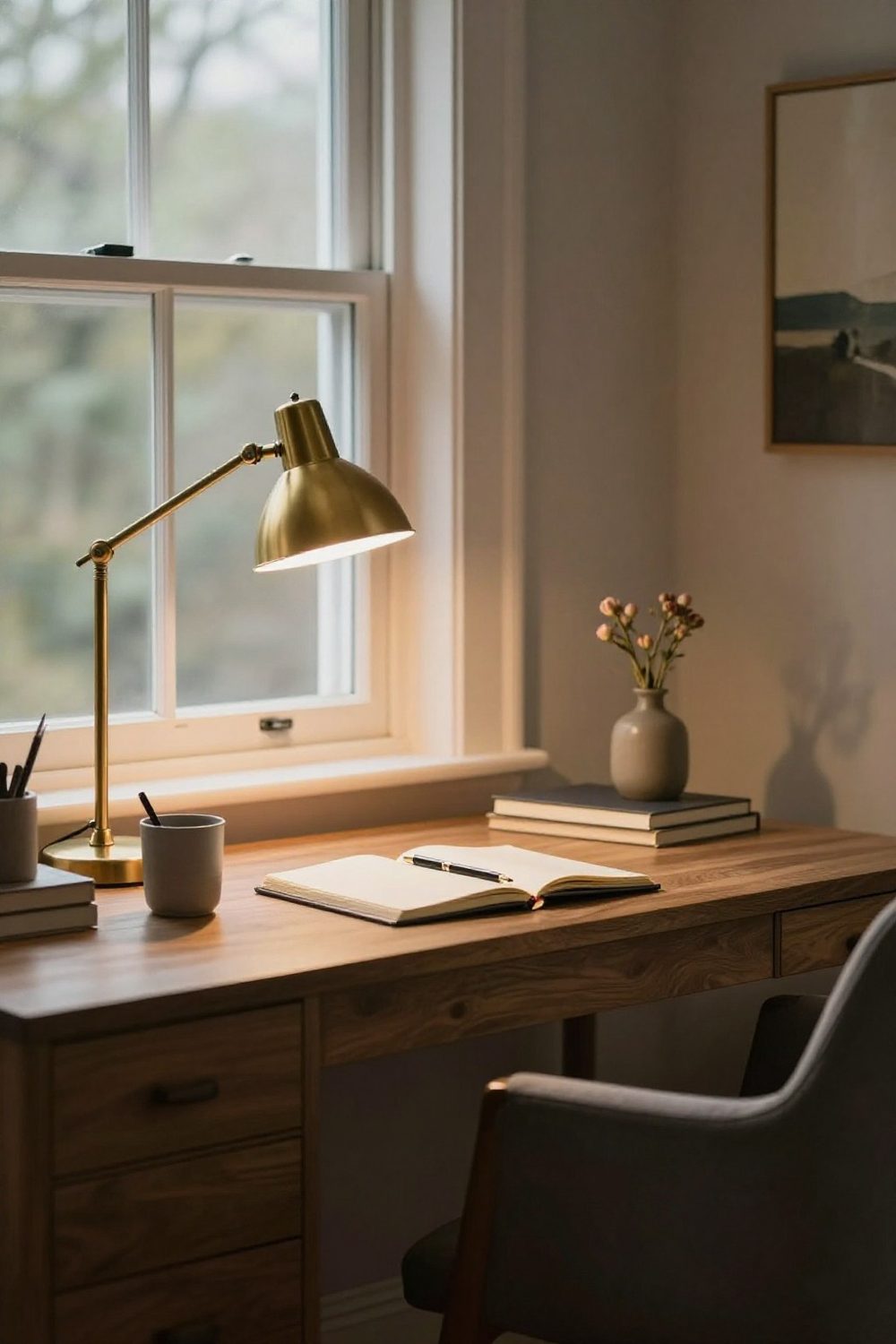
8. A good desk lamp
A desk lamp with a shade or adjustable arm is task light and decor at once. Warm-to-neutral light (about 3000–4000K) suits working hours.
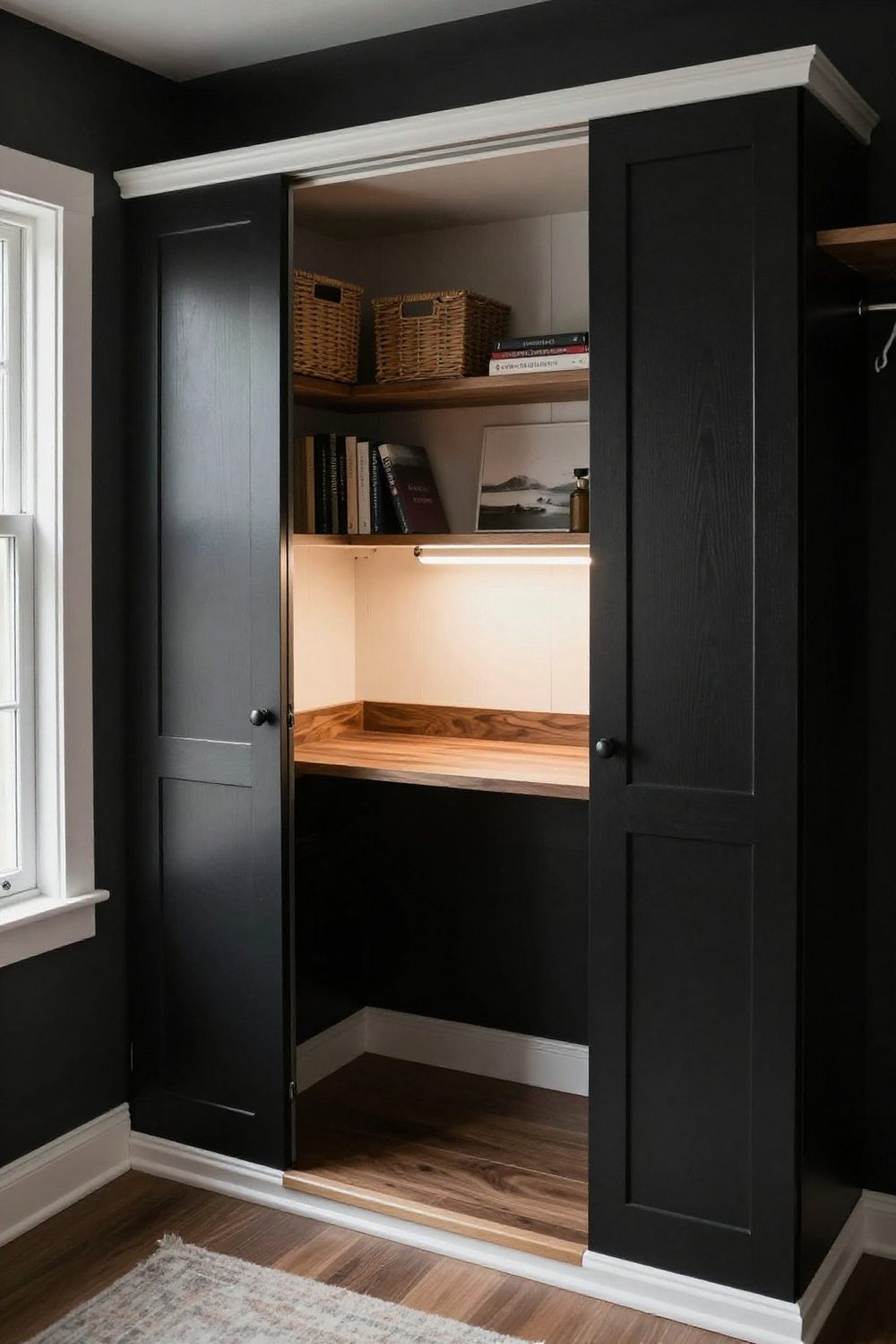
9. A cloffice
A reach-in closet with the doors removed fits a built-in desk, shelves and a light — an office you can close off visually at the end of the day.
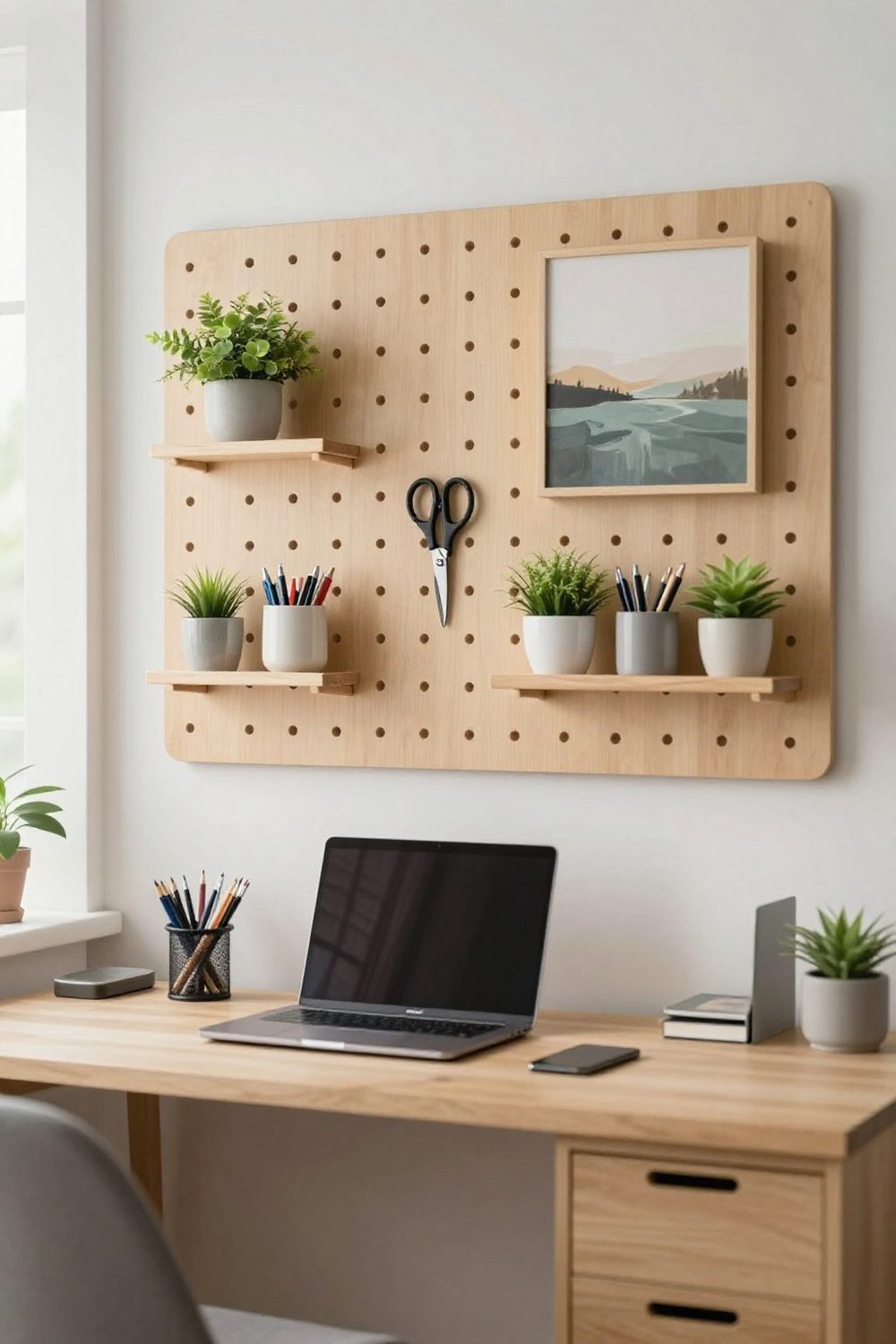
10. A pegboard wall
A painted pegboard keeps supplies off the desk and can be rearranged as needs change.
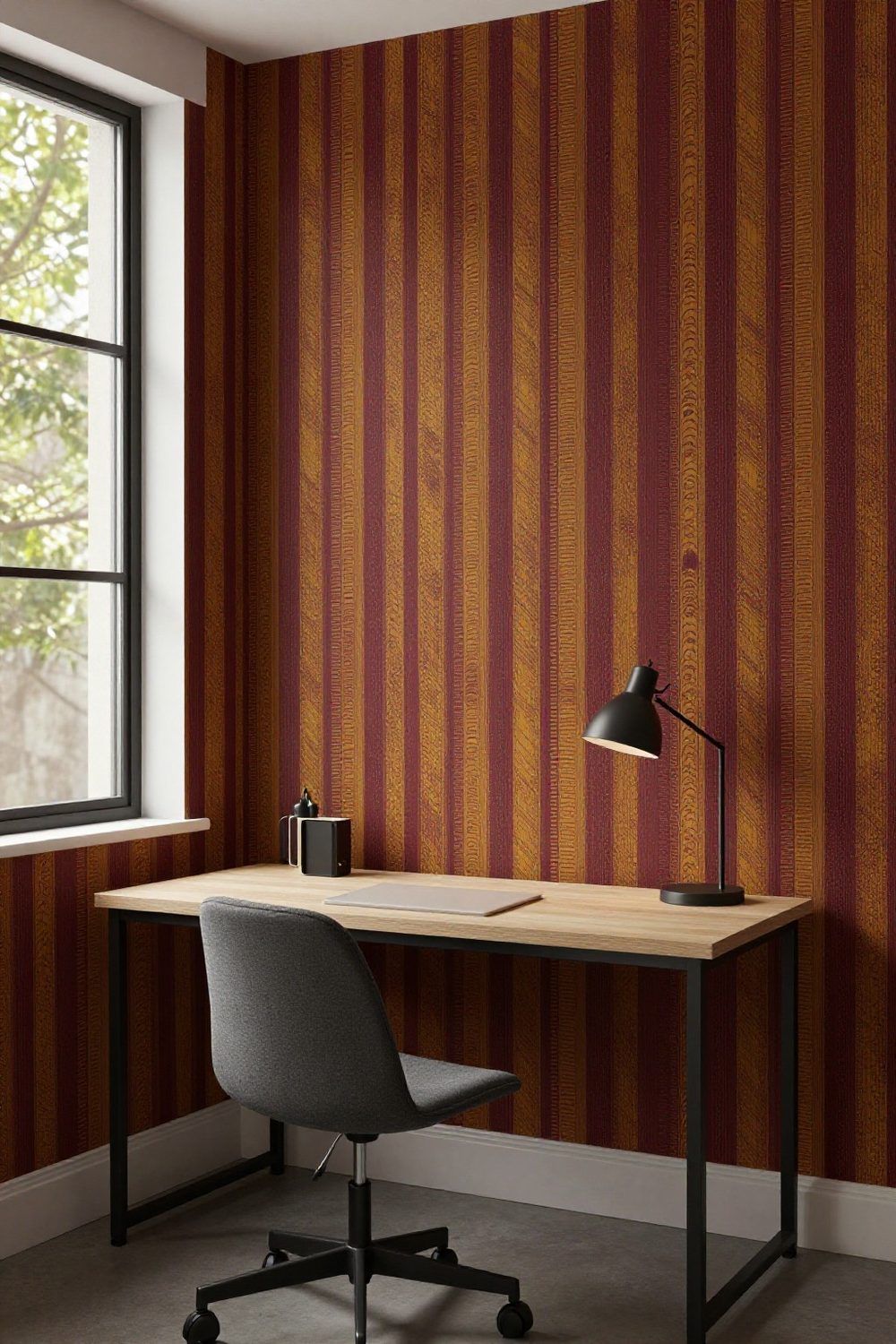
11. Wallpaper behind the desk
One wall of patterned wallpaper behind the desk makes an instant backdrop for calls and gives the room personality.
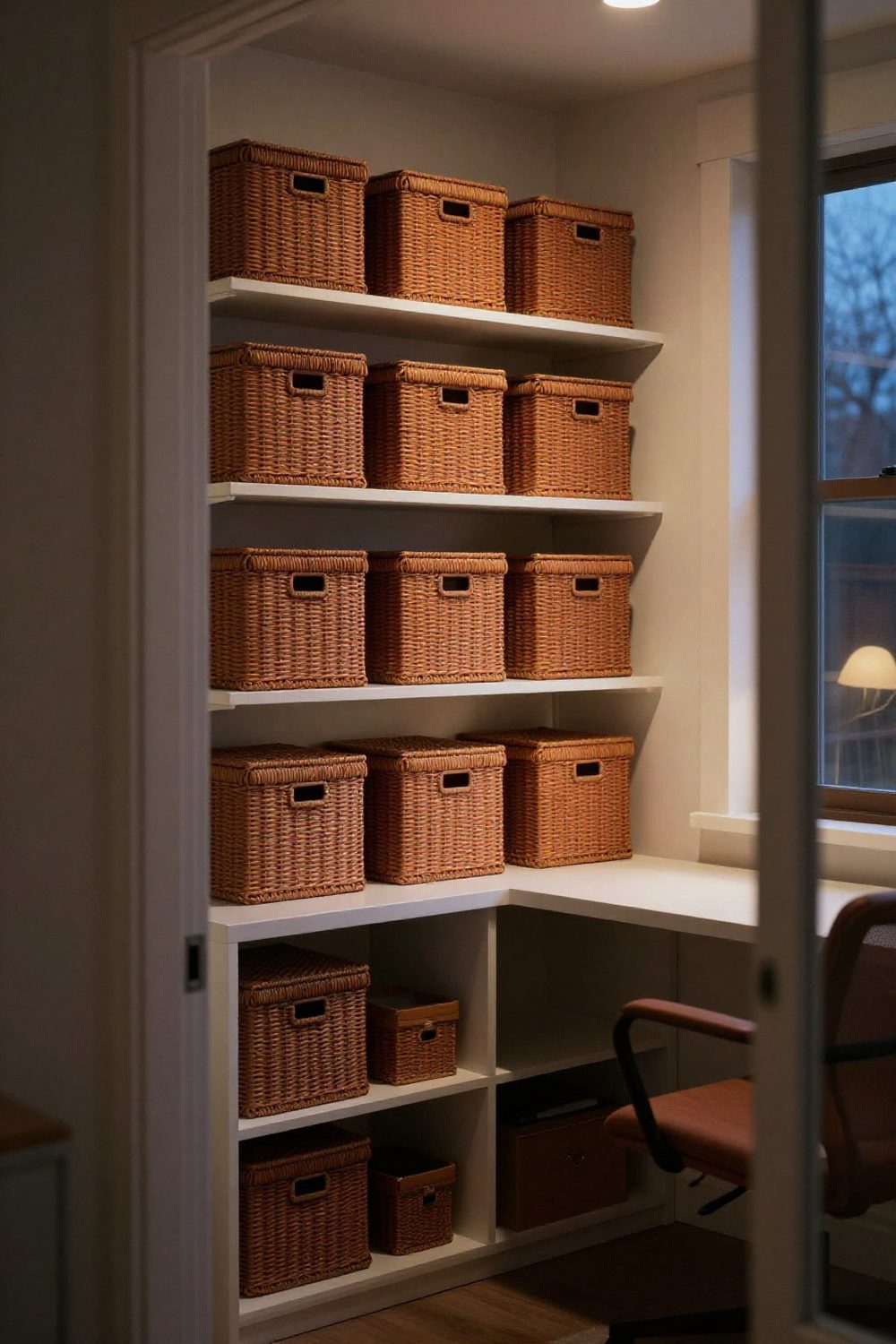
12. Baskets and boxes for paper
Matching baskets and lidded boxes hide paperwork and cables while keeping shelves calm to look at.
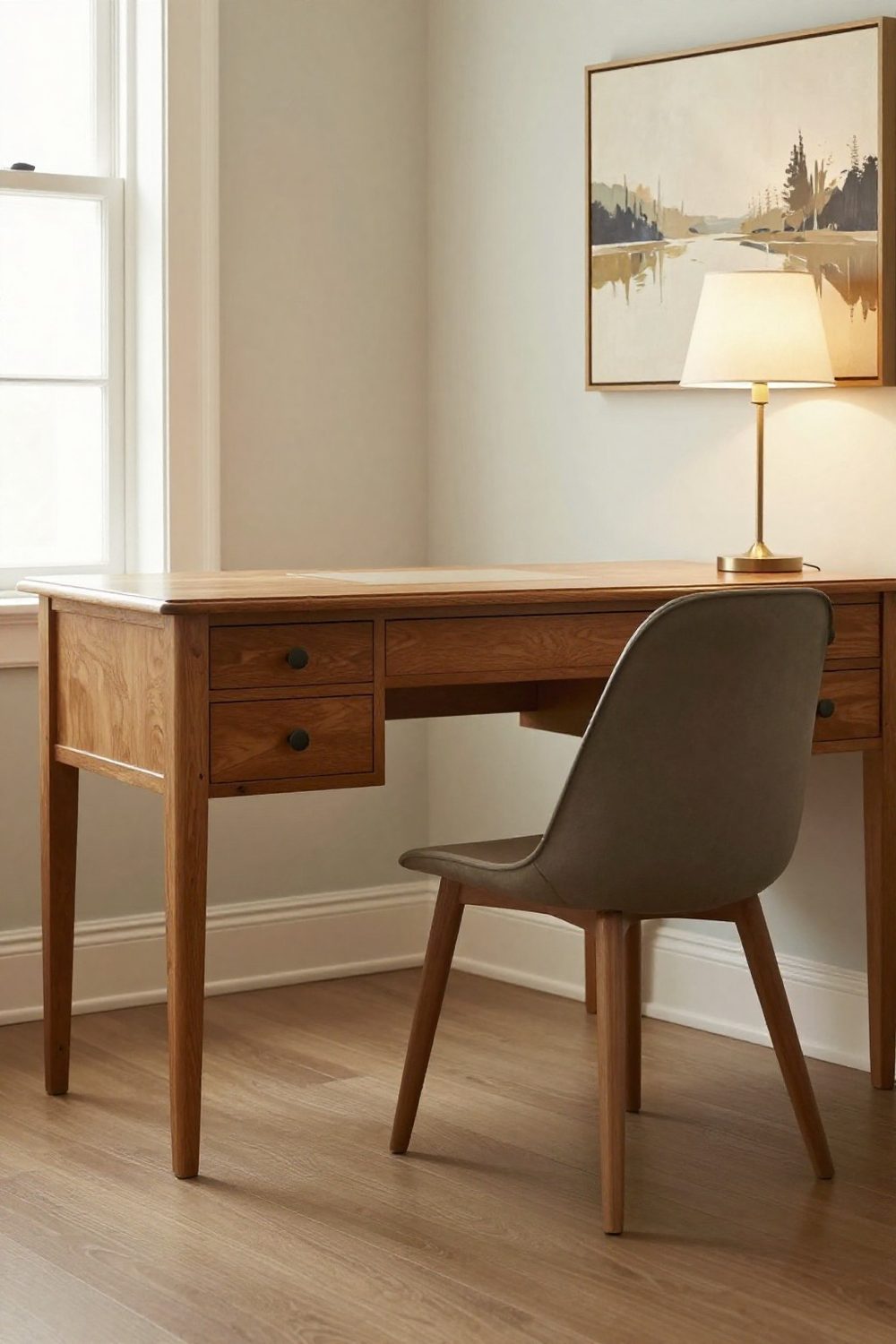
13. A vintage desk
A secondhand wooden desk brings character that new office furniture rarely has. Check its height — about 28–30 in — before buying.
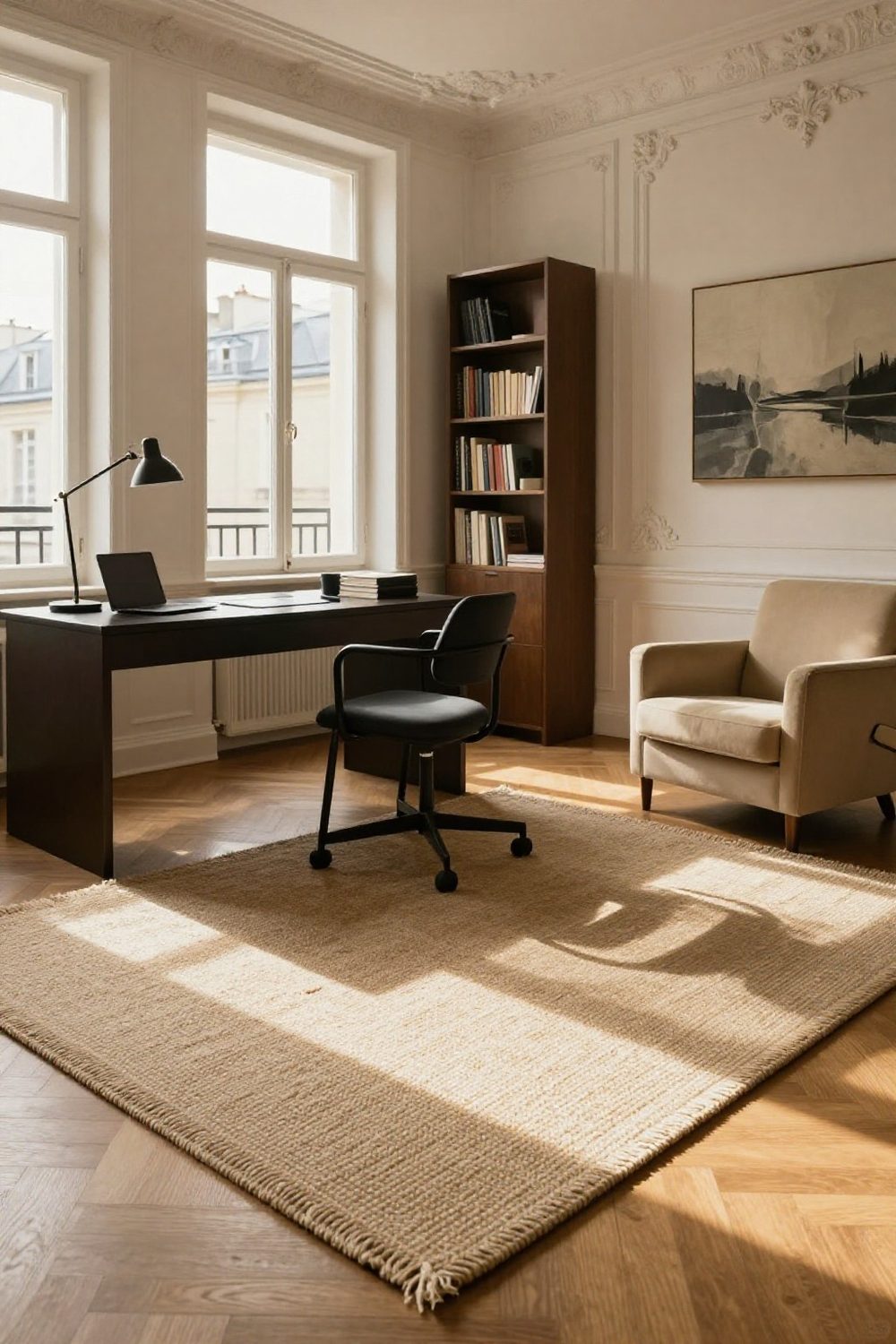
14. A rug under the desk
A rug warms the floor and absorbs sound on calls. Choose a low, flat weave so the chair rolls easily, or use a chair mat on top.
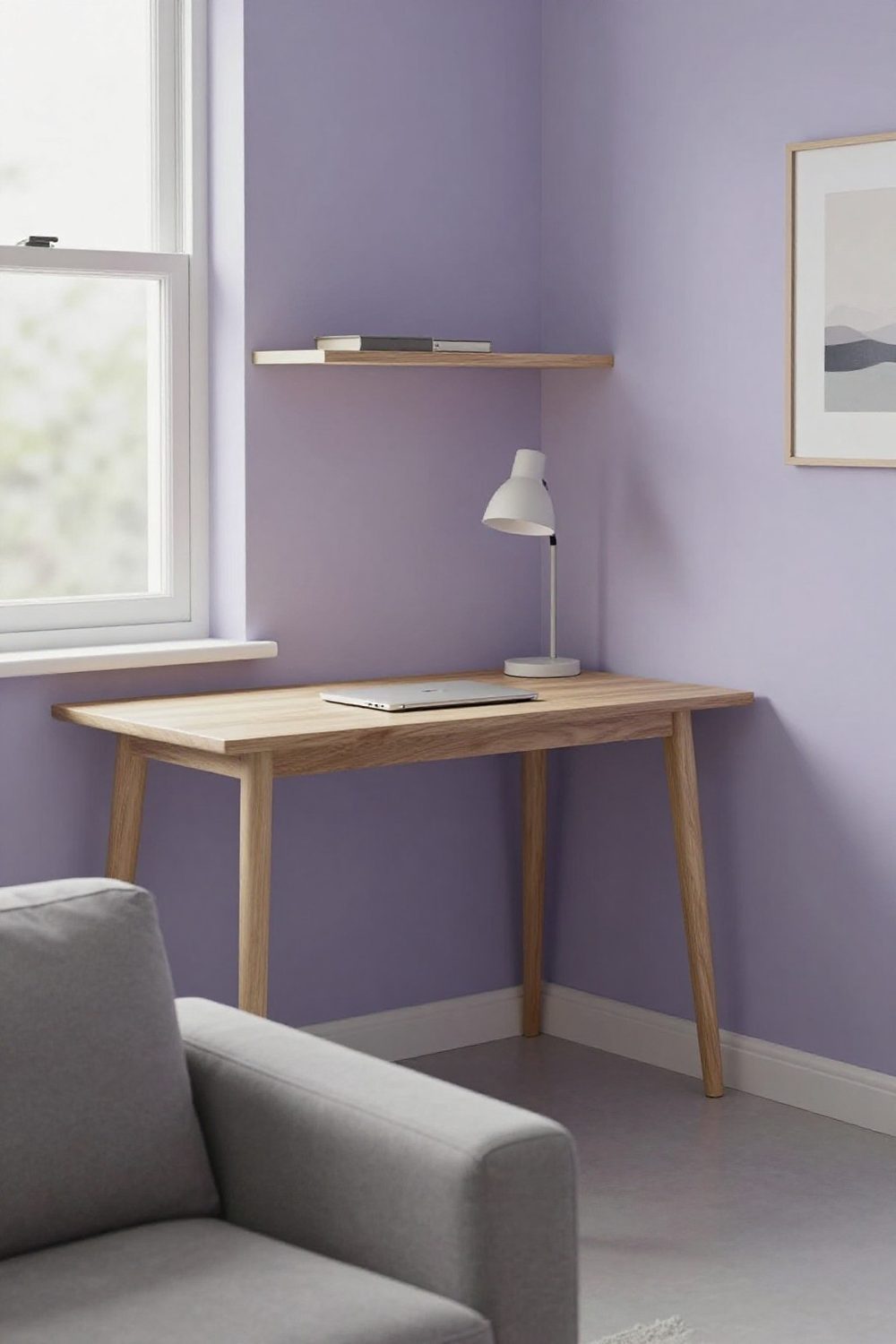
15. An office in a living room corner
A slim desk, a floating shelf and a lamp define a work zone in a corner of another room. Choose a desk that looks like furniture, not equipment.
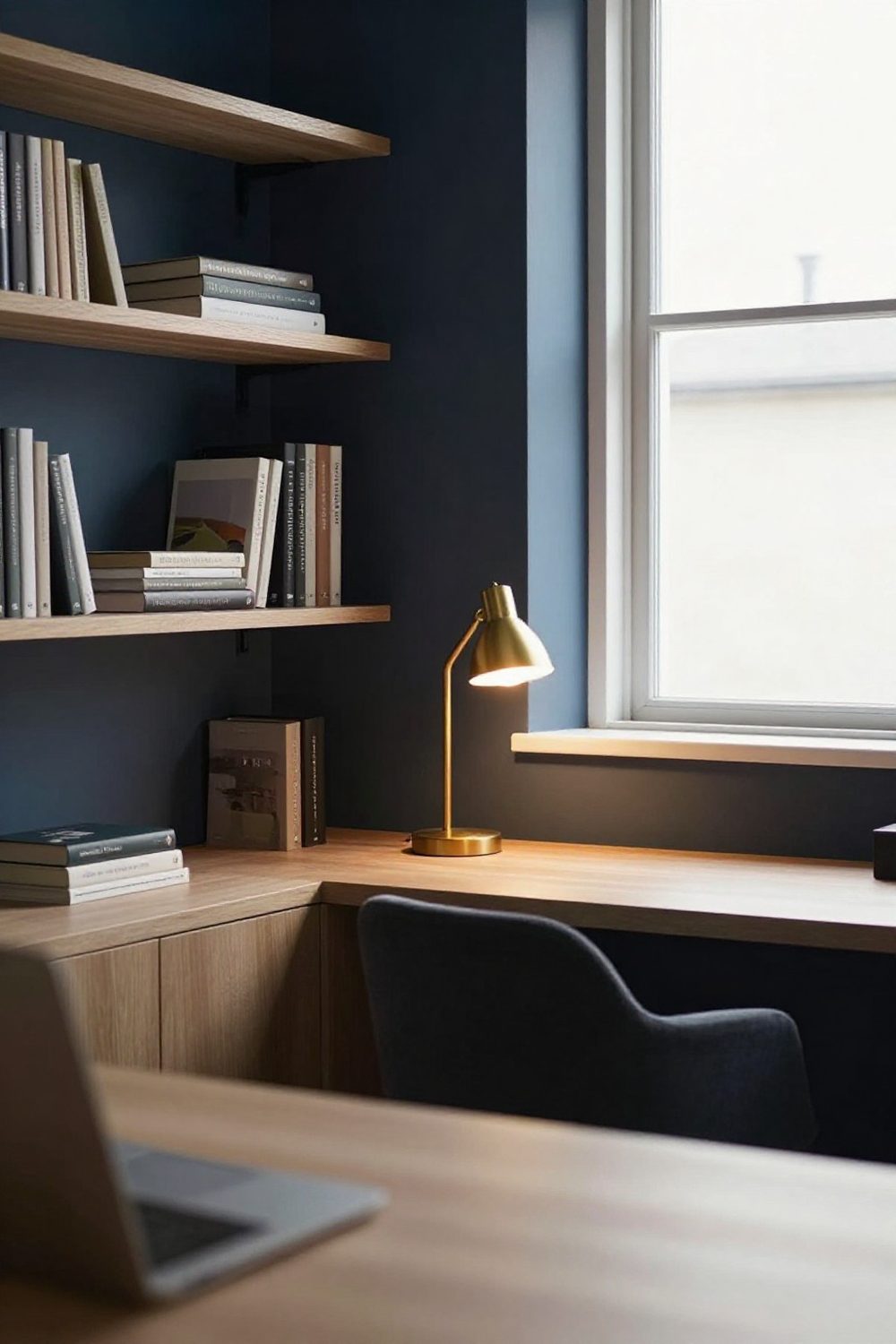
16. Go dark and cozy
Deep navy or charcoal walls make a small office feel like a library. Balance them with warm lamps and light wood.
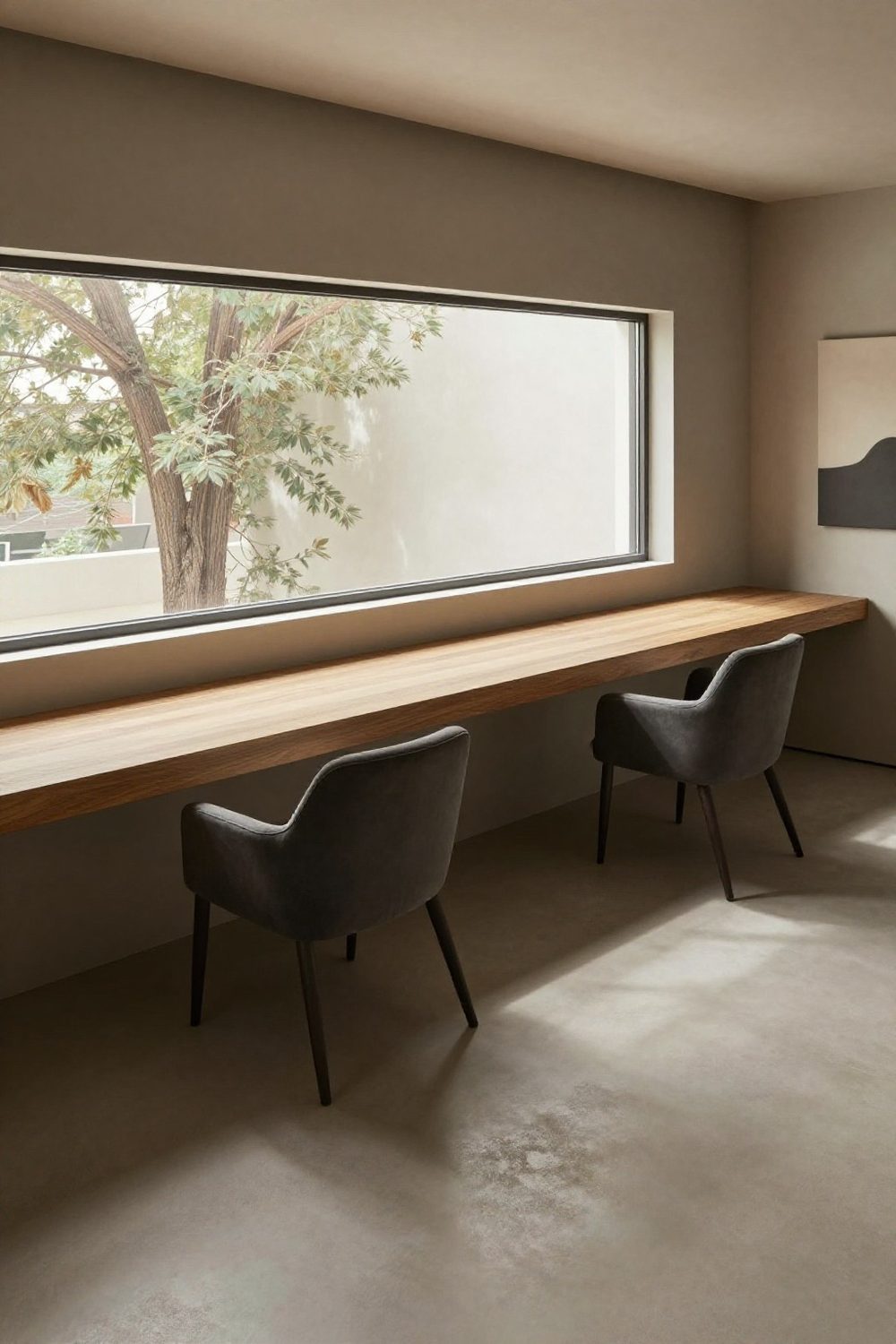
17. A wall-to-wall desktop
A long desktop spanning wall to wall gives room for two people or for spreading out, and looks built-in.
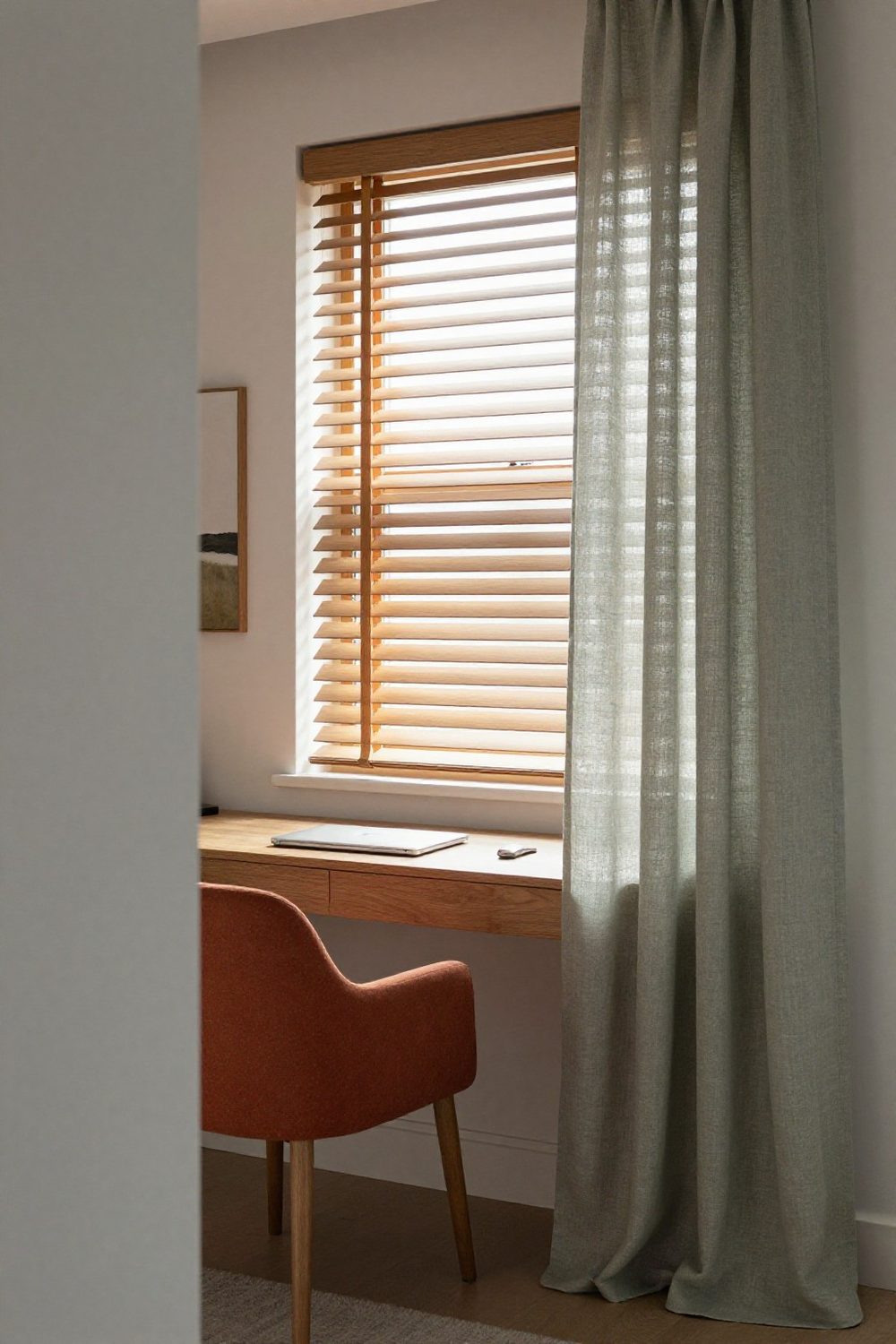
18. Blinds plus curtains
Blinds control glare on the screen; curtains soften the room. Use both on a bright window.
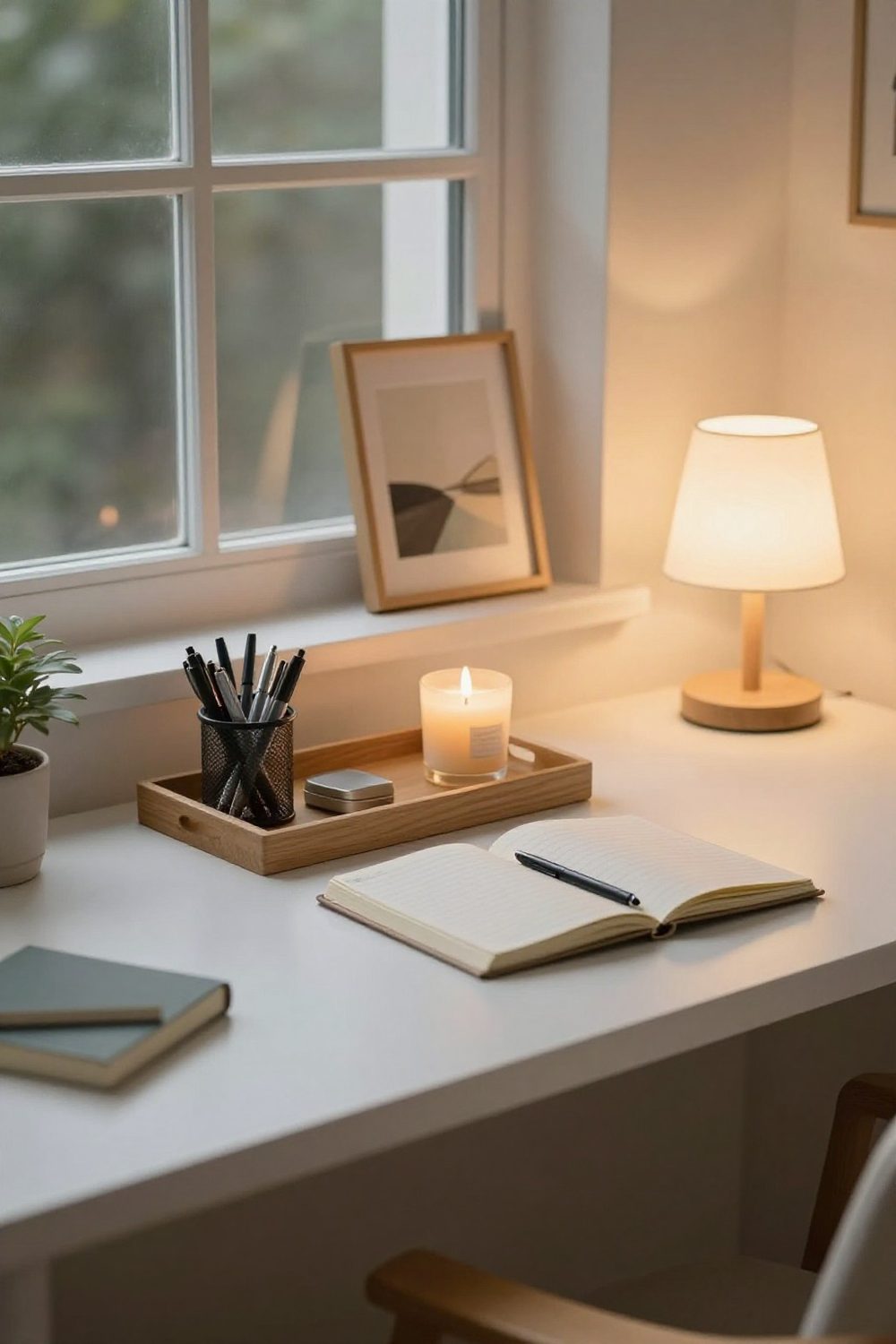
19. A tray for the small stuff
A tray turns pens, a notebook and a small plant into a tidy vignette and makes clearing the desk at the end of the day a ten-second job.
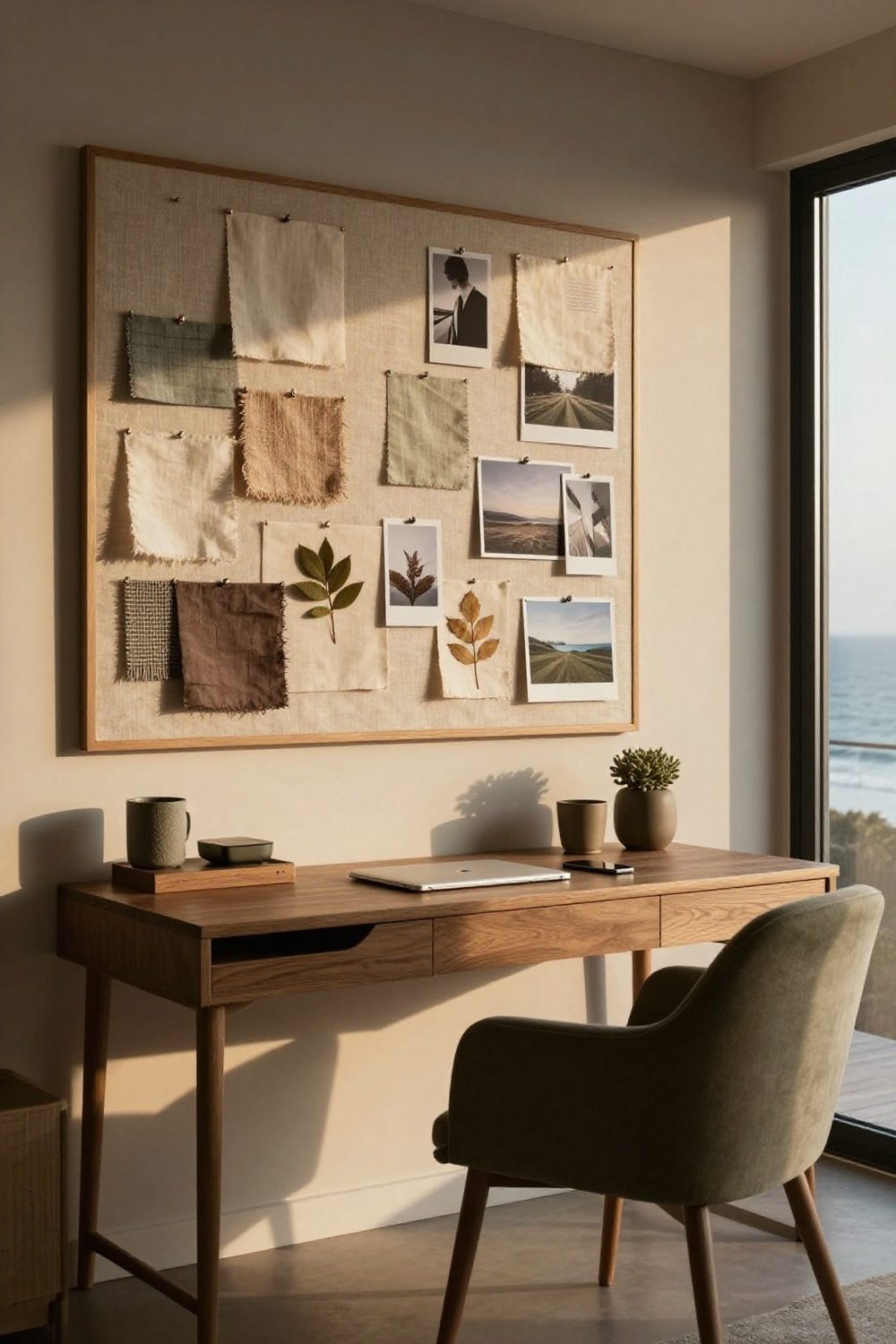
20. A fabric-covered pinboard
Cover a corkboard in linen or a patterned fabric for a mood board that looks like decor.
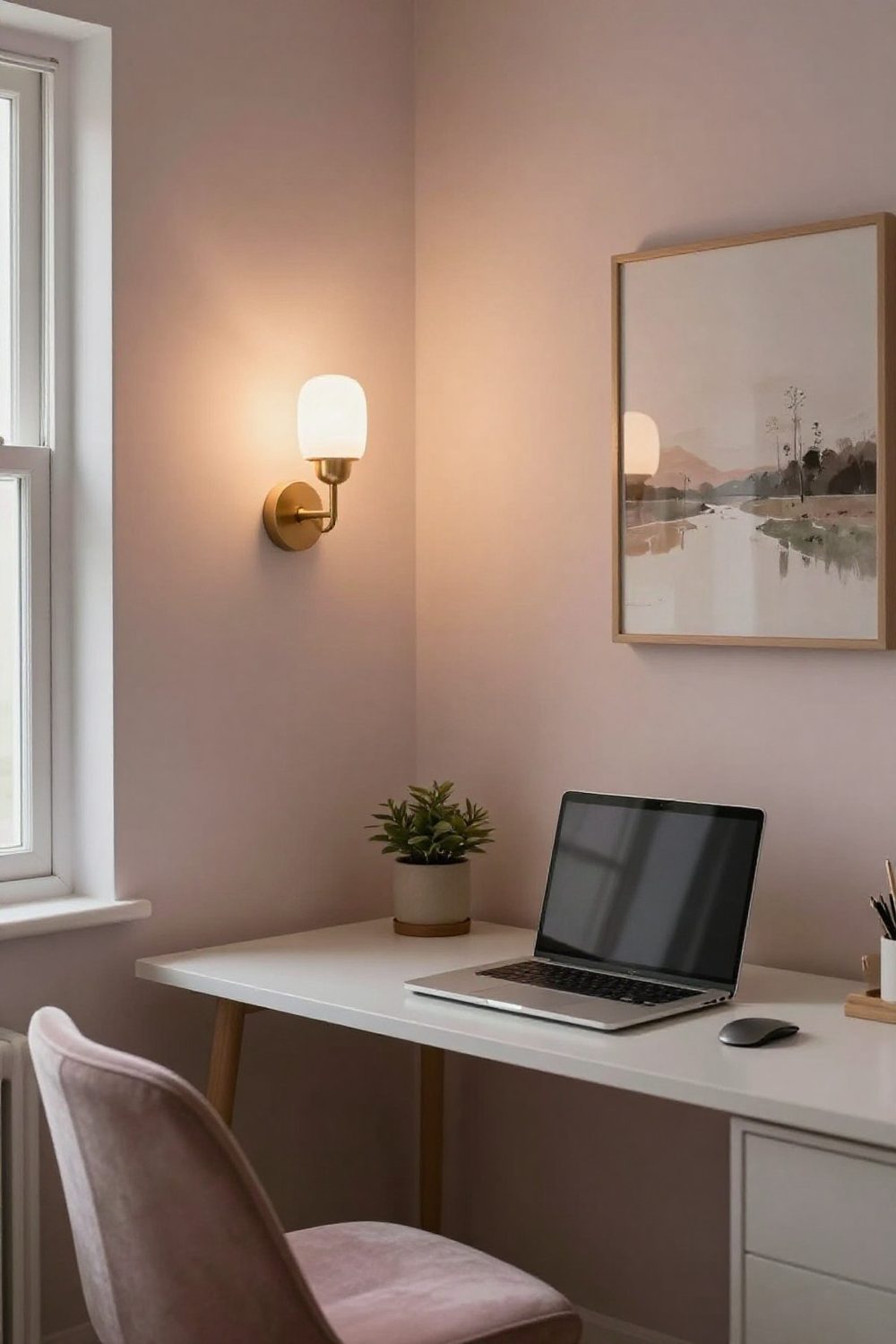
21. Wall sconces
Sconces free up desk space and add a soft glow. Plug-in sconces need no electrician.
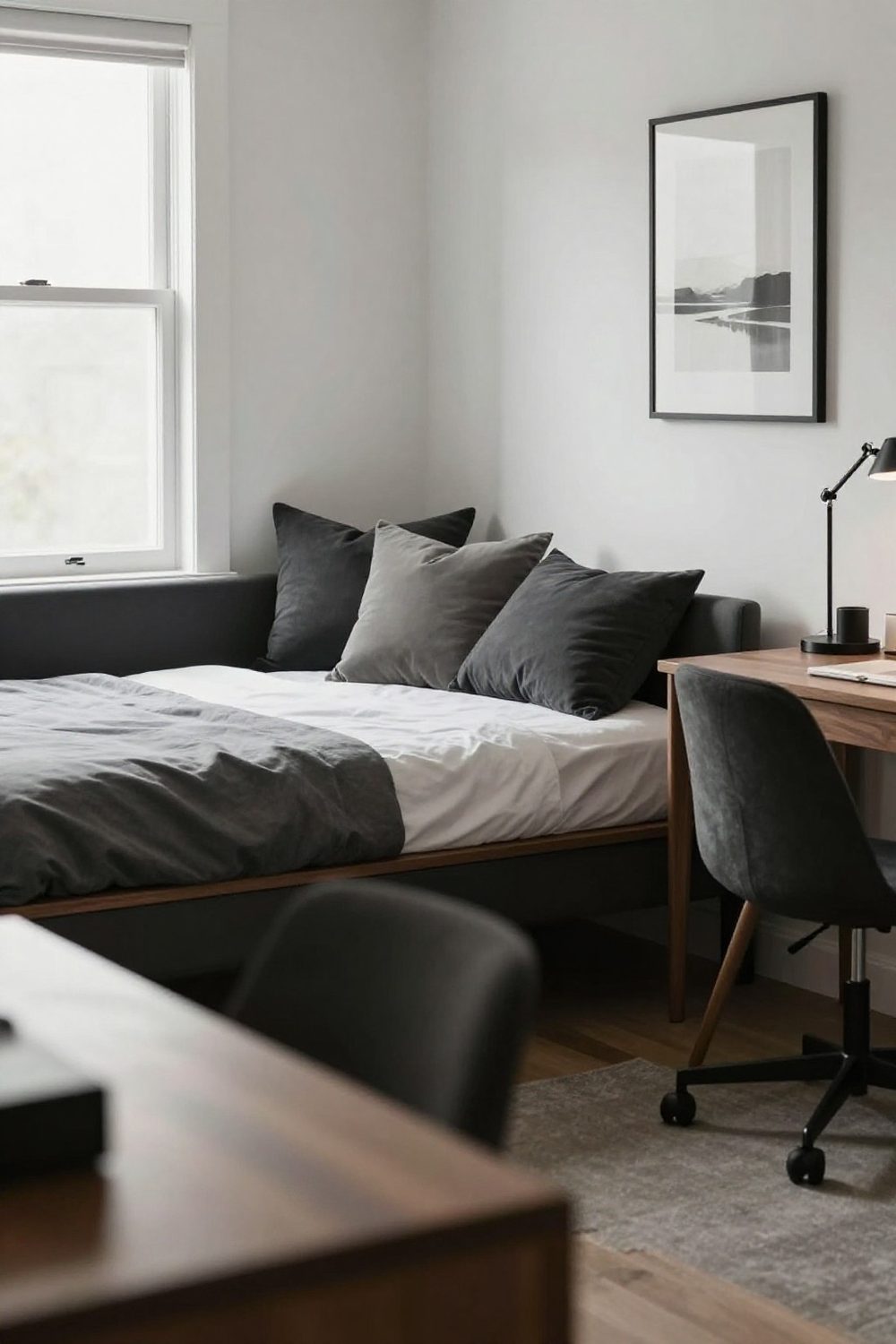
22. Office and guest room in one
A daybed or sleeper sofa turns the office into a guest room. Keep work storage closed so guests aren't sleeping among files.
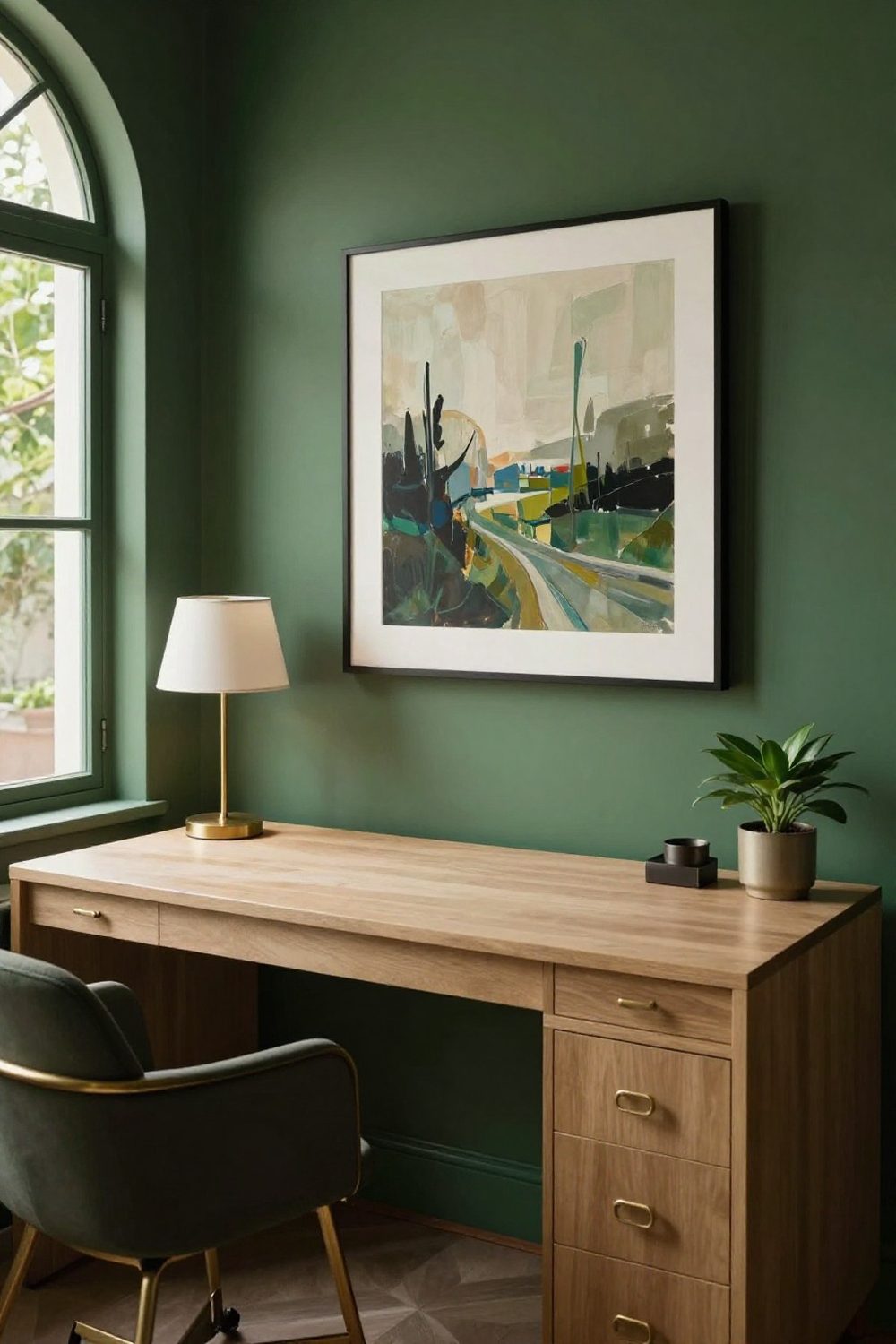
23. Minimal for focus
If clutter distracts you, keep the desk nearly empty: a lamp, a plant, one artwork. Everything else gets a closed home.
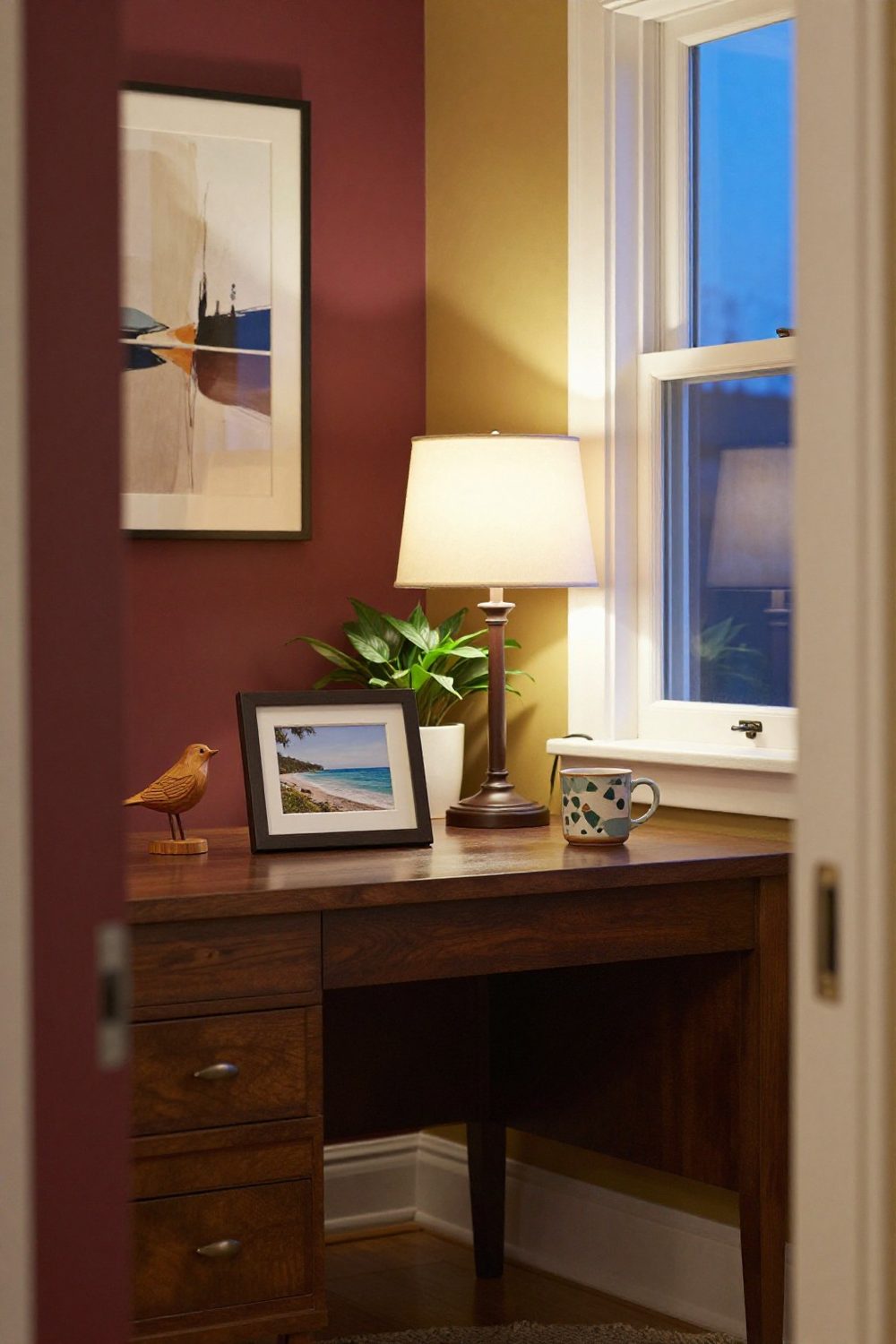
24. Make it personal
A few personal things — a photo, a souvenir, a favorite mug — make the office yours. Choose three, not thirty.
How to decorate a home office, step by step
- Place the desk — beside a window, screen at a right angle to it.
- Set up for comfort — chair, desk height and monitor per the OSHA checklist.
- Plan the light — daylight, a desk lamp and one soft source.
- Hide cords and paper — cable tray, baskets, closed storage.
- Add color, plants and art — on the wall you look at and the one behind you.
- Finish with a rug, curtains and a few personal things.
Common home office decor mistakes
- The desk facing a blank wall or with a window right behind the screen.
- A pretty chair that isn't adjustable.
- Only an overhead light.
- Cords under rugs and daisy-chained power strips.
- Too many small objects on the desk.
Final thought
A good home office is comfortable first and beautiful second — and the two aren't in conflict. Get the desk, chair and light right, give paper and cords a home, then add the color, plants and art that make you want to start work in the morning.

Sources & principles referenced
- OSHA Computer Workstations eTool — monitor height and distance, chair and desk posture, glare control.
- American Academy of Ophthalmology — the 20-20-20 rule for computer eye strain.
- Electrical safety practice (ESFI, CPSC) — don't run cords under rugs or daisy-chain power strips.
Images in this article are AI-generated visualizations of each idea, not photographs of finished projects.