

Victorian style is the great maximalist exception in interior design: where almost every other look tells you to edit down, this one is built on layers, pattern, richness and display. But it isn't chaos — the Victorians had rules, and the rules are exactly what keep "more is more" from tipping into a jumble sale. These 37 Victorian bedroom ideas are organised around those rules: how to layer pattern and colour with structure, and how to get the period richness without ending up in a museum you can't sleep in.
Maximalism, but with a framework
The instinct that ruins most Victorian-inspired rooms is thinking abundance means "add everything". It doesn't. Genuine Victorian interiors were layered within a structure — there was an underlying order beneath the richness, and that order is what your eye reads as elegant rather than overwhelming. Get the framework right and you can layer freely; skip it and the same objects read as clutter.
Three things provide that structure: the way the walls are divided, the way pattern is combined, and the discipline of a single rich palette running through it all. Establish those and the rest of this list becomes safe to indulge.
Divide the wall into three
The most useful thing the Victorians did — and the most overlooked today — was to split the wall horizontally into three zones, each treated differently:
- The dado — floor up to about waist height (roughly 90 cm), bounded at the top by a dado rail. Often panelled or in a harder-wearing, darker treatment.
- The fill — the main middle expanse, where the feature wallpaper or richest colour lives.
- The frieze — the band between the picture rail and the cornice, frequently a contrasting paper or colour.
This division is why Victorian walls can carry so much pattern without feeling frantic: the rails give the eye horizontal lines to rest on, and each zone reads as a deliberate band rather than one overwhelming surface. Even in a plain modern room, adding a picture rail and a dado rail is the single most effective — and inexpensive — move toward the authentic look, and the picture rail earns its keep for hanging art too.
Why the colours are dark and rich
Victorian bedrooms ran to deep, saturated colour — burgundy, forest and bottle green, navy and midnight blue, plum, mustard and warm browns, often with gold. Part of this was practical: rooms were lit by candle and gaslight, and those warm, low light sources made pale colours look dingy while making rich, deep tones glow. Soot and smoke also favoured colours that didn't show grime.
The design lesson survives the gaslight: these deep tones still read as warm, enveloping and period-correct, and they flatter the layered textiles and gilt frames the style depends on. If you want the look, commit to the dark palette — a pale, airy room with a few "Victorian" accessories reads as neither one thing nor the other.
Layering pattern without chaos
Mixing multiple patterns is central to the style and is where most attempts come apart. Two rules keep it controlled:
- Vary the scale. Combine a large-scale pattern (a big damask or floral wallpaper), a medium one (a stripe or trellis) and a small one (a ditsy print or fine geometric). Patterns of the same size compete and read as noise; different scales settle into a hierarchy.
- Share a palette. Let every pattern in the room draw from the same three or four colours. Common colour is the thread that makes a busy mix read as one intentional scheme rather than a collision.
Follow those two and you can put florals, stripes and damask in the same room — which is exactly what the Victorians did.
Curated abundance, not clutter
The Victorians were collectors and displayed their collections proudly — but the operative word is displayed. The difference between the rich period look and simple mess is arrangement: objects grouped by type, theme or colour, given their own surface or shelf, and composed rather than scattered. A mantel of carefully arranged ceramics reads Victorian; the same objects spread randomly read as untidiness. Abundance is welcome; randomness is not.
37 Victorian bedroom ideas — and why each works

1. A Chandelier and Candle Holders
Overhead sparkle plus candlelight recreates the warm, glittering light the whole palette was designed around. Warm bulbs and a dimmer let a modern chandelier give that low, golden glow.

2. Velvet Upholstery
Velvet is the definitive Victorian fabric — deep colour, soft sheen and obvious richness. A velvet headboard in a jewel tone anchors the room in the period instantly.

3. Decorative Cornicing
Elaborate crown moulding is core Victorian architecture and frames the top of the walls. Lightweight plaster or polymer cornice is cheap to add and lifts a plain ceiling toward the period.

4. An Ornate Fireplace
Bedroom fireplaces were standard and make a natural focal point, working or not. An original or salvaged cast-iron surround gives the room a period anchor and a mantel to display on.

5. Rich-Toned Antique Furniture
Dark, ornately worked wood — mahogany, walnut, rosewood tones — is the furniture language of the era. Genuine antiques are widely available second-hand and often cheaper than new reproductions.

6. A Four-Poster Bed
The four-poster is the room's grandest statement and the most authentically Victorian bed form. Draped with fabric it becomes the layered, enveloping centrepiece the style is built around.

7. Layered, Full-Length Drapery
Heavy curtains, often over a sheer, in generous natural fabric are essential — the Victorians layered their windows as richly as their walls. Full, floor-breaking drapery reads period; skimpy panels break the spell.
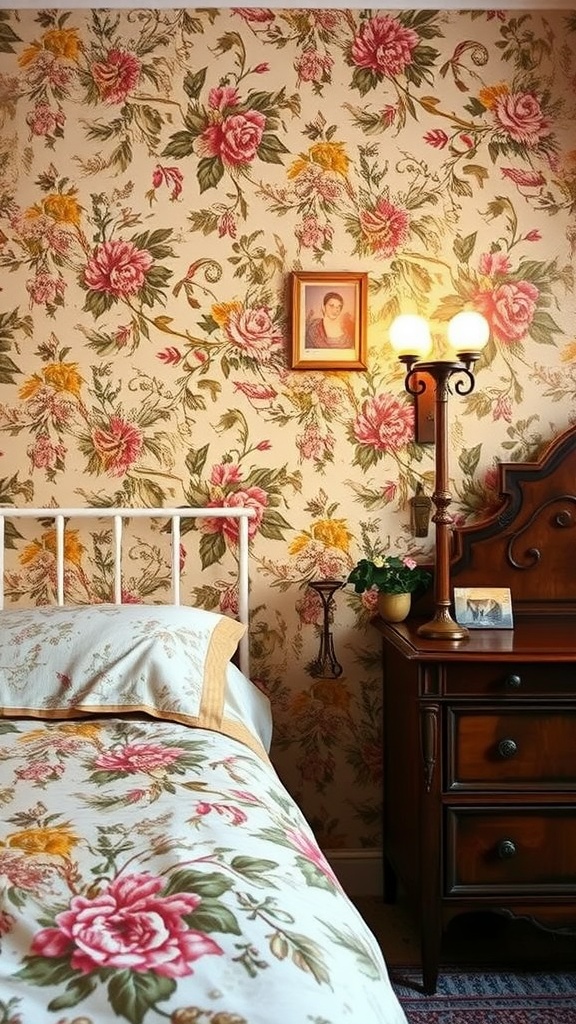
8. Feature Wallpaper in the Fill
An intricate floral, damask or William Morris-style paper on the main wall zone is the heart of the look. Reserve the boldest pattern for the fill between dado and picture rail, where it belongs.

9. Displayed Collectibles
The Victorians were avid collectors, so grouped displays of small treasures are true to the period. Arrange them by type or colour on a dedicated surface — curated, not scattered.

10. A Gilt-Framed Antique Mirror
An ornate gold-framed mirror adds grandeur and bounces the warm light around a deliberately dark room. Slightly foxed old glass reads more authentic than a pristine reproduction.
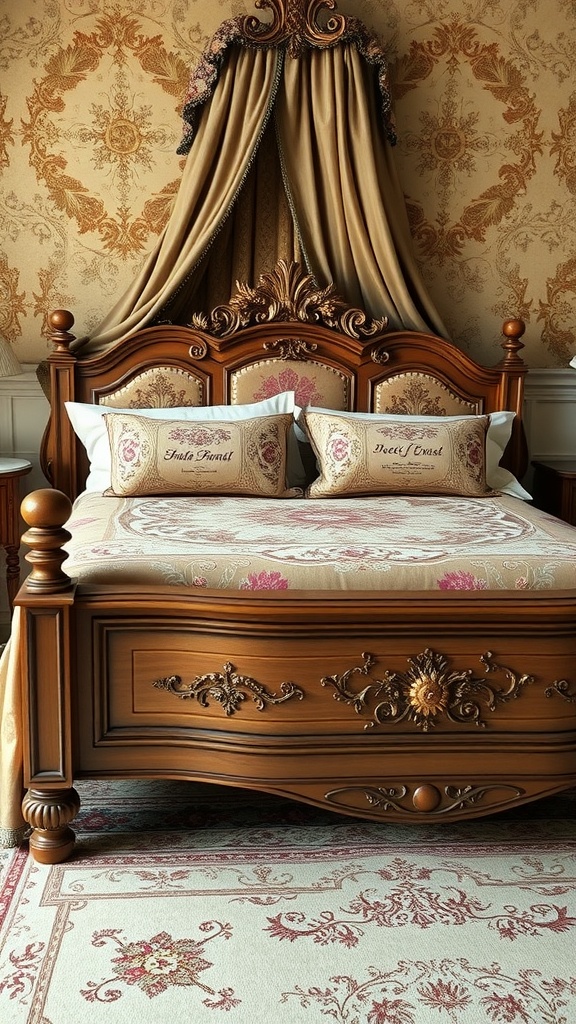
11. An Embellished Bedspread
Embroidery, tassels and trim on the bedding suit the era's love of decorative detail. Keep it within the room's shared palette so the ornament reads rich rather than random.

12. A Draped Canopy
Fabric draped over the bed frame adds the softness and layering the style loves and makes the bed feel enclosed. A canopy also gives an ordinary frame instant period drama.

13. Deep, Saturated Walls
Rich red, green or blue on the walls is what makes everything else glow under warm light, exactly as intended in the gaslight era. Commit to the dark palette — half-measures read neither modern nor period.

14. A Patterned Rug
An oriental or intricately patterned rug adds another layer of pattern at floor level and warms a hard floor. Let it share the room's palette so it joins the pattern mix rather than fighting it.

15. A Reading Nook
Reading was a central Victorian pastime, so a chair, books and good light make a period-appropriate corner. An upholstered wingback or button-back chair suits the era perfectly.

16. Sconces and Layered Light
Wall sconces alongside the chandelier recreate the multiple low, warm light sources of a gaslit room. Keep every bulb warm (2700 K) — cool light flattens the whole rich scheme.

17. A Grand Wardrobe
A large, ornately worked wardrobe was a Victorian bedroom staple and gives the room presence and real storage. Its scale suits the era, which never shied from big furniture.

18. A Decorated Ceiling
The Victorians treated the ceiling as a fifth surface, with a ceiling rose or painted detail. Even a simple rose around the light fitting adds authentic period richness overhead.

19. Portraits and Classical Art
Framed portraits and classical scenes are quintessentially Victorian and fill the walls above the dado. Hung from the picture rail on visible cord or chain, they're even more period-correct.

20. Floral Arrangements
Fresh or dried flowers in decorative vases suit the era's love of nature brought indoors. They add life and colour to a dark, rich room without breaking the palette.

21. Layered Textiles Throughout
Multiple fabrics — bed, windows, upholstery, table covers — build the enveloping richness the style depends on. Vary the texture and pattern scale but keep the colours shared.

22. Storage Behind Closed Doors
A large wardrobe or press keeps the everyday out of sight, which is what lets the displayed abundance elsewhere read as curated rather than cluttered. Hidden storage is the quiet enabler of maximalism.

23. Floral, Layered Bedding
Period-style bedding in florals and rich colours makes the bed part of the pattern mix. Combine a large floral with a smaller print, sharing one palette, for a controlled layered effect.

24. Styled Nightstands
A small ornate table with a lamp, books and a curated object or two continues the display culture at bedside. Keep the grouping composed — a tight arrangement reads elegant, a crowded one reads messy.

25. Vintage Books
Old cloth- and leather-bound books signal the era's literary culture and add warm colour and texture. Stacked and shelved naturally, they're both decor and genuine period detail.

26. Personal Touches
Framed personal pictures and meaningful objects keep the room from reading as a stage set. Slot them into the existing frames-and-groupings language so they belong to the scheme.

27. A Densely Hung Gallery
The Victorians hung art close-packed and floor-to-frieze, and a dense arrangement suits the maximalist wall. Keep the frames within a family — gilt, dark wood — so the density reads rich, not random.

28. Gilded Frames
Gold frames tie the art to the era's love of gilt and catch the warm light beautifully. A shared gold finish across many frames unifies an otherwise busy wall.

29. A Sumptuous Fabric Canopy
Heavier, more elaborate canopy drapery turns the bed into the room's undisputed centrepiece. In natural fabric and a jewel tone, it's peak Victorian luxury.

30. A Writing Desk
Letter-writing was daily life, so an ornate writing desk is both authentic and useful. A small escritoire or davenport suits the period and adds a functional focal point.

31. A Window Seat
A cushioned window seat is a classic period feature and a lovely place to sit with the light and a book. Upholster it in the palette and pile on layered cushions.

32. Dramatic Dark Furniture
An ornate black or very dark bed frame makes a bold, period-appropriate statement against rich walls. Dark furniture on dark walls is confident maximalism done right.

33. A Period-Styled Workspace
A modern need met in period language — an ornate desk and chair let a home office live inside the aesthetic. Keeping the workspace in style is how you make the room genuinely usable today.

34. A Bolder Colour Pairing
Teal with dusky pink, or similar rich pairings, show the era's more adventurous side. As long as both tones are deep and share the room's palette, unexpected combinations still read period.

35. Velvet Curtains
Velvet at the window adds weight, depth and sheen and blocks light beautifully for sleep. In a deep jewel tone it's one of the most transformative single buys for the look.

36. Vintage Trunks
An old trunk at the foot of the bed adds storage, patina and a travelled, collected feel. It's a practical piece that also reads unmistakably of the era.

37. A Button-Back Chair and Ottoman
Deep-buttoned upholstery is textbook Victorian and turns a corner into a proper seating area. A tufted ottoman adds another layer of comfort and pattern.
How to do Victorian without living in a museum
The risk with this style is that authenticity tips into costume — a room you admire but can't relax in. A few adjustments keep it liveable:
- Layer the period, don't reconstruct it. Aim for a Victorian feel — rich colour, pattern, ornament, antiques — rather than a museum-accurate reconstruction. A few genuine pieces plus the framework read more convincing than a wall-to-wall period set.
- Keep one thing calm. Amid all the pattern, let one large surface — often the ceiling or the bedding base — be relatively plain. The eye needs somewhere to rest, and that rest is what makes the richness elsewhere read as luxurious.
- Edit the collections. Display abundantly but arrange deliberately. The line between "curated Victorian" and "cluttered" is composition, not quantity.
- Modern comfort, hidden. A good mattress, real heating, concealed technology. The Victorians would have wanted the comfort; only the visible modernity needs hiding.
- Mind the light. Dark walls plus warm layered lighting is atmospheric; dark walls plus one cold ceiling bulb is gloomy. Keep one brighter warm task light for reading and dressing.
Victorian bedroom on a budget
The look leans on antiques and second-hand pieces, which makes it far cheaper to build than its grandeur suggests.
Nearly free. Paint one or all walls a deep heritage colour — the biggest single shift toward the era. Rearrange existing books, frames and objects into composed groupings. Layer the bedding you own and hang art densely from an existing rail.
Under $120. A picture rail and dado rail (inexpensive timber, painted) to create the three-zone wall; warm bulbs and a table lamp or two; a charity-shop gilt mirror and a few second-hand framed prints; a roll of feature wallpaper for one wall or a chimney breast.
Under $500. One genuine antique anchor — a wardrobe, dresser or bed frame from an auction or house clearance — plus velvet or heavy curtains and a patterned rug. Antiques are frequently cheaper than new reproductions, so this is where patient second-hand hunting pays off most.
Victorian bedroom FAQ
What are the key features of a Victorian bedroom? Deep saturated colours, layered pattern (florals, damask, stripes), rich fabrics like velvet, ornate dark-wood antiques, elaborate architectural detail (cornicing, ceiling roses, dado and picture rails), gilt-framed mirrors and art hung densely, and displayed collections. Abundance, but structured.
What colours are authentic to the style? Deep, warm and saturated: burgundy, forest and bottle green, navy and midnight blue, plum, mustard and warm browns, with gold. These glowed under the era's candle and gaslight and still read rich and enveloping.
How do I mix patterns without it looking chaotic? Vary the scale — one large pattern, one medium, one small — and make every pattern share the same three or four colours. Different scales create a hierarchy; the shared palette ties them together.
What are dado and picture rails, and do I need them? They're the horizontal mouldings that split a Victorian wall into three zones (dado, fill, frieze). They're not strictly required, but they're the most effective and affordable way to make heavy pattern and colour read as ordered rather than overwhelming — and the picture rail is genuinely useful for hanging art.
Can I do Victorian in a small modern room? Yes. Deep colour, one feature-papered wall, added rails and cornice, a few antique pieces and layered textiles carry the look at any size. In a small room, keep one surface calmer and the lighting warm so the richness feels cocooning rather than closing in.
Common Victorian bedroom mistakes
- Abundance without structure. Adding everything with no framework reads as clutter. Use the three-zone wall, scale-varied pattern and a shared palette.
- A pale, airy base. Victorian depends on deep, warm colour. A light room with a few period accessories reads as neither modern nor authentic.
- Same-scale patterns. Patterns of similar size compete and look noisy. Mix large, medium and small.
- Cold or single-source lighting. The palette needs warm, layered light. One cool overhead makes a rich room gloomy.
- Scattered objects. Collections must be arranged, not strewn. Composition is what separates curated from cluttered.
- Full museum reconstruction. Aim for the feel, keep modern comfort, and hide the technology — or you get a room you can't actually live in.
Final thought
Victorian is proof that maximalism is a discipline, not a free-for-all. The richness — the velvet, the pattern, the gilt, the collections — only works because a structure holds it together: walls divided into zones, patterns ordered by scale, everything drawn from one deep, warm palette. Build that framework, commit to the dark colour, arrange your abundance rather than scattering it, and keep the light warm and the comfort modern. Do that and you get the enveloping, layered grandeur of the era — in a room you can genuinely sleep in.

Sources & principles referenced
- Victorian interior design as structured maximalism.
- The three-part wall division (dado below the dado rail, fill, and frieze below the cornice) using dado and picture rails.
- The deep saturated period palette (burgundy, forest and bottle green, navy, plum, mustard, browns, gold) and its relationship to candle- and gaslight-lit rooms.
- Pattern-mixing principles of varied scale and shared palette.
- The era's collecting and display culture and the distinction between curated grouping and clutter.
- Layered full-length natural-fibre drapery.
- Ornate architectural detail (cornicing, ceiling roses, panelling).
- Warm (2700 K) layered lighting with a dedicated task light.
- The affordability of antique and second-hand sourcing relative to reproductions.