

When people search for aesthetic bedroom ideas, they're rarely after one specific style — they're after a room that feels cohesive, like it was designed on purpose. That's what "aesthetic" really means: a consistent visual identity where every element belongs to the same story. Below are 28 bedroom aesthetics to choose from, plus the rules that make any of them work — because the aesthetic you pick matters far less than how consistently you commit to it.
What "aesthetic" actually means in a bedroom
An aesthetic is a coherent visual language: a palette, a set of materials, a mood and a level of ornamentation that all agree with each other. A room reads as "aesthetic" not because it's expensive or heavily decorated, but because nothing in it contradicts anything else. This is why a simple, cheap room can look stunning online while an expensively furnished one falls flat — cohesion beats budget every time.
How to choose your bedroom aesthetic
Three questions narrow it down fast:
- How do you want to feel in here? Calm and restored points toward Scandinavian, Zen or neutral schemes. Energised and expressive points toward eclectic, colourful or maximalist ones.
- What's your existing shell? Work with what you already have — exposed brick pushes you toward industrial, wooden beams toward rustic, big windows toward minimal or coastal. Fighting the architecture is expensive and rarely wins.
- What do you actually own? The cheapest aesthetic is the one your existing furniture already leans toward. Choose the direction that needs the fewest replacements.
The four rules that make any aesthetic work
1. Palette discipline. Pick three to four colours and stop. Use the 60-30-10 rule — 60% dominant, 30% secondary, 10% accent — and every aesthetic below becomes easier to execute.
2. Consistent lighting. Warm 2700 K light in layers (ambient, bedside task, accent) flatters every aesthetic on this list. A single cool overhead bulb ruins all of them equally.
3. Texture over quantity. Depth comes from mixing materials — linen, wool, wood, ceramic — not from adding more objects. This is what stops a minimal room feeling bare and a busy room feeling cluttered.
4. Ruthless editing. Anything that doesn't belong to your chosen story should leave the room. One out-of-place object is more damaging to an aesthetic than five missing ones.
28 bedroom aesthetics — and who each one suits

1. Scandinavian Simplicity
Pale walls, light wood, layered neutral textiles and almost no ornament. It suits anyone who wants calm without coldness, and it's the most forgiving aesthetic on this list — hard to get wrong, easy to live with for years.

2. Colourful Eclectic
A gallery wall, patterned quilts and objects collected over time. Eclectic suits people who can't bear matching sets — but it only works if a shared colour thread runs through the chaos, otherwise it reads as clutter.

3. Industrial Loft
Exposed brick, black metal and dark timber. If your room already has raw architectural features, this aesthetic is nearly free — you're revealing rather than adding. Warm the hard materials with 2700 K light and soft bedding.

4. Vintage Elegance
Antique furniture, a chandelier and warm traditional colours. Best for anyone who loves the hunt — secondhand pieces are the whole point, and they give a room a depth of character new furniture simply can't replicate.

5. Glam
Rich fabrics, tufting, patterned wallpaper and metallic accents. Glam rewards investment in a few statement pieces — a velvet headboard, a good chandelier — rather than spreading budget thinly across many small items.

6. Nature-Inspired
Wood, plants and an earthy palette drawn straight from outdoors. It's the most restful aesthetic here and the easiest to build gradually — every plant you add moves the room further in the right direction.

7. Minimalist
Neutral, uncluttered, deliberately sparse. Minimalism is free to adopt — you remove rather than buy — but it's unforgiving: with so few elements, the quality and proportion of each one becomes highly visible.

8. Boho Chic
Macrame, layered textiles, plants and earthy warmth. Boho is the most budget-friendly aesthetic on this list because secondhand and handmade are features rather than compromises — just keep a neutral anchor so layers don't tip into mess.

9. Romantic Pastels
Soft pinks and creams, fairy lights and generous pillows. This is the classic "dreamy bedroom" aesthetic — achievable almost entirely through bedding and lighting, which makes it one of the cheapest transformations available.
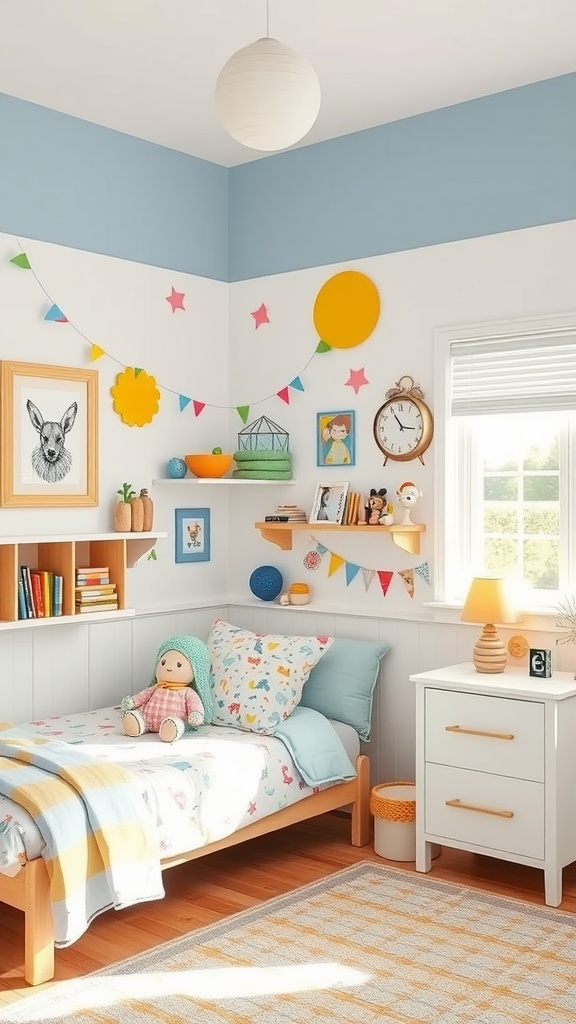
10. Playful Kids' Theme
Bright colour and character-led decor. The smart approach is keeping the expensive elements (walls, furniture) neutral and the cheap elements (bedding, prints, cushions) themed — so the room can evolve as the child does.

11. Coastal
Navy and white, natural textures and light. Coastal works best when it stays suggestive rather than literal — a palette and a texture story beat a room full of anchors and seashell motifs.

12. Modern Tech
Clean lines, integrated smart lighting and hidden cables. The aesthetic depends entirely on concealment — visible wires and chargers destroy it instantly, so plan storage and routing before you buy the gadgets.

13. Bold Mural
A large painted or papered mural as the room's entire personality. Because the wall does all the work, everything else must stay quiet — this is a high-impact, low-cost aesthetic if you can paint or hang a mural yourself.

14. Art Deco
Geometry, symmetry, brass and rich contrast. Deco is strict — its power comes from disciplined repetition of shapes and metals, so half-committing produces a muddle rather than glamour.

15. Zen
Low furniture, natural materials and generous empty space. Zen suits anyone whose main goal is sleep quality — the deliberate emptiness genuinely lowers the visual noise your brain processes before bed.

16. Rustic Farmhouse
Beams, warm linens and honest, slightly worn materials. If your home has any age or timber to it, this aesthetic amplifies what's already there rather than fighting it — which makes it both cheap and convincing.

17. Black and White
Maximum contrast, zero colour decisions. It's a graphic, decisive aesthetic that photographs beautifully — just add texture and warm lighting, or the high contrast can read cold and flat in person.

18. Futuristic
Sculptural architecture, hidden lighting and sleek surfaces. This is the most architecture-dependent aesthetic here — without unusual shapes or built-in lighting to work with, it's difficult to fake convincingly.

19. Sophisticated Neutrals
Greige, soft grey and restrained accents. The most timeless option on this list — it dates slowly, suits resale, and lets you change the room's mood entirely by swapping cushions and art.

20. Texture-Led Cosy
Not a style so much as a strategy: one quiet colour, many materials. It's the best aesthetic for anyone who finds colour decisions stressful, since all the interest comes from touch rather than hue.

21. Gallery Wall
Let one densely hung wall carry the room's personality. Lay the arrangement on the floor first and hang so the cluster's centre lands around 145–150 cm — the most common mistake is hanging the whole group too high.

22. Floral Feminine
Florals across walls, bedding and rug. Repeating the motif at different scales is what makes it feel designed rather than accidental — one large-scale print, one medium, one small.

23. Urban Jungle
Plants as the dominant design element. It's the most affordable aesthetic here and the only one that improves over time — but be realistic about light levels before committing to a room full of greenery.

24. Artisan Handmade
Woven wall hangings, pottery and visibly crafted objects. The slight irregularity of handmade pieces gives a room warmth that mass-produced decor can't — and it makes the space unmistakably yours.

25. Travel-Inspired
Maps, global textiles and objects with a provenance. This aesthetic only works when the pieces are genuinely yours — bought souvenirs from places you've never been read as set dressing rather than story.

26. Lighting-Led
Build the aesthetic from light itself: layered warm sources, dimmers and a sculptural fixture. It's the single highest-impact change per pound spent, and it improves every other aesthetic on this list.

27. Integrated Workspace
A desk that belongs to the room's palette rather than fighting it. The key is matching the desk's materials and colours to the bedroom scheme, so work doesn't visually intrude on rest.

28. Cottagecore
Soft colours, vintage wood, florals and gentle nostalgia. Cottagecore is thrift-store heaven — worn, mismatched and slightly faded pieces are exactly right, which makes it one of the cheapest aesthetics to assemble well.

Bonus: Modern Farmhouse
Rustic warmth with contemporary clean lines — the hybrid that keeps farmhouse from feeling twee. Pair natural wood with simple, modern shapes and a restrained palette for a look that stays current.
How to change your aesthetic without renovating
You rarely need new furniture to switch aesthetics. Change these four things, in this order, and most rooms transform completely: lighting (warm bulbs, a lamp, a dimmer), bedding (the single largest fabric surface in the room), wall treatment (paint or one mural wall), and the accessories you remove. That last one is free and often the most powerful — most rooms lack an aesthetic not because something's missing, but because too many competing things are present.
Aesthetic bedroom FAQ
How do I find my personal bedroom aesthetic? Save 20–30 images of rooms you love without thinking about why, then look at them together and find what repeats. Nearly everyone discovers a consistent thread — a palette, a level of clutter, a material — that they hadn't consciously identified. That thread is your aesthetic, and it's more reliable than picking a named style from a list.
Can I mix two aesthetics? Yes, but only if they share either a palette or a material story. Japandi (Japanese plus Scandinavian) and modern farmhouse (rustic plus contemporary) work precisely because their parent styles already overlap. Combining, say, Art Deco with cottagecore gives you nothing shared to build on, and the room reads confused.
Which aesthetic is cheapest to achieve? Minimalist and Zen, because both are subtractive — you remove rather than buy. After those, boho and cottagecore are the most budget-friendly, since secondhand, handmade and slightly worn pieces are genuine features rather than compromises.
How do I keep an aesthetic from feeling like a copy? Include at least a few objects with personal history — inherited, handmade, or brought back from somewhere. A room styled entirely from one retailer's current range will always look like a catalogue; personal objects are what make it yours.
Does my bedroom aesthetic affect sleep? Indirectly, yes. Cooler, brighter and more visually busy schemes are more stimulating, while restrained palettes, warm light and clear surfaces lower the amount of visual information your brain processes before bed. If sleep quality is your priority, lean toward the calmer end of this list.
Common aesthetic bedroom mistakes
- Mixing three aesthetics at once — the fastest way to make a room feel unresolved. Pick one and commit.
- Copying a photo without adapting it — the room in the image had different light, proportions and ceiling height than yours.
- Buying the look in one shop — matching sets read as showroom, not personality.
- Ignoring the lighting — a cool overhead bulb will undermine every aesthetic here, no matter how well you've decorated.
Final thought
The most beautiful bedrooms aren't the most expensive ones — they're the most consistent. Choose the aesthetic that matches how you want to feel and what you already own, hold the palette to three or four colours, light it warmly, and remove everything that belongs to a different story. Cohesion is the whole secret.

Sources & principles referenced
- Visual cohesion and palette discipline (the 60-30-10 colour rule).
- Layered lighting and colour temperature (2700 K).
- Texture-led depth in restrained palettes.
- Gallery-wall hanging height (145–150 cm centre).
- Defining characteristics of Scandinavian, industrial, Art Deco, boho, coastal, Zen and cottagecore interior styles.