

"Cosy" sounds vague, but it's actually made of specific, repeatable ingredients — which is good news, because it means you can engineer it. The best cozy bedroom ideas all work on the same five levers: low warm light, layered texture, a sense of enclosure, a warm palette, and sensory details like scent and sound. Get those right and a plain room becomes genuinely comforting. Here are 36 ways to do it, and the reasoning behind each.
What actually makes a bedroom feel cozy
The Danish concept of hygge gets quoted constantly, but the underlying design mechanics are simple. A room reads as cosy when it delivers low, warm light (bright overhead light is the single biggest enemy of cosiness), textures you want to touch, a sense of enclosure rather than exposure, and warm colours that reflect light kindly. Add scent and soft sound and you've engaged four senses instead of one — which is why some rooms feel cosy the instant you walk in, regardless of size or budget.
Light: low, warm and from several points
If you change nothing else, change this. Fit bulbs at 2700 K or lower, add a dimmer, and use at least three separate light sources at different heights — a bedside lamp, a floor or dresser lamp, and something atmospheric like string lights or candles. Multiple low pools of warm light create soft shadow and depth; one bright ceiling fixture flattens everything and kills the mood instantly.
Texture is the second lever
Cosiness is tactile. Layer materials with genuinely different hands — chunky knit, brushed cotton, linen, wool, sheepskin, velvet — rather than varying colour. A useful test: if everything in the room feels roughly the same to touch, it will look flat no matter how well you've chosen the shades. Soft flooring matters too, since bare feet on a cold floor undermine the whole effect.
Enclosure: make the bed feel like a nest
Humans find enclosed spaces restful, which is why four-posters, canopies and headboards feel so comforting. You don't need a canopy — a tall upholstered headboard, generous floor-length curtains, or a bed tucked into a corner all create the same sense of shelter. Lower furniture and warmer, darker ceilings also make a room feel more enveloping rather than exposed.
The cozy palette
Warm tones reflect warm light best: cream, oatmeal, caramel, terracotta, soft brown, muted olive and warm greys. Cool blue-greys and stark white can look beautiful but rarely read as cosy, because they reflect light coldly. Use the 60-30-10 rule with a warm neutral dominant, and remember that a slightly darker room is often cosier than a bright one.
36 cozy bedroom ideas — and why each works

1. Layer Different Textures
A knitted blanket over smooth cotton, against a velvet cushion — the contrast between materials is what registers as comfort. Aim for at least three distinctly different textures on the bed alone, and the room will look inviting even before you add anything else.

2. A Reading Nook
A chair, a lamp and something to read turns a bedroom into somewhere you choose to spend time rather than just sleep. Tuck it into a corner so it feels enclosed, and give it its own warm light source independent of the main room.

3. A Warm Colour Palette
Warm beiges, creams and caramels reflect lamplight in a flattering way that cool greys simply don't. If your room feels sterile despite good furniture, the wall colour's undertone is usually the culprit — warming it is often the single highest-impact fix.

4. A Plush Rug
What your feet land on first thing in the morning genuinely shapes how the room feels. A deep-pile rug also absorbs sound, and quieter rooms read as cosier — size it to extend past the bed on the sides you actually step onto.

5. Personal Photographs
Familiar faces and places make a room feel like somewhere you belong, which is a large part of what cosiness actually is. Keep frames consistent so a personal collection still reads as a considered display rather than a pile of memorabilia.

6. Layered Ambient Lighting
String lights plus a bedside lamp gives you two low, warm sources at different heights — exactly the configuration that produces soft shadow and depth. Two modest lamps will always beat one bright ceiling fixture for atmosphere.

7. Light-Filtering Curtains
Sheers diffuse harsh daylight into a soft glow and add a layer of privacy that makes the room feel sheltered. Hang them high and wide, and pair with heavier drapes if you also need proper blackout at night.

8. Layered Bedding
Sheet, duvet, folded throw and mixed cushions build visual depth and let you adjust warmth through the year. An unlayered bed looks functional; a layered one looks like somewhere you'd want to climb into.

9. Natural Elements
Plants and botanical prints soften hard architectural lines and bring life into the room. Greenery also pairs beautifully with warm neutrals, reinforcing the natural, unforced quality that cosy rooms share.

10. A Window Seat
A cushioned window seat is enclosure and daylight in one — you're tucked in but still connected to outside. If you have a deep sill or a bay, it's one of the highest-value cosy additions available.

11. Art You Actually Love
Cosiness is partly emotional, and art you have a genuine connection to does more work than technically "correct" decor. Choose warm-toned pieces and hang them at eye level so they feel present rather than remote.
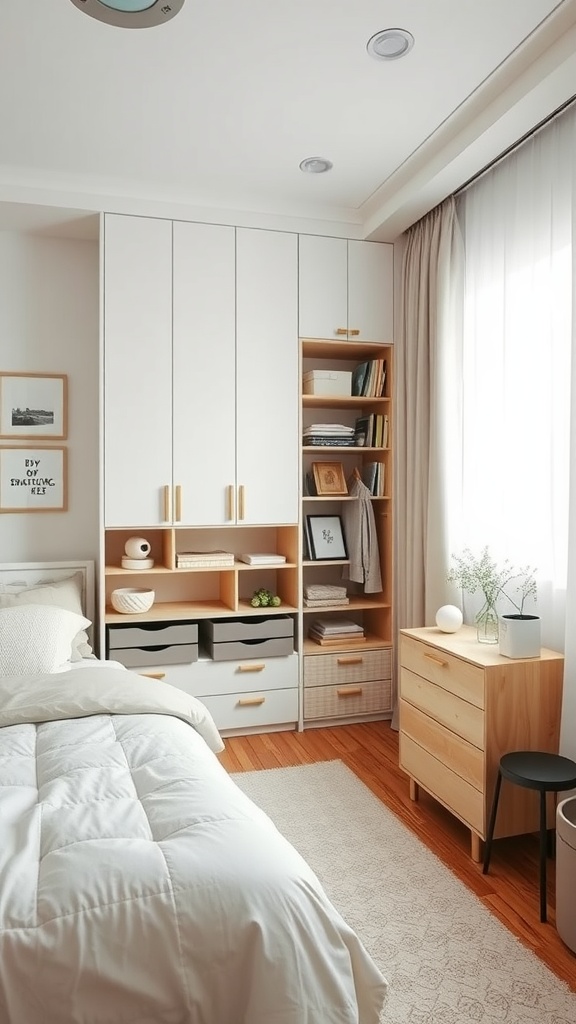
12. Enough Closed Storage
Visual clutter and cosiness are incompatible — a cluttered room reads as stressful, not snug. Closed storage lets you keep the soft, warm elements on display and everything administrative out of sight.

13. Scented Candles
Candles deliver moving flame-light and scent simultaneously, engaging two senses at once. Warm, familiar scents — vanilla, wood, amber — read cosier than fresh or citrus notes, which tend to feel energising instead.

14. A Canopy Bed
Fabric overhead creates literal enclosure — a room within the room. It's the most direct way to satisfy the shelter instinct that underpins cosiness, though you'll need reasonable ceiling height for it to work.

15. Characterful Furniture
A painted chest or a piece with some history gives a room warmth that flat-pack rarely manages. Cosy rooms tend to look collected over time rather than bought in a single afternoon.

16. Soft Fabrics Everywhere
The more soft surfaces a room contains, the cosier it feels — and the better it sounds, since textiles absorb echo. Curtains, cushions, upholstery and rugs all contribute to that acoustic softness.

17. Textured Wallpaper
Grasscloth or a textured finish gives walls tactile depth that flat paint can't, catching lamplight in subtle ways. It's texture applied at the largest possible scale, which makes it quietly effective.

18. A Touch of Vintage
Older pieces carry patina and an implied history, both of which read as warmth. One or two vintage items against a simple base is usually enough — the goal is character, not a period reconstruction.

19. Good Natural Light by Day
Cosy doesn't mean dark. The ideal is generous daylight and low warm light after dark — keep window treatments light enough to enjoy the day, and let the evening layers do the atmospheric work.

20. A Warm Desk Corner
If the bedroom must include work, make the desk feel like part of the room — wood, a plant, a warm lamp — rather than an office intrusion. And keep it clear at night, since visible work undermines rest.

21. An Aromatherapy Diffuser
Scent is processed by the brain's emotional centres before conscious thought, which is why it changes a room's feel so quickly. A diffuser also gives you a flame-free option for daily use.

22. A Meaningful Quilt
A handmade or inherited quilt combines texture, pattern and personal history in one object. It's arguably the single cosiest item you can put on a bed, and it usually costs nothing if it's already in the family.

23. Plenty of Plants
Grouped greenery adds organic shape, softens corners and makes a room feel cared for. Vary the heights — floor pots, shelf plants, something trailing — and keep them clear of your walking routes.

24. Fairy Lights
Dozens of tiny warm points produce glow with no glare — cheap, effective and instantly atmospheric. Choose warm white rather than cool, and run them along a wall or headboard rather than overhead.

25. Dimmers on Everything
The ability to drop light levels through the evening is what lets one room be practical at 7pm and restful at 10pm. Dimmers are inexpensive and deliver more atmosphere per pound than almost any purchase.

26. Words That Mean Something
Framed text works when it's genuinely personal — a line from a favourite book or song. Keep it to one piece in a colour that fits your palette; a wall of slogans reads as decor filler rather than warmth.

27. Simple Canopy Drapes
You don't need a four-poster — a ceiling track or a hoop above the bed with light fabric achieves the same enclosure for very little. Sheer fabric keeps it from feeling heavy or dark.

28. A Fireplace
Fire delivers warmth, moving light and a natural focal point simultaneously — three cosy ingredients from one feature. Even a decorative or electric version anchors the room effectively.

29. Warm Neutrals with Wood
Neutral walls plus natural timber is the most reliable cosy formula there is. The wood provides warmth and the neutrals keep it calm — it's why this combination appears in almost every cosy room.

30. A Nightstand with Storage
Drawers keep the bedside surface clear for a lamp, a book and a glass of water — which is exactly the uncluttered, settled look a cosy room needs. Match the top to within 5 cm of the mattress height.

31. Warm Colour Accents
Rust, mustard, terracotta and warm rose lift a neutral scheme without cooling it. Keep accents to roughly 10% of the room and repeat each colour two or three times so it looks deliberate.
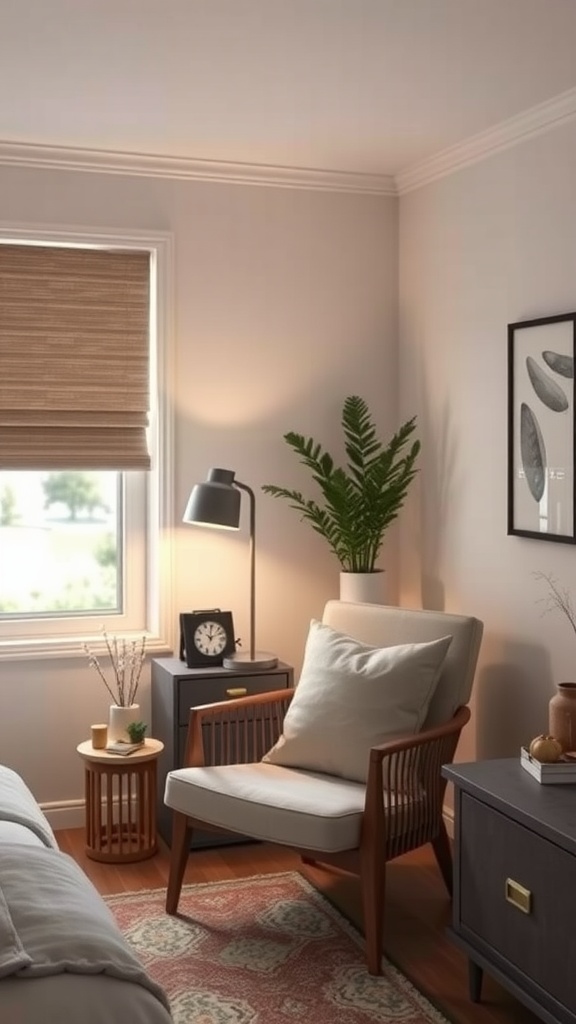
32. A Dedicated Retreat Corner
Giving over floor space to comfort rather than storage signals that the room is for restoring, not just sleeping. A chair, a plant and a lamp is genuinely all it takes.

33. Bedding That Feels Good
You spend a third of your life in contact with it, so this is where quality is most worth paying for. Brushed cotton and linen both soften with washing, getting cosier over time rather than wearing out.

34. Books on Display
Books add colour, texture and a strong signal of a life being lived in the room — and they absorb sound. A well-used bookshelf is one of the most reliably cosy features a bedroom can have.

35. Seasonal Layer Swaps
Heavier wool and deeper tones in winter, lighter linen in summer. Changing textiles seasonally keeps the room feeling responsive and fresh without buying furniture or repainting.

36. Consider the Sound
The most overlooked lever. Soft furnishings dampen echo, and a quiet room feels dramatically cosier than an acoustically live one. Rugs, curtains and upholstery all help — and a small speaker adds warmth of a different kind.
How to make a bedroom cozy on a budget
Cosiness is genuinely cheap to achieve, because almost none of it depends on furniture.
Free: declutter the surfaces, rearrange the bed into a corner or against a solid wall for enclosure, and layer the bedding you already own more deliberately. Move a lamp so light comes from a low point rather than overhead.
Under £30: swap every bulb to warm 2700 K, add fairy lights, and buy one candle. This alone transforms most rooms, because lighting is the dominant lever.
Under £100: add a plush rug beside the bed, one chunky knit throw, and a couple of textured cushions — the three highest-impact textile purchases. Secondhand quilts and throws are excellent value here.
Worth saving for: good bedding and full-length curtains. Both are large surfaces you interact with daily, and both deliver warmth, softness and better acoustics at once.
Common cozy bedroom mistakes
- One bright ceiling light — the single biggest obstacle to cosiness; go low, warm and multi-source.
- Cool-toned whites and greys — they reflect light coldly and rarely read as warm, whatever else you add.
- All smooth surfaces — without contrasting textures the room looks flat, however good the colours.
- Clutter — visual mess reads as stress; cosy requires calm, which requires storage.
- Bare floors and windows — hard surfaces echo, and echo makes a room feel exposed rather than snug.
Final thought
Cosiness isn't a decorating style you buy — it's a set of conditions you create. Drop the light and warm it, layer things worth touching, give the bed a sense of shelter, and clear away the noise. Do that and even a small, inexpensive bedroom will feel like the most comfortable room in the house.

Sources & principles referenced
- Hygge and the design mechanics of perceived cosiness.
- Colour temperature and multi-source low-level lighting (2700 K, dimmers).
- Tactile layering of contrasting textiles.
- Enclosure and shelter in spatial design.
- Acoustic softening with soft furnishings.
- Warm-neutral palettes and the 60-30-10 rule.