
Dark wood furniture is one of the most common things people are stuck with rather than choosing — an inherited bedroom set, a solid bed frame too good to replace, a wardrobe that came with the house. Handled badly it drags a room toward dim and dated; handled well it gives a bedroom depth, warmth and a sense of quality nothing else quite matches. These 10 dark wood bedroom ideas are about the second outcome: how to decorate around dark wood so it reads rich and grounding rather than heavy and old-fashioned.
Why dark wood turns heavy — and the fix
Dark timber has a low Light Reflectance Value: mahogany, walnut and espresso-stained oak absorb light rather than bouncing it, which is exactly why a room full of it can feel closed-in and gloomy. The problem is almost never the wood itself — it's a room where everything else is dark or neutral too, so there's no relief and nothing for the eye to read against.
The single most important principle, then, is contrast. Dark wood needs light around it: pale walls, light bedding, bright textiles, good lighting. Give it that contrast and the same furniture that looked oppressive becomes a striking, grounding anchor. The wood stops being the problem and becomes the point.
The 90s-bedroom-set trap
The reason dark wood so often reads "dated" is a specific one: matching sets. A bed, two nightstands, a dresser and a wardrobe all in the identical dark finish, all the same style, all bought together — that's the look that says "past decade", because it's exactly how bedroom furniture was sold then. The wood isn't the issue; the uniformity is.
Two fixes break it. Split the set up — don't use every matching piece in the same room, or pair the dark pieces with furniture in other materials and finishes (a painted nightstand, a rattan chair, a metal lamp). And let the surroundings be current — modern bedding, contemporary art, fresh colour. Dark wood mixed with newer, lighter, varied elements reads timeless; dark wood in a matching quartet reads like a showroom from twenty years ago.
Warm up, don't cool down
Dark woods are warm-toned — they carry red, brown and amber undertones — so they pair best with a warm surrounding palette: creams, warm whites, soft terracotta, sage, warm greys. Cool, blue-grey schemes fight the wood's undertone and can make the timber look muddy or the room feel cold and mismatched. The same logic applies to metals: warm brass, gold and bronze flatter dark wood, while cold chrome and stark silver tend to clash. And keep the lighting warm too — 2700 K bulbs make dark wood glow; cool white makes it look flat and drab.
Balance the visual weight
Dark, solid furniture is visually heavy, and a room reads unbalanced if all that weight sits on one side or low to the ground. Spread it: don't cluster every dark piece together, and lift some visual interest upward with pale walls, art and lighting so the eye isn't pulled permanently to the floor. If the bed frame and wardrobe are both dark and both large, let the nightstands, chair or shelving be lighter to keep the room from feeling bottom-heavy.
10 dark wood bedroom ideas — and why each works
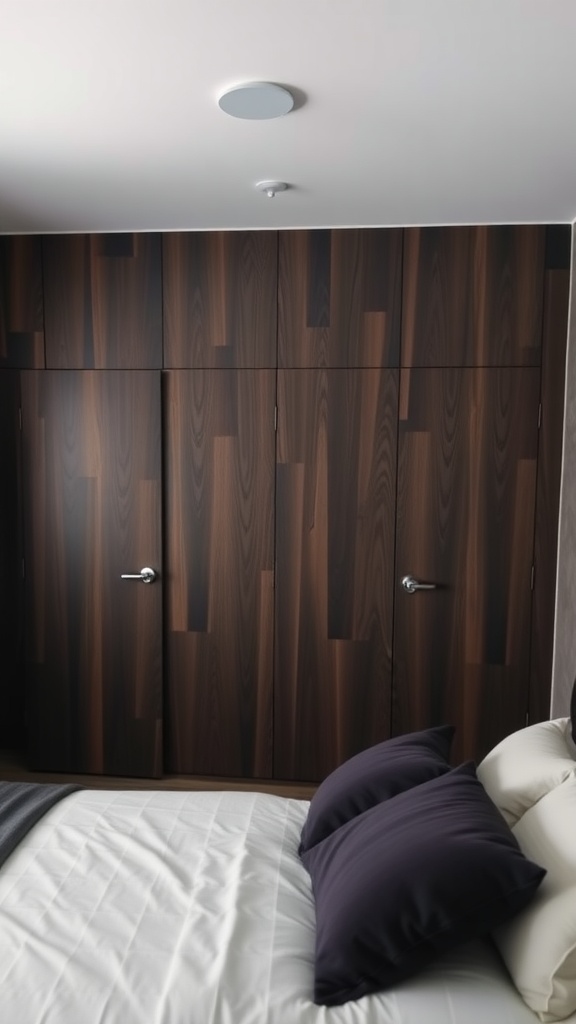
1. A Dark Wood Accent Wall
Concentrating dark timber on one wall — as panelling behind the bed — gives you the richness without darkening the whole room. Pair it with sleek, light elements elsewhere and the wall reads as a deliberate modern feature, not a hangover.
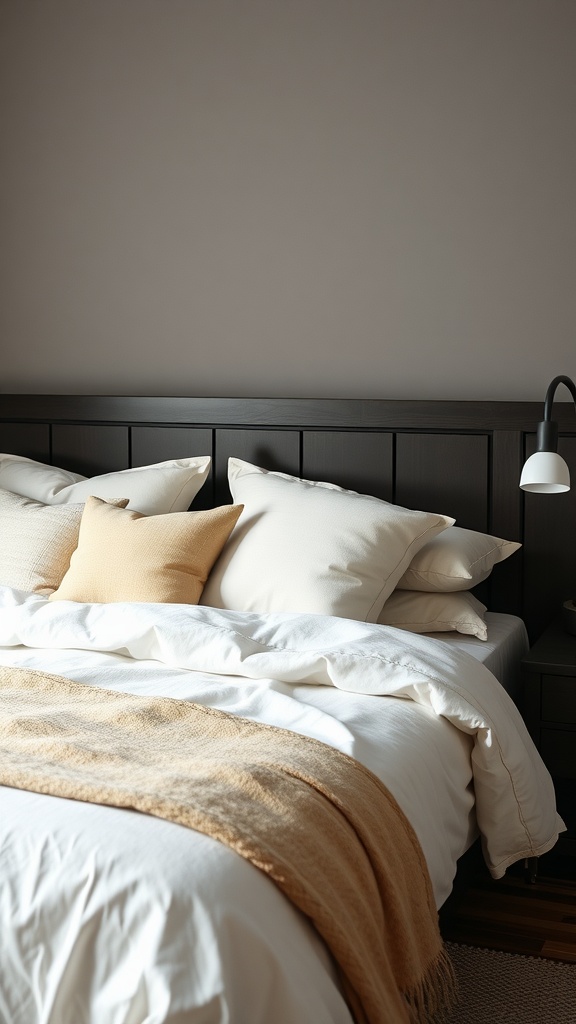
2. Light Textiles Against the Wood
White or cream bedding against a dark headboard is the cleanest, most reliable contrast there is, and it's what stops the wood reading heavy. This single pairing does more to modernise a dark bed than anything else on the list.
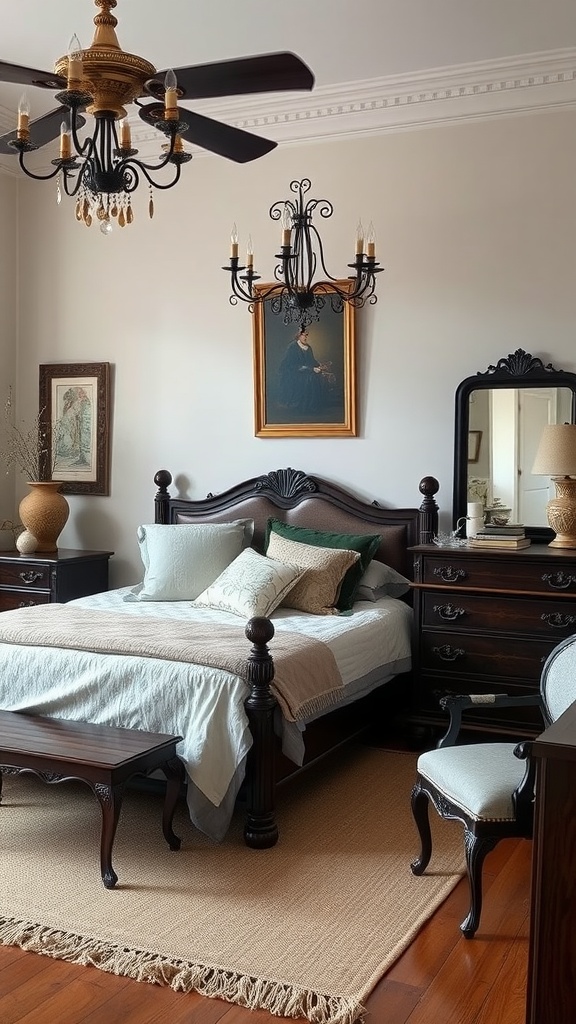
3. Lean into Vintage Character
If the wood is genuinely old, embrace it — dark antique timber has a depth and patina new furniture can't buy. Play up the heritage with warm light and a few characterful pieces rather than fighting it with cold modernity.
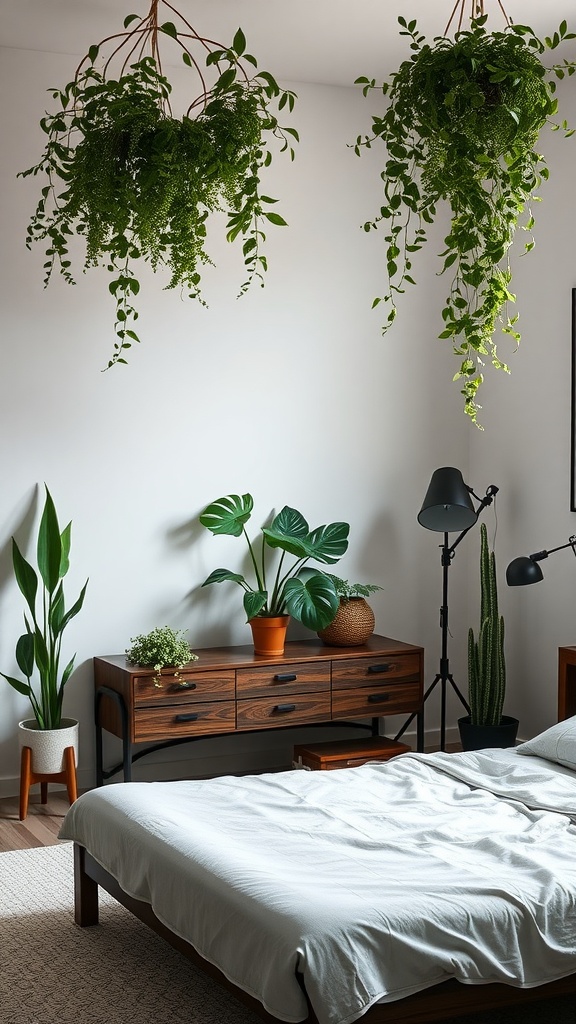
4. Green Plants for Life and Contrast
Foliage reads vividly against dark wood and keeps the room feeling alive rather than static. Trailing and hanging plants also add lightness up high, balancing the weight of heavy furniture below.
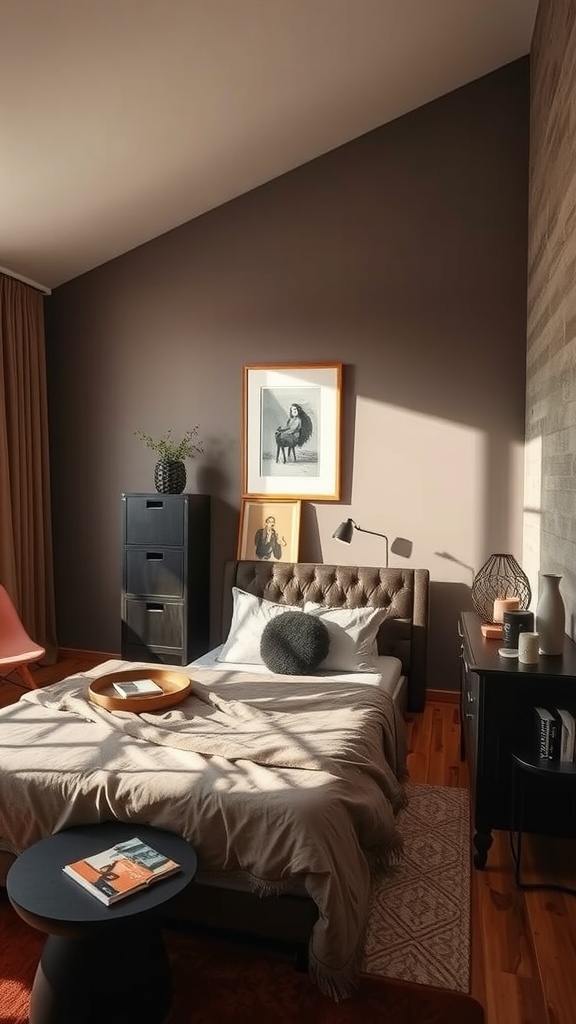
5. A Warm Surrounding Palette
Creams, terracotta, warm neutrals and sage flatter the wood's warm undertone and make the whole room feel cohesive. This is the palette that lets dark wood glow instead of sinking into gloom.
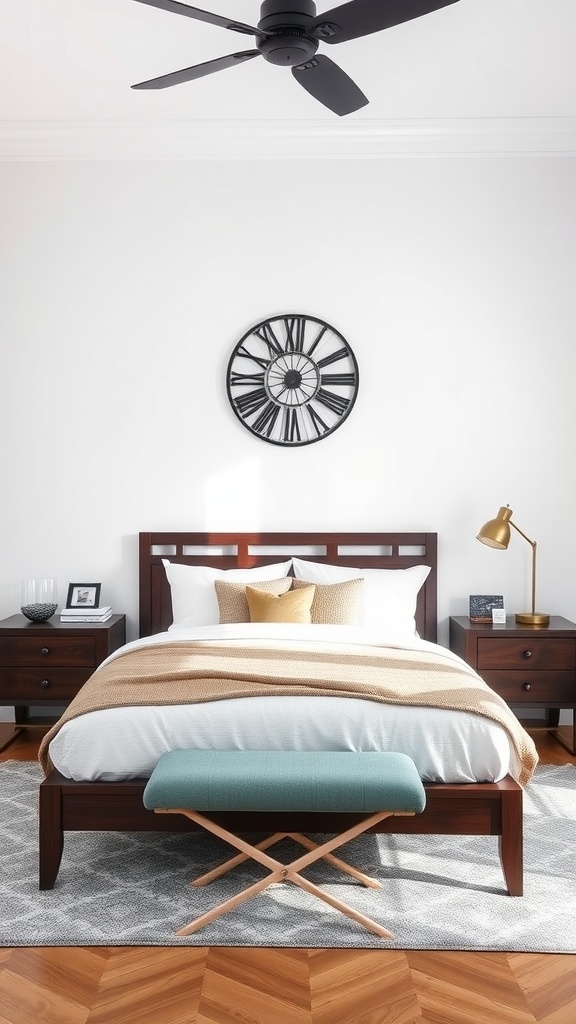
6. Arrange for Balance, Not Symmetry of Weight
Spread the dark pieces around the room rather than clustering all the mass in one corner. Distributing the visual weight keeps the room from feeling lopsided or bottom-heavy.
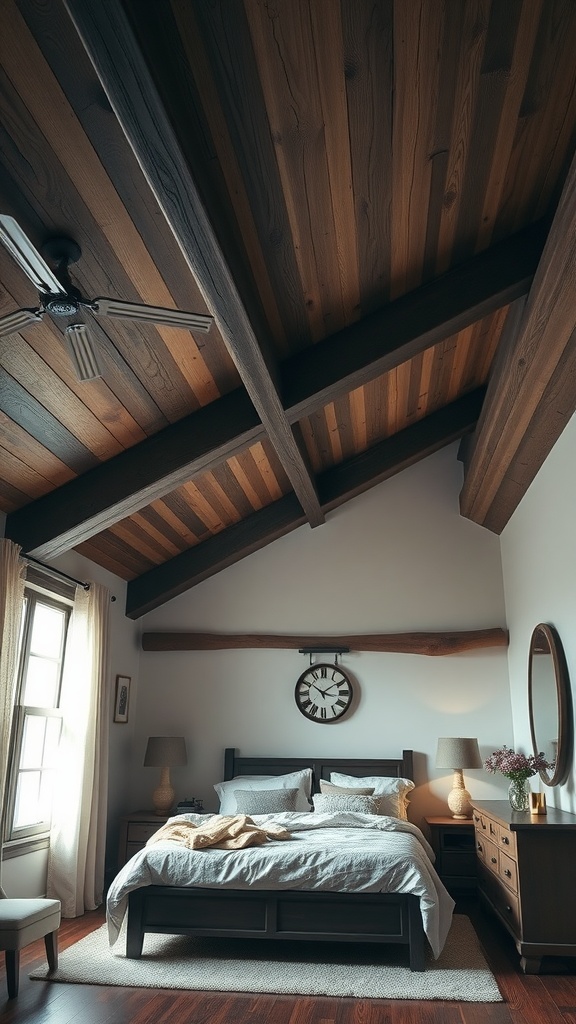
7. Echo the Wood in Beams Overhead
If you have dark beams, treat them as an asset that ties the furniture into the architecture. Keep the walls between them pale so the beams read as rustic character rather than a low, dark ceiling.
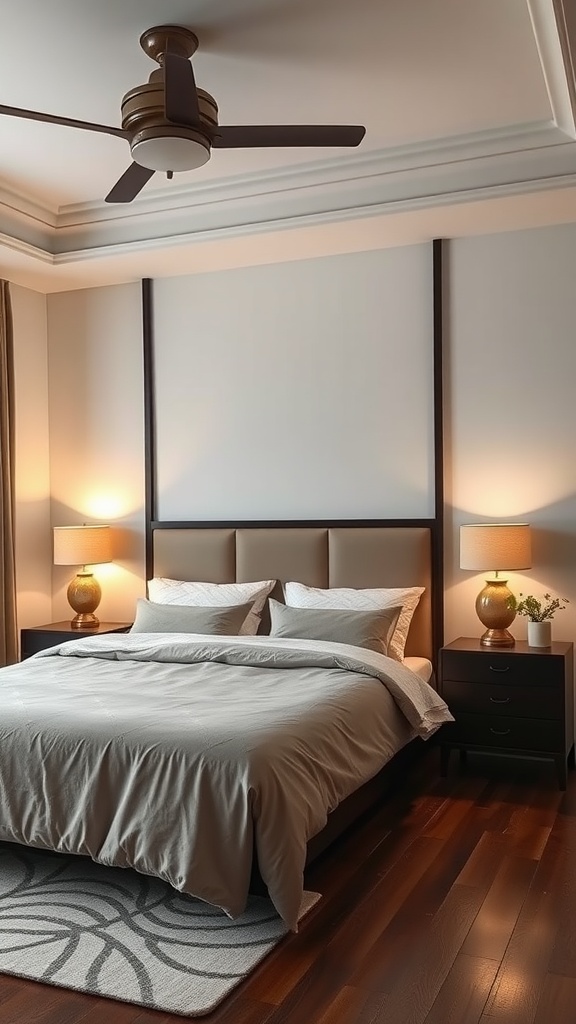
8. Layered, Warm Lighting
Dark wood absorbs light, so a single ceiling bulb leaves the room dim — several warm sources at different heights are essential. Bedside lamps, a wall fitting and a warm overhead on a dimmer make the timber glow instead of going drab.
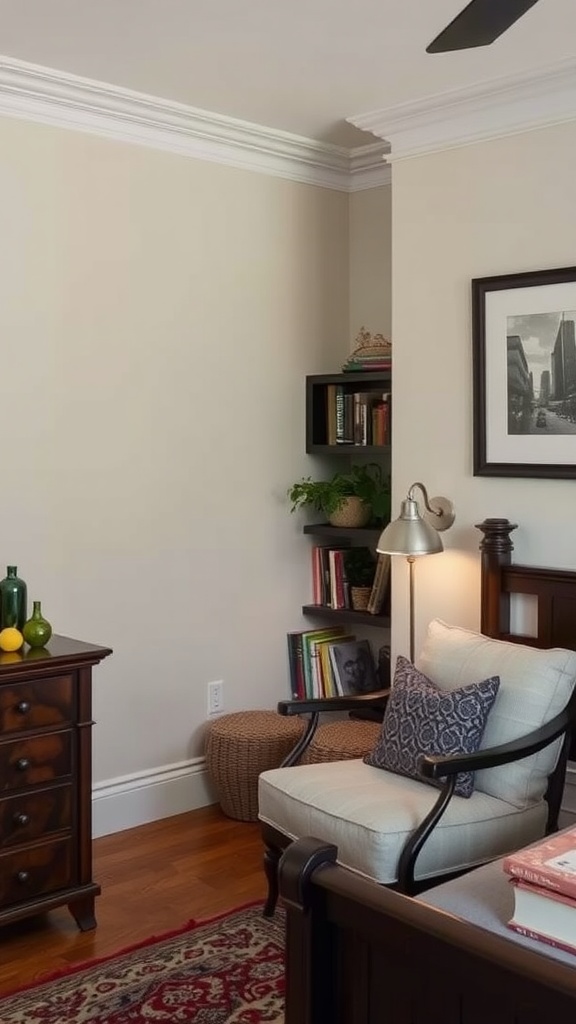
9. A Warm, Inviting Reading Nook
Dark wood is at its best when it reads cosy rather than formal, and a corner with a chair, a lamp and books plays exactly to that strength. Add a soft light-toned throw and cushion to lift the darker frame.
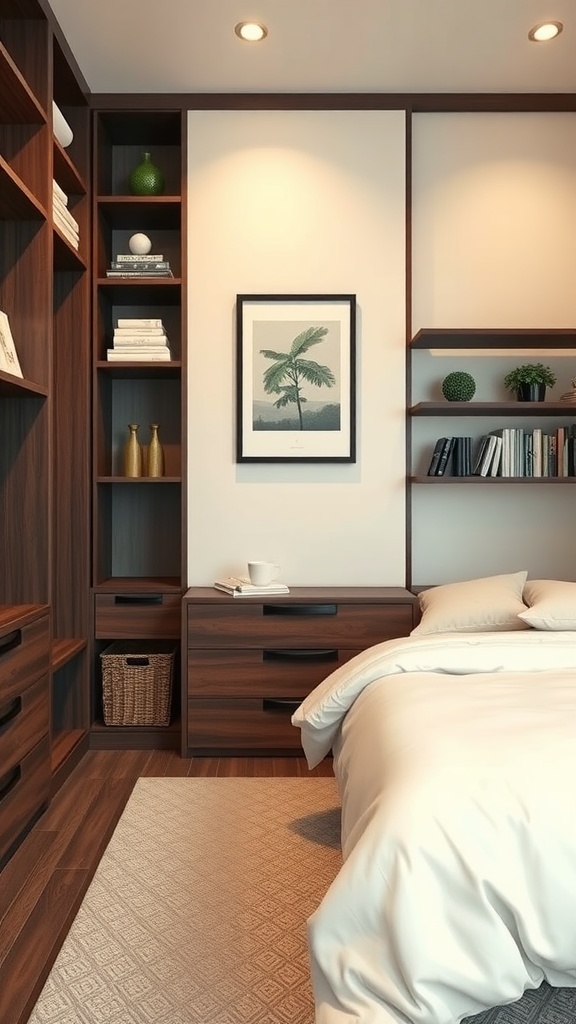
10. Use It for the Storage It Does Well
Solid dark-wood dressers, shelves and nightstands are usually well-built and generous — genuinely good storage worth keeping for its function alone. Style the tops with a few light-toned objects so the pieces earn their keep without adding to the room's heaviness.
What colour walls go with dark wood furniture?
This is the question that decides whether the room works, so it's worth answering directly. The rule is light and warm — you want reflectance to counter the wood's darkness, and a warm undertone to agree with the timber's warmth.
- Warm white and cream — the safest, brightest choice; maximum contrast, lets the wood be the feature. Best for small or low-light rooms.
- Soft sage or muted green — a natural partner to wood, calming and slightly richer than plain neutral.
- Warm terracotta, clay or soft ochre — echoes the wood's warm undertones for a cosy, enveloping feel; use in rooms with decent light.
- Warm greige — more depth than white while staying light, as long as it leans warm rather than cool.
- Deep warm colour (forest green, warm navy) — dramatic and rich, but only in a well-lit room, and lighten hard with pale bedding and plenty of warm lighting or it closes in.
What to avoid: cool, blue-based greys and stark bright whites, which fight the wood's warm undertone and can leave the room feeling cold, muddy or mismatched.
Dark wood bedroom on a budget
Because the furniture is already there, transforming a dark-wood room is almost entirely about the cheap surrounding layer.
Nearly free. Swap dark or busy bedding for white or cream — the biggest single change. Move a matching piece out of the room to break up the set. Add any plants you have. Replace cool bulbs with warm ones. Open up the curtains to let daylight counter the wood.
Under $80. Light-toned bedding and a couple of bright cushions and a throw; two warm bedside lamps with 2700 K bulbs; a mirror positioned to bounce daylight; a plant or two for height and life.
Under $250. A tin of warm, light paint for the walls — the change that does the most — plus new brass or bronze handles to warm and modernise the pieces, and one contrasting non-wood item (a rattan chair, a painted stool) to break the matching-set look. Spend on the wall colour first; it reframes everything else.
Dark wood bedroom FAQ
How do I stop dark wood furniture making my room look dark and dated? Two things: add contrast (pale walls, light bedding, warm layered lighting, plants) so the wood has relief around it, and break up any matching set by mixing in other materials and keeping the surroundings modern. The wood is rarely the problem — a room that's uniformly dark and matchy is.
What wall colour goes best with dark wood? Light and warm: warm white or cream for maximum brightness and contrast, or soft sage, terracotta or warm greige for more depth. Avoid cool blue-greys and stark whites, which clash with the wood's warm undertone.
Can dark wood work in a small bedroom? Yes, with discipline. Keep the walls pale and warm, the bedding light, the lighting warm and layered, and consider concentrating the dark wood in one or two pieces rather than a full set. Contrast is what keeps a small dark-wood room from feeling cramped.
What metals and finishes pair with dark wood? Warm metals — brass, gold, bronze — flatter its warm undertone. Cold chrome and stark silver tend to clash. Swapping dated handles for warm metal is a cheap, effective update.
Should I paint over dark wood furniture? Only if you actively dislike it — solid dark wood is often good-quality and worth keeping for both looks and function. Try changing the room around it first (walls, bedding, lighting, handles); painting is a last resort, not a first move.
Common dark wood bedroom mistakes
- No contrast. Dark wood in a dark or all-neutral room reads gloomy. It needs pale walls, light bedding and warm light around it.
- The full matching set. Every piece identical and bought together is what reads dated. Split it up or mix in other materials.
- Cool colour schemes. Blue-greys fight the wood's warm undertone. Go warm — cream, sage, terracotta, warm greige.
- Cold or single-source lighting. One cool bulb leaves the room flat and dim. Layer several warm 2700 K sources.
- All the weight in one place. Clustering heavy pieces unbalances the room. Distribute the mass and lift interest upward.
- Cold metals. Chrome against dark wood clashes. Choose brass, gold or bronze.
Final thought
Dark wood is a gift disguised as a problem. It's usually solid, well-made and full of depth — everything flat-pack isn't — and the only reason it reads heavy or dated is a room that hasn't been built to set it off. Give it contrast with pale, warm walls and light bedding, keep the lighting warm and layered, break up any matching set, and let brass and greenery do the rest. Do that and the furniture you were stuck with becomes the grounding, quietly expensive anchor the whole room is built around.

Sources & principles referenced
- The low Light Reflectance Value of dark timbers (mahogany, walnut, espresso-stained oak) and the resulting need for surrounding contrast.
- The "matching-set" uniformity — rather than the wood itself — as the cause of a dated look, and the fixes of splitting sets and mixing materials.
- The warm undertones of dark wood and its pairing with warm palettes (cream, terracotta, sage, warm greige) and warm metals (brass, gold, bronze) rather than cool blue-greys and chrome.
- Warm (2700 K) layered lighting to counter light absorption.
- Distribution of visual weight to avoid a bottom-heavy room.
- Recommended wall colours for dark wood and the case for keeping solid dark-wood furniture for its build quality and storage function.