

A studio apartment asks one room to do the work of four, and the difference between a studio that feels calm and one that feels cramped is almost entirely about zoning — creating distinct areas without building walls. These 8 cozy studio apartment interior design ideas cover the techniques that actually separate sleeping from living, plus the storage discipline a one-room home genuinely requires.
Why separating the sleep zone matters
This is the decision that affects daily life most, and it isn't only aesthetic. Sleep specialists consistently recommend associating the bed with sleep rather than with work, eating and screens — the stronger that association, the easier it is to wind down. In a studio, where the bed is visible from the sofa and the desk, that separation has to be created deliberately.
Even a partial visual break helps: a curtain, a shelving unit or simply positioning the bed so it isn't the first thing you see from the door. The aim is that the sleeping area reads as a different place, even though it's the same room.
The five ways to divide a studio
Each has a different trade-off between separation, light and reversibility:
- A ceiling-track curtain — the cheapest and most flexible option. Full visual separation when drawn, completely open when not, and it packs down when you move. Track can often be fitted with minimal fixings.
- Open shelving — divides while still letting light through, and gives you storage in the same footprint. An open-backed unit is the single most efficient divider available.
- A folding screen — entirely freestanding, so nothing to fix and nothing to make good when you leave. Ideal for renters.
- Half-height furniture — a sofa back, a low sideboard or the headboard itself creates a boundary at seated height while keeping sightlines open above.
- Rugs and lighting — no physical barrier at all, but a rug under the seating and separately switched lamps in each zone define the areas surprisingly strongly.
Most successful studios use two or three of these together rather than relying on one.
Hiding the bed entirely
If your studio is small enough that the bed dominates, three approaches remove it from view during the day. A Murphy (wall) bed folds up and reclaims the entire floor area — the most effective solution, though it usually requires fixing to the wall. A sofa bed converts the sleeping area into seating, at the cost of making and unmaking it daily. A loft or raised bed lifts sleeping above and frees the floor beneath for a desk or seating, provided your ceiling height allows it.
One palette, because you see everything at once
In a house you can decorate rooms differently because you experience them separately. In a studio you see every zone simultaneously, so competing colour schemes read as chaos rather than variety. Choose three or four colours total and repeat them across all zones, applying the 60-30-10 rule to the whole apartment rather than per area. A consistent palette is one of the strongest tools for making a small studio feel bigger.
Storage: the thing that makes or breaks a studio
In a one-room home, clutter has nowhere to hide — every untidy surface is visible from every seat. That makes storage a structural requirement rather than an afterthought. Prioritise closed storage over open, use the vertical space right up to the ceiling, and exploit the dead space under the bed, which is usually the largest untapped volume in the apartment. Furniture that stores as it serves — an ottoman, a storage bed, a bench with a lid — earns its footprint twice.
The habit that matters most: one-in, one-out. A studio stays workable only if what comes in is balanced by what leaves.
8 cozy studio apartment ideas — and why each works
1. Multi-Functional Furniture
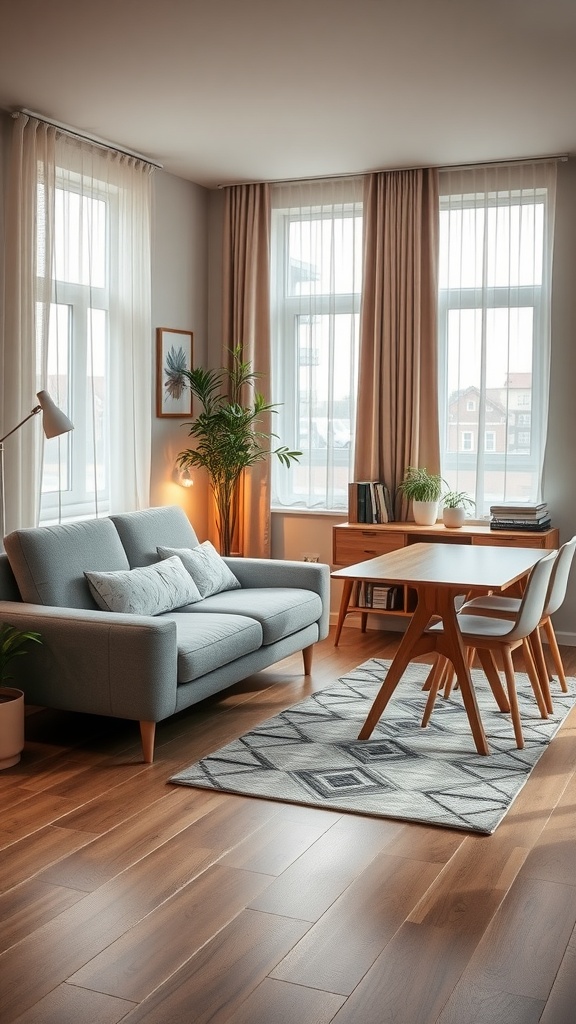
In a studio, every large piece should do at least two jobs. A dining table that doubles as a desk, a sofa bed, a storage ottoman that serves as footrest, seating and a box for bedding — each of these removes an item you'd otherwise need to find floor space for.
Choose pieces on visible legs wherever possible. Seeing the floor run underneath furniture makes a room read noticeably more spacious than the same piece sitting flush to the ground, which is why leggy mid-century furniture suits studios so well.
2. Layered Textiles
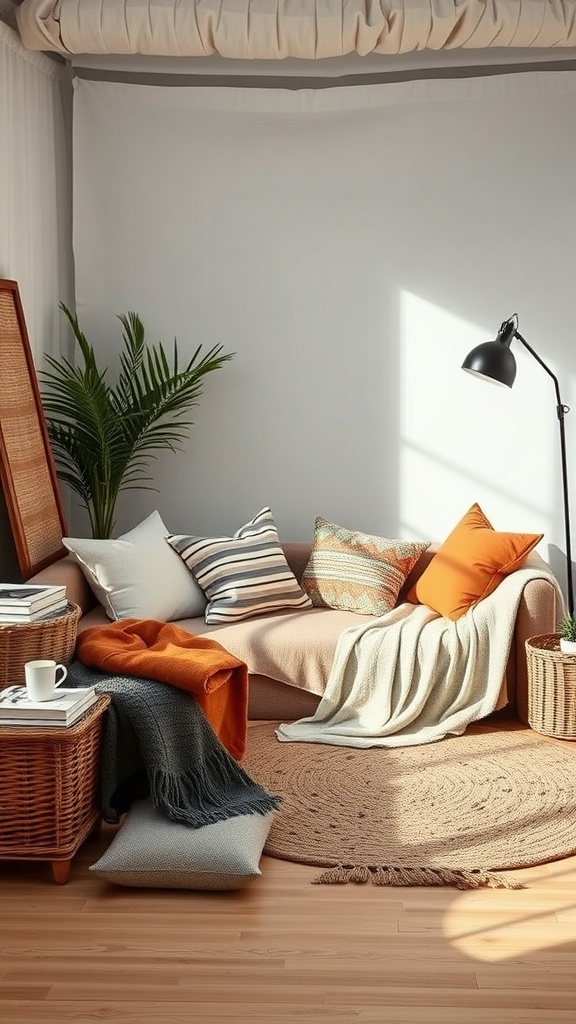
Studios tend to have hard floors and few soft surfaces, which makes them acoustically live — sound bounces and the space feels less comfortable than it should. Textiles fix both problems at once.
Layer materials with genuinely different textures — knit against linen against wool — rather than just adding more cushions of the same type. Contrast between materials is what registers as comfort. A rug in particular does double duty: it defines a zone and absorbs a meaningful amount of the echo.
3. Plants at Every Level
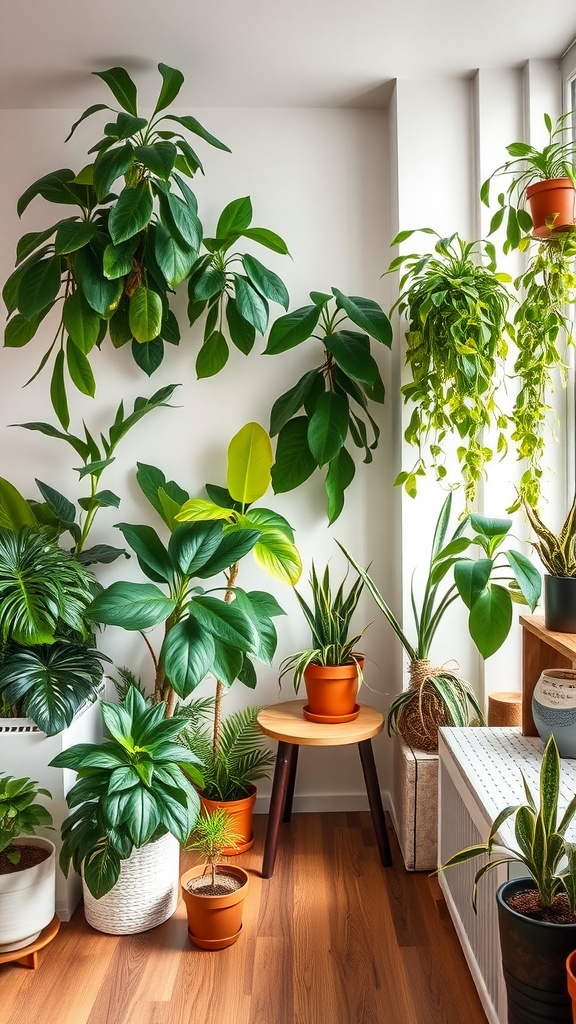
Greenery softens the hard lines that small modern apartments tend to have, and it's one of the few decorative elements that improves over time. In a studio the key is going vertical: hanging planters and shelf-level plants add life without consuming the floor you can't spare.
Choose species suited to your actual light levels rather than the ones you like the look of, and group them in odd numbers at varying heights so a collection reads as deliberate rather than accumulated.
4. Zone with Rugs and Dividers
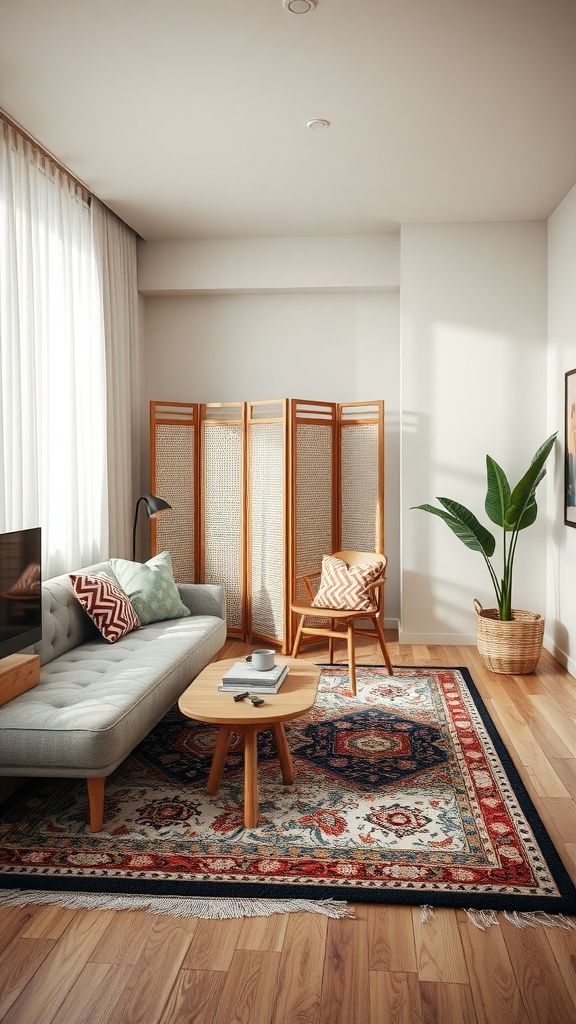
This is the single most important technique in a studio. A rug under the seating group tells the eye exactly where the living area begins — size it so at least the front legs of the sofa sit on it, because a small rug floating in the middle fragments the space rather than defining it.
Pair the rug with a physical divider for stronger separation. A slatted wooden screen or open shelving gives you a boundary while still letting light travel through, which matters enormously in a studio where the windows may all be on one wall.
5. Warm, Zoned Lighting
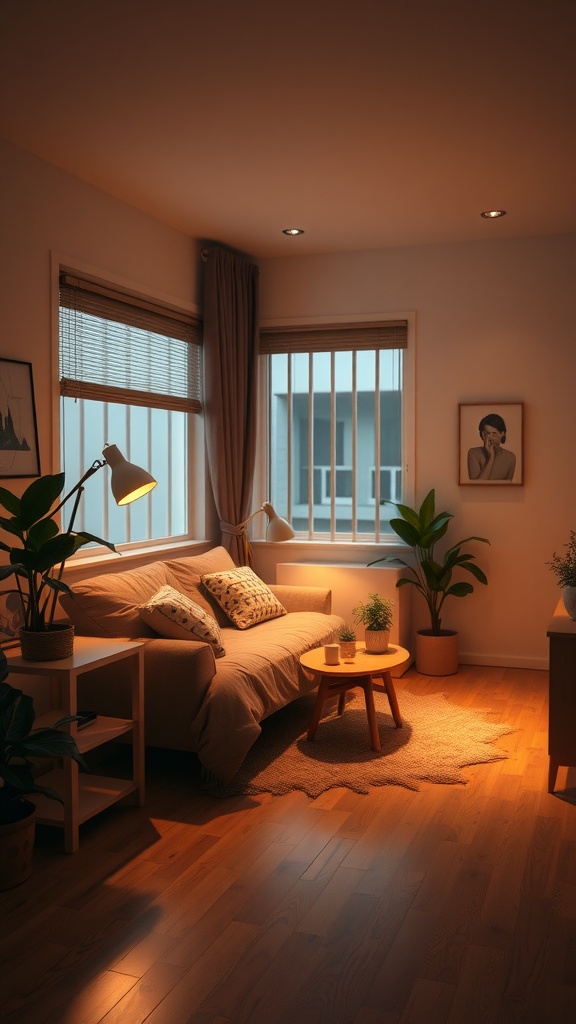
Lighting is the most underrated zoning tool available. Give each area its own light source on its own switch — a floor lamp by the sofa, a bedside lamp in the sleeping zone, a task lamp at the desk. Being able to light one zone while leaving another dark creates separation as effectively as any screen.
Keep every bulb at 2700 K or lower and add dimmers where you can. A single bright ceiling fixture lighting the whole studio evenly is what makes a one-room apartment feel like a bedsit.
6. A Neutral, Consistent Palette
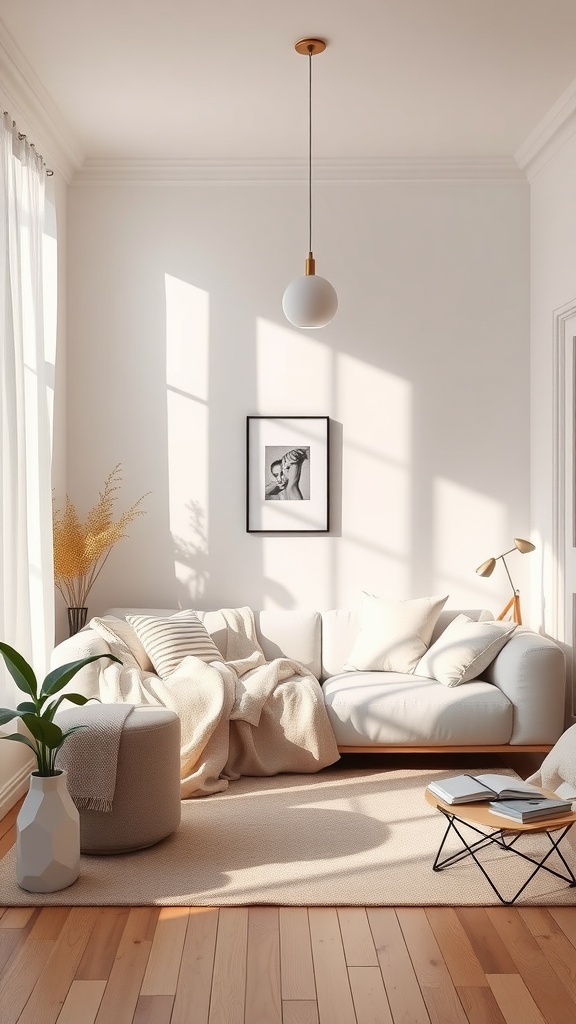
Because you see the whole apartment at once, palette discipline matters more here than anywhere else. Warm neutrals — cream, oatmeal, soft grey with warm wood — keep the space calm and let the zones read as one coherent home rather than several competing rooms.
Light colours also reflect rather than absorb light, which genuinely helps a small apartment feel more open. Save stronger colour for the 10% accent layer, where it's easy to change.
7. Art on the Walls, Not the Floor
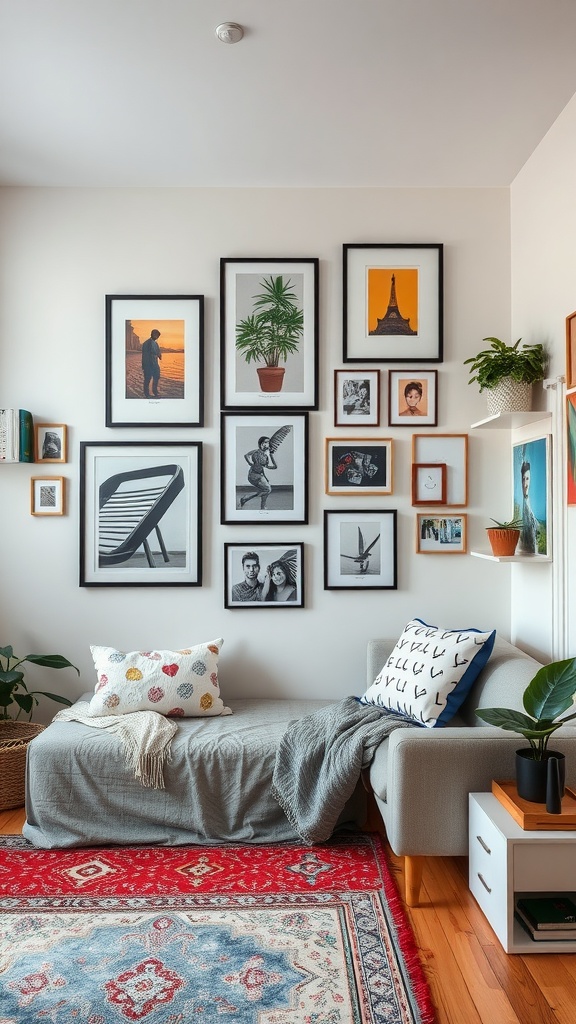
In a studio the walls are the one surface with capacity to spare. A gallery wall adds personality without consuming any floor, and it can also reinforce zoning — art above the sofa marks that area as the living zone.
Lay the arrangement out on the floor first, then hang so the cluster's centre sits around 145–150 cm from the floor. Consistent framing is what turns an assembled collection into something that looks curated.
8. Storage Everywhere It Fits
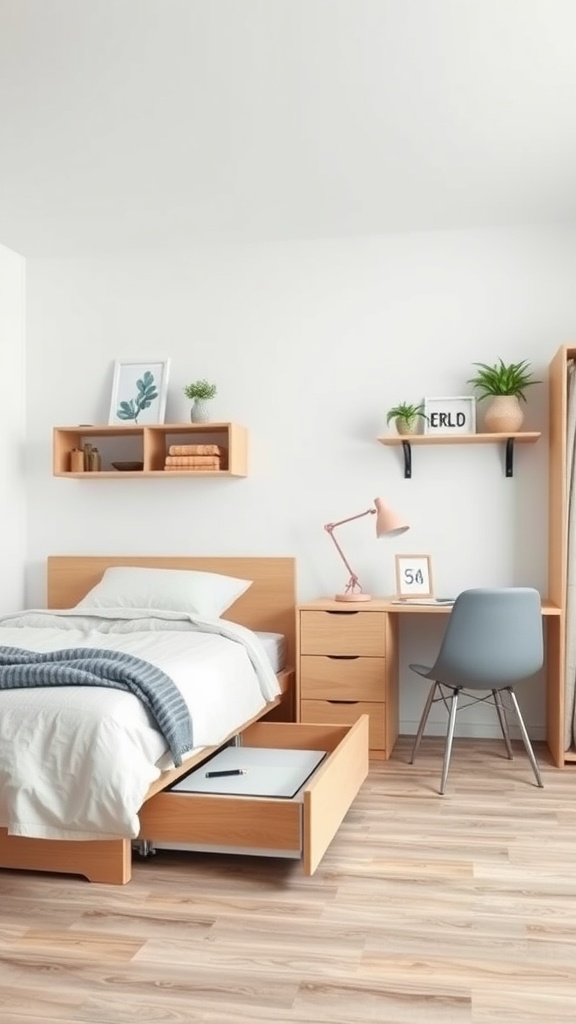
A storage bed is the highest-value furniture purchase in a studio — the space beneath it is the largest unused volume in the apartment, and drawers make it genuinely accessible rather than a place things disappear into.
Combine that with wall shelves taken high, and closed storage for anything that isn't attractive. In a one-room home the difference between "minimal" and "cluttered" is simply whether everything has somewhere to go.
Studio apartment FAQ
How do I separate the bedroom area in a studio? The cheapest effective method is a ceiling-track curtain — full separation when drawn, invisible when open, and removable when you leave. Open shelving is the best alternative because it divides while letting light through and stores things at the same time. Most studios work best with a physical divider plus a rug and separate lighting.
Should the bed be visible from the living area? Ideally not, or not prominently. Beyond appearance, keeping the bed visually separate supports the association between bed and sleep that helps you wind down. If full separation isn't possible, position the bed so it isn't in the direct sightline from the door or the sofa.
What's the best bed for a studio? A storage bed if you have room to leave it up permanently — the under-bed drawers are invaluable. A Murphy bed if the floor space matters more than the convenience, and a sofa bed only if you're genuinely willing to convert it daily, which most people aren't after the first month.
How do I make a studio feel bigger? Keep one consistent light palette throughout, choose furniture on visible legs so floor runs underneath, store vertically, use mirrors to reflect the windows, and keep surfaces clear. Visual clutter shrinks a studio faster than its actual dimensions do.
How do I stop a studio feeling like one big bedroom? Zone it properly — a rug and dedicated lighting for the living area, a divider at the sleeping area, and a clear boundary for any workspace. When each function has its own defined spot, the apartment reads as a small home rather than a single room with a bed in it.
Common studio mistakes
- No zoning at all — furniture pushed to the walls with an undefined middle makes a studio feel like a waiting room.
- One ceiling light for everything — kills any sense of separate areas; light each zone independently.
- Competing colour schemes — you see every zone at once, so they must belong to one palette.
- Not enough closed storage — in one room, clutter is visible from everywhere.
- Oversized furniture — measure the walkways (75–90 cm) before buying, not after.
Final thought
A studio works when it stops being one room and starts being several zones that happen to share walls. Divide the sleeping area from the living one, give each zone its own rug and its own light, hold to a single palette, and give everything a place to go. Do that and a studio feels like a small, well-considered home — not a compromise.

Sources & principles referenced
- Sleep-hygiene guidance on associating the bed with sleep.
- Studio zoning techniques (ceiling-track curtains, open shelving, folding screens, half-height furniture, rugs and independent lighting).
- Space-saving bed types (Murphy, sofa bed, loft bed).
- Visible-leg furniture and light palettes for perceived space.
- Area-rug sizing.
- Vertical and under-bed storage.
- Layered warm lighting (2700 K, dimmers).
- Art hanging height (145–150 cm centre).
- Walkway clearances (75–90 cm).
- The 60-30-10 colour rule.