

Elegance is the most misunderstood goal in bedroom design, because people reach for ornament when the actual ingredients are restraint, proportion and quality. An elegant bedroom isn't the one with the most in it — it's the one where every element is correctly sized, quietly chosen and in balance with the rest. These 37 elegant bedroom ideas show how that works in practice, and why elegance is far more achievable on a normal budget than luxury is.
Elegant vs. luxurious: not the same thing
The two words get used interchangeably, but they describe opposite instincts. Luxury is about richness and abundance — deep materials, opulent finishes, a sense of indulgence. Elegance is about restraint and refinement — clean proportion, quiet quality, nothing superfluous. A luxurious room impresses you; an elegant room simply feels right, and you often can't immediately say why. This matters practically: luxury usually requires spending, while elegance mostly requires editing and getting proportions correct — which costs nothing.
Proportion is the foundation
Nearly every "elegant" room follows the same handful of measurements, and nearly every awkward room breaks them:
- Art — hang so the centre sits around 145–150 cm from the floor, and scale a piece or cluster to roughly two-thirds of the furniture beneath it.
- Curtains — hang close to the ceiling and wide of the frame, dropping to just touch the floor. Short curtains are the fastest way to make a room look unfinished.
- Rugs — large enough to extend well past the bed on three sides; an undersized rug undermines everything above it.
- Nightstands — tops within about 5 cm of the mattress height, and wide enough to look substantial beside the bed.
Symmetry and balance
Elegance leans on symmetry because the eye reads it as calm and intentional. A centred bed with matched nightstands, matched lamps and balanced art is the classic elegant arrangement — and it's the single easiest change to make with furniture you already own. Where perfect symmetry isn't possible, aim for visual balance instead: equal weight either side, even if the objects differ.
A restrained palette
Elegant bedrooms are almost always tonal rather than colourful. Soft neutrals, warm greys, cream, taupe and muted blues or greens, with one deeper accent and a metallic — brass, aged gold or bronze — for definition. Hold to three or four colours in a 60-30-10 split and let texture supply the variety colour normally would: linen against velvet against polished wood.
Lighting: layered, warm, dimmable
No elegant room relies on one ceiling light. Layer ambient, bedside task and accent lighting, keep every bulb at 2700 K or lower, and put as much as possible on dimmers. Consistency matters too — mismatched warm and cool bulbs are a common reason a well-decorated room still feels subtly wrong.
37 elegant bedroom ideas — and why each works

1. A Chandelier with Bedside Lamps
The classic elegant lighting pair: one central fixture for presence, two matched bedside lamps for symmetry and reading. Put both on dimmers so the room can shift from functional to restful.

2. A Correctly Sized Rug
Size matters more than pattern or fibre here. A rug that runs generously past the bed anchors the whole room; a small one floating in the middle undoes an otherwise refined scheme.

3. Layered Window Treatments
Sheers behind heavier drapes give soft daylight and full blackout from one system. Hang the track near the ceiling and extend it beyond the frame — the proportions do more than the fabric.

4. Quality Layered Bedding
The largest surface in the room, so its quality is highly visible. Long-staple cotton or linen drapes properly, and a layered pillow arrangement is what makes a bed look considered rather than merely made.

5. Classic Furniture Shapes
Timeless silhouettes date far more slowly than trend-led pieces. Choosing classic forms is the closest thing to future-proofing an interior, and it's why elegant rooms still look good a decade later.

6. Considered Wall Art
Fewer, larger, well-framed works beat many small prints. Consistent framing across a collection is what turns assembled pieces into something that looks deliberately curated.

7. A Sophisticated Neutral Palette
Soft neutrals are elegance's default because they never compete for attention. Restraint in colour count is what allows proportion, texture and quality to be noticed.

8. A Textured Accent Wall
Plaster, grasscloth or fine panelling adds depth without adding colour or pattern. It's the most elegant way to make a wall interesting — subtle enough that you feel it before you see it.

9. Subtle Metallic Accents
Brass, aged gold or bronze catch warm light and give a neutral scheme definition. Keep to one metal family throughout — mixed metals read as eclectic rather than elegant.

10. A Minimal Bedside
A lamp, one plant, perhaps a book. Clear bedside surfaces are a hallmark of elegance — clutter here undermines refinement faster than almost anything else in the room.
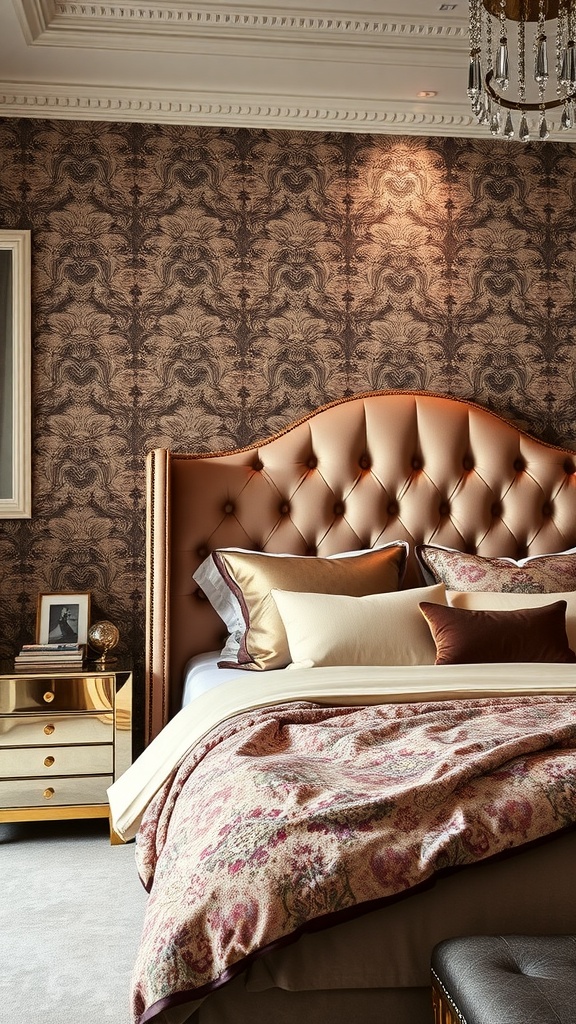
11. A Tall Upholstered Headboard
Height and generous width give the bed presence and anchor the wall behind it. It's the highest-impact single piece in an elegant bedroom, and a DIY version costs a fraction of a bought one.
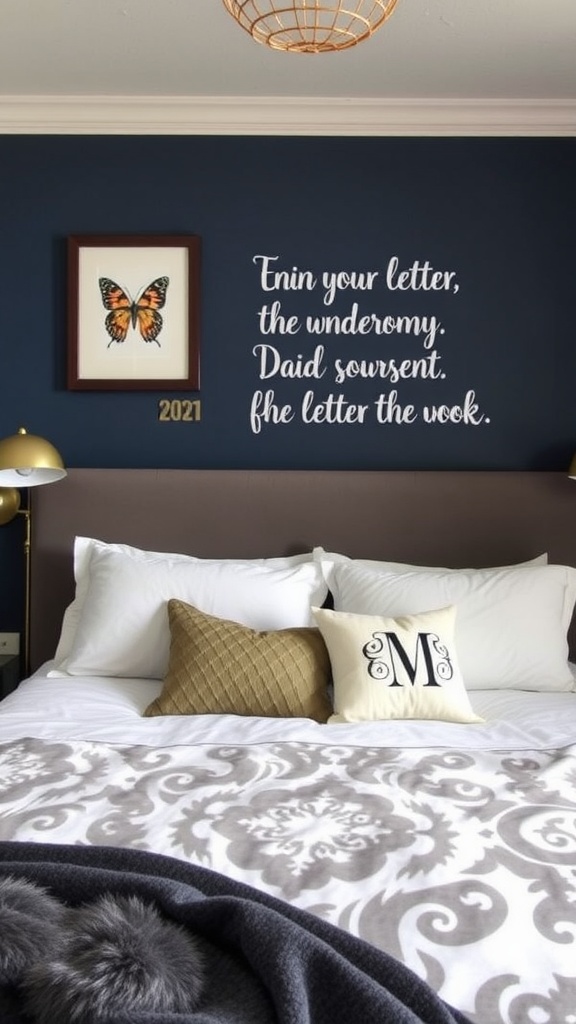
12. A Few Personal Objects
Elegance doesn't mean impersonal — it means selective. Two or three meaningful objects, well spaced, add warmth without disturbing the room's calm.

13. A Reading Chair
One well-proportioned chair signals that the room is for living in, not just sleeping. A single good chair always beats two mediocre ones in an elegant scheme.

14. One Sculptural Plant
A single healthy specimen with a strong silhouette reads as elegance; several struggling small pots read as clutter. Scale and condition are what matter.

15. Art Deco Influence
Deco's geometry and symmetry suit elegance naturally. Borrow its discipline — repeated shapes, one metal, strong balance — rather than copying it wholesale.

16. A Restrained Canopy
A slim four-poster with minimal drapery adds vertical architecture without heaviness. The elegant version is always lighter than the luxurious one.

17. Three Lighting Layers
Ambient, task and accent, all warm and dimmable. Layered lighting is the least visible and most effective marker of a professionally considered room.

18. Refined Wallpaper
A subtle pattern in a tonal colourway adds interest while staying quiet. Confine it to one wall and keep everything else plain so it reads as intentional.

19. Minimalist Restraint
Minimalism and elegance overlap because both depend on editing. With fewer objects present, the quality and proportion of each becomes clearly visible.

20. Sculptural Silhouettes
A piece with a beautiful outline functions as art while remaining useful. Elegant rooms tend to contain one or two shapes worth looking at, not many.

21. A Sleek Dresser
Clean lines and quality hardware. Simply swapping dated handles for well-made plain ones refines an ordinary dresser more effectively than replacing it.

22. Subtle Scent
A restrained fragrance signals care and completeness. Keep it soft and singular — competing scents are the olfactory equivalent of a cluttered surface.

23. A Considered Pillow Arrangement
Vary sizes and textures within one palette and group in odd numbers. Elegant pillow styling is disciplined — a mountain of mismatched cushions reads as excess.

24. One or Two Vintage Pieces
An antique among contemporary pieces adds depth and suggests a room assembled over time rather than bought at once. Restraint is key — one is usually enough.

25. One Large Statement Work
A single substantial piece above the bed is more elegant than a busy gallery arrangement. Scale it to about two-thirds of the bed's width for correct proportion.
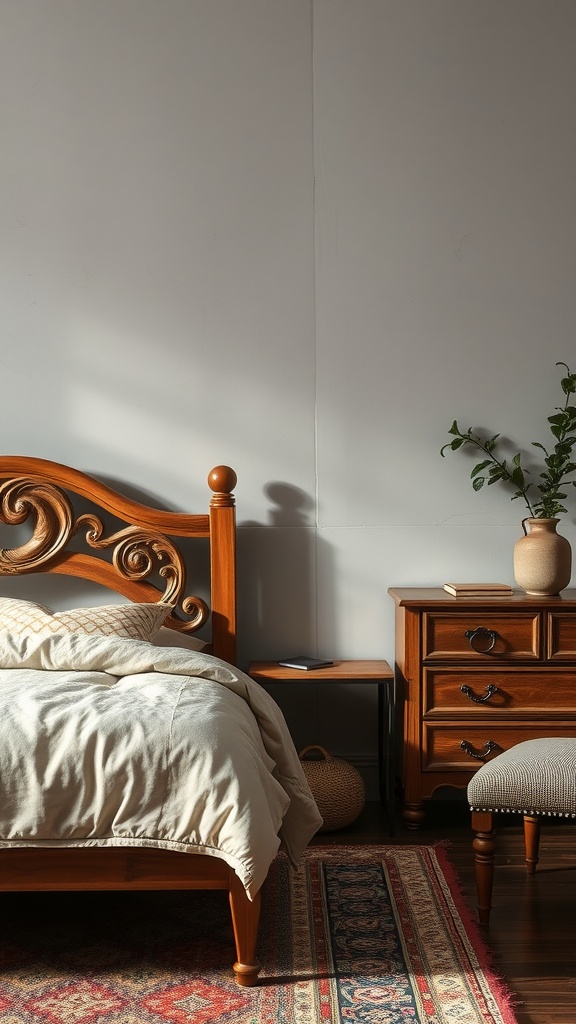
26. Visible Craftsmanship
Well-made joinery and honest materials communicate quality quietly. Elegance is often just good construction left unornamented and allowed to show.

27. Subdued Earth Tones
Muted, slightly greyed colours are more sophisticated than saturated ones because they recede. They also age well, which suits elegance's long-term outlook.

28. A Small Seating Area
Two chairs and a side table turn a bedroom into a suite. Devoting space to something other than storage is itself a signal of a considered interior.

29. Concealed Storage
Elegance depends on clear surfaces, which requires somewhere for everything to go. Flat, handleless fronts keep the wall plane calm and unbroken.

30. Textural Contrast
Velvet against linen against smooth wood gives a tonal room its depth. In a restrained palette, texture is doing the job colour would otherwise do.

31. Beautiful Everyday Objects
Choose a clock, a carafe or a lamp you genuinely like looking at. Elegance comes from the quality of ordinary things, not from decorative extras.

32. Ceiling Mouldings
Cornicing and ceiling detail add architectural refinement — and in a bedroom, the ceiling is what you actually look at. Lightweight moulding is inexpensive to fit.

33. Soft, Even Ambient Light
Diffused warm light flatters materials and skin alike. Harsh downlights create unflattering shadow — the quickest way to make a good room look cheap.

34. Timeless Colour Pairings
Navy and grey, cream and taupe, sage and white — combinations that have worked for decades and will keep working. Elegance rarely chases the current trend.

35. Fresh Flowers
The cheapest refinement there is. A few stems in a good vase signal attention and care — and elegance is largely the visible result of attention.

36. One Beautiful Throw
A single well-made throw, folded across the bed, adds warmth and a hint of asymmetry. One good piece beats several ordinary ones — the elegant principle in miniature.

37. Mirrors Placed with Purpose
A pair of matched mirrors delivers symmetry and doubles the light. Position them to reflect a window or a lamp rather than a blank wall or a cluttered corner.

Bonus: Let Daylight Lead
Good natural light flatters every material in the room and costs nothing. Keep windows unobstructed and treatments light enough to make the most of it.

Bonus: Treat the Fifth Wall
Beams, panelling or a painted ceiling turn the most overlooked surface into a quiet feature — an unexpected detail that reads as thoroughly considered.
How to make a bedroom elegant on a budget
Because elegance rests on proportion and restraint rather than expensive materials, most of it is genuinely free.
Costs nothing: clear every surface, centre the bed, and make the two sides symmetrical with what you already own. Rehang your art at 145–150 cm centre and move your curtain track higher and wider. These four changes alone transform most rooms.
Under £50: switch every bulb to the same warm 2700 K, add a dimmer, and replace dated furniture handles with simple, well-made ones.
Where to spend: bedding and a properly sized rug. Both are large, visible and tactile, and getting the rug size right matters far more than getting an expensive fibre.
Save on: accessories and art. Thrifted frames with consistent finishes look more elegant than a set of new but mismatched ones.
Common elegant bedroom mistakes
- Ornament instead of proportion — adding decorative detail won't fix art hung too high or a rug that's too small.
- Too many colours — elegance needs a narrow palette; variety should come from texture.
- Mixed metals and mismatched bulbs — small inconsistencies that quietly undermine the whole room.
- Cluttered surfaces — the single fastest way to lose refinement, regardless of what the furniture cost.
Final thought
Elegance is a discipline, not a budget. Get the proportions right, keep the palette narrow, make the room symmetrical, light it warmly in layers, and remove everything that isn't earning its place. What remains will feel considered and calm — and that, far more than expense, is what people recognise as elegant.

Sources & principles referenced
- The distinction between elegance (restraint, proportion) and luxury (richness, opulence).
- Standard interior proportion guidelines — art hanging height (145–150 cm centre), curtain hanging, rug sizing, bedside-table height.
- Symmetry and visual balance.
- Tonal palettes and the 60-30-10 rule.
- Layered warm lighting (2700 K, dimmers).