

Building a bedroom in Minecraft looks like a world away from real interior design — no soft furnishings, no paint, just cubes. But the game turns out to be a surprisingly honest design teacher, because it strips decorating down to its fundamentals: proportion, palette, texture and light. These 29 Minecraft bedroom ideas are organised around those real principles — how a designer thinks about a room — applied to the block world, so your builds look genuinely designed rather than just placed.
A block is a metre — so real proportion applies directly
Here's the fact that makes Minecraft a real design tool rather than a toy: each block is one cubic metre, so real-world dimensions map onto the grid exactly. That means the proportion rules that govern actual rooms work here without translation:
- Ceiling height: a 2-block ceiling feels cramped (it's 2 m); 3 blocks reads comfortable; 4+ feels grand. Just like real rooms.
- Bed clearance: leave at least one block of walking space down the side of the bed, exactly as you'd leave ~70 cm in reality.
- Room size: a cosy bedroom might be 5×6 blocks; scale up and you get a suite, down and it feels like a cell.
Because the grid is literally metric, building in Minecraft is a free way to practise real spatial proportion — and the builds that feel right in-game are almost always the ones that obey real dimensions. Design your Minecraft room as if a real person had to live in it and it will read convincingly.
Light is both décor and survival — so it's never an afterthought
In most decorating, lighting gets ignored until last. Minecraft won't let you: dark spaces spawn hostile mobs, so lighting a room is literally required for it to be safe. That mechanic accidentally enforces the single most important real-world design rule — a room must be properly lit — and it rewards the same approach real rooms want:
- Layer your light sources rather than relying on one. Lanterns, candles, glowstone behind carpet, sea lanterns under trapdoors, and hidden light give depth — the block equivalent of layered warm lamps.
- Choose warm-toned light for a cosy bedroom: torches, lanterns, candles and glowstone read warm; sea lanterns and froglights read cool and modern. Pick to match your mood, exactly as you'd choose 2700 K over cool white.
- Hide the source. Glowstone or shroomlight buried behind a carpet, trapdoor or slab gives a soft glow with no ugly bright block — the Minecraft version of concealed, indirect lighting.
A limited block palette is a discipline, not a limit
Real designers work to a tight palette — a few main colours and materials, repeated. Minecraft forces the same discipline, because a room built from one of every block reads as chaos. Choose a dominant block, a secondary and an accent (the block-world version of the 60-30-10 rule): say oak planks for the main structure, stone for a feature, and a single wool colour or terracotta for accents. Repeating a small block palette is what separates a build that looks designed from one that looks like a resource dump. Restraint reads as intention here just as it does in a real room.
Texture comes from mixing block types
With no fabric or paint, all of a Minecraft room's richness comes from texture — and texture comes from combining different block types. Smooth stone against rough cobble against wood grain against wool against glass gives a wall depth the way linen-against-wood-against-ceramic does in reality. Mixing related blocks (planks, stairs, logs, trapdoors of the same wood) adds variation without breaking the palette. When a Minecraft room looks flat and boring, it's almost always built from single, unbroken block faces — the fix is texture, exactly as it is in a real low-colour scheme.
Fake furniture with stairs, slabs and trapdoors
Minecraft has no sofa or nightstand block, so convincing furniture is built from stairs, slabs, trapdoors, signs and fences — and this is where real design thinking pays off most. A nightstand is a block with a trapdoor drawer; a chair is a stair with sign armrests; a lamp is a fence post with a lantern on top. The trick is the same as styling a real room: think about the function and proportion of the real object, then approximate its shape and scale on the grid. Builds full of these details read as furnished, lived-in rooms rather than empty boxes.
29 Minecraft bedroom ideas — and why each works

1. Steampunk Loft
Copper blocks (which oxidise over time), gears faked from other blocks, and warm lantern light give an industrial-vintage feel. It's a lesson in material palette — commit to copper, dark wood and iron and repeat them.

2. Enchanted Forest Hideaway
Leaves, logs, moss and glowing lanterns bring the outdoors in — the block version of biophilic design. The glow of hidden lanterns among foliage is pure concealed, layered lighting.

3. Modern Minimalist
A tight neutral palette — smooth stone, light wood, white concrete — and clean lines prove restraint works in blocks too. The discipline of few materials, well repeated, is the whole minimalist lesson.

4. Rustic Farmhouse
Mixed woods, stripped logs and warm lantern light give the cosy, worn farmhouse feel. Varying the wood blocks (planks, logs, stairs) adds the texture a single-block wall lacks.

5. Space Theme
A dark ceiling studded with hidden glowstone "stars" is a striking use of light as decoration. Concentrating interest overhead uses the often-ignored fifth surface, exactly as a real feature ceiling does.

6. Cozy Cabin
Wood walls, a stone fireplace and big windows to a view balance warmth and light. The fireplace as a focal point works the same way it does in a real room — every space wants an anchor.

7. Underwater Oasis
Glass walls onto the ocean turn the view into the décor — borrowed scenery, a real design trick. Sea lanterns give the cool, aquatic light the theme wants.

8. Fairy-Tale Room
Warm palette, soft curves faked with stairs, and elegant lighting create a storybook feel. Using stairs and slabs to soften hard block edges is the key craft skill here.
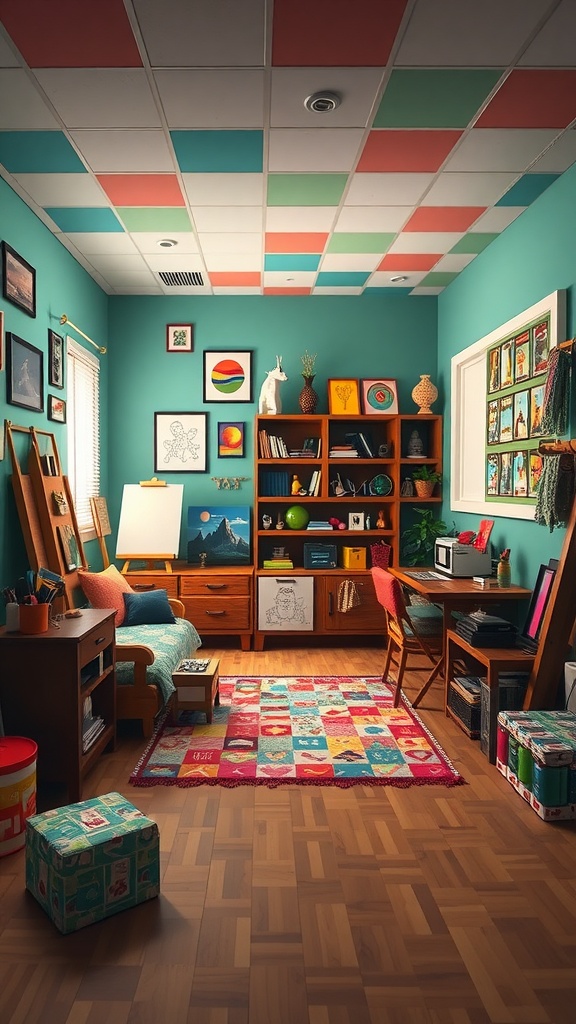
9. Creative Studio
Bold teal and vibrant accents show colour used with confidence — but note it still works to a palette. One strong colour plus neutrals reads energetic, not chaotic.

10. Victorian Elegance
Dark woods, "ornate" detail built from trapdoors and fences, and rich colour recreate period maximalism. The lesson is that even ornate styles need structure — repeated detail, not random.

11. Gamer's Retreat
Faked screens (black concrete with sea-lantern glow), redstone lamps and cool light make a tech den. It's a chance to use cool, coloured light deliberately rather than everywhere.

12. Urban Apartment
Floor-to-ceiling glass, concrete and a city view make the window the feature. Maximising light and framing a view are real principles that translate straight into blocks.

13. Cottagecore
Flower pots, mixed woods and soft colour build a gentle, rural charm. Flowers and plants are the easiest way to add life and colour to any block build.

14. Tropical Paradise
Light woods, a beach view and bright accents create an airy, holiday feel. The pale palette and borrowed sea view do exactly what a real coastal scheme does.

15. Cloud Room
White wool "clouds" on the ceiling and a soft pink palette make a playful kids' space. Concentrating the whimsy overhead keeps the rest of the room usable.

16. Vintage Travel
Item frames as "maps", stacked blocks as suitcases and warm wood tell a story. Personal, collected detail is what makes any room — real or virtual — feel lived-in.

17. Industrial
Brick, iron and wood, warmed with soft light, give an urban-loft edge. The hard-materials-plus-warm-light balance is what keeps industrial from feeling cold in blocks or in reality.

18. Bohemian
Layered colour, plants and warm light read gathered and cosy — held together by a warm palette. Even a colourful boho build needs a connective colour thread to cohere.

19. Mountain Lodge
Dark wood, stone and a huge window to the peaks make the landscape the star. Framing a dramatic view and keeping the interior warm and simple is a real lodge principle.

20. Mediterranean
Terracotta blocks, wooden beams and arched windows (built with stairs) capture warm southern light. The terracotta palette and arches are lessons in colour and shape working together.

21. Fairy Garden
Masses of flowers, vines and soft light bring a garden indoors. Greenery is the cheapest, most effective way to soften a hard block room.

22. Artsy Loft
Exposed beams, an easel built from blocks and personal art make a creative space. Giving the room a clear function beyond sleeping makes it feel purposeful.

23. Castle Chamber
Stone bricks, tall windows and a grand scale suit the medieval theme — and the height reads appropriately grand. Scale is a deliberate choice: tall for grandeur, low for cosy.

24. Luxury Hotel Suite
Symmetry, quartz, a large bed and a framed view create an elegant, ordered space. Symmetry and a restrained luxe palette read expensive in blocks just as in reality.

25. Children's Room
Bright colour and playful shapes suit a kids' build — kept to a palette so it's cheerful, not chaotic. Even a colourful child's room benefits from a few repeated hero colours.
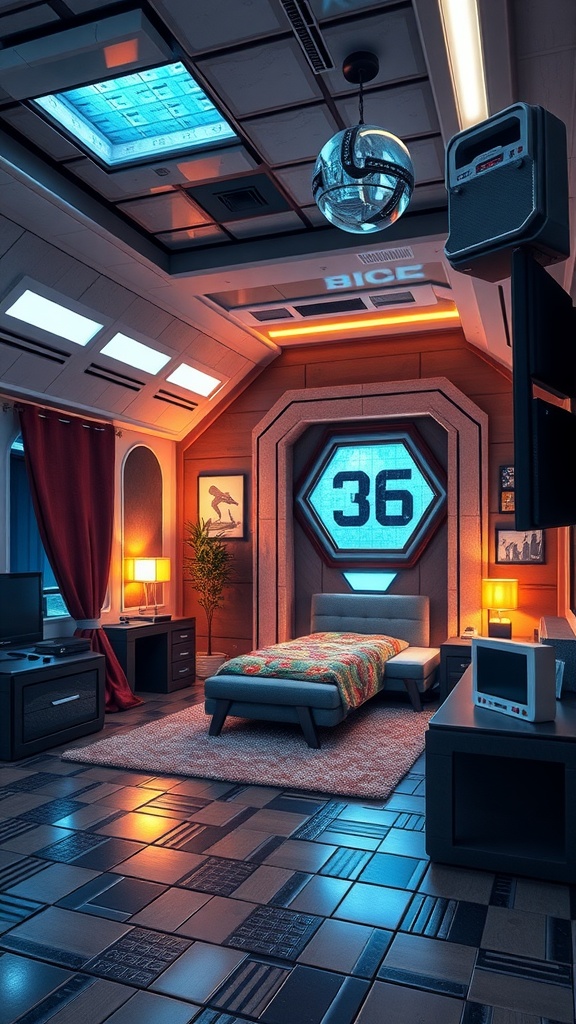
26. Sci-Fi Sanctuary
Smooth quartz, sea lanterns and cool light with warm accents make a futuristic feel. Mixing cool and warm light deliberately gives even a sleek room somewhere cosy.

27. Zen Retreat
Natural blocks, plants, soft light and lots of empty space create calm. Negative space — resisting the urge to fill every block — is a real design lesson the game teaches well.

28. Moonlit Haven
A dark ceiling, candlelight and hidden glow make a soft, atmospheric night room. Low, warm, layered light is what makes it feel restful — exactly as in a real bedroom.

29. Retro 80s
Bold colour blocking, geometric patterns in wool, and neon-style light capture the decade. Committing to one era's palette and shapes is what makes a themed build read clearly.

Bonus: Nature-Inspired Retreat
Big windows, wood and plenty of plants blur the line between inside and out. Bringing nature in and maximising daylight are the two most universal design moves there are — in blocks or bricks.
How to build a Minecraft bedroom that looks designed
Whatever theme you pick, these real-design steps lift a build from "placed" to "designed":
- Set the proportions first. Aim for a 3-block ceiling, leave a block of clearance around the bed, and size the room so it feels neither cramped nor cavernous. The grid is metric — build as if a real person lives there.
- Choose a palette of three. One dominant block, one secondary, one accent. Repeat them and resist adding a fourth without reason.
- Build texture in. Mix related blocks (planks, stairs, logs) and combine materials (wood, stone, wool, glass) so no wall is a flat, single face.
- Fake the furniture. Use stairs, slabs, trapdoors, signs and fences to approximate a bed surround, nightstands, a chair and lamps — think about the real object's shape and scale.
- Light it warm and layered — and safe. Several warm sources, some hidden behind carpet or trapdoors, at a level that also stops mobs spawning. Décor and survival in one.
- Leave some empty space. Don't fill every block. Negative space reads as calm and deliberate.
Minecraft bedroom FAQ
How do I make a Minecraft bedroom look realistic? Use real proportions (a block is a metre — 3-block ceilings, a block of clearance around the bed), a tight three-block palette, mixed block textures, and furniture faked from stairs, slabs and trapdoors. Then light it warmly and layer the sources. Building as if a real person had to live there is the single best guide.
What blocks make the best bedroom furniture? Stairs make chairs and headboards; slabs make shelves and low tables; trapdoors make cabinet doors and drawers; signs make armrests and small details; fences with lanterns make lamps. Combine them and think about the shape and scale of the real object you're imitating.
How should I light a Minecraft bedroom? Warm sources — lanterns, candles, torches, glowstone — for a cosy feel, or sea lanterns and froglights for a cool modern one. Layer several, hide some behind carpet or trapdoors for a soft glow, and keep the light level high enough to stop mobs spawning. Lighting is both décor and safety here.
Why does my Minecraft room look flat and boring? Almost always too little texture and too big a palette. Mix block types on your walls so no surface is a single flat face, and cut your materials down to a dominant, a secondary and an accent. Add depth with stairs, slabs and hidden lighting.
What ceiling height should a Minecraft bedroom have? Three blocks reads comfortable and human, since each block is a metre. Two feels cramped; four or more feels grand and suits castle, hotel or loft themes. Match the height to the mood you want.
Common Minecraft bedroom mistakes
- Ignoring proportion. Two-block ceilings and no clearance feel cramped. Build to real metric dimensions.
- Too many block types. One of everything reads as chaos. Work to a three-block palette.
- Flat, single-block walls. They look boring. Mix textures and break surfaces with stairs and slabs.
- Empty of furniture. A bed in a bare box isn't a room. Fake the nightstands, chairs and lamps.
- One harsh light, or worse, dark corners. Layer warm light and keep the whole room lit — for mood and to stop mob spawns.
- Filling every block. No breathing room reads as clutter. Leave some space.
Final thought
Minecraft is a better design teacher than it has any right to be, precisely because it removes the easy crutches — no cushions, no paint, no shopping — and leaves you with the fundamentals. Get the proportions right on its metric grid, work to a tight palette, build texture from mixed blocks, fake convincing furniture, and light it warmly and safely, and your block bedroom will read as genuinely designed. Better still, every one of those moves is a real design principle — so the room you build in the game is quietly teaching you how to think about the real one.

Sources & principles referenced
- The one-cubic-metre Minecraft block grid and how real-world spatial proportions (ceiling height, bed clearance, room size) map onto it directly.
- Minecraft light-level and mob-spawning mechanics, which make lighting a functional requirement, and warm versus cool in-game light sources (lanterns, candles, torches, glowstone versus sea lanterns and froglights).
- Concealed/indirect lighting techniques (light blocks hidden behind carpet, trapdoors and slabs).
- Palette discipline analogous to the 60-30-10 rule (dominant, secondary, accent blocks).
- Texture created by combining and varying block types in the absence of soft furnishings.
- Building furniture from stairs, slabs, trapdoors, signs and fences by reference to real objects' function, shape and scale.
- And negative space as a calming design device.