
Of all the video games people decorate in, The Sims 4 is the one closest to actual interior design — it has a build mode, a furniture catalogue, real-ish room proportions, and, remarkably, it grades your decorating. That makes it more than a game: it's a free, consequence-free sandbox for practising the real thing. These 35 Sims 4 bedroom ideas are organised around that — the real design principles the game quietly rewards, and how to use it to plan rooms you might actually build.
The game literally rewards good design
This is what sets Sims apart from every other build-in-a-game: your decorating has measurable consequences. Rooms carry an Environment / décor rating, and Sims in well-decorated, well-lit, uncluttered rooms get a genuine mood boost, while those in dark, bare or messy rooms feel worse. In other words, the game runs a live feedback loop on the same principles that make real rooms feel good — light, order, quality, and enough (but not too much) décor. When your Sim is happier in a room, you've usually made a decision a real designer would applaud. Pay attention to that feedback; it's teaching you real taste.
It's a free prototyping tool for real rooms
Here's the genuinely useful part: because Build Mode uses a proper grid and a huge catalogue, you can test a real bedroom before spending a penny on it. Recreate your actual room's dimensions, drop in furniture at roughly the right scale, and try arrangements — bed under the window or on the facing wall? Desk in the corner or the alcove? Does the walking path work? You'll spot a layout that doesn't flow, or a palette that clashes, in minutes and for free, instead of discovering it after the furniture arrives. Treat Sims as a sketchpad for the real room and it earns its place in a decorator's toolkit.
Commit to a style and a palette — the catalogue makes it easy
The Sims catalogue is organised by style and offers colour swatches for almost everything, which nudges you toward two real disciplines: picking a coherent style and coordinating a palette. The best Sims rooms, like the best real ones, commit — a clear direction (industrial, Scandi, boho) and a repeated set of colours across furniture and walls. Use the style filter and swatches deliberately: choose two or three colours and buy the swatch of each piece that fits them, rather than grabbing default finishes. That single habit is the difference between a Sims room that looks designed and one that looks like the catalogue threw up.
The tricks that make Sims rooms look real
A few Build Mode techniques mirror real styling and lift a room from "placed furniture" to "designed space":
- bb.moveobjects (MOO): the cheat that frees objects from the grid, letting you layer rugs, overlap décor and add realistic clutter — the digital equivalent of styling a surface.
- Quarter-tile placement (hold Alt): nudges furniture off the rigid grid for realistic spacing and clearance, just as you'd leave the right gap around a real bed.
- Layer the lighting: a ceiling light plus lamps plus wall lights, exactly as real rooms want several sources — and it raises the room's brightness and décor score too.
- Add clutter for life: books, plants, a throw, objects on the nightstand. A perfectly bare Sims room reads as empty; a few styled details read as lived-in.
Where Sims flatters — and reality bites
For all its usefulness, Sims makes decorating easier than life does, and it's worth knowing where the illusion breaks so your real room doesn't disappoint:
- Infinite budget. In Sims you can buy anything; in reality you can't. Use it to plan the look, then cost it out honestly.
- No maintenance or clutter creep. Sims rooms stay pristine; real ones accumulate laundry and cables. Design in real storage that the game never makes you think about.
- MOO breaks physics. The cheat lets objects overlap in ways that won't fit real walls and clearances. Great for styling, misleading for measuring — so verify real dimensions separately.
Use Sims for layout, palette and style, and keep budget, storage and real clearances in mind, and the gap between the game and the real room stays small.
35 Sims 4 bedroom ideas — and why each works

1. Industrial Loft
Brick wallpaper, a metal frame and warm wood balance hard and soft — and the warm accents keep the décor score (and the mood) up. It's a lesson in warming an industrial palette so it doesn't read cold.
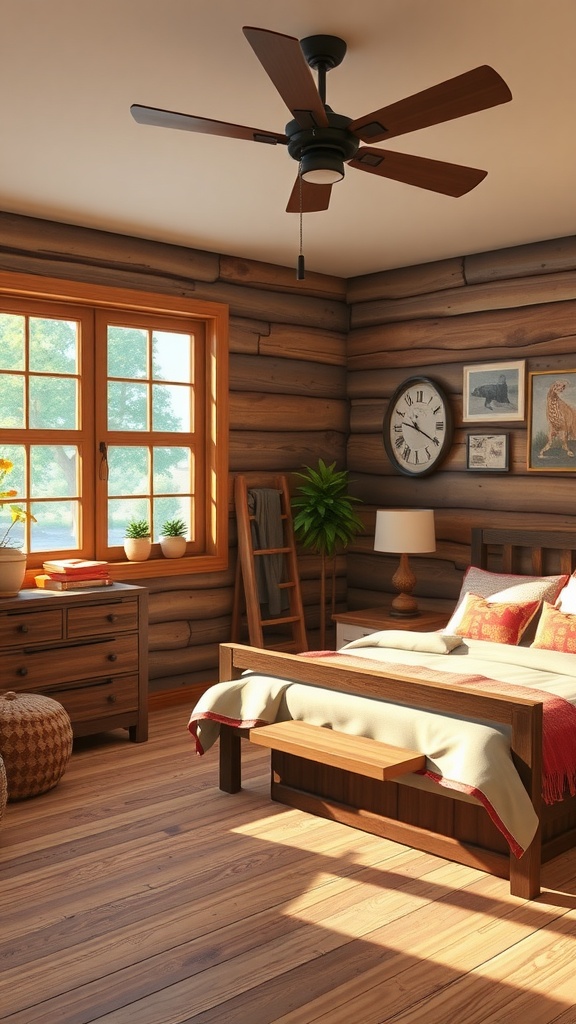
2. Rustic Retreat
Wood walls and warm furnishings create instant cosiness — and cosy, well-decorated rooms lift a Sim's Environment need. Layered textures do the work here just as in a real rustic room.

3. Art Deco Glamour
Teal and coral with geometric pattern shows a committed palette and style — the catalogue's swatches make matching easy. Two coordinated colours plus pattern read glamorous, not busy.

4. Whimsical Fantasy
Pastels and fairy lights make a soft, playful room — and the extra light sources boost brightness and mood. Layered small lights are a real principle the game rewards directly.

5. Vintage Elegance
Floral paper, an ornate bed and a chandelier build period richness — MOO helps layer the décor convincingly. Committing to one era keeps an ornate room coherent.

6. Bohemian
Plants, textiles and colour layered together read gathered and warm. Plants raise the room's décor rating and soften it — a rare case where the game and real design agree exactly.

7. Futuristic Pod
Sleek forms and blue ambient light make a sci-fi mood — a deliberate use of cool, coloured lighting. It shows how light colour alone can define a whole theme.

8. Modern Minimalist
A restrained palette and clean lines still need plants and soft light, or a bare room scores poorly. It's the game teaching that minimalism isn't emptiness — texture and life still matter.

9. Mediterranean Oasis
Blue beams, wood and plants with bright light make an airy southern feel. The light, warm palette and greenery are straight from real coastal design.

10. Teen Creative Space
Colour, a desk and personal décor make a room that suits a Sim's (and a real teen's) needs. Giving the room a clear function beyond sleep makes it feel purposeful.

11. Scandinavian Simplicity
Light wood, soft textiles and daylight make a calm, bright room that scores well for tidiness and light. Scandi is a great template because it's easy to keep cohesive.
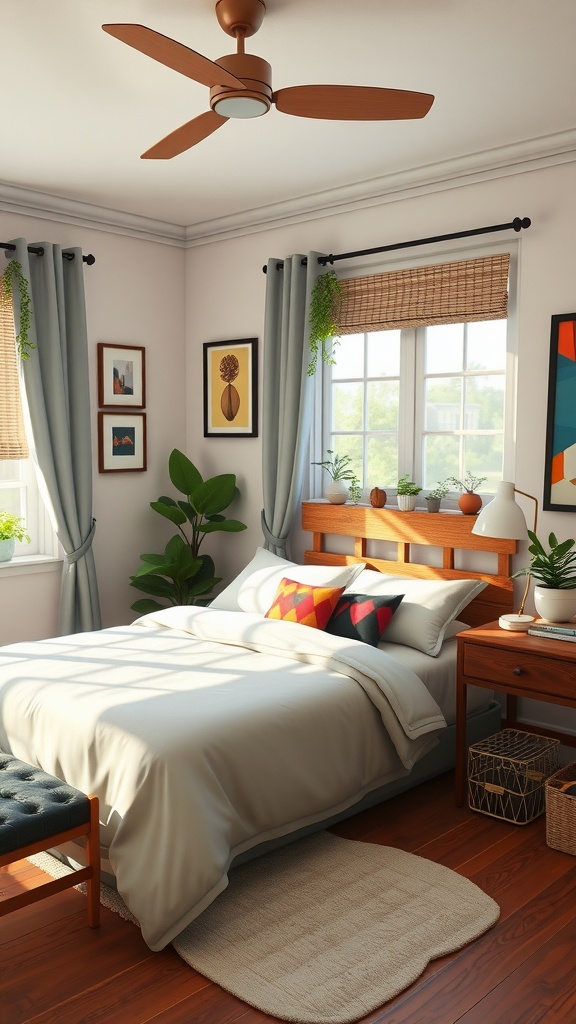
12. Eclectic Chic
A confident mix works when a repeated colour threads it together — the same rule as real eclectic. MOO lets you layer the varied décor so it reads curated, not cluttered.

13. Elegant Master Suite
Symmetry, a statement bed and a chandelier read luxurious — and symmetry is easy to nail on the grid. A balanced, restrained scheme scores high and looks expensive.

14. Tropical Paradise
Masses of plants and warm colour make a holiday feel — and all those plants send the décor score soaring. It's a fun demonstration of greenery's outsized impact.

15. Urban Apartment
Dark bedding, wood and a skyline view make a sophisticated city room, with the window as the feature. Framing a view is a real principle that works beautifully in Build Mode.

16. Nature-Inspired Sanctuary
Olive green, wood and plants create a grounding, biophilic calm. Earthy colour plus greenery is one of the most reliable, high-scoring combinations in the game.

17. Zen Space
Natural materials, calm colour and space create serenity — and the game rewards uncluttered rooms. Leaving breathing room is a real design lesson Sims quietly enforces.

18. Child's Dream Room
Bright colour and playful pieces suit a child Sim — kept to a palette so it's cheerful, not chaotic. Even a vibrant kids' room benefits from a few repeated hero colours.

19. Secret Garden
Floral paper and plants blur indoors and out for a romantic feel. Pattern plus real greenery is a rich, high-scoring pairing.

20. Kids' Playroom Combo
Combining sleep and play zones in one room is smart use of space — and the game lets you test the layout free. Zoning a multi-use room is a genuinely useful thing to prototype.

21. Colourful Retro
Pink walls and floral bedding commit to a period palette. Choosing one era's colours and shapes is what makes a retro room read clearly, in Sims or reality.

22. Mid-Century Modern
Clean lines, warm wood and a couple of bold accents make the most timeless retro look. It's the easiest style to keep cohesive and it always scores well.

23. Coastal Beach House
Light wood, soft bedding and a sea view maximise brightness and calm. Pale palettes and a framed view are real coastal moves that translate directly.

24. Gothic Fantasy
A dark palette and wrought iron still need warm light, or the room scores as gloomy. It's the game teaching that even dark rooms need proper, warm lighting to work.

25. Home Office Nook
A styled desk corner tied into the room's palette keeps a bedroom-office cohesive. Prototyping where the desk fits without crowding the bed is exactly what Build Mode is good for.

26. Sophisticated Black and White
High contrast plus a chandelier reads sharp and modern — and texture keeps it from feeling stark. Monochrome scores well when it's balanced and well-lit.

27. Crafter's Haven
A creative workspace with personal décor makes the room feel purposeful and lived-in. Function plus personality is what lifts a room above a showroom.

28. Country Cottage
Floral bedding and wood make a gentle, nostalgic room. Soft pattern plus warm wood is a cosy, forgiving, high-scoring combination.
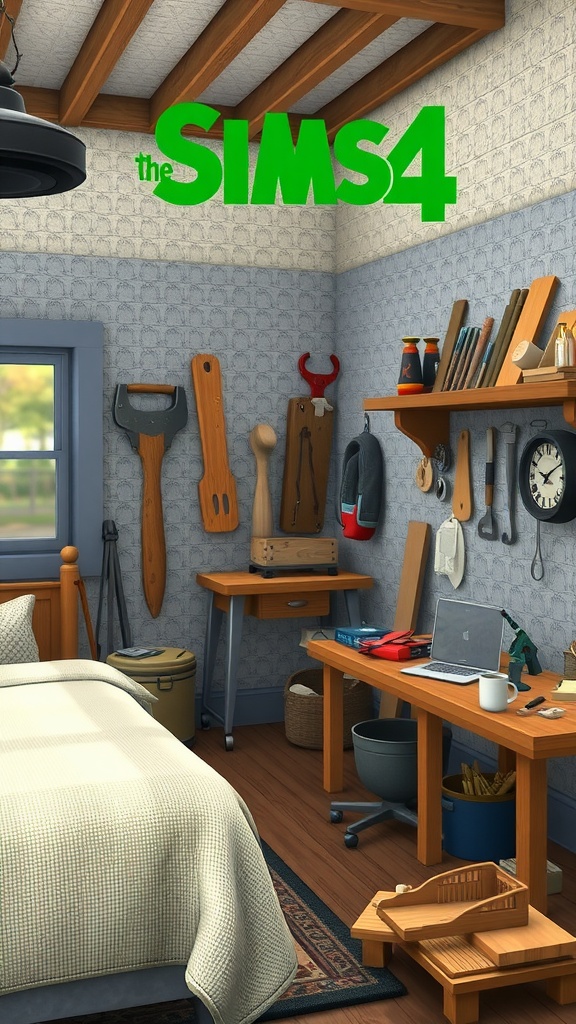
29. Workshop Retreat
A warm palette and characterful "workshop" clutter tell a strong personal story. Themed clutter, layered with MOO, is what makes a room feel like someone's.

30. Vibrant Youth Space
Bold décor and cosy bedding suit a young Sim — energetic but still to a palette. Confident colour reads intentional when a couple of hues repeat.

31. Serene Monochrome
Grey and white with modern décor read calm — and texture keeps a low-colour scheme from scoring flat. It's the same texture-carries-a-quiet-palette rule as in reality.

32. French Boudoir
Soft pink, a chandelier and luxurious fabrics make a romantic, feminine room. Muted pink used as a near-neutral reads elegant rather than juvenile — a real principle, faithfully modelled.

33. Abstract Art Bedroom
A bold artwork anchors the room and sets the palette for everything else. Letting one statement piece lead is a real styling move Sims makes easy to try.

34. Spa-Inspired Oasis
Light wood, sheer curtains and calm colour create a restful retreat. Maximising soft light and keeping it serene is exactly what a real spa-style room does.

35. Fairy-Tale Princess Room
Pink walls and a chandelier make a storybook child's room — kept coherent by a single palette. Even a fantasy theme reads better with colour discipline underneath.

Bonus: Alpine Retreat
Wood walls, big windows and warm light make a snug lodge feel. Warm light against a mountain view is a cosy, high-scoring pairing.

Bonus: Space Adventure
A starry ceiling and planets make a playful kids' theme, with the interest concentrated overhead. Using the ceiling as the feature keeps the rest of the room usable.

Bonus: A Reading Nook
A chair, bookshelves and daylight add a second function and a cosy focal point. Books and a comfy seat also nudge the room's décor rating up — décor and use in one.
Using Sims 4 to plan a real bedroom
If you want the game to earn its keep as a design tool, use it like this:
- Recreate your real room. Build the actual dimensions in Build Mode, including window and door positions.
- Test the layout. Try the bed on different walls, place the wardrobe and desk, and check the walking paths flow. Use quarter-tile placement (Alt) for realistic clearances.
- Lock a palette and style. Pick two or three colours and a direction, and use the catalogue swatches to keep everything coordinated.
- Layer the lighting. Ceiling light plus lamps plus wall lights — watch the room brighten and the mood lift.
- Style with restraint. Add plants, books and a little clutter with MOO for realism, but leave breathing space.
- Reality-check it. Cost the look honestly, add real storage, and confirm true clearances — the things the game lets you ignore.
Sims 4 bedroom FAQ
Does The Sims 4 actually teach real interior design? To a surprising degree, yes. It has a proper build mode and a graded Environment/décor system that rewards good lighting, tidiness, quality and appropriate décor — the same things that make real rooms feel good. It's a free, consequence-free way to practise layout, palette and styling.
Can I use Sims 4 to plan a real room? Yes — recreate your room's real dimensions, test furniture arrangements and walking paths, and lock in a palette before you spend anything. Just remember the game's blind spots: infinite budget, no maintenance, and MOO letting objects overlap unrealistically. Use it for look and layout, then reality-check budget, storage and clearances.
What cheats help make a Sims bedroom look designed? bb.moveobjects (MOO) frees objects from the grid so you can layer rugs, overlap décor and add realistic clutter; holding Alt enables quarter-tile placement for realistic spacing. Both mirror real styling and greatly improve how a room reads.
How do I raise a room's décor rating? Light it well (ceiling plus lamps plus wall lights), keep it tidy and uncluttered, add plants and quality pieces, and commit to a coherent style and palette. These are the same moves that make a real room feel good — the game is essentially grading your design fundamentals.
Why do my Sims rooms look empty or flat? Usually too little layering and light. Add lamps and wall lights, bring in plants, layer a rug and some clutter with MOO, and make sure you've committed to a palette. A bare, single-source room scores and looks poorly in the game just as in life.
Common Sims 4 bedroom mistakes
- Ignoring the décor score. It's live design feedback — use it. A low rating means light, tidy or layer more.
- No palette. Default finishes and clashing swatches read messy. Pick two or three colours and use the catalogue swatches.
- One light source. A single ceiling light reads flat. Layer ceiling, lamp and wall lights.
- Everything on the grid. Rigid placement looks stiff. Use quarter-tile (Alt) and MOO for realistic spacing and styling.
- Bare or over-cluttered. Both score badly. Add plants and a little styled clutter, but leave breathing room.
- Treating it as reality. Infinite budget and MOO overlaps flatter you. Reality-check budget, storage and clearances before you build for real.
Final thought
The Sims 4 is the rare game that rewards you for thinking like a designer — it grades your light, your order, your décor and your restraint, and it hands you a free grid to test real rooms on. Commit to a palette and style, layer the lighting, style with MOO and quarter-tiles, and watch both the room and your Sim's mood improve. Then take what you've learned to the real thing, keeping budget, storage and clearances in mind. Used that way, a game about virtual people becomes a genuinely useful rehearsal for the room you actually live in.

Sources & principles referenced
- The Sims 4 Build/Buy Mode, its style-tagged catalogue and colour swatches, and the Environment/room décor rating that rewards good lighting, tidiness, quality and appropriate décor with a Sim mood boost.
- Using Build Mode as a to-scale prototyping tool for real room layout, flow and palette.
- Build Mode techniques mirroring real styling — the bb.moveobjects (MOO) cheat for off-grid layering and realistic clutter, and Alt quarter-tile placement for realistic spacing and clearance.
- Layered lighting (ceiling, lamp and wall sources).
- The game's simplifications relative to reality (unlimited budget, no maintenance or clutter accumulation, MOO overlaps ignoring real clearances) and the need to reality-check budget, storage and dimensions.
- And the general design principles the game reinforces (palette discipline, texture in low-colour schemes, greenery, negative space, and a single statement piece).