
A village kitchen isn't a style you apply — it's a kitchen shaped by how a rural home actually lives. Cooking from scratch, storing a season's harvest, gathering the family around one table, using what's made locally: these are the forces that produced the look, long before anyone called it a look. These 31 simple village kitchen design ideas honour that, covering the pantry, the hearth and the honest materials that make a cottage kitchen feel genuinely rooted rather than merely decorated.
The pantry is the heart of it
The single feature that most defines a traditional country kitchen is a proper pantry or larder — a dedicated cool store for dry goods, preserves and produce. It exists because rural cooking means buying and growing in bulk, preserving a harvest, and keeping staples in quantity.
Even a small modern kitchen benefits from the principle. A single tall larder cupboard, ideally on a cooler north or east wall away from the oven's heat, holds a remarkable amount and keeps everyday ingredients organised and visible. Traditional larders were kept cool and ventilated for a reason — the same logic applies to storing flour, grains and preserves well today.
Honest, local, natural materials
A village kitchen uses what the region provides: solid timber, natural stone, ceramic and cast iron. The defining quality is honesty — materials shown in their true state, allowed to age and show wear rather than hidden under high-gloss finishes. A worn wooden worktop, a stone floor that's been walked for decades, a scrubbed pine table: these read as authentic precisely because they're not perfect.
This is also why a village kitchen is one of the most sustainable and affordable styles to build. Reclaimed timber, secondhand furniture and locally sourced stone are features rather than compromises, and their imperfections are exactly what the style wants.
The table is the centre of the home
In a village home the kitchen table isn't just for eating — it's where food is prepared, children do homework, and the family gathers. That makes a large, solid wooden table the natural centrepiece, sized for gathering rather than for two. Allow roughly 60 cm of table edge per person and about 90 cm behind each chair so people can rise easily, and choose something robust enough to be worked on daily.
Warmth from the hearth and the light
Traditionally the kitchen was the warmest room in the house, heated by a range or hearth that also cooked the food. A modern range cooker or a wood-burning stove carries that role forward — warmth, a focal point, and a genuine connection to how these kitchens were used. Layer the lighting warmly around it: keep bulbs at 2700 K or lower and combine general light with task light over the worktop and something soft for the evening. Candlelight and vintage-style fittings suit the style and complete the atmosphere.
31 village kitchen ideas — and why each works

1. A Farmhouse Sink
The deep apron-front sink is a country classic and genuinely practical — it handles large pots and produce washing that a standard sink can't. A vintage-style tap completes the look.

2. A Traditional Tile Backsplash
Handmade or hand-glazed tile brings colour and craft, and its slight irregularity suits the honest, imperfect aesthetic. It's wipeable where it matters, too.

3. Rustic Wooden Cabinets
Solid timber, allowed to show its grain and age, is the backbone of the style. Painted or waxed, wood is what makes a village kitchen feel warm and rooted.

4. A Compact Island
A small island adds prep space and storage. A butcher-block top is both traditional and useful — it doubles as a chopping surface and improves with age.

5. Open Shelving
Displaying everyday crockery is honest country style — nothing hidden, everything to hand. Keep it to pieces you use, since open shelves collect grease.

6. Big Windows to the View
A rural kitchen's greatest asset is often the view. Keep window treatments minimal and let the landscape become part of the room.
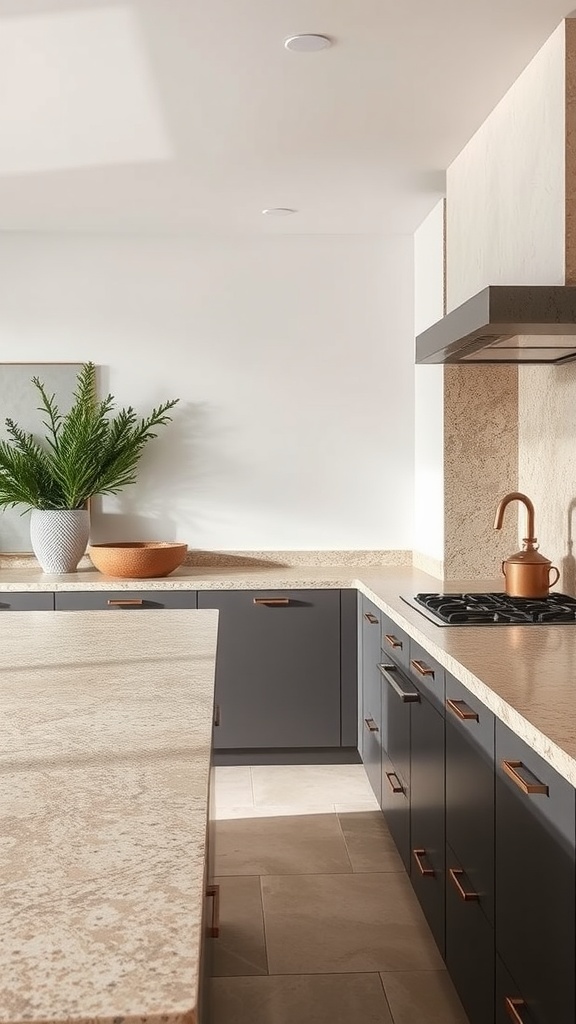
7. Natural Stone Worktops
Stone is durable, heat-tolerant and ages beautifully. Its natural variation suits the honest materials palette — no two pieces are identical.

8. A Neutral, Earthy Palette
Cream, stone, warm brown and muted green are drawn from the landscape. These earthy tones layer effortlessly and read as calm and timeless.

9. A Hanging Pot Rack
Copper pans on a rack free a cupboard and add warm metal and honest utility. Hang it over an island or worktop, clear of head height.

10. A Windowsill Herb Garden
Fresh herbs to hand is fundamental to cooking from scratch. It's decor that goes straight into the food, using light the sill provides anyway.

11. Simple Appliances
Modern function needn't clash with country style. Keep appliances plain and let the timber and stone lead, or integrate them behind matching fronts.
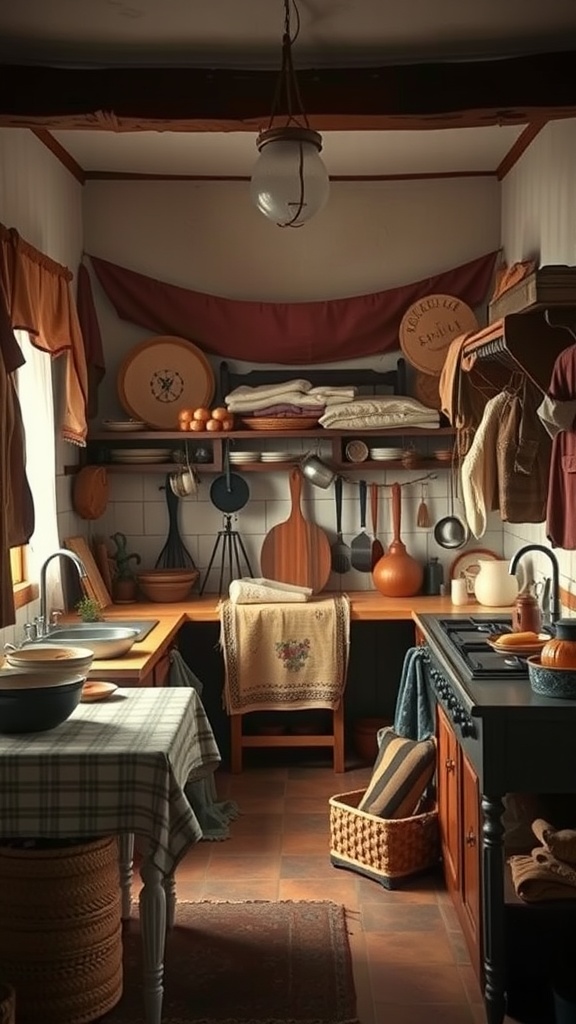
12. Earthy Textiles
Linen, cotton and wool in checks and simple patterns add softness and colour cheaply. They also wash well, which a working kitchen needs.

13. A Proper Pantry
The defining country feature — a dedicated cool store for staples, preserves and produce. Even a single tall larder cupboard transforms how a kitchen functions.

14. A Solid Wooden Table
The heart of the home — for eating, preparing, gathering. Choose something robust and generously sized; this is the piece the whole kitchen orbits.
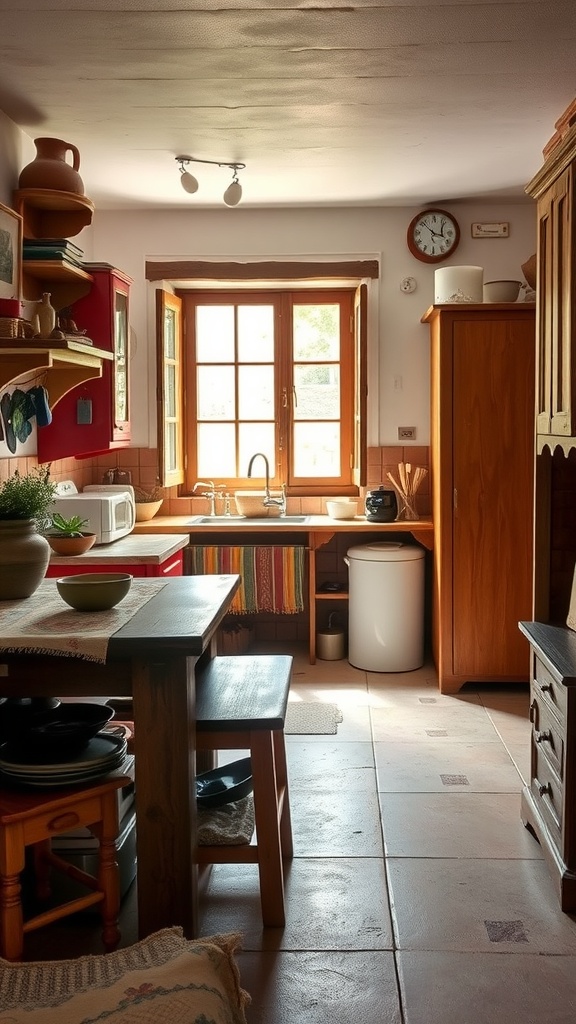
15. Handcrafted Furniture
Visible workmanship and slight irregularity are exactly the point. Handmade or vintage pieces give the room a character no flat-pack can imitate.

16. Vintage Light Fittings
Aged metal and glass suit the period feel. Fit warm 2700 K bulbs so the light flatters wood and stone rather than flattening them.

17. Natural, Eco-Friendly Materials
Terracotta, timber and natural fibres are both traditional and sustainable. The country style has always used what's local and long-lasting.
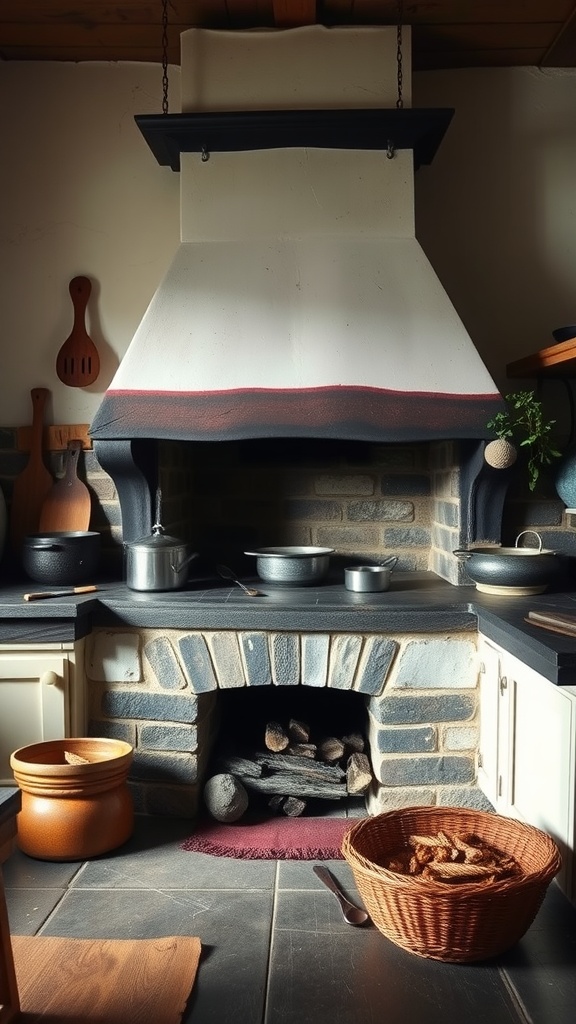
18. A Range or Hearth
Traditionally the kitchen's source of heat and cooking both. A range cooker or wood stove carries that forward — warmth and a genuine focal point.

19. Artisan Pottery
Handmade ceramics bring texture and colour, and their imperfection is the whole appeal. A few pieces on a shelf beat a cupboard of matching sets.

20. Family-Style Seating
Benches and mixed chairs around a big table suit the gathering role of a country kitchen. Comfort and capacity matter more than a matching set.

21. Seasonal Decor
Rural life follows the seasons, and the kitchen reflects it — a garland, seasonal produce, foraged greenery. It keeps the room connected to the year outside.

22. An Efficient Small Layout
Many village kitchens are compact. Keep the work-triangle legs 1.2–2.7 m and protect landing space beside the hob, whatever the style.
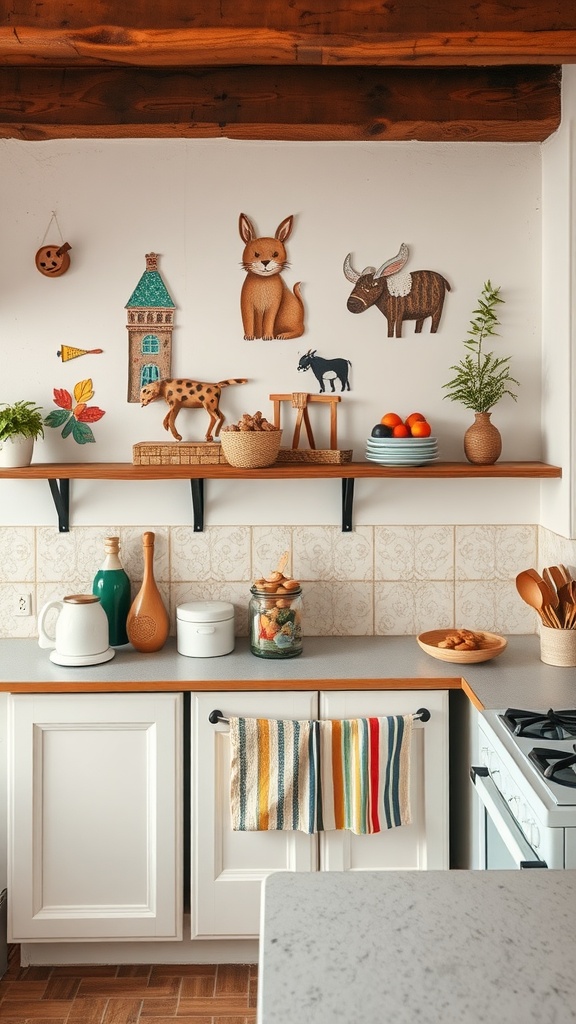
23. Nature-Themed Art
Animal and botanical motifs reinforce the rural connection. Frame under glass so the pieces survive kitchen grease and steam.

24. A Multi-Functional Worktop
In a working country kitchen, surfaces prep food, hold preserving jars and serve as a homework desk. Generous, robust worktops earn their keep.

25. Colourful Ceramic Tiles
Country kitchens aren't always muted — regional tiles bring cheerful colour and craft. Concentrate them on one surface so they read as deliberate.

26. A Breakfast Nook
A small round table by a window makes a sunny spot for morning coffee. Round suits tight corners better and seats people more sociably.

27. Simple, Visible Storage
Baskets, jars and open shelves keep staples organised and to hand. In a country kitchen, practical storage is part of the look rather than something to hide.

28. Family Photos
The kitchen is where a rural family gathers, so it's the natural place for photographs. Frame under glass and keep them clear of the cooking zone.
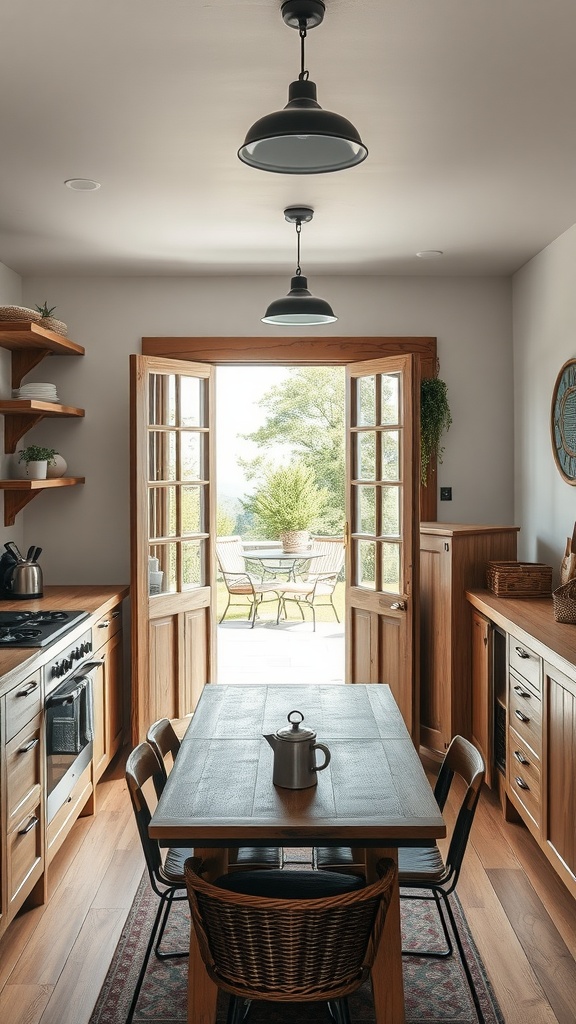
29. A Connection to Outside
French doors to a garden or yard suit rural living — bringing in produce, eating outside, ventilating a busy kitchen. The indoor-outdoor link is central.

30. Composting and Sustainability
Rural kitchens have always been resourceful. A compost caddy and thoughtful waste sorting are practical, traditional and easy to build in.

31. Bright Accent Colour
A village kitchen can be cheerful as well as rustic. Turquoise, red and yellow accents against natural wood bring life — keep them to accessories you can change.
Village kitchen FAQ
What makes a kitchen "village" or "cottage" style? Honest natural materials shown in their true state (solid wood, stone, ceramic, cast iron), a proper pantry, a large gathering table, warmth from a range or hearth, and an earthy palette drawn from the landscape. Above all, it looks used and lived-in rather than showroom-perfect.
Do I need a pantry? Not strictly, but it's the most useful country-kitchen feature. Even a single tall larder cupboard — ideally on a cooler wall away from the oven — holds a great deal and keeps staples organised. Rural cooking means storing in bulk, and the pantry is the answer.
Can I get this style in a modern or small home? Yes. Solid or timber-effect cabinetry, a stone or wood worktop, open shelving, a farmhouse sink and warm lighting deliver the look in any size. The style is about materials and warmth, not square footage.
Is a village kitchen expensive? It's one of the more affordable styles, because reclaimed timber, secondhand furniture and local materials are features rather than compromises. The imperfections that come with age are exactly what the look wants.
How do I keep it from looking twee? Restraint. Let the materials do the work and resist filling the room with signs, slogans and knick-knacks. One or two genuine, characterful pieces read as authentic; a wall of them reads as a gift shop.
Common village kitchen mistakes
- Over-polished, perfect finishes — the honest, aged look is the point; high gloss fights it.
- No proper storage for staples — country cooking needs a pantry or larder to work.
- Too many decorative signs and slogans — tips the room from characterful into kitsch.
- Cool white lighting — flattens the timber and stone; keep it warm at 2700 K.
- An undersized table — the gathering table is the heart; size it for the family, not for two.
Final thought
A village kitchen works because it's designed around how a rural home actually lives — cooking from scratch, storing the harvest, gathering the family. Give it a proper pantry, a generous table, honest materials allowed to age, and warmth from the range and the lighting. Do that and the room feels genuinely rooted, which is something no amount of applied "farmhouse decor" can fake.

Sources & principles referenced
- The role of the pantry/larder in traditional rural kitchens (cool, ventilated bulk storage) and larder placement away from oven heat.
- Honest natural and local materials (solid timber, stone, ceramic, cast iron) shown with visible age.
- The kitchen table as household centre and dining clearances (~60 cm per person, ~90 cm chair pull-out).
- Range/hearth heating tradition.
- The kitchen work triangle (1.2–2.7 m legs) and landing space.
- Layered warm lighting (2700 K).
- Earthy landscape-drawn palettes.