

There's a fine line between an antique bedroom that feels collected and characterful and one that feels like your grandmother's spare room — and it isn't the age of the furniture that decides which. It's how the old pieces are combined, edited and set off. These 38 antique bedroom ideas are organised around that: how to decorate with genuine old pieces so the room reads timeless and personal rather than dated, mostly by knowing what not to do with them.
The difference between "antique" and "dated"
A dated room is one where everything is old, everything is from roughly the same era, and it all matches — a complete period set, untouched. It reads as a time capsule because there's nothing in it to signal the present. An antique room, done well, uses old pieces deliberately inside a room that also breathes: mixed eras, some contemporary elements, space around things, and a clear sense that a person living now chose each piece.
So the goal isn't to assemble the most complete period look. It's the opposite — to use antiques as the characterful layer in a room that's otherwise clean and current. That single reframing prevents almost every antique-bedroom failure.
Mix old with new — the 80/20 that keeps it alive
The most reliable technique in the whole style is deliberate contrast between old and new. An ornately carved antique bed looks far more striking against plain, simple bedding and a clean wall than it does buried among equally ornate everything. The tension between eras is what makes each read clearly: the antique looks more special next to something modern, and the modern looks warmer next to something old.
A useful working ratio is roughly 80% calm, simple base and 20% antique character. Keep the large surfaces — walls, main bedding, flooring — relatively plain and contemporary, and let the antiques be the punctuation. A room that's 100% antique becomes a museum; a room that's 20% antique becomes characterful. The old pieces earn their impact by being outnumbered.
One hero, then supporting cast
Antiques are demanding objects — carved, detailed, full of visual weight — and a room full of competing heroes exhausts the eye. Choose one statement antique to lead: a bed frame, a wardrobe, a vanity. Give it space and let it dominate. Everything else old in the room should be quieter and support it, not compete. This hierarchy is the difference between a curated room and a crowded one, and it's the same discipline that makes any collection read as deliberate.
Patina is the point — don't over-restore
The value of a genuine antique, decoratively, is its age: the worn edges, the softened finish, the marks of use. That patina is exactly what a reproduction can't fake and what makes the piece feel real. So resist the urge to sand and refinish everything back to new — a fully restored antique often loses the very quality you wanted it for. Clean it, stabilise it, make it safe and functional, but let the age show. The exception is anything you actually sleep in or on: a bed frame needs to be sound, and a mattress should always be new.
Give the eye somewhere to rest
Because antiques are visually busy, an antique room needs deliberate calm to balance them — plain walls behind a carved headboard, an area of clear surface, simple bedding, negative space around a statement piece. This isn't a contradiction of the style; it's what makes the style legible. The old rule holds: the richness reads as luxury only when there's quiet around it to set it off. Crowd every surface and even beautiful antiques start to read as clutter.
38 antique bedroom ideas — and why each works
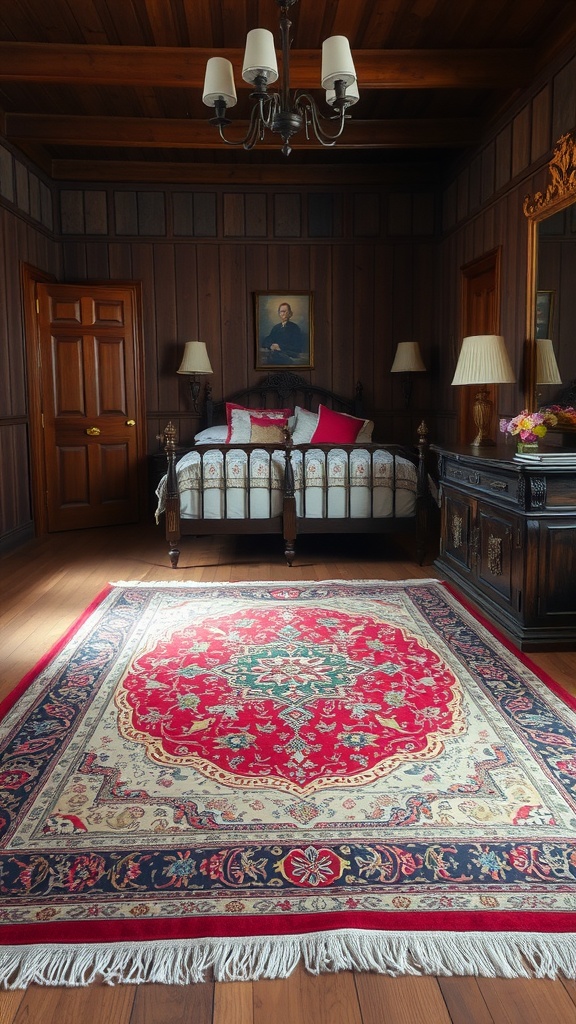
1. A Classic Persian Rug
A worn oriental rug brings age, pattern and warmth underfoot, and its faded softness signals genuine history. An old rug reads far richer than a new one, so this is a place to buy vintage.

2. A Canopy Bed as the Hero
A four-poster or canopy frame is the ideal statement antique — big, characterful and room-defining. Set it against simple bedding and plain walls so it leads without the room competing with it.

3. Vintage Floral Wallpaper
Period wallpaper adds instant age to the largest surface — but choose one feature wall rather than wrapping the room, or it tips into dated. One papered wall against plain ones keeps it current.

4. A Carved Bed Frame with Plain Bedding
Ornate carving looks its best against simple, light bedding — the contrast lets the detail read. This is the 80/20 rule in one image: rich frame, calm dressing.

5. Shabby-Chic Touches
Softly worn painted pieces and white bedding lighten the antique look and keep it from feeling heavy or dark. It's the airy, feminine end of the style, and it forgives imperfect, chipped finds.

6. An Antique Dresser with Mirror
A dresser with an attached mirror is a classic period piece that's also genuinely useful storage. Its patina adds character; keep the top styled sparingly so it doesn't read cluttered.

7. Nightstands — Matched or Not
A pair of vintage nightstands frames the bed neatly, but deliberately mismatched ones read more collected and less like a bought set. Either works; matching is calmer, mismatched is more characterful.

8. A Trunk at the Foot of the Bed
An old trunk adds patina, a travelled feel and real storage in one piece. At the foot of the bed it also anchors the layout and hides clutter that would otherwise break the calm.

9. Vintage Light Fixtures
An old fitting casts warm, characterful light and doubles as a decorative object overhead. Fit warm bulbs and, where wiring is old, have it checked or rewired before use.

10. Exposed Wooden Beams
Beams give architectural age that furniture alone can't, drawing the character up to the ceiling. If they're original, expose them; if not, this is one antique effect best left genuine rather than faked.

11. An Antique Vanity
A dressing table with a mirror is a quintessential period piece and a functional daily-use spot. Flank it with warm sconces and it becomes a small, characterful room-within-the-room.

12. A Grouping of Antique Frames
Old frames, even around simple prints, add age to the walls and a collected feel. Group them as a composed arrangement so they read as a gallery, not scatter.

13. Antique Clocks
Old clocks are characterful objects with real presence, and a small grouping reads as a collection. Keep them to one surface so they're a considered display rather than clutter spread around the room.

14. An Eclectic, Multi-Era Mix
Combining finds from different periods is what makes a room look accumulated over a lifetime rather than bought as a set. A shared palette or material keeps the mix coherent instead of chaotic.

15. Lace and Linen
Delicate old textiles add softness, age and a hand-made quality against sturdier wooden pieces. Natural fibres suit the style and balance the visual weight of carved furniture.

16. Antique Shelves
Old shelving displays books and objects while adding character and using vertical space. Style it with a little breathing room so it reads curated rather than crammed.

17. A Soft Earthy Palette
Warm, muted earth tones flatter aged wood and old textiles and keep the room feeling grounded. A calm neutral base is exactly the quiet backdrop antiques need to stand out.

18. A Gentle Retro Colour
A soft period colour like warm peach on the walls adds era-appropriate character without going dark or heavy. Kept muted, it reads nostalgic rather than dated.

19. Framed Family Photographs
Old family photos are the one antique element that's genuinely, unrepeatably yours, and they deepen the sense of history. In vintage frames, they belong completely to the scheme.

20. One Ornate Bedding Layer
A single decorative quilt or coverlet adds period richness to the bed — use one, not a full stack, so it stays a highlight. Against plainer sheets it reads special rather than fussy.

21. Handcrafted Wooden Pieces
Visible craftsmanship — joinery, turning, carving — is a core reason antiques feel richer than modern flat-pack. Let the making show; it's the quality signal doing the work.

22. Curated Souvenirs and Memorabilia
A grouped display of old objects tells a personal story and reads as a lifetime's collecting. The key word is grouped — arranged by type or theme, not scattered across the room.

23. An Antique Wardrobe
A large ornate wardrobe makes a commanding statement piece and provides serious storage. Give it a plain wall and space around it so its detail reads as grandeur, not bulk.
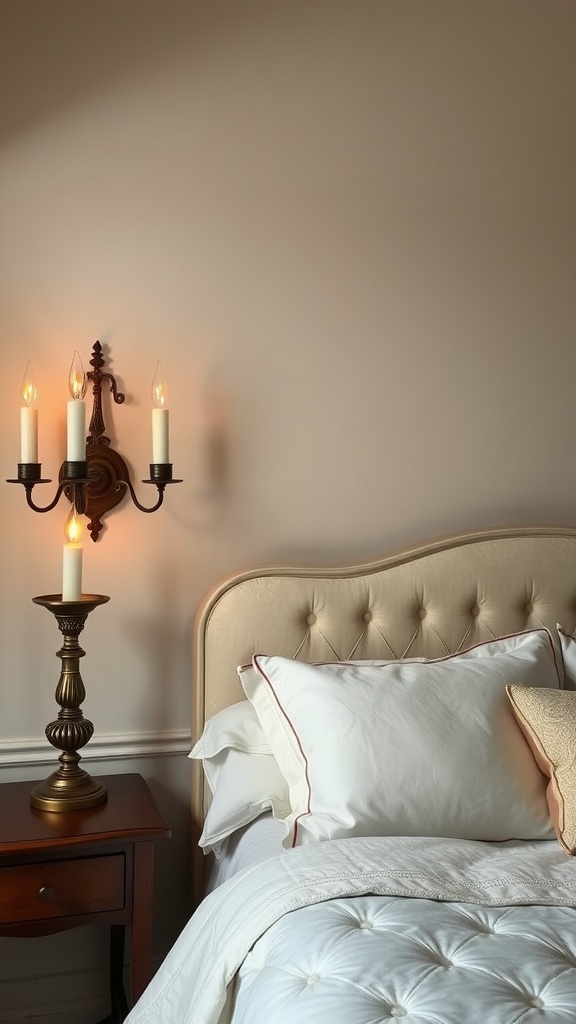
24. Wall Sconces and Candle Holders
Period sconces add warm, low light at the right height and read as authentic fittings. Use LED candles for the flame effect around bedding, where real flames are a fire risk.

25. Full-Length Drapery
Generous curtains in natural fabric suit the period and frame the windows richly. Floor-breaking length reads antique and quality; short or skimpy panels undercut the whole room.

26. Textured Walls
A limewash, plaster or subtly textured finish gives walls an aged depth that flat modern paint lacks. It's a quiet backdrop with character — ideal behind busy antique pieces.

27. Old Books and Small Objects
Cloth- and leather-bound books add warm colour, texture and a literary, lived-in feel. A few knick-knacks among them read charming; a surface packed with them reads cluttered.

28. A Canopy Softened with Fairy Lights
Warm fairy lights over a canopy blend antique romance with a modern, cosy touch — a small, deliberate hit of the present. It's a gentle way to keep the look from feeling strictly period.

29. A Ceiling Medallion
A ceiling rose around the light fitting adds period architecture to an often-ignored surface. Inexpensive to add, it lifts a plain modern ceiling toward the era.

30. A Boho-Antique Blend
Layering colourful textiles and plants with antique furniture warms the look and makes it feel young and personal. It's a good route to antiques for anyone who finds pure period style too formal.

31. Embroidered Accessories
Hand-embroidered pillows and linens add craft, softness and detail that suit aged furniture. A few are enough — they're accents against the plainer base, not the whole scheme.

32. A Few Colourful Cushions
A hit of colour keeps an antique room from feeling brown and heavy, and cushions are the cheapest, most reversible way to add it. Keep to one or two colours that echo the rug or art.

33. Antique Frames Around Modern Art
Putting contemporary or abstract art in old ornate frames is the mix-old-and-new principle in a single object. The tension is the point — it keeps the room firmly in the present.

34. Old-World Charm, Modern Comfort
Antique character combined with modern light, heating and a good mattress is the liveable version of the style. Keep the romance visible and the modern conveniences discreet.

35. Plants Among the Antiques
Living greenery keeps an old-furniture room from feeling static or museum-like — nothing says "present day" like something growing. Plants also soften the hard lines of heavy wood.

36. Fresh Flowers as the Modern Note
A vase of fresh flowers on an antique dresser is the simplest way to make an old room feel currently lived-in. It's cheap, changeable and instantly warming.

37. Rustic Warmth
Pairing antiques with cosy, textured bedding and warm light leans the style toward comfortable farmhouse rather than formal period. It's the most relaxed, welcoming version of the look.

38. Choose Timeless Forms
Classic shapes — a four-poster, a well-made dresser, a simple chandelier — are what let an antique room feel enduring rather than trend-bound. Buy for form and quality and the room ages gracefully.
How to buy antiques without getting burned
Furnishing this look means buying second-hand, and a few checks keep you from overpaying or bringing home a problem:
- Check it's structurally sound. Anything you'll actually use — a bed frame, a chair, a wardrobe you'll load — needs to be solid. Wobble it, open the drawers, look for active woodworm (fresh holes with pale dust) before you buy.
- Value patina, but know the difference from damage. Gentle wear, softened finish and age marks are desirable. Structural cracks, missing veneer and unstable joints are problems, not character.
- Don't over-restore. Refinishing an antique back to new can strip both its patina and, for collectible pieces, its value. Clean and stabilise; refinish only when the surface is genuinely beyond use.
- Have old wiring checked. Vintage lamps and fixtures often need rewiring before they're safe. Budget for it, or rewire before plugging anything in.
- Always buy the mattress new. An antique frame is charming; a second-hand mattress is a hygiene and support problem. Restore the frame, buy the mattress.
- Where to look: estate and house-clearance sales, auctions, antique fairs and centres, charity shops, online marketplaces — and family attics, which are free and come with the story attached.
Antique bedroom on a budget
Antiques are frequently cheaper than new reproductions, so this look often costs less than it appears.
Nearly free. Bring out and mix in any genuine old or family pieces you already own. Edit the room down so a couple of antiques can breathe. Rearrange books and objects into composed groupings. Add fresh flowers or a plant for the modern note.
Under $120. Hunt one characterful hero piece — a dresser, a mirror, a trunk — from a charity shop or marketplace. Add a vintage rug, a few old frames, and warm bulbs. A muted earthy wall colour or one wall of period wallpaper does a lot.
Under $400. A statement antique bed frame or wardrobe from an auction, full-length natural-fibre curtains, a genuine old rug, and — non-negotiable — a new mattress. Have any vintage lighting rewired. Spend on the hero and the things you touch; let everything else stay simple.
Antique bedroom FAQ
How do I decorate with antiques without the room looking dated? Mix old with new — keep walls, main bedding and flooring plain and contemporary (roughly 80% of the room) and let antiques be the 20% of character. Choose one statement antique to lead, give pieces space to breathe, and add a modern note like plants, fresh flowers or contemporary art. A room that's entirely period reads as a time capsule; a mostly-calm room with a few antiques reads as timeless.
What's the difference between antique, vintage and reproduction? Broadly, "antique" means genuinely old (often 100+ years), "vintage" means old but more recent, and "reproduction" means newly made in an old style. For this look, genuine age matters because patina — the wear a reproduction can't fake — is what makes the room feel real.
Should I restore antique furniture? Only as much as it needs. Clean it, make it structurally sound and safe, but don't sand it back to new — over-restoring strips the patina you wanted and can reduce a collectible piece's value. Let the age show.
Are antiques expensive? Often less than you'd think, and frequently cheaper than new reproductions of the same thing. Estate sales, auctions, charity shops and marketplaces are full of solid old furniture selling for less than flat-pack, precisely because it's out of fashion.
Can antiques work in a modern or small room? Yes — a single antique against clean modern surroundings is often more striking than a whole period room, and the contrast keeps a small space feeling current. One well-chosen old piece is enough to give a plain room soul.
Common antique bedroom mistakes
- Everything old and matching. A complete, same-era period set reads as dated. Mix eras and add contemporary elements.
- No calm surfaces. Antiques are busy; without plain walls and clear space they read as clutter. Give the eye somewhere to rest.
- Too many heroes. Several statement pieces competing exhausts the room. Pick one lead and keep the rest supporting.
- Over-restoring. Sanding everything back to new destroys the patina that made the piece worth having.
- Ignoring safety. Unchecked old wiring and unstable frames are real hazards. Rewire fixtures and buy the mattress new.
- Fearing colour and life. An all-brown antique room feels heavy. A little colour, some greenery and fresh flowers keep it alive.
Final thought
An antique bedroom succeeds not by being the most complete period room but by being the most alive one. Use genuine old pieces for their patina and character, but set them inside a room that breathes — plain surfaces, some modern touches, one hero given space, and colour and greenery to keep it in the present. Mix the eras, respect the age rather than sanding it away, and let a few beautiful old things do the talking. That's the difference between a room that feels timeless and one that feels like it stopped a hundred years ago.

Sources & principles referenced
- The distinction between an "antique" room (mixed eras, contemporary balance, curated) and a "dated" one (complete matching period set).
- The mix-old-and-new principle and an approximate 80% calm base / 20% antique character ratio.
- Single-hero hierarchy in a room of visually busy objects.
- Patina as decorative value and the case against over-restoration.
- Negative space and calm surfaces to set off ornate pieces.
- Antique-buying checks — structural soundness, active woodworm, rewiring of old electrical fixtures, and buying mattresses new.
- The relative affordability of antiques versus reproductions and typical second-hand sourcing (estate sales, auctions, fairs, charity shops, marketplaces).
- Fire-safety guidance favouring LED candles around bedding.