
Most people who want a new kitchen don't need one — they need a better-decorated version of the kitchen they already have. The distinction matters, because decorating covers everything you can change without trades, permits or ripping anything out, and it accounts for a surprising share of how a kitchen actually looks. These 38 kitchen decorating ideas are organised around that: what to change, in what order, and what will still look good in five years.
Decorating vs. renovating
Renovating means changing the layout, the cabinetry carcasses, the plumbing or the structure — expensive, disruptive and requiring trades. Decorating means everything else: paint, hardware, lighting, splashback, worktop styling, textiles, shelving and accessories. The useful insight is that the elements people judge a kitchen by — how it's lit, how the surfaces look, how cluttered it is — sit almost entirely in the decorating category. A well-decorated older kitchen consistently reads better than a badly decorated new one.
The order of impact
If you're improving a kitchen without renovating, this sequence delivers the most visible change per pound spent:
- Declutter the worktops. Free, and the single biggest visual improvement available. Clear surfaces are what separate a "nice kitchen" from a chaotic one.
- Fix the lighting. Warm 2700–3000 K bulbs, a dimmer, and under-cabinet strips over the worktop. Nothing else changes the feel of a kitchen this cheaply.
- Change the hardware. New handles transform dated cabinetry for very little money, and you touch them daily.
- Paint. Cabinet paint is the biggest transformation available short of replacement — the results depend almost entirely on preparation.
- Textiles and styling. Towels, a runner, plants and a few chosen objects finish the room.
Kitchen decor has to survive the kitchen
Cooking releases grease aerosols and steam that settle on everything, and surfaces near the hob get hot as well as dirty. That rules out unframed paper art, delicate textiles near burners and anything precious on an open shelf above the cooker. Favour ceramic, metal, sealed wood, glass-framed prints and washable fabrics, and accept that open shelving and hanging racks trade a beautiful look for regular cleaning.
Worktops are for cooking
The most common kitchen decorating mistake is styling away the surfaces you need. A reliable discipline: only appliances you use at least weekly earn permanent worktop space, and decorative items should sit in one grouped zone — ideally on a tray you can lift away — rather than scattered across every available surface.
Cohesion beats quantity
Kitchens contain a lot of visual noise: appliances, tools, packaging, hardware. The way to calm it is repetition. Pick one metal finish, one or two wood tones, and a palette of three or four colours, then repeat them. Matching storage containers and consistent frames do more for a kitchen's appearance than any individual decorative purchase.
38 kitchen decorating ideas — and why each works

1. Open Shelving
Lighter than wall cabinets and turns everyday crockery into display. The honest trade-off is dust and grease, so reserve it for items you use — and therefore wash — regularly.

2. Pendant Lighting
The highest-impact decorating change in most kitchens. Hang pendants 75–90 cm above the worktop and fit warm bulbs on a dimmer.

3. Bold Colour
Painted cabinetry is the cheapest dramatic change available. Because it's paint, it's also reversible — which makes bold colour a lower-risk decision than it feels.

4. Steel with Warm Wood
Stainless steel can read cold on its own; warm timber cabinetry balances it. Pairing a cool material with a warm one is a reliable formula throughout the kitchen.

5. Wood and Plants
The two most effective warming elements in any kitchen. Both add organic texture to a room otherwise dominated by hard, engineered surfaces.

6. A Working Island
An island only earns its place if you can keep 91 cm clear around it. Allow 60 cm per stool and 30 cm of knee room at standard counter height.
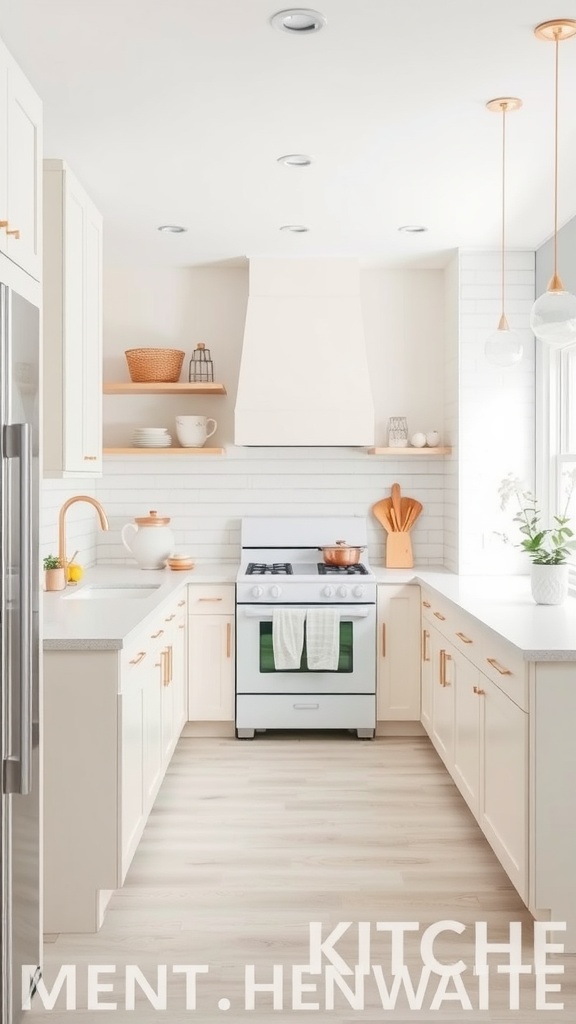
7. A Neutral Palette
Neutrals age slowly and let food, produce and flowers supply the colour. It's the most practical long-term choice for a room you'll live with for years.

8. Vintage Character
Older pieces bring patina that new kitchens lack. One or two characterful items against a simple base is usually all it takes.

9. Farmhouse Warmth
Beams, open shelves and a deep sink read welcoming rather than clinical. Farmhouse works because it makes no attempt to hide that the room is used.
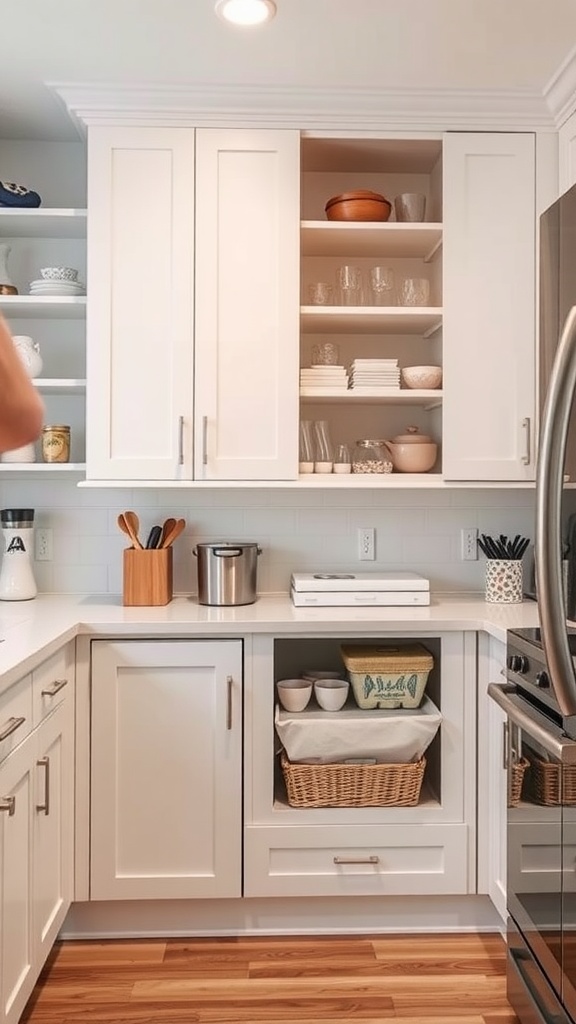
10. Storage That Enables Clear Surfaces
Every decorating scheme depends on somewhere to put things. Storage isn't decorative in itself, but nothing else works without enough of it.
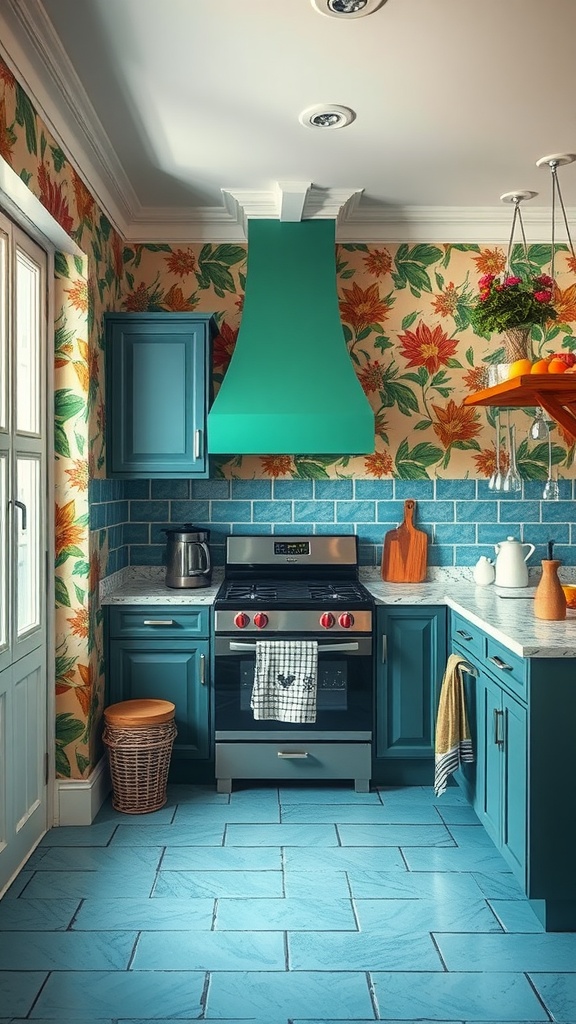
11. Wallpaper
A fast way to add personality to a kitchen you can't restructure. Choose a wipeable or vinyl finish anywhere near cooking, and keep it off the splash zone.

12. Glass Cabinet Fronts
Glass breaks up a solid run of doors and adds depth. Swapping a few solid panels for glass is a decorating change, not a renovation.
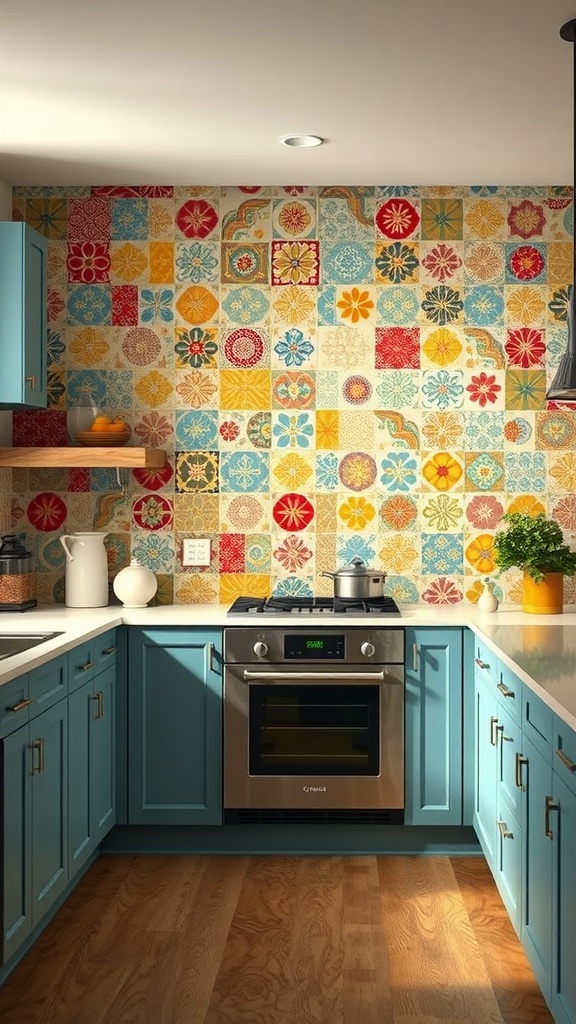
13. A Patterned Splashback
The splashback has to be wipeable anyway, making it the ideal place for pattern. One patterned surface in an otherwise plain kitchen is high impact, low risk.
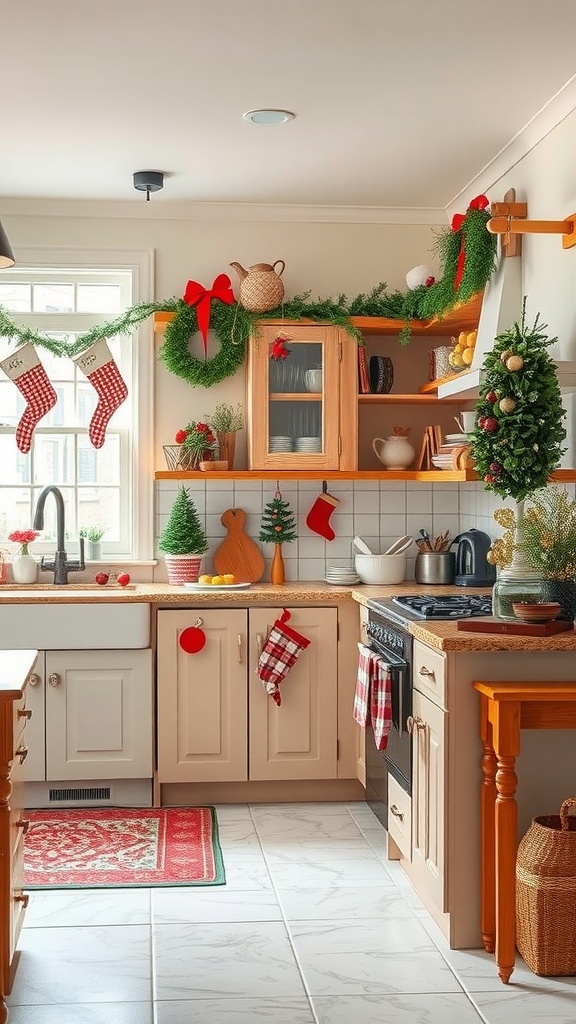
14. Seasonal Layers
Small seasonal swaps keep the kitchen feeling current without permanent commitment. A neutral base kitchen accepts any seasonal palette you throw at it.

15. Mix Traditional and Modern
Traditional cabinetry with contemporary tile and lighting is how most real kitchens evolve. The mix looks collected rather than showroom-fresh.
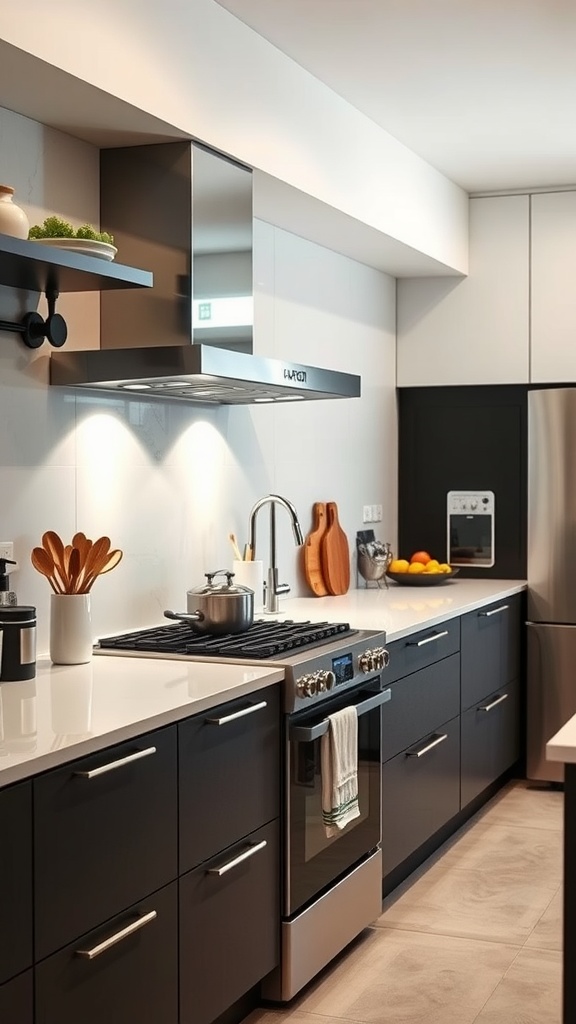
16. Discreet Technology
Smart appliances and lighting help, but visible cables undo them. Plan where things charge and route the wiring out of sight.

17. A Coffee or Breakfast Nook
Grouping related items into one defined zone stops them sprawling across the kitchen. Zoning is what keeps a busy room from looking chaotic.

18. A Mirror
Unusual in a kitchen but effective, particularly in a dark or narrow one. Position it to reflect a window rather than a wall of cabinetry.
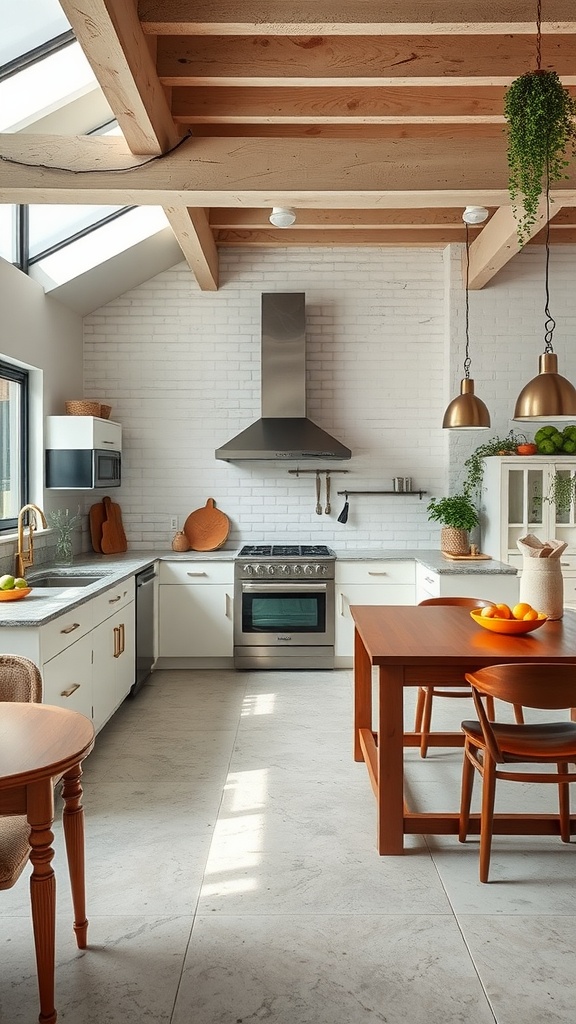
19. Let Natural Light Lead
Daylight flatters every material in the room and costs nothing. Keep windows unobstructed and window treatments slim.
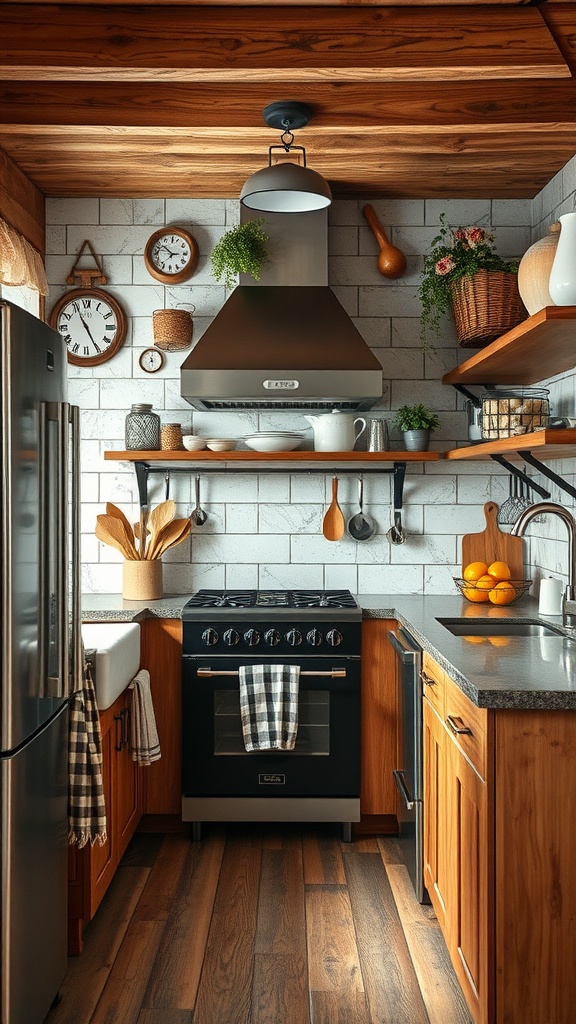
20. Mix Textures
Wood against steel against stone against ceramic gives a kitchen depth without adding colour. Texture is the quiet workhorse of kitchen decorating.

21. Sustainable Materials
Refinishing rather than replacing is both the greenest and cheapest option. A repainted, rehandled kitchen keeps a functional carcass out of landfill.

22. Colour Blocking
Painting upper and lower cabinets differently is a decorating-level change that reads as a full redesign — and it visually lowers the room's centre of gravity.

23. Framed Artwork
Art makes a kitchen feel like part of the home rather than a utility room. Frame under glass and hang away from the cooking zone.

24. Repeat Materials
Matching boards, bowls and containers create calm through repetition. This is the cheapest way to make a busy kitchen look deliberately designed.
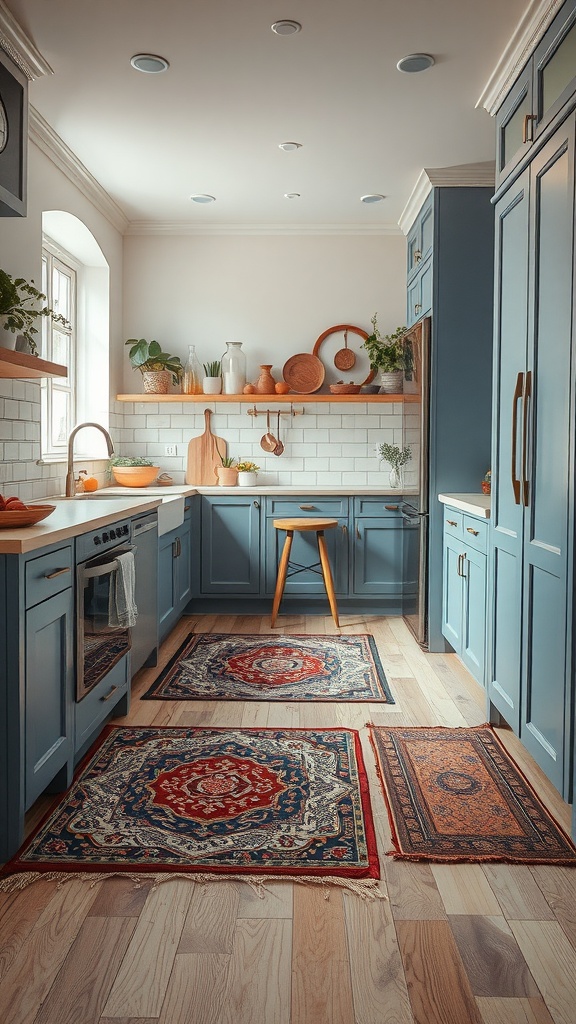
25. A Runner
Zones the space, adds pattern, softens the acoustics of a hard room, and is kinder to your back during long spells at the worktop.

26. Organise Under the Sink
Usually the worst-used cupboard in the kitchen because of the plumbing. Tiered racks and containers work around the pipes and reclaim real capacity.
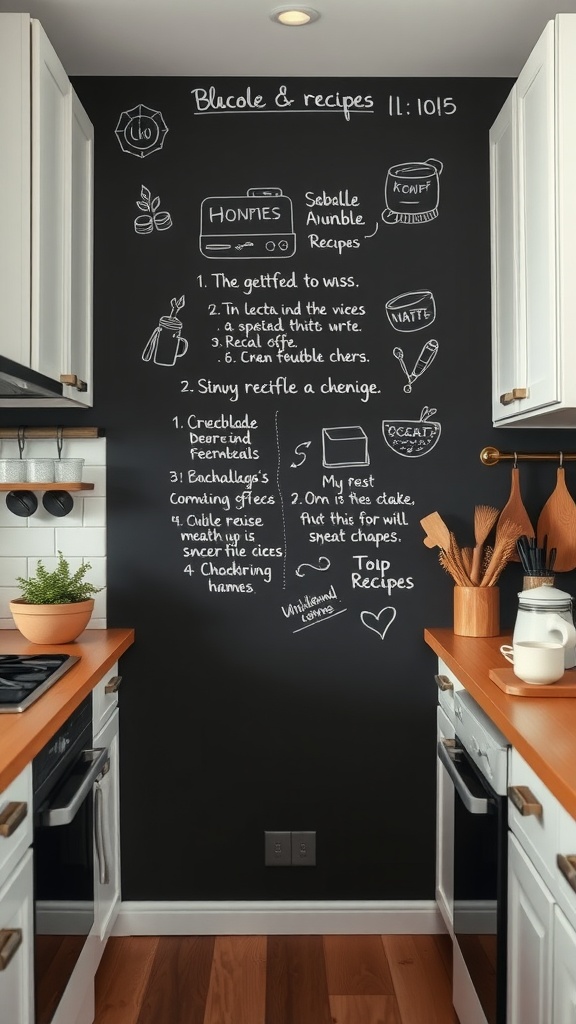
27. A Chalkboard Wall
Decor that's wipeable by design and rewrites itself constantly. Ideal for a family kitchen where the room doubles as a message hub.

28. Plants
The cheapest way to soften a room full of hard surfaces. Herbs on the sill are the most useful version — decor that goes into the food.

29. Cookbooks on Show
They add colour, warmth and a signal that the kitchen is genuinely used. Keep them clear of steam sources so the pages survive.
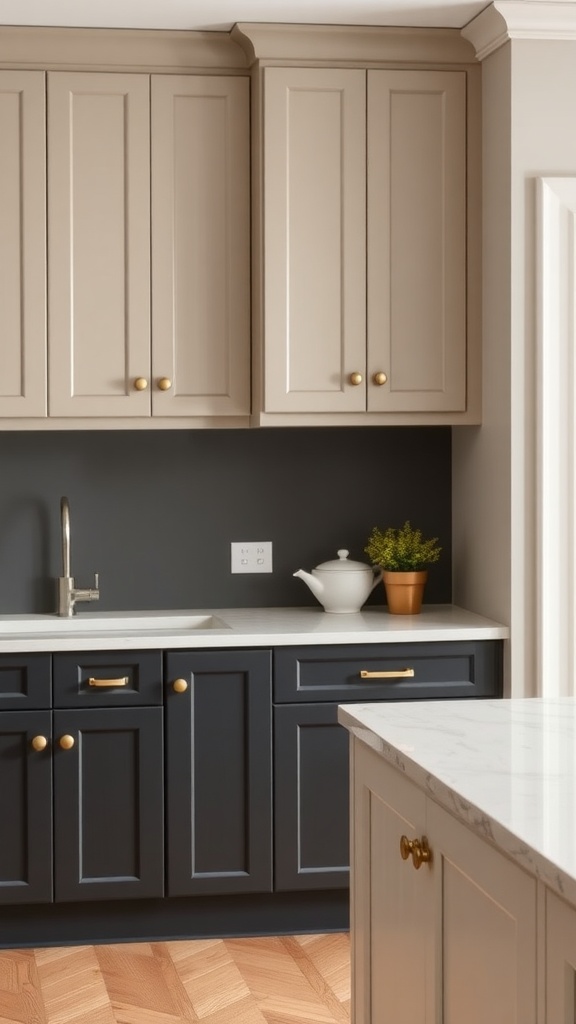
30. Statement Hardware
The best value change in any kitchen. New handles cost little, take an afternoon, and completely alter how dated cabinetry reads.
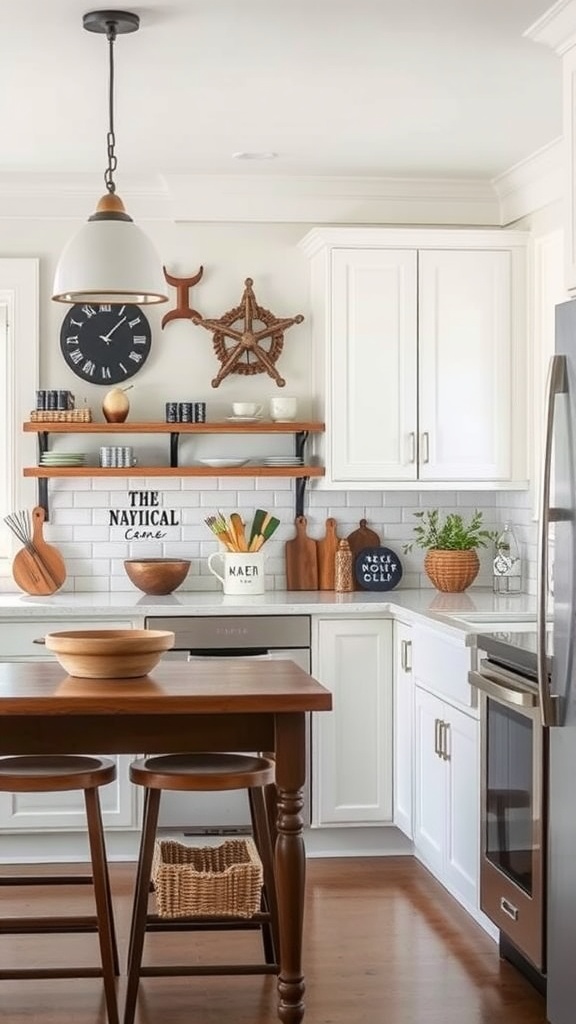
31. A Light Theme
Themes work when they stay suggestive — a palette and a material story rather than a room full of literal motifs. Restraint is what keeps it from tipping into kitsch.
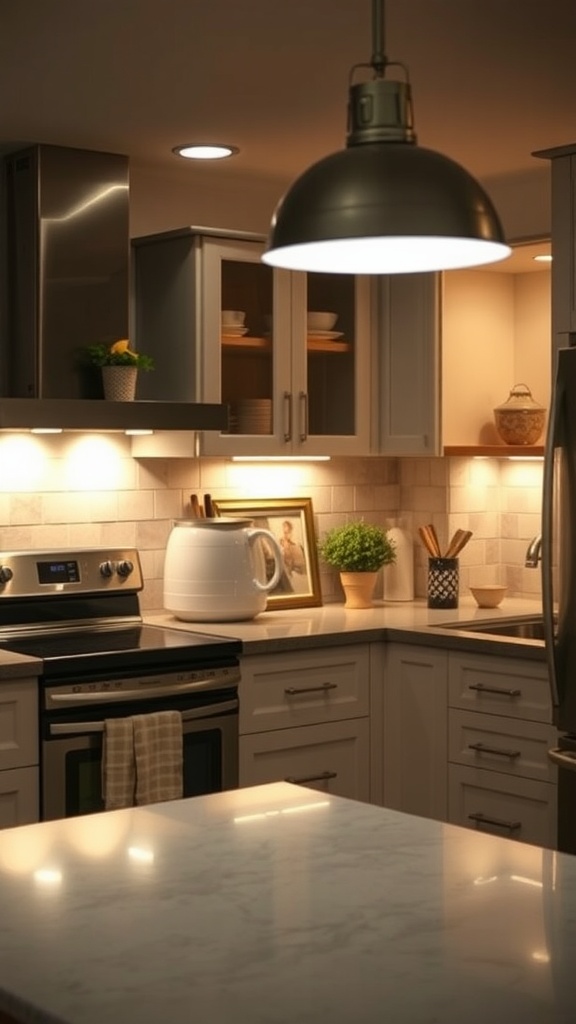
32. Three Lighting Layers
Ceiling for general light, under-cabinet for the worktop, decorative for evening mood. Upper cabinets always shadow the counter — task lighting is the fix.

33. White Cabinets with Warm Floors
White reflects light and keeps a kitchen bright; a warm wooden floor stops it feeling clinical. The most reliably liveable combination there is.
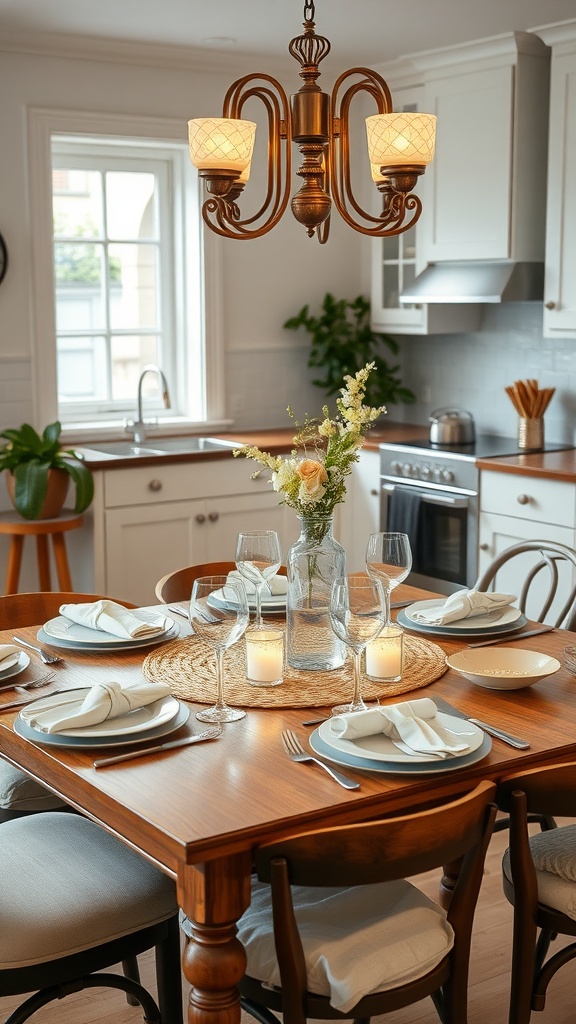
34. A Set Table
Leaving the table laid, or simply adding candles and a runner, changes how the whole room reads for almost nothing.
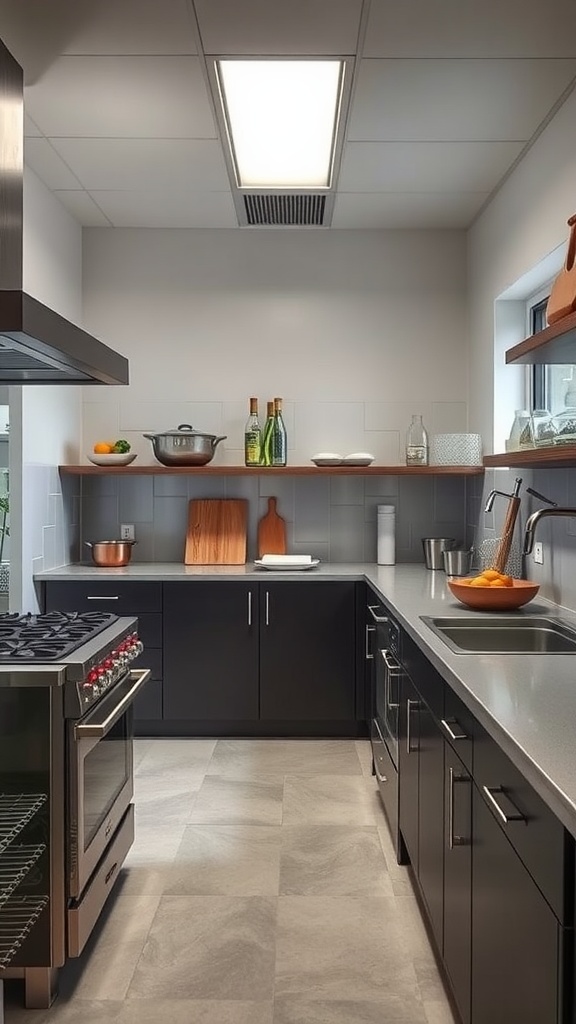
35. Design Around How You Cook
If you cook seriously, prioritise landing space beside the hob and tools within reach. A kitchen styled at the expense of function fails daily.

36. Soft Furnishings
Cushions and curtains absorb echo in a room full of hard surfaces. Quieter kitchens genuinely feel more comfortable to spend time in.
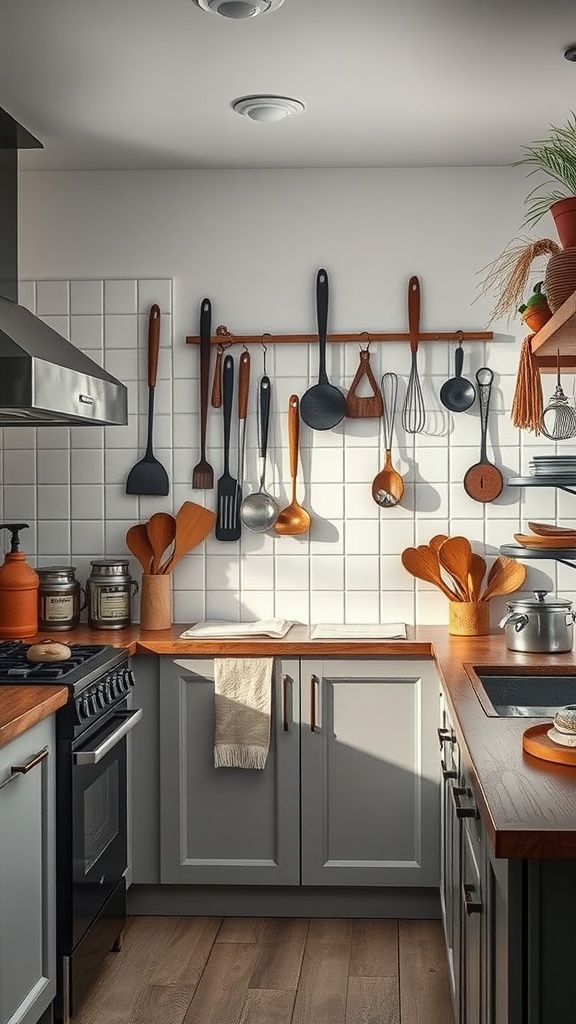
37. Tools on Display
A wall rail frees a drawer and puts everything within reach. It's decor that's honest about the room's purpose — and it needs regular wiping.

38. Repurpose Freestanding Furniture
An old dresser or sideboard adds storage and character without any fitted joinery — the most flexible decorating move for renters especially.
Kitchen decorating FAQ
How can I update my kitchen without replacing the units? In order of impact: declutter the worktops, upgrade the lighting to warm bulbs plus under-cabinet strips, change the handles, paint the doors, then add textiles and plants. Together these cost a fraction of new cabinetry and change almost everything you actually see.
Can I paint kitchen cabinets myself? Yes, and it's the single biggest transformation available on a budget. Success is about preparation — degrease thoroughly (kitchen grease defeats most paint), sand, use a proper adhesion primer, and finish with cabinet-grade paint. Skipping the degreasing step is the most common reason cabinet paint fails.
What's the best value change in a kitchen? Lighting, closely followed by hardware. Both are inexpensive, both are quick, and both affect how every other element in the room appears.
How do I decorate a rented kitchen? Stick to reversible changes: freestanding furniture, a runner, removable splashback panels, magnetic rails, plants, textiles and lamps. Replacing handles is also usually reversible if you keep the originals.
How much decor is too much? When it colonises the worktops you need for cooking. Keep decorative items grouped in one zone, ideally on a tray, and leave the largest continuous stretch of surface clear.
Common kitchen decorating mistakes
- Styling over the working surfaces — a kitchen that photographs well but can't be cooked in.
- Only a ceiling light — upper cabinets shadow the worktop; under-cabinet lighting is close to essential.
- Unprotected decor near the hob — grease and heat will ruin paper, textiles and unsealed wood.
- Too many finishes — three metals and four wood tones read as accidental; repetition is what looks designed.
- Decorating before decluttering — no amount of styling compensates for crowded surfaces.
Final thought
You can change most of what people notice about a kitchen without touching the layout. Clear the surfaces, light it properly and warmly, change the hardware, and repeat a small number of materials and colours throughout. Do that and an ordinary kitchen will look considered — which is a far better return than a renovation you didn't need.

Sources & principles referenced
- The distinction between decorating and renovating scopes.
- Layered kitchen lighting including under-cabinet task light (2700–3000 K).
- Grease and steam exposure and suitable wipeable materials.
- Cabinet-painting preparation (degreasing, priming, cabinet-grade finishes).
- Island and stool clearances (91 cm surround, 60 cm spacing, 30 cm knee room).
- Pendant mounting height (75–90 cm).
- Material and finish repetition for visual cohesion.